ICC

ICC to Allow Victim Participation in Ntaganda Appeal

By: Andrew Kramer

Impunity Watch Staff Writer

THE HAGUE, Netherlands – On February 13, 2020, the Appeals Chamber of the International Criminal Court (“ICC”) issued a decision authorizing the 2,129 victims who participated at the trial of Bosco Ntaganda to present their views and concerns regarding his appeal.  The victims, through their legal representatives, have 30 days to file their observations in respect to their personal interests in the issues on appeal.
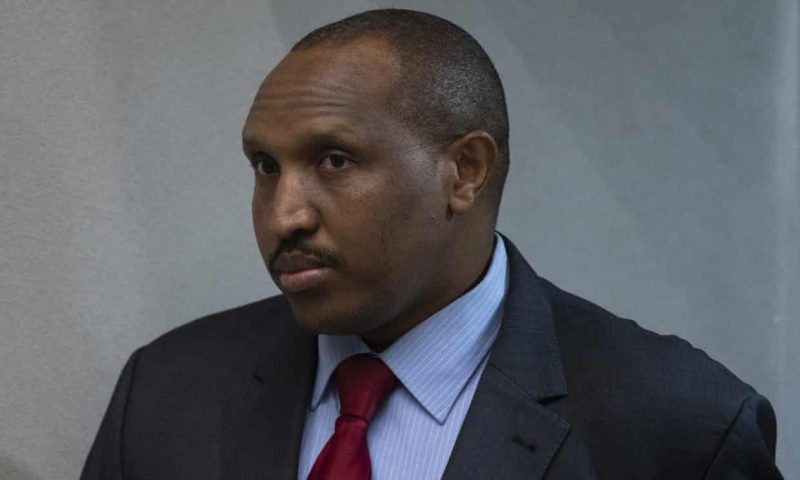
Former Congolese military leader Bosco Ntaganda sitting before the International Criminal Court. Photo Courtesy of The Guardian.

Article 68(3) of the Rome Statute allows for victim participation at all stages of proceedings in the ICC, however it defers to the Court to determine what stages are appropriate for each case.  According to the Statute, victim participation must not be prejudicial to or inconsistent with the rights of the accused and a fair and impartial trial.

Victim participation is a crucial aspect of the ICC judicial process, however it carries great risk.  Participation gives victims a voice in proceedings, and allows the Court to gather a better understanding of the truth.  In the context of sentencing decisions, participation provides the Court with a firsthand account of the magnitude of a convict’s actions.  Because of this, victims may be subject to intimidation and violence. While the ICC does employ protective measures for witnesses and victims in the courtroom,  the witness protection program is limited. The Court often operates far from the home countries of witnesses and victims, and protection after proceedings largely relies on agreements between the ICC and national security programs.

After victim observations have been filed, Ntaganda and the Prosecutor will have an opportunity to respond to them, and the appellate process will move forward.  The Appellate Chamber of the ICC consists of a panel of five judges.  Among their responsibilities, the appeals judges may confirm, reverse, or amend a decision of guilt or innocence, ensure the sentence is proportionate to the crimes, and revise a final judgement of conviction or sentence if new evidence is later found.

Ntaganda is appealing the entirety of his conviction decision, as well as his sentence. On July 8, 2019, Trial Chamber VI convicted the former Congolese general of 18 counts of war crimes and crimes against humanity, committed in Ituri, Democratic Republic of the Congo, from 2002-2003.  He is only the fourth person to be convicted of international crimes by the ICC, and the first to be convicted of sexual slavery. On November 7, 2019, he was sentenced to a total of 30 years of imprisonment.

The Prosecution has also filed an appeal, asserting the Trial Chamber made errors of law which led to the acquittal of Ntaganda of criminal responsibility for attacks of a church in Sayo and a hospital in Mongbwalu.

For further information, please see:

International Criminal Court – Case Information Sheet: Situation in the Democratic Republic of the Congo – 7 Nov. 2019

International Criminal Court – Prosecution Notice of Appeal – 9 Sept. 2019

International Justice Monitor – Ntaganda to Appeal ICC Conviction – 11 July 2019

BBC – DR Congo’s Bosco Ntaganda Convicted of War Crimes by ICC – 8 July 2019 
Coalition for the International Criminal Court – Is Enough Being Done to Protect ICC Witnesses? – 18 May 2015

Bosco Ntaganda Convicted: A Long-Awaited Victory by the ICC

By: Madison Kenyon

Impunity Watch Staff Writer

KINSHASA, Congo — On July 8, 2019, the International Criminal Court (ICC) found Bosco Ntaganda guilty. The Court convicted him of 13 counts of war crimes, including: murder and attempted murder, intentionally directing attacks against civilians, rape, sexual slavery, ordering the displacement of the civilian population, conscripting and enlisting children under the age of 15 years into an armed group and using them to participate actively in hostilities, intentionally directing attacks against protected objects, and destroying the adversary’s property; and five counts of crimes against humanity, including: murder and attempted murder, rape, sexual slavery, persecution, and forcible transfer and deportation. Ntaganda is only the fourth person to be convicted by the ICC and the first person to be convicted of sexual slavery.

Bosco Ntaganda in the International Criminal Court. Photo Courtesy of AP.

Ntaganda’s crimes date back to before 2003. These crimes specifically arise from his involvement with the Patriotic Forces for the Liberation of Congo (FPLC), of which he was the Deputy Chief of Staff and commander of operations. Despite the ICC’s prosecutor beginning her investigation on June 21, 2004, an arrest warrant was not issued until August 22, 2006. The first warrant charged Ntaganda with the war crime of recruiting and using child soldiers. The ICC did not issue a second arrest warrant until July 13, 2012, which was amended to include four additional counts of war crimes and three additional counts of crimes against humanity. The prosecutor later added more crimes.

Even with the addition of these charges to his arrest warrant, the investigative organization, Human Rights Watch, argued that additional charges should have been added for the alleged crimes he committed after 2003. Specifically, Human Rights Watch argued that he should be charged for his actions while he was military chief of staff of the National Congress for the Defense of the People, a military group located in the North Kivu Province in eastern Congo. While in this position, Human Rights Watch documented Ntaganda’s involvement in ethnic massacres, killings, rape, torture, and recruitment of child soldiers. Despite this documentation and the urge by Human Rights Watch, the court did not include these crimes.

In 2012, Ntaganda broke away from the National Congress for the Defense of the People and formed his own coalition, the March 23 Movement (also referred to as M23). During this time, he continued to live freely and visibly in front of the Congolese government. President Joseph Kabila refused to arrest him because he did not want to disrupt the peace of DR Congo. Thus, Ntaganda would have remained free if he had not turned himself over to the ICC on March 22, 2013. He surrendered because he feared the turmoil currently occurring within M23.

After the ICC brought Ntaganda into custody, the judicial process took six years to reach the July verdict due to extensive investigations by both parties, resulting in approximately 69,000 pages worth of evidence. The trial, which took place over the course of 248 hearings, included testimony from 80 witnesses and experts called by the prosecutor, and 19 witnesses called by the defense team. The court also authorized 2,129 victims to partake in the trial.

Although many are celebrating this judgment, this conviction sheds light on some flaws of the ICC. One flaw in particular is highlighted by the view that this conviction may have never occurred if Ntaganda did not surrender himself to the ICC. This situation could prompt the ICC and the international community to consider another means to bring war criminals within its jurisdiction. Solutions to these issues may expedite a path to justice as the court cannot start a trial without the defendant present.

For further information, please see: 

International Criminal Court – Case Information Sheet: Situation in the Democratic Republic of Congo – 8 July 2019 

BBC – DR Congo’s Bosco Ntaganda Convicted of War Crimes by ICC – 8 July 2019 

BBC – Bosco Ntaganda: The Congolese ‘Terminator’ – 8 July 2019

Human Rights Watch – Q&A: Bosco Ntaganda, DR Congo, and the ICC – 2 July 2019