International Criminal Court

ICC Prosecutor Files Response to Ntaganda Appeal

By: Andrew Kramer

Impunity Watch Staff Writer

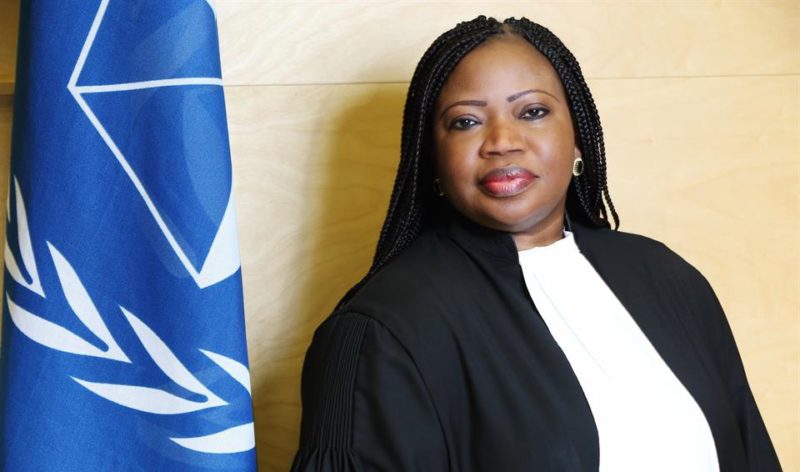
THE HAGUE, The Netherlands – On April 14, 2020, the International Criminal Court (“ICC”) released the public redacted version of the Prosecutor’s response to Appellant’s brief in the case of The Prosecutor v. Bosco Ntaganda.  ICC Prosecutor Fatou Bensouda presented the appellee’s brief.
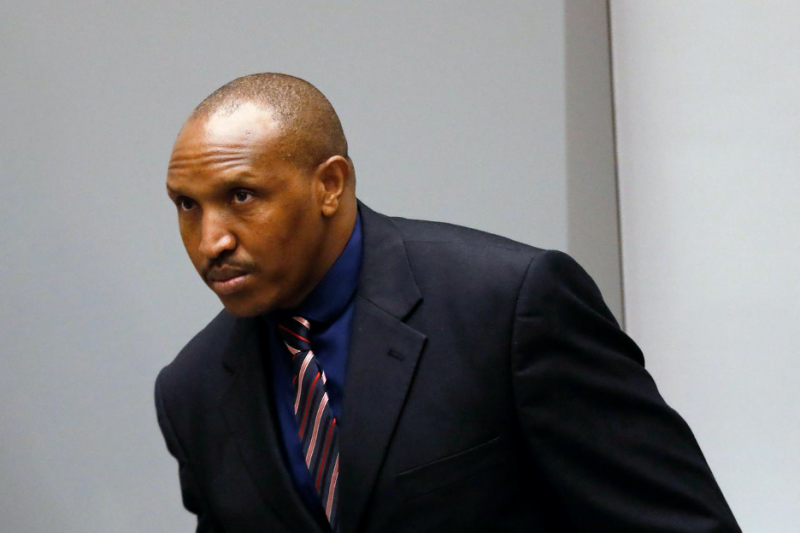
Congolese warlord Bosco Ntaganda stands in the ICC courtroom during closing statements of his trial. Photo Courtesy of Reuters.

The Prosecutor’s brief addresses each of Ntaganda’s twelve grounds of appeal in turn.  Whereas Ntaganda attempted to downplay his involvement in crimes of sexual violence and slavery in grounds one through four, the Prosecutor asserted that Ntaganda played an essential role in the commission of these crimes throughout the period of the charges.  Furthermore, the Prosecutor asserted that Ntaganda himself killed and raped, participated in recruitment drives, and used children under 15 years of age as his personal escorts.  The Prosecutor maintained that the Trial Chamber assessed these factors correctly when arriving at Ntaganda’s 30-year prison sentence.  

In addressing Ntaganda’s argument in grounds seven through twelve, that the Trial Chamber failed to properly assess alleged mitigating factors, the Prosecutor asserts that the Ntaganda simply disagrees with the Court’s fair evaluation and rejection of these circumstances.  The Prosecutor stated that the Court correctly considered Ntaganda’s alleged acts of protecting civilians from attacks, saving the lives of enemy soldiers, and contributing to the reconciliation with the Lendu community, among others, however they did not carry enough weight to impact his sentence.  This difference of opinion does not indicate a failure to consider the circumstances properly.

As for grounds five and six, that the Court erred in applying some aggravating circumstances, the Prosecutor argued that Ntaganda misapplied the relevant provisions of the Rome Statute.  While Ntaganda asserted that the Court considered an improper aggravating circumstance in ground 5, the Prosecutor stated that the elements of the uncharged crime allow for it to be considered as an aggravating circumstance.  In ground 6, which Ntaganda accused the court of “double-counting” some factors the Prosecutor argued that Ntaganda failed to understand the “two-step” process the Court uses for sentencing established by article 78(3).

While grounds one through four and seven through twelve are likely based on matters which were at the discretion of the trial court, and therefore likely to be upheld on appeal, the arguments in grounds five and six present reasonably more nuanced legal issues. Particularly interesting is the Court’s “two-step” process for sentencing, in which the individual sentences for each crime is calculated before the appropriate joint sentence is determined.  While sentences are calculated two times using this process, aggravating factors are not “double-counted,” for each sentence.

No scheduling order has been released for the Appeals Hearing of Ntaganda.  Ntaganda also stated to be appealing the judgement of conviction in his notice of appeal, however no brief has been filed yet.

For further information, please see:

International Criminal Court – Prosecution Response to “Sentencing Appeal Brief” – 14 Apr. 2020
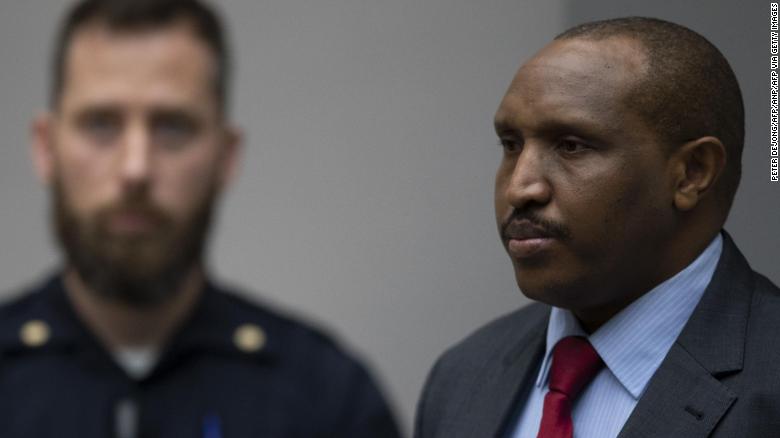
International Criminal Court – Case Information Sheet: The Prosecutor v. Bosco Ntaganda – 7 Nov. 2019

Appellant’s Brief Released in Ntaganda Case

By: Andrew Kramer

Impunity Watch Staff Writer

THE HAGUE, The Netherlands – On April 8, 2020, the International Criminal Court (“ICC”) released the public redacted appellate brief of former Congolese militia leader and convicted war criminal Bosco Ntaganda. The brief was originally filed on February 10, 2020 but was unavailable to the public. Ntaganda is currently appealing only his 30-year sentence of imprisonment.

Bosco Ntaganda looks on in an ICC courtroom during trial. Photo Courtesy of CNN.

Ntaganda raised twelve grounds on appeal, generally asserting that the Trial Chamber failed to assess mitigating factors properly when determining his sentence. Grounds one through four claim the Trial Chamber failed to properly assess Ntaganda’s “limited” degree of participation in various crimes committed, including rape and sexual slavery. Grounds seven through twelve claim the Trial Chamber failed to properly assess mitigating conduct of Ntaganda, both during the commission of the crimes and in the courtroom. These grounds assert the Court did not properly consider that Ntaganda saved the lives of enemy soldiers, protected civilians from attacks on occasions, protected an individual from harm, contributed to reconciliation with the Lendu community, and cooperated with the Court. 

The remaining grounds assert the Court erred in assessing aggravating factors. Ground five asserts the Court considered an improper aggravating circumstance in determining its sentence, which it claims fell outside the scope of the crimes charged. Ground six asserts the Court “double-counted” certain aggravating factors to arrive at its sentence.

This is a robust brief submitted on behalf of Ntaganda. While he may find little sympathy from the Appeals Chamber for his “limited role and knowledge” in crimes of sexual violence and slavery, a merit which the Court may more thoroughly address is the question of what constitutes a proper aggravating factor. The degree of relation of the factor to the crime, relations to an uncharged crime, and how to apply the factor in a sentencing decision are all areas which the Court might provide clarity.

There is not much precedent for the appellate process of the ICC. Only two other cases have reached decision by the Appeals Chamber, both of which confirmed the Trial Chamber’s findings. In the only appellate decision, which upheld a sentence of imprisonment, the case of The Prosecutor v. Thomas Lubanga Dyilo, the Appeals Chamber declined to reduce a prison sentence, partially because the appellant had already served most of it. If the present case reaches a decision on the merits, it could solidify sentencing procedure, and depending on the outcome, empower or restrain the Trial Chambers in their sentencing decisions.

Once the Prosecutor responds to the Appellant’s brief, a hearing date will be set. The COVID-19 outbreak will likely slow progress of this appeal process, as all ICC staff members based in The Hague will be working remotely until at least April 28.  

For further information, please see:

International Criminal Court – Public Redacted Version of “Sentencing Appeal Brief” – 10 Feb. 2020

International Criminal Court – Case information Sheet: Situation in the Democratic Republic of the Congo – 7 Nov. 2019

International Criminal Court – The Prosecutor v. Thomas Lubanga Dyilo – 15 Dec. 2017

The ICC Prosecutor’s Road to Justice for Afghanistan

By: Madison Kenyon 

Impunity Watch Staff Writer 

KABUL, Afghanistan — On September 17, 2019, the Pre-Trial Chamber II of the International Criminal Court (ICC) granted in part the request of the prosecutor for Leave to Appeal the Chamber’s earlier decision, which rejected the prosecutor’s request for authorization to investigate into the situation in the Islamic Republic of Afghanistan. The Pre-Trial Chamber originally rejected this authorization because it believed that an investigation at the current stage of the situation would not serve the interests of justice. Thus, on June 7, 2019, the prosecutor, Fatou Bensouda, filed for leave to appeal this decision.

International Criminal Court’s prosecutor, Fatou Bensouda. Photo courtesy of the ICC.

This procedural history stems from the preliminary examination, which began in 2006, by the Office of the Prosecutor of the situation in Afghanistan. Specifically, the prosecutor examined alleged crimes against humanity and war crimes that have occurred in Afghanistan since July 1, 2002, with particular focus on alleged crimes that occurred on May 1, 2003. The prosecutor asserts that the results of this examination prove the following: (1) crimes against humanity and war crimes by the Taliban and their affiliated network; (2) war crimes by the Afghan National Security Forces, and in particular, members of the National Directorate for Security and the Afghan National Police; (3) and war crimes by members of the United States’ armed forces and the United States Central Intelligence Agency (CIA). Overall, through this examination, the prosecutor determined that there is a reasonable basis to proceed with an investigation into this situation and thus made the request for authorization to investigate on November 20, 2017.

The prosecutor asserts that, at a minimum, the crimes against humanity that have been committed include: murder; imprisonment or other severe deprivation of physical liberty; and persecution against an identifiable group or collectivity on political and gender grounds. Along with this, the prosecutor states that the war crimes that have been committed include: murder; cruel treatment and torture; outrages upon personal dignity; intentionally directing attacks against civilians; intentionally directing attacks against personnel or objects involved in a humanitarian assistance or peacekeeping mission; internationally directing attacks against protected objects; rape and other forms of sexual violence; using, conscripting or enlisting children under the age of fifteen; and killing or wounding treacherously a combatant adversary. Further, regarding the United States’ involvement in the situation in Afghanistan, the prosecutor states that there is a reasonable basis to believe that members of the U.S. armed forces and members of the CIA committed acts of torture, cruel treatment, outrages upon personal dignity, and rape and sexual violence against conflict-related detainees in Afghanistan and other locations.

Although the Pre-Trial Chamber granted the prosecutor leave to appeal its earlier decision, this does not mean that it will also grant the prosecutor authorization to investigate further into the situation in Afghanistan. Due to the evidence produced by the prosecutor from her preliminary examination, if the Chamber again refuses to grant authorization to investigate further, it may leave many to wonder if the court is actually concerned about the “interests of justice” or if it is actually trying to avoid upsetting an international powerhouse like the United States.

For further information, please see: 

International Criminal Court – Afghanistan: ICC Pre-Trial Chamber II Authorises Prosecutor to Appeal Decision Refusing Investigation – 17 Sept. 2019

International Criminal Court – Situation in Afghanistan: Summary of the Prosecutor’s Request for Authorisation of an Investigation Pursuant to Article 15 – 20 Nov. 2017

International Criminal Court – The Prosecutor of the International Criminal Court, Fatou Bensouda, Requests Judicial Authorisation to Commence an Investigation into the Situation in the Islamic Republic of Afghanistan – 20 Nov. 2017

Bosco Ntaganda Convicted: A Long-Awaited Victory by the ICC

By: Madison Kenyon

Impunity Watch Staff Writer

KINSHASA, Congo — On July 8, 2019, the International Criminal Court (ICC) found Bosco Ntaganda guilty. The Court convicted him of 13 counts of war crimes, including: murder and attempted murder, intentionally directing attacks against civilians, rape, sexual slavery, ordering the displacement of the civilian population, conscripting and enlisting children under the age of 15 years into an armed group and using them to participate actively in hostilities, intentionally directing attacks against protected objects, and destroying the adversary’s property; and five counts of crimes against humanity, including: murder and attempted murder, rape, sexual slavery, persecution, and forcible transfer and deportation. Ntaganda is only the fourth person to be convicted by the ICC and the first person to be convicted of sexual slavery.

Bosco Ntaganda in the International Criminal Court. Photo Courtesy of AP.

Ntaganda’s crimes date back to before 2003. These crimes specifically arise from his involvement with the Patriotic Forces for the Liberation of Congo (FPLC), of which he was the Deputy Chief of Staff and commander of operations. Despite the ICC’s prosecutor beginning her investigation on June 21, 2004, an arrest warrant was not issued until August 22, 2006. The first warrant charged Ntaganda with the war crime of recruiting and using child soldiers. The ICC did not issue a second arrest warrant until July 13, 2012, which was amended to include four additional counts of war crimes and three additional counts of crimes against humanity. The prosecutor later added more crimes.

Even with the addition of these charges to his arrest warrant, the investigative organization, Human Rights Watch, argued that additional charges should have been added for the alleged crimes he committed after 2003. Specifically, Human Rights Watch argued that he should be charged for his actions while he was military chief of staff of the National Congress for the Defense of the People, a military group located in the North Kivu Province in eastern Congo. While in this position, Human Rights Watch documented Ntaganda’s involvement in ethnic massacres, killings, rape, torture, and recruitment of child soldiers. Despite this documentation and the urge by Human Rights Watch, the court did not include these crimes.

In 2012, Ntaganda broke away from the National Congress for the Defense of the People and formed his own coalition, the March 23 Movement (also referred to as M23). During this time, he continued to live freely and visibly in front of the Congolese government. President Joseph Kabila refused to arrest him because he did not want to disrupt the peace of DR Congo. Thus, Ntaganda would have remained free if he had not turned himself over to the ICC on March 22, 2013. He surrendered because he feared the turmoil currently occurring within M23.

After the ICC brought Ntaganda into custody, the judicial process took six years to reach the July verdict due to extensive investigations by both parties, resulting in approximately 69,000 pages worth of evidence. The trial, which took place over the course of 248 hearings, included testimony from 80 witnesses and experts called by the prosecutor, and 19 witnesses called by the defense team. The court also authorized 2,129 victims to partake in the trial.

Although many are celebrating this judgment, this conviction sheds light on some flaws of the ICC. One flaw in particular is highlighted by the view that this conviction may have never occurred if Ntaganda did not surrender himself to the ICC. This situation could prompt the ICC and the international community to consider another means to bring war criminals within its jurisdiction. Solutions to these issues may expedite a path to justice as the court cannot start a trial without the defendant present.

For further information, please see: 

International Criminal Court – Case Information Sheet: Situation in the Democratic Republic of Congo – 8 July 2019 

BBC – DR Congo’s Bosco Ntaganda Convicted of War Crimes by ICC – 8 July 2019 

BBC – Bosco Ntaganda: The Congolese ‘Terminator’ – 8 July 2019

Human Rights Watch – Q&A: Bosco Ntaganda, DR Congo, and the ICC – 2 July 2019