VA won’t Change Their Motto for Gender Neutrality

By Sarah Purtill
Impunity Watch Reporter, North America

WASHINGTON, D.C., USA – A quote from America’s 16th President currently stands as the motto for Veterans Affairs. In his second Inaugural Address, Abraham Lincoln stated, “To care for him who shall have borne the battle and for his widow, and his orphan.” The language of this quote has been under fire by many who believe it is outdated and/or sexist. IAVA Executive Director Allison Jaslow wrote a strongly worded letter in October of 2017. The letter went unanswered by VA Secretary David Shulkin. Iraq and Afghanistan Veterans of America also called on VA Secretary David Shulkin in November to change the motto.

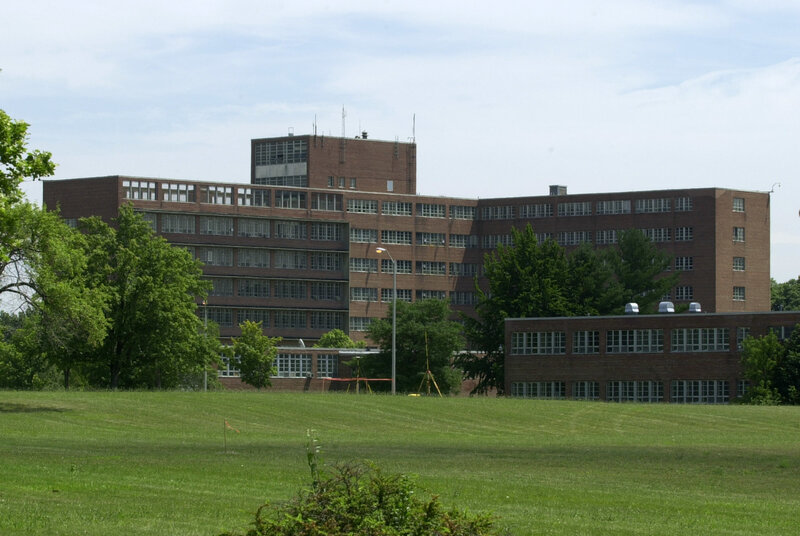
For the last 59 years, the VA motto has been a quote from President Lincoln’s Second Inaugural Address. Photo Courtesy of Stars and Stripes/ Veterans Affairs.

Despite the outcry for change, a spokesperson for Secretary Shulkin’s office stated that the VA will continue to use it’s motto. “[The] VA is proud of Lincoln’s words as a historic tribute to all Veterans, including women Veterans, whose service and sacrifice inspires us all,” Secretary Shulkin’s spokesperson said. In response to the spokesperson,  Jaslow said, “They’re missing the point — that women don’t feel comfortable at the VA. That action enshrined not only a motto, but a culture too that often renders women veterans invisible at the agency, even to this day. Every day that the VA preserves this motto, it ignores and obscures the needs of far too many women veterans.”

There are many who think the VA has bigger problems to deal with right now rather than the currentness of the motto. Some of those problems include the long wait time for appointments and various scandals. Some of these scandals are centered around women. One such scandal was a Facebook group of over 30,000 members sharing pictures of nude female service members without their consent.

A study was also recently posted by the National Academy of Sciences, Engineering and Medicine which stated that many female combat veterans said that they weren’t believed about their war experience and often belittled by VA doctors. The study was conducted over 4 and a half years and focused on VA mental health services.

The director of the VA Center for Women Veterans, Kayla Williams, responded to the pleas from IAVA to change the motto. She unofficially has been using a modified version of the motto which states, “To care for those who shall have borne the battle and their families and survivors.”

“Recognizing that they can seem exclusionary to some women veterans, for many years I – along with other senior VA leaders – have honored the population we serve today by using a modernized version,” Williams said to Jaslow in a letter. “This symbolic update, which we are continuing to gradually incorporate alongside the original in digital and print materials, as well as spoken remarks, is an important acknowledgement of today’s veteran population.”

Jaslow calls for more change and for that change to be official. “I get it. The VA was designed for a male population, and culture change is hard,” Jaslow said. “But we’re talking 16 years we’ve been at war in Afghanistan. Women veterans are still feeling invisible and articulating they don’t feel comfortable at the VA. At what point are we going to get serious about addressing this?”

For more information, please see:

Washington Post – Is the VA Motto Outdated and Sexist? The Head of the Iraq and Afghanistan Veterans Group Thinks So – 6 February 2018

Stars and Stripes – VA Disregards Request to Make Agency Motto Gender Neutral – 2 February 2018

Workers File Human Rights Complaint, Case Brought Against Them

By: Katherine Hewitt
Impunity Watch Reporter, Asia 

BANGKOK, Thailand – A trial against 14 workers in Thailand was brought to court on February 7, 2018. The workers are charged with criminal defamation.

A worker at a chicken farm in Thailand. Photo Courtesy of Sukree Sukplang.

In July 2016, 14 workers filed a complaint against their employer with the National Human Rights Commission of Thailand on violations labor conditions. They accused Thammakaset Co. Ltd. of requiring 20-hour work days, making them work 40 days straight, forcing them to work overtime, paying below minimum wage, restricting movement, and holding onto identity documents.

While the Labor Ministry Officials mandated the company to pay 1.7 million Baht (48,600 USD) as workers compensation, the 14 have yet to receive the money. Thammakaset Co. Ltd. appealed this action in court.

Following this, Thammaskaset filed their criminal defamation case in October.   They defend that they have done no wrongdoings and that case hurts their company image.  The legal code in Thailand, in respect to criminal defamation, allows companies to take steps against those that accuse them of labor rights abuses.

Human Rights Watch and others have called for the government to oppose the criminal defamation charges against the 14 workers. The Prime Minister General Prayuth Chan-ocha has previously stated Thailand’s commitment to the UN Guiding Principles on Business and Human Rights and “actions, including enforcing a labor protection legislation that ensures fair treatment of workers and protects them from abuse and mistreatment.”

The first day of the trial witnesses of the prosecution spoke. On the following two days the workers gave their testimony.  If the 14 workers are found guilty, they could spend up to a year in jail and be fined up to 20,000 Baht (600 USD).

For more information, please see:

Human Rights Watch – Thailand: Burmese Workers on Trail for Reporting Abuses – 7 February 2018

Reuters – Myanmar workers go on trail for accusing Thai Chicken farm of abuse – 7 February 2018

Fortify Rights – Thailand: Drop Criminal Defamation Lawsuits against 14 Myanmar Workers – 6 February 2018

Brazil’s military takes control of security in response to gang violence

By: Emily Green
Impunity Watch Reporter, South America

RIO DE JANEIRO, Brazil – The Brazilian military has taken full control over security in its crime-plagued capital. Organized crime has taken control of the state and this increased security is meant to restore order.

Brazilian soldiers search a resident of a favela. Image Courtesy of Mauro Pimentel.

Rio’s governor, Luiz Fernando Pezao, issued an appeal for help after chaos during the famous Rio Carnival. Several celebrations were spoiled by violence from gun fights and looting. Three police officers were killed in these violent clashes. The governor asked the national government to use military intervention because he saw it as the only way to tackle the heavily armed gangs. He apologized to the citizens affected saying, “We were not ready. There were mistakes in the first days and we reinforced the patrols.”

Due to the economic crisis, Rio’s police budget has been slashed in recent years. Critics say that police do not even have enough money to pay for the petrol in their patrol cars. The financial problems have also emboldened criminal gangs. The national recession, slump in oil prices, and high levels of corruption has given organized crime an opportunity to gain power.

President Michel Temer said organized criminals have all but seized control of the state and compares the growing gang violence to “a cancer.” He has appointed General Walter Souza Braga Netto to oversee security in the capital. This army general was widely praised for his part in coordinating security for the 2016 Rio Olympic Games.

Residents of Rio try to go about their daily lives, but often find that violence gets in the way. Stray bullets have killed children in favelas, shoot-outs have closed down major highways, and mass robberies have ruined Carnival celebrations. Many criticize the fact that the state governor willingly gave up his power to the President. Even though most are happy that something is being done, many are skeptical of big political gestures like this when a presidential election is coming up.

For now, the army will regularly patrol some of the city’s most dangerous areas. It will be the first time the army has had such a high profile since Brazil’s return to democracy in 1985. Brazil’s National Congress still needs to approve the move.

President Temer explained, “Organized crime has almost taken over the state of Rio de Janeiro, it is a cancer that spreads throughout the country and threatens the tranquility of our people, so we have now enacted the federal intervention of the public security area of ​​Rio de Janeiro.”

For more information, please see:

Digital Journal – Brazil’s Temer announces new security ministry to combat violence – 18 February 2018

Euro News – Brazil’s military takes charge of Rio as gang violence spirals upwards – 18 February 2018

DW – Brazil to create new ministry for public security – 18 February 2018

BBC News – Rio de Janeiro violence: Brazil army to take control of security – 16 February 2018

NY Times – Brazil’s Military is Put in Charge of Security in Rio de Janeiro – 16 February 2018

Macron threatens Syria over alleged chemical attacks

President Macron spoke to reporters on February 13. Image courtesy of BBC News.

By: Sara Adams
Impunity Watch News Reporter, Europe

PARIS, France – French President Emmanuel Macron warned the Syrian government on February 13th that France “would strike” if evidence was found that Syria used chemical weapons on its own people.

Chemical weapons are a severe violation of international treaties. Yet the United States government, along with several others, determined that the cause of a 2013 attack in Damascus was caused by chemical weapons.

The Syrian government has denied any use of chemical weapons against its citizens.

President Macron has previously stated that Syrian use of chemical weapons is a “red line” for France.

Last May, President Macron stated that this “red line”, if crossed, would “draw an immediate response” from France.

More recently, President Macron reaffirmed this line in a phone call with Russian President Vladimir Putin. In this phone call, the French President reaffirmed his concerns over Syria’s alleged use of chlorine gas on its citizens.

Reaffirming the “red line” to news reporters, President Macron said, “If we have proven evidence that chemical weapons proscribed in treaties are used, we will strike the place where they are made.”

Despite these statements, many have criticized France for failing to take a hard stance against the Syrian government’s atrocities.

Some members of the United Nations Security Council, of which France is a member, have felt that the European nation has not established whether they would view chlorine gas as a “chemical weapon.”

The “White Helmets”, Syria’s Civil Defence force, urged President Macron to “stop talking” and “take real action” against Syria’s government.

However, President Macron’s government remains indecisive. Speaking to reporters, the President stated that French intelligence had yet to find evidence that Syria had used illegal chemical weapons during its civil war.

France’s foreign minister sought to clarify President Macron’s remarks on February 14th, stating that France would only retaliate against Syria if the chemical attacks were “lethal” and “carried out by government forces.”

Calls for a cease-fire in Syria by France and the United Nations have ramped up in the past several months.

Yet as the fighting continues, so too does Syria’s humanitarian crisis. The future rests unclear.

For more information, please see:

Reuters – France says Syria red line only crossed if gas attacks ‘lethal’: minister – 14 February 2018

BBC News – France’s Macron threatens Syria strikes if chemical weapon use proven – 14 February 2018

The Telegraph – Macron: ‘France will strike’ if use of chemical weapons in Syria is proven – 13 February 2018

Reuters – ‘France will strike’ if proven chemical bombs used in Syria: Macron – 13 February 2018

Deutsche Welle – Macron: France will ‘strike’ if proven using chemical arms – 13 February 2018

Ugandan Human Rights Group Looks to Regroup After Violent Break-In

By: Adam King
Impunity Rights News Reporter, Africa

Ugandan activists protest violence against NGOs. Photo courtesy of HURINET/Human Rights Watch.

KAMPALA, Uganda – A human rights group focused on marginalized group representation was recently the target of a break-in that left two security guards injured.  Anthony Mutimba, Deputy Executive, is unclear as to the motive of the attack, but thinks it may be linked to an earlier attack in May 2016:

“We suspect the attempted robbery is closely linked to the first attack where the thieves broke into the executive director’s office to steal some documents.”

Human Rights Awareness and Promotion Forum (HRAPF) promotes the rights of groups that include the lesbian, gay, bisexual, transgender and intersex persons. Sex workers are also a focus of HRAPF’s efforts in the country. Human Rights Watch reports that this instance of violence was not the first time that the group was the victim of a violent break-in:

“The break-in continues a string of burglaries and attacks on the offices of independent nongovernmental groups in Uganda, including a previous attack on HRAPF in May 2016, in which a security guard was beaten to death and documents were stolen. The Uganda police neither identified nor arrested suspects in that attack.”

Attacks of this nature are nothing new for human rights organizations operating in Uganda. According to The Observer, many groups have been subjected to acts of violence with no response from the police force:

“Organisations such as the Uganda Land Alliance, the Foundation for Human Rights Initiative, the Legal Aid Service Providers Network, Akina Mama Wa Afrika and the Anti-Corruption Coalition have suffered break-ins in similar fashion and, despite timely reports to the police on all occasions, investigations have been unsatisfactory and the follow up insufficient.”

The lack of arrests or suspect identification, while tertiary to the violence, is a cause for concern by human rights groups in Uganda.  Maria Burnett, a researcher with Human Rights Watch, opines that the problem starts and ends with the police force:

“The lack of accountability for attacks on non-governmental organizations has apparently led to an atmosphere in which attackers felt free to kill a security guard, in order to accomplish their aims… The Uganda Police Force needs to live up to its obligation to actively investigate these cases and bring those responsible to justice.”

The lack of police intervention is asserted under the backdrop of the tenuous nature of LGBT rights in Uganda generally.  In fact, The Guardian has classified Uganda as one of the most difficult countries to be gay or transgender.

For more information, please see:

The Observer — “Angry human rights workers camp at Old Kampala police’ — 12 February 2018

Daily Monitor — “Suspected thugs break into offices of rights activists, injure two guards” — 9 February 2018

Human Rights Watch — ‘Uganda: Human Rights Group Targeted in Violent Break-In’ — 9 February 2018

The Guardian — “Where are the most difficult places in the world to be gay or transgender?” — 1 March 2017

Erasing 76 Crimes — “Appeal to Uganda: Stop break-ins that target advocates” — 15 June 2016
Human Rights Watch — ‘Uganda: Investigate Break-ins at Groups’ Offices’ — 13 June 2016