BEIJING, China – Chinese petitioners describe being beaten and detained by Chinese authorities for unfurling a banner in Tiananmen Square on behalf of jailed fellow activists.
Chinese petitioners have been detained in unofficial facilities known as black jails (Photo Courtesy of Human Rights Watch).
Following the unfurling of the banner, which read: “the victims locked up in the Qiutaoshanzhuang black jail in Shaanxi wish the central government leaders a happy new year,” the Beijing police detained more than twenty people who were protesting the illegal detentions of in an unofficial detention center, known as a “black jail.”
Chinese petitioners claim that they are sent to black jails, where they are beaten and harassed, when they try to complain about the local government to the higher government.
Many of those put into black jails have spent decades trying to win redress for forced evictions, beatings while in custody and corruption regarding lucrative land sales.
Petitioner Zhang Wuxue described, “we were locked in the basement and got nothing to eat or drink, and we couldn’t get out, and the security guards swore at us and beat us.”
A recently freed detainee of a black jail stated that, “when we were detained, we were starved and humiliated. We were sick but couldn’t get any medical help. One of the elder petitioners was sick for four or five days and couldn’t get any medicine, even though he was going to pay for it himself.”
According to rights lawyer Liu Anjun authorities are cracking down in dissent in the capital in comparison with past years.
Chinese citizens have experience an increase in government crackdown on dissidents following the uprisings in the Middle East almost a year ago. Many speculate that the government is in fear of losing the control it has over it’s citizens to rebellions inspired by the Middle East protestors.
By Brittney Hodnik Impunity Watch Reporter, North America
WASHINGTON, United States – According to figures from 2010, eight percent of the prison population (or 124,400 inmates) is 55 years old or older. This number is up from three percent in 1995. A report released by Human Rights Watch acknowledged this change and demonstrated why this is such a problem.
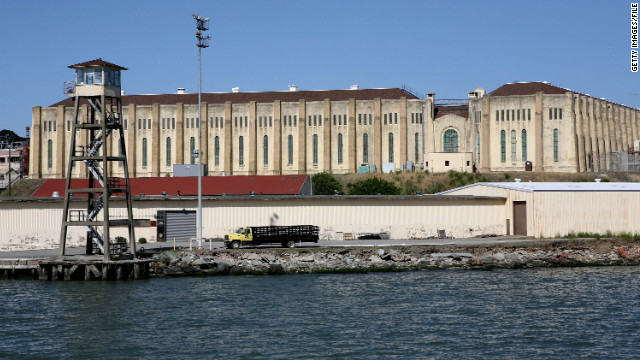
The growing elderly prison population causes problems for states, facilities, officers, and the prisoners themselves. (Image courtesy of CNN)
Human Rights Watch issued a 106-page report titled “Old Behind Bars: The Aging Prison Population in the United States.” Not only does the report outline the problems, but also calls for changes on harsh sentencing rules, mandatory minimum sentences, reduced opportunities for parole, and additional changes in prison facilities.
Not only does the aging prison population cause problems for the prisons themselves, but also for taxpayers and policymakers. According to CNN, older prisoners incur medical costs that are three to nine times higher than younger prisoners.
Jamie Fellner, a Human Rights Watch special adviser who wrote the report, sees extreme comparisons between prisons and geriatric facilities. “U.S. corrections officials now operate old age homes behind bars,” Fellner said, as reported by TIME.
Elderly prisoners face many issues within the prisons themselves. The facilities are not equipped for wheelchairs; the elderly cannot easily climb into top bunks or up sets of stairs. Some facilities struggle with whether they need grab bars and handicap toilets for elderly inmates.
A.T. Wall is the director of the Rhode Island Department of Corrections and president of the Association of State Correctional Administrators. According to TIME, Wall said “Dementia can set in, and an inmate who was formerly easy to manage becomes very difficult to manage.” He continued on to explain, “There are no easy solutions.”
While the report wants changes in many areas of sentencing, Human Rights Watch is not advocating for complete release. According to The New York Times, Fellner said, “Age should be a get-out-of-jail-free card, but when prisoners are so old and infirm that they are not a threat to public safety, they should be released under supervision.” Fellner goes on to argue that if changes are not made soon, “legislatures are going to have to pony up a lot more money to pay for proper care for them behind bars.”
Besides lengthy sentences and more life sentences, the other factor that contributes to the elderly inmate population is that the number of old people entering for the first time, according to The New York Times.
Although the lacking budget in most states hinders significant change, some states are really making an effort. For example: The Louisiana State Penitentiary has a hospice program where fellow prisoners provide care for their fellow dying inmates. They provide everything from changing diapers to saying prayers, according to TIME.
Other states like Washington and Montana are looking into opening assisted living facilities for elderly inmates. Each facility is small – capacities of 74 and 120 beds respectively – but will provide specialized treatment for the elderly inmates.
The biggest dilemma is that some of the inmates are still dangerous and some are not, so it is difficult to create a bright line rule for release.
In a nation where sentences seem to get longer and longer, the problem is only going to get worse. The report points out that almost 10% of state prisoners are serving a life sentence, according to CNN. Furthermore, another 11.2% have sentences longer than 20 years.
While facility changes are beginning, the report points out the fact that guards and other correctional officers are not trained properly to deal with the elderly. Linda Redford, director of the geriatric education center at the University of Kansas Medical Center has helped train prison staff and inmates to better deal with geriatric prisoners. Even the medical staff is not prepared to deal with it: “They’re used to having to deal with issues of younger prisoners, such as HIV and substance abuse,” Redford said, according to TIME.
States and prisons will continue to try to deal with caring for elderly patients. Often times they are disregarded due to their inmate status. The Human Rights Watch report will hopefully point out some of the common problems across the nation.
According to the Lawrence Journal World, Feller begs us to ask the question, “How are justice and public safety served by the continued incarceration of men and women whose bodies and minds have been whittled away by age?”
By Alexandra Halsey-Storch Impunity Watch Reporter, Europe
PARIS, France–Late Monday night the French Senate passed a new genocide law that could be signed by French President, Nicholas Sarkozy, in just two weeks; the new law elicited angry reactions from Turkey.
Franco-Turkish people protest the French Genocide Law near the French Senate in Paris. (Photo Curtesty of TVNZ).
The new legislation provides that, “those who have publicly denied or trivialized crimes of genocide” could be subject to a year in prison and/or a 45,000-euro fine (the equivalent of $58,00). Although the law does not mention specifically the “massacre of hundreds of thousands of ethnic Armenians by Ottoman Turks,” the seven-hour debate in the French senate on Monday focused primarily on the memory of the Armenian genocide.
As a nation, Turkey has, and continues to deny that the killing of 1.2 million ethnic Armenians was “genocide.” The United Nations has defined genocide as “the killing of, injuring of, or displacing of members of a national, ethnic, racial or religious group with the intent to destroy the group.” Turkey claims that the estimated 1.2 million deaths is a gross exaggeration and that “there was no attempt to wipe out the whole group,” instead arguing “that hundreds of thousands of Armenian Christians and Muslim Turks died from intercommunal violence, disease and general chaos.” Moreover, under Turkish law today, recognizing these particular deaths as genocide is an “insult to Turkish identity” that could result in a criminal conviction.
Notwithstanding Turkey’s strong and passionate denial, France, along with many other countries throughout the world, have in fact declared the 1915 killings “genocide.” In 2001, France enacted a law codifying this belief. As such, if the latest genocide law is signed by President Sarkozy, any person that denies the 1915 killings as being a genocide could face severe penalties.
While Armenia’s foreign minister, Edward Nalbandian, recognized Monday as a day which will be “written in gold,” and avowed France as “a genuine defender of universal human values,” the Turkish government, and supporters of the government, could not have been less enthusiastic. Prime Minister Recep Tayyip Erdogan expressed that the French legislation “represented evident discrimination, racism and massacre of free speech,” adding that “we have not lost our hope yet that this mistake can be corrected.” Various headlines found on Turkish newspapers screamed “Guillotine to History” and “Guillotine to Thought.” Yet another said, “He Massacred Democracy” next to a photo of Sarkozy.
Despite the Bill’s seemingly good intentions, even Amnesty International has agreed with Turkish sentiment. Nicola Duckworth, the Director of Europe and Central Asia at Amnesty Internationa,l claimed that the legislation “would violate freedom of expression by making it a criminal offense to publicly question events termed as ‘genocide’ under French law,” a principal that has been repeatedly upheld by the European Court of Human Rights. She went on to explain that “this bill…would have a chilling effect on public debate and contravene France’s international obligations to uphold freedom of expression…People should be free to express their opinions on this issue—in France, Turkey and elsewhere.” In short, should this bill be enacted, it will be clear that “French authorities are failing to comply with their international human rights obligations,” she said.
In addition to violating international law, the direct conflict between France’s new law and Turkish law, not to mention Turkish nationalism, could cause “permanent harm to Franco-Turkish relations.” When the French lower house of parliament passed the genocide law in December, Turkey withdrew Tahsin Burcuoglu, the country’s ambassador, from Paris and suspended military ties with France. Additionally, some Turkish politicians have warned of further sanctions and the permanent removal of the ambassador while the Turkish President, Abdullah Gul wasted no time declaring that the “bilateral relations are at a different level from now on.” The Nationalist Movement Party expressed a desire to terminate the Turkish and French friendship parliamentary committee.