By Carolyn Abdenour Impunity Watch Reporter, Middle East
DAMASCUS, Syria – On Friday, 20 January, the United States’ (“US”) State Department confirmed suspicions that Syrian officials arrested Abdelkader Chaar, a 22 year old U.S. citizen, from his home in Aleppo on 8 January. Sam Chaar, Abdelkader’s uncle, stated Syrian officials have not disclosed why they arrested Chaar or identified the charges against his nephew.
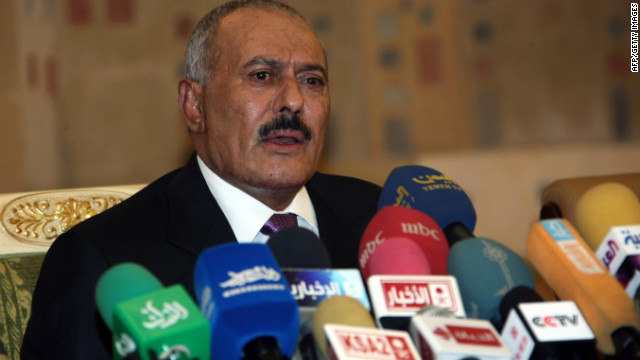
22 year old Abdelkader Chaar arrested in Syria. (Photo Courtesy of CNN)
Born in Syracuse, New York in 1989, the Chaar family moved to Aleppo, Syria when he was six years old. Chaar currently attends medical school at Aleppo University.Chaar’s father has contacted the US Embassy in Damascus and New York Senator Charles Schumer.
The State Department has received notification of Mr. Chaar’s arrest. Victoria Nuland, spokesperson for the US State Department, said “We’ve been in contact with Syrian authorities and have requested confirmation of the arrest and requested consular access.” Since the Chaar family did not sign a US Privacy Act waiver, Ms. Nuland did not provide more details about Chaar’s status.
Senator Schumer’s spokesperson Matt House added, “We have had multiple contacts with the State Department and are doing everything we can to find out the details of Mr. Chaar’s situation…We will continue to work with American and Syrian officials to assist in any way we can.”Syrian officials confirmed Chaar’s arrest in conjunction with Friday’s protests demanding the release of political detainees. Opposition activist group Local Coordination Committees of Syria reported at least ten people died during Friday’s protests.
Furthermore, the Arab League has uged President Bashar al-Assad to free political detainees, remove tanks and weapons from cities, cease violence against citizens, and permit outsiders and international journalists to move freely throughout the country.
Syrians have held anti-government protests throughout the country since mid-March. The United Nation (“UN”) stated over 5,000 people have died during the ten months of protests, but opposition groups in Syria estimate the clashes have led to over 6,000 deaths.
The United States has warned Americans to avoid travel in Syria and encouraged those traveling in the country to leave immediately before transport options evaporate.
Sam Chaar said his nephew plans to practice medicine in the US after he completes a six week rotation at the Cleveland Clinic that begins on February 11.
By Carolyn Abdenour Impunity Watch Reporter, Middle East
RABAT, Morocco – On Thursday, 19 January, five unemployed men set themselves on fire to protest a lack of jobs in Morocco for university graduates. The men are members of the Morocco’s “unemployed graduates” movement that demonstrates to highlight the lack of economic progress in the country. The police often violently dissolve the demonstrations organized throughout the country by this loose collection of millions of unemployed university graduates.
A protester sits in the location where a man set himself on fire. (Photo Courtesy of The Sydney Morning Herald)
Three men received hospital treatment, and the other two men’s clothing singed. Two men with serious burns are receiving medical treatment at the serious burns unit in Casablanca. Thirty-year-old Mohammed Zeitoun is not likely to survive his injuries, and Moahammed Haouass, a protestor in his early twenties, is not critically injured.
Although the national unemployment rate is 9.1 percent, the unemployment rate for university graduates is 16 percent. When the Islamist-led government won the election in November, it promised the creation of 200,000 jobs per year from public and private investment. On Thursday, over 1,000 unemployed graduates picketed the parliament when the government unveiled its new economic plan.
As a part of the movement’s protest, approximately 160 people occupied a Ministry of Higher Education’s administrative building in Rabat during the past two weeks. The protesters received food from supporters until the police prevent the food delivery two days ago.
Youssef al-Rissouni from the Moroccan Association for Human Rights reported, “The authorities prevented them from receiving food and water, so five people went outside to get food and threatened to set themselves on fire if they were stopped.”
The men covered themselves with a liquid, began collecting the bread supporters threw towards the building over the police’s heads, and threatened to set themselves on fire if the police stopped them. Two men burst into flames when the riot police with truncheons moved to stop them. Supporters surrounded the men running wildly and smothered the flames.
Protesters began utilizing the once rare self-immolation tactic after a Tunisian vegetable seller set himself on fire to protest police harassment in December 2010. Protesters in Tunisia continue to use this tactic. Four protesters set themselves on fire, including a father of three who died from burns.
Casablanca-based activist Sayed Bouchaini said “The fact is that we are struggling to make ends meet, get jobs and have a good life…These men are beginning the movement for change and maybe it will get others to the street.”
By Alexandra Halsey-Storch Impunity Watch Reporter, Europe
LONDON, England–On Wednesday, January 18, Justice Secretary Ken Clarke announced that England would discontinue an investigation, initiated by Prime Minister David Cameron in 2010, to look into the country’s involvement with the United States’s extremely controversial extradition and rendition program. The decision to cease Cameron’s “Detainee Inquiry” came shortly after the statement announcing that the Metropolitan Police and Crown Prosecution Service would instead “launch a criminal investigation into claims that Britain’s domestic intelligence service, M15, and overseas spy agency, M16, were complacent in the illegal rendition of terror suspects to Libya. These “fresh allegations” were made by Abdel Hakim Belhadj, a Libyan Islamist and his attorneys at Leigh Day & Co.
Abdel Hakim Belhadj, commander of the former rebel forces in Libya, has brough torture charges against the British Government
Cameron’s Detainee Inquiry was to be led by a retired appeals court judge, Peter Gibson, who was appointed to investigate whether British agents had collaborated with foreign security services, namely the Central Intelligence Agency (“CIA”), in a supposed effort to obtain information from suspected terrorists being held in Guantanamo Bay, Cuba and in so doing engaged in abusive and torturous tactics. Additionally, the inquiry was to investigate allegations made by several British citizens of Pakistani descent who claimed that “they were abused in custody” while in Pakistan “with complicity from British officials.”
Scotland Yard has already investigated the Guantanamo Bay detainee’s cases and although Peter Gibson “regretted the inquiry would not be completed” he “agreed it was not practical to continue for an indefinite period.” Further, he hopes that the investigations that have been done will not be for naught and anticipates that the information that has already been collected “will materially assist the future inquiry that the government intends to establish.”
On the other hand, however, according to Belhadj’s attorneys, the Detainee Inquiry “was ill-conceived from the beginning, the government reserved the right for the final say on what material would be published and did not allow for cross-examination or any other way of testing the evidence from members of the UK security services, which was to be given secretly. Additionally, only “as much of the report as possible” would have been accessibly to the public, rather than the entire investigation.
Human Rights activists have taken a similar stance. Clare Algar, an executive director of Reprieve, stated that the inquiry, “simply did not have the power or independence to get to the truth.” She went on to say that the organization “looks forward to working with the government to ensure that an inquiry with real clout and independence is established.”
Amnesty International’s Europe and Central Asia director, Nicola Duckworth, agreed with Algar’s sentiments, saying that the inquiry was never fit for purpose, and fell short of the UK’s international human rights obligations to fully and independently investigation allegations of UK involvement in torture and ill-treatment.” Duckworth went on to iterate that Amnesty International “hopes that the government seizes the opportunity presented by the mounting allegations of UK involvement , the ongoing criminal investigations into specific cases, and the report of the Detainee Inquiry’s work to date, to establish a human-rights- compliant inquiry that ensures real accountability.”
According to the BBC, the new police investigation came about as a result of claims made by Abdel Hakim Belhadj, a commander of the former rebel forces in Libya and Sami-al-Saadi. “The allegations raised in the two specific cases…are so serious that it is in the public interest for them to be investigated now rather than at the conclusion of the Detainee Inquiry.” It is likely that the British government will also need the police investigation to build its defense in the legal action which Belhadj and his attorneys have initiated against the government.
Belhadj says that he was tortured in Libya after being arrested in 2004 while in Bangkok, Thailand. The arrest allegedly occurred during a CIA and M16 operation which was conducted to help Muammar Gaddafi “round up his enemies.” Belhadj says he tortured for six year. Belhadj was not allowed to bathe and was “subjected to protracted investigations.” He also says that his pregnant wife was held in Libya for four months and released only just before she gave birth. Belhadj claims that he told British intelligence services about the torture when they visited him in Libya; they did nothing to prevent future harm.
“Those who contributed to this, those who have harmed us, and the people who elected them—they committed this crime while pretending to protect human rights—we want to see them brought to justice,” commented Belhadj.
The allegations have been consistently denied by both “current and former heads of M15 and M16 and British authorities say they would never use, or encourage others to use, torture to gain information” despite years of accusations suggesting that they did in fact assist in the “ill treatment of detainees, often at the hands of U.S. authorities after the September 11 attacks on the United States.”
In yet a similar case, Sami-al-Saadi has made like allegations, claiming “British collusion in rendition and is demanding damages for the torture he suffered in one of Gaddafi’s prisons.”
By Brittney Hodnik Impunity Watch Reporter, Oceania
CANBERRA, Australia – For the first time in 224 years, Australia is voting on a Constitutional amendment that will recognize Aborigines as the first people of the country. Similar to Native Americans, British settlers displaced the Aborigines and they have suffered racism and discrimination ever since. The new changes will finally bring an end to all state-sponsored racism.
Aborigines are among the poorest, most disadvantaged Australian citizens. (Image courtesy of News One)
After the Aborigines were dislocated from their land, their lifestyle, health, and equality decreased dramatically. According to News One, Aborigines are one of the poorest, unhealthiest, and most-disadvantaged people with an average lifespan of 17 years shorter than other Australians. Furthermore, they have endured racism and discrimination from the beginning.
Originally, different sections of Australia’s constitution actually promoted discrimination against Aboriginal people. As reported by The Guardian, Section 25 recognized that states could disqualify people (i.e. Aborigines) from voting. Section 51 allowed federal parliament to make laws based solely upon race.
The Guardian reports that these sections were included in the constitution in 1901 to prevent certain races from living in primarily white neighborhoods.
According to News One, a panel of 19 people, made up of indigenous leaders, politicos, entrepreneurs, and legal eagles will revamp a document that still contains racist Aboriginal references. The report was handed to Prime Minister, Julia Gillard who is strongly supporting the changes.
“This is a time when truth and respect for the Aboriginal and Torres Islander peoples needs to be achieved . . . through the recognition in our constitution. Strong leadership and our national interest are critical for our nation to go forward,” said Professor Patrick Dodson, an Aborigine who headed the expert panel, according to The Telegraph.
Aborigines did not even receive “citizen standing” until 1967 in Australia, according to the New Zealand Herald. That was the first time that Aboriginal people were included in the census, and that referendum passed with 90% support. However, since then, only 8 out of 44 proposed amendments relating to the advancement of Aborigines have succeeded.
In Australia, in order for a Constitutional amendment to pass, there must first be federal legislation followed by a referendum that must be supported by a majority of voters in a majority of states, according to The New Zealand Herald.
The new legislation basically calls for respect for Aboriginal culture and promotion and historical recognition of language and heritage.
The country has progressed slowly in supporting the Aboriginal people. Other historical movements include the 1992 decision that gave native title to Aborigines over traditional lands. Then, in 2008, former Labor Prime Minister Kevin Rudd finally delivered an official apology on behalf of the nation, according to The New Zealand Herald.
Prime Minister Gillard says “time is right to say yes to an understanding of our past, to say yes to constitutional change, and to say yes to a future more united and more reconciled than we have ever been before,” according to The Telegraph.
Gillard would like to hold the referendum before the next election (which will be held in 2013). However, she admitted, bipartisan support will be crucial to its success, and that is not always easy to come by, reported by The Telegraph.
Opposition leader, Tony Abbott said that he would support any measure that did not amount to a Bill of Rights, reported The Telegraph. Abbott is quoted as saying that he hoped the referendum would serve as “a unifying moment for the nation.”
Furthermore, The Telegraph reports, Abbott said, “We have some reservations about anything that might turn out to be a one-clause bill of rights. But we accept that millions of Australians hopes and dreams are resting on constitutional recognition of indigenous people.”
Human Rights Commission President Catherine Branson believes that the Australian government needs to focus on building a consensus between the Aboriginal people and Torres Strait Islander peoples, according to The New Zealand Herald. Also, the report said that a major public education campaign is necessary to ensure voters knew what they were voting on and what exactly they were approving.
Overall, the 300 page report said that some kind of recognition should be given to the Aboriginal peoples as the first inhabitants of Australia. They should have some recognition within the body of the constitution. Leaders hope that the referendum will be passed before elections in 2013.
PARIS, France – A group of alleged victims from Belarus have filed a complaint in a Paris court against Belarusian Interior Minister Anatoly Kuleshov accusing him of torture. The victims claim that the torture took place just after Alyaksandr Lukashenka’s disputed reelection in 2010. The suit was filed on Wednesday, January 18. Kuleshov is currently attending an Interpol meeting in the French city of Lyon; his visit is scheduled to end on January 20.
Belarusian Interior Minister Anatoli Kulashov, who faces allegation of torture. (Photo courtesy of Telegraf.by)
Victims’ lawyer William Bourdon called the conduct of which Kuleshov, who is blacklisted in the European Union for his role in the government crackdown on political opposition, is accused of “torture and cruel and degrading treatment.” Bourdon has called for an immediate investigation into Kuleshov’s involvement in the alleged torture following the 2010 elections.
Following the December 2010 elections in Belarus, which Lukashenka won in dubious fashion, Belarus witnessed a rise of political opposition followed by a crackdown by Lukashenka’s regime. Nearly 50,000 Belarusians took to the streets after the election, in which each of Lukashenka’s opponents was awarded less than three percent of the vote. The complaint filed in France pinpoints Kuleshov as a key player in the orchestration of the torture of political opponents.
The complaint alleges “proof of the crimes under universal jurisdiction, giving the basis to legally pursue Lukashenko and his associates, particularly, for torture and hostage-taking.” French officials have received no reply from Kuleshov or any Belarusian authorities in response to the complaint.
Bourdon cites United Nations regulations as justification for the complaint, stating “[t]he United Nations Convention against Torture, adopted on December 10, 1984, the so-called New York convention, obliges the states which had ratified it, including France, to arrest persons suspected in torture, when they stay at hair territory. It is exactly the situation of the minister.”
The strength of the evidence, according to Bourdon, is strong enough to warrant legal action by France. The documentation “leaves no doubt that the Interior Minister is the main person responsible for organizing torture against opponents in Belarus.”
Bourdon took the case after British law firm McCue and Partners reached out to him about a possible case against Kuleshov. McCue and Partners is known for their work in human rights law and previously posted guidelines for Europeans to initiate prosecution against Lukashenka and his ministers.
Matthew Jury, a partner at McCue, said, “If Kuleshov is in France, under the Torture Convention, France should be obliged to take Kuleshov into custody for his part in the torture and hostage-taking of innocent Belarusians. It will only diminish France’s standing and moral authority if it fails to take action. If it does not, then we call on France’s civil society and legal community to take up the responsibility and to enforce the law.”
Pro-Belarusian liberty groups criticized the French government for allowing Kuleshov to freely enter French territory. Natalia Kaliada of Free Belarus Now said, “The French Republic is founded on the principles of Liberty, Equality, and Brotherhood; today those principles seem very far away. By inviting an agent of the Lukashenko regime, who personally orchestrated mass violent arrests of peaceful demonstrators, over its borders, France has betrayed all those fighting for democracy and human rights in Belarus. There are fifteen political prisoners who remain behind bars in my country in the heart of Europe. These men along with any others were arrested and tortured while in KGB custody in December last year. Today INTERPOL freely welcomes emissaries of Europe’s last dictatorship and condemns those who stood peacefully against them as criminals.”
Bourdon himself expressed regret for possible failure of the French court system in this case. “Struggle with impunity is a great problem for the international community. The Justice becomes global. Some countries do not obey it, so access to the French judicial system, considering that France had recognized the New York Convention, gives victims a means to get access to justice, and a hope that persons responsible for crimes would be brought to justice. It requires political will. Technical means should be used for capturing these suspects. I deeply regret about hesitation of Paris Court, which does not react in a speed required by the situation.”
According to the French embassy, the French visa had been issued to the Belarusian Minister, banned in the European Union, for legitimate reasons.