Brazilian Indigenous Leader Murdered In Front of Tribe

by Emilee Gaebler
Impunity Watch Reporter, South America 

BRÁSILIA, Brazil – This past Friday, an indigenous leader of the Guarani tribe was shot to death in front of his people.  Nisio Gomes was the 59 year old leader of an indigenous tribe that had recently returned to their ancestral land amid controversy.

Nisio Gomes the leader of the Guarani tribe. (Photo Courtesy of BBC News)

Witnesses report that 40 gunmen assaulted the tribe early Friday morning in the southwestern region of Mato Grosso do Sul.  Gomes was shot in the head, arms, chest and legs and then his body was dragged away to a location that is still undetermined.  Gomes’ son was shot with rubber bullets when he tried to intervene and stop the attackers.  It is reported by Al Jazeera news agency that three other Guarani tribal members were also taken in the attack.

Police believe at this time that the gunmen were hired by local ranchers; attempting to remove the presence of the Guarani.  The tribe had been evicted earlier due to a dispute with the cattle ranchers regarding land ownership.  The tribe had recently returned to the area, in early November, setting up camp near the town of Amambai.

“Everything indicates that ranchers, who want the land to raise cattle and plant sugarcane, hired the gunmen to get rid of Gomes, who was an outspoken defender of Indian rights,” said Renato Santana the spokesman for the Indian Missionary Council.

The identities of the gunmen have yet to be released.  The state-run newspaper, Agencia Brasil, reports that identification of the shooters will be near impossible as they covered their faces.

In the Mato Grosso do Sul region, roughly 50,000 indigenous people live in extreme poverty and are constantly fighting ranchers for rights to the land.  The region is coveted by the ranchers because it is prime cattle raising land.  On the other side of the battle are the indigenous Guarani, who are attempting to defend it as tribal lands guaranteed to them by the Brazilian constitution.

Human rights activists have arrived to conduct investigations into what is being termed by the Brazilian government as a systematic campaign of violence towards the Guarani people.  Officials report that in the past eight years over 250 Guarani people have been killed in the Mato Grosso do Sul state alone.

“The people will stay in the camp; we will all die here together. We are not going to leave our ancestral land,” was the statement of one Guarani to the Roman Catholic Indigenous Missionary Council.


For more information, please see;

Aljazeera – Brazilian Indigenous Leader Killed – 20 November 2011

BBC – Brazil Indigenous Guarani Leader Nisio Gomes Killed – 18 November 2011

CNN – Brazilian Indigenous Chief Executed, Dragged by Gunmen – 18 November 2011

The New York Times – Brazil: Chief Killed in Land Dispute – 18 November 2011


Raul Castro Enacts Expansive Property Legislation in Cuba

By Brittney Hodnik
Impunity Watch Reporter, North America

HAVANA, Cuba – This past week, Raul Castro enacted legislation that allows residents to buy and sell property for the first time in nearly 50 years.  However, do not assume Castro’s new policy is to create a better life for his people.  The Cuban government wants to rejuvenate its economic system, not promote the basic property rights of the citizens.

Cubans suffer from serious overcrowding due to a housing shortage; the new legislation is a welcome change. (Image courtesy of PolicyMic.com)

Cubans have lived under harsh oppression for half a century.  Historically, according to BBC News, parents were able to pass property on to their children, but buying and selling property was not allowed.  The new law, which took effect on November 10, allows Cubans to own a maximum of two properties and to freely buy and sell properties.  Additionally, back in October, the Cuban government passed legislation that allowed Cubans to purchase and sell vehicles, although it is still heavily regulated.

Previously, Cubans lived in overcrowded apartment buildings due to a severe housing shortage, reported BBC News.  Cubans could not legally buy or sell properties, but could merely swap them with each other through very informal processes, according to Salon.com.

While the Cuban government is seeking to overcome economic depression, many are still dismayed by the fact that there are severe restrictions on movement and the lack of a democratic process, specifically a lack of political opponents.

The New York Times calls this new legislation “a major break from decades of socialist housing.”  According to Salon.com, the Cuban citizens appreciate the change, even if it is not for human rights reasons.

Many people are skeptical of Castro’s economic policies over the last year.  His allowance of private enterprise is welcomed, but it has not generated any results as of yet, at least economically.  Castro reiterated the fact that the new law is not designed to promote any kind of accession to wealth, according to The Miami Herald.

The new law allows families to relocate to a bigger or smaller property as is necessary.  However, it is still difficult to manage.  The Miami Herald reports that there are still so many restrictions, and such a housing shortage, that it will be difficult for people to find the place they need.  Cubans are skeptical because corruption is obviously still rampant, and the residents foresee many title issues in the future.

Many hope that this is just the first step of many in promoting human rights and better treatment of Cuban citizens.

For more information, please visit:

Associated Press — Amid Economic Reforms, Cuba Goes After Corruption — 20 Nov. 2011

PolicyMic.com – Cuba Needs to Focus on Human Rights More than Economic Freedoms — 20 Nov. 2011

The Miami Herald — Cuba’s Housing Reform Draws Praise, Doubts — 20 Nov. 2011

Salon.com — Cuba’s Private Property Revolution — 19 Nov. 2011

BBC News — Cuba Passes  Law Allowing Private Home Sales — 3 Nov. 2011

Malaysia Detains Thirteen Under Internal Security Act Despite Promise of Reform

By: Jessica Ties
Impunity Watch Reporter, Asia

KUALA LUMPUR, Malaysia – The Malaysian government has used the Internal Security Act to detain thirteen individuals indefinitely and without trial despite an announcement in September that the ISA would be repealed.

Thirteen individuals were detained under the ISA despite promises by the Malaysian prime minister, pictured above, that the law would be repealed (Photo Courtesy Malaysian Insider).

According to the inspector-general of police all thirteen of those detained this week were arrested under Section 73(a) of the act which authorizes the police to make a warrant-less arrest of anyone whom they suspect might “act in any manner prejudicial to the security of Malaysia.”

Although the identities of those  detained have not been officially released, there are reports that the detainees include businessmen and two teachers and that six of those detained are foreign nationals who are slated to be deported to their country of origin.

The reason for the detentions, according to the inspector-general, is that intelligence and police investigations have uncovered information that those detained were attempting to revive militant activities but did not elaborate on which militant organization they belonged to. Authorities also allege that the suspects were planning to conduct paramilitary training on the coast of Malaysia before going to the southern Philippines and were using Tawau, a Malaysian coastal city, as their transit point for importing weapons from the Philippines.

Asia director of Amnesty International, Sam Zarifi, has criticized the Malaysian government as making “…a mockery of its plan to scrap the Internal Security Act by using it to detain people once again.” Zarifi has called on the Malaysian government to either charge the thirteen detainees or release them.

Voice of the Malaysian People, a rights group, has described the detentions as a heinous act and found it “…regrettable because it contradicts with the announcement of the prime minister of Malaysia” referring to the September announcement of the act’s repeal.

Over the past decade, the law has been used to detain over 100 militant suspects, political opponents and government critics without trial.

The Internal Security Act has been criticized as draconian and contrary to international human rights standards calling for a fair trial, the right to due process and freedom from arbitrary detention.

Human Rights Watch has been applying pressure to the Malaysian government to fulfill their promise to repeal the Internal Security Act. Even after the promise to repeal the act was made, however, the senior minister in charge of legal affairs explained that there was no schedule for action to officially rescind the Internal Security Act but that it might not happen until after the March 2012 legislative session.


For more information, please see:

Borneo Post – Six Foreigners Held for Militant Activity to be Deported – 19 November 2011

The Star – Thirteen Detained in Tawau are Terrorists, Says Hishammuddin – 19 November 2011

Amnesty International – Malaysia: New ISA Detentions Show U-Turn on Reform Promises – 18 November 2011

Arab News – Malaysia Arrests Thirteen Suspected of Militant Activity – 17 November 2011

Channel News Asia – Malaysia Detains Thirteen Over Borneo Militant Group – 17 November 2011

Human Rights Watch – Malaysia: Fulfill Promise to Repeal Abusive Laws – 23 September 2011

Russian Federation Violates International Law in Investigation of Smolensk Crash

By Alexandra Halsey-Storch
Impunity Watch Reporter, Europe

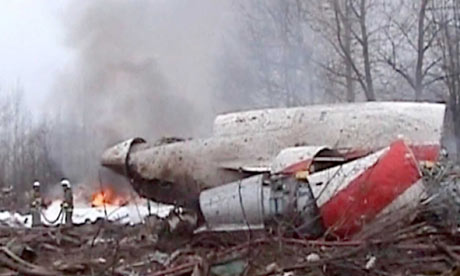
WARSAW, Poland – A November 11, 2011 Status Report was released by a multidisciplinary team of experts which presents evidence that demonstrates Russia’s violation of international law during the investigation of the April 2010 aircraft crash which killed the Polish President, First Lady and many other Polish officials.

The PFL 101 Governmental Plane that carried the Polish President and his wife which crashed in April 2010 (Courtesy of The Guardian)

In April 2010 a PFL 101 Governmental Plane carried the Polish President, First Lady, and 95 others from Poland to Russia where it crashed at Smolensk military airfield. The aircraft was on its way to commemorate the Massacre of Katyn where 20,000 Polish officers were murdered under the Stalin regime.  According to the BBC, it was “the nation’s worst disaster since World War Two.”

Because the crash occurred in Russia, the Russians spearheaded the investigation into the cause of the accident yet seemingly wanted to involve and include Poland in the inquiry. Pursuant to the Chicago Convention, the Republic of Poland and the Russian Federation entered into an agreement which provided that the Russian Federation, as the State of Occurrence, would be in charge of and conduct the investigation, while the Republic of Poland would appoint an Accredited Representative to participate in the investigation.  In other words, the two countries agreed to work together and collaborate in the investigation of the aircraft crash.

Unfortunately, despite the willingness of both countries to enter the agreement, the agreement was fundamentally violated by the Russian Federation thereby leaving the Republic of Poland unable to fulfill its obligations as proscribed by the Chicago Convention. The Polish Accredited Representative “filed numerous motions and requests with respects to the investigation” in accordance with the Chicago Convention; yet, out of 222 inquiries that Poland filed only 34 were answered. According to the Status Report, “the Russian Federation ignored or refused to acknowledge 169 inquiries, and partially answered 19 inquiries.”

The laundry list of information that the Russian Federation failed to provide is extensively long. The Status Report outlines the denied information in great detail.  In short, the Federation failed to provide vital information regarding “the assessment of the minimum airdrome conditions at the Smolensk airport, a request for video recordings of radar display readings, a request for photographic documentation from the crash scene, a request for data of the fly-around performed soon after the crash, and requests for inspection of communication and navigation aids.” Furthermore, the Russian Federation failed to provide “documentation of forensic examinations of the aircraft crew” or the report of the inspection of the crash site. The Polish side has not received information regarding any rescue actions at the scene of the crash nor any “transcripts of communication or situational plans, reports of participants of the rescue and fire- fighting teams, photographic documentation, including film footage, which is essential for proper assessment of the security level of the airfield. Failing to provide this critical information inhibited Poland from reaching its own conclusions regarding the ultimate cause of the crash.

Though Russia has withheld this critical information from Poland, the Russian investigation concluded in January and determined that the cause of the crash was the “pilot’s decision to attempt to land despite extremely poor visibility caused by dense fog at the airfield.” Not all agree that this conclusion is likely to be entirely comprehensive or even true. The late Polish President’s brother, Jasoslaw Kaczynski, believes that the Russians “bear direct responsibility for the crash.” Furthermore, an opinion pole conducted last week shows that 78% of those who responded believe that “the circumstances of the crash have not been fully cleared up.”  

The Republic of Poland, “as the State having suffered fatalities of its President, First Lady, nine generals and the top leadership” deserves access to the truth. The Country has a right to the “relevant factual information” of the crash. The Chicago Convention provides that the “State of Occurrence shall use every means to facilitate the investigation…and…establishes the responsibility of the state conducting the investigation.” Having signed the agreement pursuant to the Chicago Convention, the Federation of Russian has a legal duty and responsibility to comply with international law. The Federation must properly investigate the circumstances surrounding the crash; it must allow access to not just some, but all of the relevant evidence surrounding the tragic plane crash and allow Poland to reach its own conclusions.

For more information please visit:

The Guardian – Smolensk Air Crash–A Year On and the Scars are Yet to Heal – 7 April 2011

BBC – Division Mars Poland’s Smolensk Plane Crash Anniversary – 9 April 2011

Egyptians Unify to Protest Proposed Constitutional Changes by the Supreme Council of Armed Forces

By Carolyn Abdenour
Impunity Watch Reporter, Middle East

CAIRO, Egypt – On Friday, 18 November, tens of thousands of Islamists and young activists gathered at Tahrir Square to protest Egypt’s ruling Supreme Council of Armed Forces’ (SCAF) attempt to grant themselves special powers for a future elected government.  The SCAF has ruled the country since Mubarak’s fall in February, but many Egyptians fear the military wants to ingrain its power after the elections that take place in ten days.

Thousands Gather to Protest SCAF. (Photo Courtesy of Seattle Post-Intelligencer)

The rally, called “Friday of One Demand,” rested on the principle that the military should end their rule with a swift transfer of power to the elected president by April 2012.  This demonstration has been the largest since the 18-day revolt that spurred Mubarak’s fall.

The demonstrators in Cairo and Alexandria demanded the SCAF remove their proposed constitutional change to declare the military the guardian of “constitutional legitimacy”.  Critics suggest this wording implies the military could strongly influence major policies once Egypt elects a new president.  The SCAF also introduced constitutional clauses to limit civilian oversight of the military.

The SCAF promised to end its rule that began when Mubarak fell on 11 February after a six-month transitional period.  During their tenure, the SCAF has maintained a security vacuum, tried civilians in military court, and ignored the people’s demands from the January 25 Revolution while the national economy deteriorated.

Although both liberals and conservatives are vying for votes, both sides stand against the military.  The election victors will draft the new constitution to define post-revolutionary Egypt.

The demonstration population includes conservative Islamists from the Muslim Brotherhood’s Freedom and Justice party, their hardline Islamic Salafi rivals from several political parties, and young protesters who relied on social networking to lead the previous protests.

Social studies teacher Nahed Skukri commented that the diversity of ages, classes, and allegiances reminded her of Egyptian unity against Mubarak.  She said, “We are unified against people who try to take advantage of use. . . .  The [SCAF] is taking advantage of us now, and now we are regrouping.  I can see that we are one today.”

The Muslim Brotherhood, Egypt’s most organized political group expected to fare well in the elections, has dodged confrontation with the SCAF.  However, the Brotherhood warned the SCAF if it does not withdrawal its proposed constitutional powers, the protests would increase.

28-year-old Brotherhood member Hani Hegazi commented, “The army as no role in ruling people. . . .  Its only job is to protect the country.  We want civilian rule chosen through democracy.”

For more information, please see:

Ahram Online – Islamists Dominate Egypt’s Tahrir Square’s Dense Friday Protest – 18 Nov 2011

BBC – Egypt: Thousands Protest in Cairo Against Military – 18 Nov 2011

Seattle Post-Intelligencer – Egypt’s Islamists Confront Military, Vie For Votes – 18 Nov 2011

The Washington Post – In Egypt, Crowds Urge End to Military Rule – 18 Nov 2011