Uruguay farmers hold mass protest over excessive costs

By: Emily Green
Impunity Watch Reporter, South America

DURAZNO, Uruguay – Tens of thousands of farmers gathered in Uruguay to protest the government’s excessive spending. Their main demand was tax cuts for the agricultural sector.

Uruguayan farmers gather in protest. Image Courtesy of AFP.

Uruguay is one of the world’s largest cattle exporters and agriculture is key to its economy. Protestors claim that the government is spending excessively for itself and then handing the cost down to farmers. They reference spending on things such as office rents and the government’s fleet of vehicles, and ask that the Uruguayan government review its fiscal and government companies’ policies. The goal is to decrease the costs of fuel and power, as well as municipal level taxes on land.

The demonstration occurred in the city of Durazno under a massive display of unity. Farmers and their families waved Uruguayan flags as they gathered in tractors, vans, trucks, harvesters, and on horseback. This mass gathering is the first major protest the Frente Amplio (Broad Front) coalition government has ever experienced. The coalition came to power almost thirteen years ago.

Federico Hozman, the organizer of the protest, explained, “We’re sick of our voices being ignored, but when it comes to collecting taxes, we’re not ignored.” The movement began with several farmers who were disappointed by President Vazquez’s decision to repeatedly postpone their meeting request. Soon after, the protest expanded to other groupings and lobbies such as industry, exporters, manufacturers, and tourism. It became known as the “One Uruguay” movement.

In response to the massive demonstration, the government media tried to downplay the event by saying that attendance was lacking. Even radical groups tried to label it as a political play by the opposition. Nevertheless, the farmers have strong numbers to argue. The costs of the Uruguayan government have increased from $3.3 billion in 2004 to $17 billion today. The payroll has added a huge amount of new staff and green energy promises have fallen through. Additionally, money exchange rate is an issue. A recent report from the IMF announced that the US dollar in Uruguay was undervalued and should be at least 15% more expensive.

The protest ended peacefully as the farmers were promised the opportunity to present their proposals to President Vazquez.  They handed over a list from independent farmers and are told they will be brought into talks with leaders of the country’s agricultural associations. The list includes fixing conditions of highways and roads, cutting gas costs, correcting currency issues, and dropping electricity costs. The protestors hope that these changes will limit competition conditions for the farming industry.

For more information, please see:

Herald Tribune – Uruguay President to Study Demands of Small Farmers – 27 January 2018

Kaplan Herald – Uruguay farmers maintain mass protest over excessive prices – 27 January 2018

MercoPress – “Enough is enough,” thousands of Uruguayan farmers tell the government – 24 January 2018

BBC News – Uruguay farmers hold mass protest over high costs – 24 January 2018

Pope defends Peru’s Amazon and its indigenous groups

By: Emily Green
Impunity Watch Reporter, South America

PUERTO MALDONADO, Peru – Pope Francis traveled to a distant corner of the Amazon on Friday, January 19. In Peru’s jungle, he met with indigenous people to discuss the deforestation and illegal mining that wreak havoc on their livelihood.

Pope Francis delivers speech to representatives of indigenous groups. Image Courtesy of Vincenzo Pinto.

The Pope arrived at his first official event in Puerto Maldonado aboard his popemobile. He was greeted by thousands of indigenous people decked out in traditional dress. Men in loincloths and colorful costumes surrounded him and chanted, “Francis, Francis, you are now Amazonian.”

Puerto Maldonado is the capital of one of the Peruvian Amazon’s most threatened regions, Madre de Dios. Deforestation has escalated to the point that scientists at the Mapping of the Andean Amazon consider it a “deforestation crisis.” Calculations have tracked an increasing trend of annual forest loss since 2001 that peaked in 2017. In 2017 alone, 208 square kilometers (80 square miles) of forest were lost. Gold miners and farmers are taking down trees with little regard to the effects of their operations. Logging and mining devastates the forest and contaminates the air, water, and soil with toxins. As a result, indigenous people who rely on those resources are suffering.

Pope Francis arrived with a plan to highlight environmental issues and human rights violations. During a 20-minute speech, the pontiff said, “We have to break with the historical paradigm that views the Amazon as an inexhaustible source of supplies for other countries, without concern for its inhabitants. Defense of the Earth has no other purpose than the defense of life.” He regarded the Amazon as a source of biological riches as well as a “culture reserve.” He recognized that it was under threat by new forms of colonialism, and suggested that limits be set to help preserve the habitat from massive destruction.

The visit was meant to build on his treatise on the environment, the 2015 Laudato Si encyclical, which is a plan for a council of Amazon Basin bishops. The message guides the clergy and their followers on key environmental issues. The crowd applauded this message, but some express concern that it does not go far enough to protect the rights of inhabitants. The pope did not specifically reference some of the controversial issues faced by indigenous peoples such as territorial demarcation, property titles and consent, and the right to veto extractive or infrastructure projects.

However, the pope did dedicate part of his address to people living in isolation. Many leaders and representatives of indigenous groups were in attendance to present their case to the pope. Pope Francis said that they were the “most vulnerable of the vulnerable” and should not be considered a “kind of museum of a bygone way of life.”  He did not go after illegal mining directly, but did not completely avoid it. He said, “There exists another devastating assault on life linked to this environmental contamination favored by illegal mining. I am speaking of human trafficking: slave labor and sexual abuse.”

For more information, please see:

Washington Post – Pope brings environmental crusade to Peru’s Amazon, citing ‘defense of the earth’ – 19 January 2018

Los Angeles Times – Pope Francis, in Peru, speaks of threats to native Amazonian people and the rainforest – 19 January 2018

Straits Times – Pope to meet indigenous people in Peruvian Amazon – 19 January 2018

Mongabay – Pope set to visit site of deforestation, indigenous struggle in Peru – 19 January 2018

Voice of America – Pope Heads to Chile, Peru to Focus on Indigenous People – 14 January 2018

Afghan Military Units Accused of Child Rape Receive U.S. Aid

By: Katherine Hewitt
Impunity Watch Reporter, Asia

KABUL, AfghanistanIn a report released on January 18, 2018, the Special Inspector General for Afghanistan Reconstruction noted ‘gross human rights abuses’ by the Afghan military. Several of these included child sexual assault, though the full scope of the sexual abuse is unclear as a result of a lack of resources and access.

Of a total of 75 incidents recorded from 2010-2016 by the Office of the Under Secretary of Defense for Policy, “7 involved child sexual assault, 46 involved other gross violations of human rights, and 22 were classified at a level above Secret because of the sensitivity of the information or the sources and methods used to obtain the information.” However, the U.S. Military personnel reported 5,753 human rights violations for the same time span.

Afghan Military Units continue to receive U.S. Military Aid despite child sex abuse cases. Image courtesy of Ghulamullah Habibi.

The cases of child sexual abuse by members of the Afghan military frequently refer to widespread practice of bacha bazi (boy play), where underage boys are kept as sex slaves for Afghan commanders.

According to the Leahy Law, U.S. military aid cannot be given to foreign military involved in human rights violations. However, U.S. aid has continued to flow to the Afghan military despite the 5,753 reports and 75 confirmed incidents. Additionally, many of the U.S. servicemen have seen negative consequences (even death) as a result of reporting child rapes and sexual abuse.

How does the U.S. military evade the Leahy Law? There is a loophole called the “notwithstanding clause” that states the Afghan military should receive aid no matter what. In this manner, 14 Afghan units continued to be supported despite allegations of child rapes against them.

A U.S. Senate committee hopes that this report will be a step forward to closing the legal loophole.

For more information, please see:

The New York Times – Afghan Pedophiles Get Free Pass From U.S. Military, Report says – 23 January 2018

The Washington Examiner – Senate targets loophole Defense Department used to support Afghan forces accused of human rights abuses – 23 January 2018

The Washington Post – Pentagon and watchdog at odds over efforts to prevent sexual abuse of children by Afghan troops – 23 January 2018

Special Inspector General for Afghanistan Reconstruction – (U) Child Sexual Assault in Afghanistan: Implementation of the Leahy Laws and Reports of Assault by Afghan Security Forces – 18 January 2018

The Guardian – US military fails to tackle sexual abuse of children by Afghan allies, report finds – 24 January 2018 

Myanmar and Bangladesh Agree to Repatriation Timeline

By: Katherine Hewitt
Impunity Watch Reporter, Asia

NAYPYIDAW, Myanmar – With more than 740,000 Rohingya Muslims having fled from Myanmar to Bangladesh since October 2016, Bangladesh has been overwhelmed with refugees. An initial agreement between the two countries was signed in November of 2017, though an official implementation timeline was only recently established.

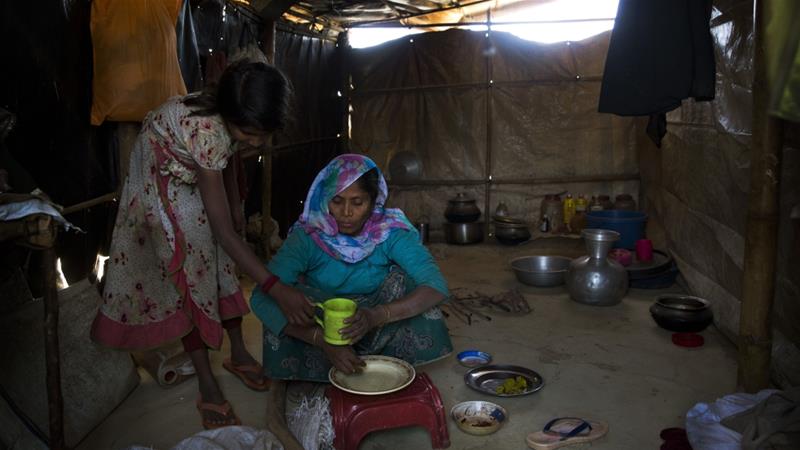
Image of Rohingya Refugee Camp. Photo Courtesy of Roger Arnold.

The agreement lays out that Myanmar will take 1500 Rohingya refugees back each week, with 300 per day and with all returning within two years. This begins on 23 January 2018.  However at this rate it will take closer to 10 years to repatriate all 740,000 refugees.   Bangladesh sees the goal of 300 persons each day as a starting point and hopes that the numbers will increase as time goes on. Bangladesh strives to send families back together as well as orphans and “children born out of unwarranted incidence.” This deal is only applicable to those who fled between the October 2016 violence and the latest round in 2017.

In preparation Myanmar plans to build two transport camps. One can accommodate up to 30,000 people.   Bangladesh will build 5.

As a result of the violence, 350 Rohingya villages burned down.   While Myanmar rebuilds, little attention is given to the Rakhine state. Myanmar’s foreign secretary U Myint Thu stated that there are plans to build new villages for the Rohingya. The plan is that “the returnees will build their homes by themselves.” It is a cash-for-work program in which the Myanmar government “will give them both money and jobs.”

The repatriation act is not without its critics. Little has been done to rectify the repression of Rohingya in Myanmar, and human rights activists are concerned that there can be no safe returns if grievances aren’t addressed. For a community leader in a Rohingya Refugee camp, the “first priority is, they have to grant us citizenship as Rohingya. Secondly, they have to give back our lands. Thirdly, our security must be ensured internationally. Otherwise, this is not good for us.” Restrictions on Rohingya movement have not been waived either.

The UN High Commission for Refugees encourages refugees to only return if they feel safe. The statement from the U.S. reads that the timeline was of less importance compared to the safety of the people. While the reparation is voluntary, most refugees say they will only return if their safety is assured, their homes rebuilt, and their land returned to them.

For more information, please see:

The BBC – Rohingya crisis: Bangladesh and Myanmar agree repatriation timeframe – 16 January 2018

Reuters – Bangladesh agrees with Myanmar to complete Rohingya return in two years – 16 January 2018

The Washington Post – Bangladesh, Myanmar aim to finish Rohingya return in 2 years – 16 January 2018

Syria Deeply: New Syria peace talks begin in Sochi, no cease-fire in Eastern Ghouta, and Turkey may extend Operation Olive Branch

Syria Deeply
Jan. 30th, 2018
This Week in Syria.

Welcome to Syria Deeply’s weekly summary of our coverage of the crisis in Syria.

Sochi talks: The Moscow-sponsored “Congress of the Syrian National Dialogue” began in the Russian Black Sea resort city of Sochi on Monday. These are the first Syria negotiations to be held in Russia, though Moscow has previously led the trilateral talks in Astana.

U.N. Syria envoy Staffan de Mistura is attending the talks, where he is expected to lead a new constitutional commission that will be set up at the two-day Sochi talks, according to Reuters.

Last week, a Turkish official told Hürriyet Daily News that around 1,600 participants were expected to take part in negotiations, but a number of delegations have since said they would boycott the Sochi talks.

The Syrian Negotiation Commission – the opposition’s main negotiating bloc – said on Friday that it would not be attending the Sochi congress, AFP reported. Many other Syrian opposition groups have said they will boycott the congress. However, members of the Moscow platform, “a dissident faction of the opposition,” said it will attend, according to Al Jazeera.

Kurdish authorities have also said that they will boycott Sochi talks because of a continued Turkish assault on Afrin, according to Middle East Eye.

According to Kremlin spokesman Dmitry Peskov, “The fact that some representatives of the processes currently taking place in Syria are not participating is unlikely to stop this congress from going ahead, and is unlikely to seriously undermine the importance of the congress,” he said on a conference call with reporters on Monday.

No cease-fire in Eastern Ghouta: After Syrian opposition reports of a cease-fire agreement in the Eastern Ghouta on Friday, fighting continued between pro-government and rebel forces over the weekend in the Damascus suburbs.

On Friday, a rebel official said that during recent U.N.-sponsored peace talks in Vienna, Russia said it would put pressure on the Syrian government to enforce a cease-fire in the area, Reuters reported. Damascus never acknowledged the cease-fire.

At least 23 aerial raids and 40 missiles targeted the city of Harasta and its outskirts and dozens of artillery and aerial raids targeted the city of Arbin on Monday, killing 34 civilians, including at least one child and one woman, in Eastern Ghouta, according to the Syrian Observatory for Human Rights. SOHR said on Sunday that government bombardment in the area killed eight people between then and Saturday.

Operation Olive Branch: Turkish president Recep Tayyip Erdogan made repeated threats to expand Turkey’s ongoing operation against the Syrian Kurdish People’s Protection Units (YPG)-controlled city of Afrin to other Kurdish-controlled areas of northern Syria.

On Friday, Erdogan said operations could extend eastward all the way to the Iraqi border, where the United States – Turkey’s NATO ally – has troops deployed. On Saturday, Turkey’s foreign minister called on the U.S. to withdraw its forces from Manbij ahead of a potential Turkish attack, but the commander of the U.S. Central Command, General Joseph Votel, told CNN on Sunday that withdrawing from Manbij was “not something we are looking into.”

Erdogan later said that “step by step, we will clean our entire border,” in a speech following one of the first significant gains Turkish troops and allied rebels made since Operation Olive Branch began nine days ago. On Sunday, they seized Mount Barsaya, which is located near the Kurdish town of Afrin and overlooks the town of Kilis on the Turkish side of the border and Azaz on the Syrian side.

The Syrian Observatory for Human Rights said that Turkish airstrikes between Sunday and Monday killed 13 people, including five children and three women, and injured another five, all from the same family in the village of Kobla in northeastern Afrin city.

On Friday, Turkish airstrikes damaged roughly 60 percent of the ancient Ain Dara neo-hittite temple, built by the Arameans in the first millennium B.C., in Afrin, according to the BBC. “The Turkish regime’s destruction of the Ain Dara Temple was a barbaric act, and a completion of the plan led by this regime to destroy the Syrian cultural heritage,” Mahmoud Hammoud, Syria’s director general for antiquities and museums, said, according to state-run news agency SANA.

Read our Daily Executive Summaries

f020b569-7455-410e-8ef8-f41b0077a844.png MOST POPULAR

This Week’s Top Articles

cryo2.jpeg?w=185&h=130&fit=crop&q=60&dpr=2

DIPLOMACY & FOREIGN AFFAIRS

Analysis: Why Turkey Wants a ‘Secure Zone’ in Afrin

Turkey’s operation on the Kurdish enclave of Afrin in Syria aims to halt YPG expansion near Turkey’s border, facilitate refugee returns and empower Ankara-backed FSA forces, writes analyst Ömer Özkizilcik.

cryo2.jpeg?w=185&h=130&fit=crop&q=60&dpr=2

CIVIL SOCIETY

Syrian Conflict Isn’t Over, Don’t Forget the Syrians: Davos Voices

Syria experts at the World Economic Forum’s annual meeting in Davos weigh in on what must be done to improve the humanitarian situation and alleviate the impact of war in Syria.

973ab3c3-9b8d-4a6d-9ac8-50621f4257fe.png EDITOR’S PICKS

Community Insight

putin-tillerson-meeting-exxonmobil.jpeg?w=90&h=90&fit=crop&q=60&dpr=2

ARTICLES

Deeply Talks: The Future of Syria Is Female

6827aefd-79dd-482b-9584-82c275-565c92dc808b2.jpg?w=68&h=68&fit=facearea&facepad=2&corner-radius=100&mask=corners&maskbg=transparent&fm=png32
Alessandria Masi,  Managing Editor of Syria Deeply

To conclude our partnership with TIMEP, Syria Deeply’s latest Deeply Talks discussed the changing role of Syrian women in the humanitarian, media and public sectors and the future challenges women face in having a voice in traditionally male-dominated fields.

putin-tillerson-meeting-exxonmobil.jpeg?w=90&h=90&fit=crop&q=60&dpr=2

DISPLACEMENT

Idlib Women in Jeopardy. What Comes Next?

6827aefd-79dd-482b-9584-82c275-565c92dc808b2.jpg?w=68&h=68&fit=facearea&facepad=2&corner-radius=100&mask=corners&maskbg=transparent&fm=png32
Hind Kabawat,  Director of Interfaith Peacebuilding, CRDC, George Mason University

Attorney and Tanenbaum peacemaker Hind Kabawat writes about the deteriorating humanitarian situation for women in and around Idlib, where she cofounded the Jarjanaz and Darraya Women’s Peace Centre with the E.U. last year.

FIRST LOOK

Upcoming coverage

We are always looking for new writers, experts and journalists who are covering the crisis in Syria and are interested in writing about a variety of topics. Please send us your ideas, story pitches and any other thoughts about our coverage via email, Twitter or Facebook.