THE SITUATION IN SYRIA CONTINUES TO DETERIORATE, BUT NOT THE RESOLVE OF ITS ACTIVISTS

By Adom M. Cooper
Impunity Watch Reporter, Middle East

DAMASCUS, Syria–The volatile situation in Syria has shown absolutely no signs of cooling down, as at least 11 individuals have been killed when military forces backed by tanks stormed a small town of Kanaker near the capital of Damascus.

Protesters in the streets of Damascus. (Photo Courtesy of Reuters)

The Syrian Observatory, based in Britain, reported that four tanks and a bulldozer entered Kanaker on 27 July 2011, while 14 other tanks surrounded the town. The raid on the city took place after electricity and phones lines were cut off in the area. This activity is merely the latest swing in the crackdown on protests against President Bashar al-Assad. Residents threw stones and set fire to tires of vehicles in an attempt to stall the advance of troops.

Rami Adubl-Rahman, a correspondent for the Syrian Observatory, reported this recollection of the raid to CNN:

“At 3AM Wednesday, Syrian security forces and army soldiers stormed Kanaker amid heavy gunfire. Some residents threw rocks at the tanks and burned their tires as many chanted ‘Allah is the Greatest’ in the west part of the town where seven tanks took positions there.”

Kanaker is located 30 kilometers (approximately 18.64 miles) southwest of Damascus.

The Syrian National Organization for Human Rights reported that military intelligence agents arrested some 300 individuals in Kanaker and took them away in 11 buses. Ammar Qurabi, a key opposition figure, leads this group.

The restriction on international journalists in Syria has made it increasingly difficult to verify the accuracy of reports given by the various human rights groups active in the country.

This recent crackdown appeared to come as a result of two organizations in France threatening to file legal complaints against President al-Assad and other members of the ruling Baath party. The two organizations, Sherpa and Transparency International France, said on 26 July 2011 that they wish the French government to make all of its findings public. They are primarily concerned with discovering if al-Assad and members of his party own any assets in France.

“The object is get an investigation open that would then identify assets that they may own in France either in their own name or through intermediaries and then to freeze them so they are not transferred to uncooperative jurisdictions.”

According to various human rights groups, more than 1,600 civilians have lost their lives and some 20,000 others imprisoned by Syrian security forces in the countrywide crackdown on the protests since March.

But these numbers are not lowering the spirits of the activists and protesters in the least. Moaz Al Sibaai, the coordinator for the Syrian activists’ network, reported to CNN that the opposition is always working to find ways to improve its work. He specifically highlighted improving communication with the media, developing secure telecommunications that cannot be hacked or tracked, and teaching how to lobby against the regime by documenting human rights violations.

“The harsher the regime is with its crackdown, the more creative we become in finding ways to cover the revolution.”

For more information, please see:

Al-Jazeera-Syrian troops in ‘deadly crackdown’-27 July 2011

BBC-Syrian forces kill eight in Kanaker raid: rights groups-27 July 2011

CNN-Activists: 8 slain in Syrian protest-27 July 2011

The Guardian-Syrian protesters ‘forcibly disappeared’ at rate of one every hour, say activists-28 July 2011

U.S. DENIES AID TO MALAWI AFTER VIOLENCE ERUPTS AT PROTESTS

By Tamara Alfred
Impunity Watch Reporter, Africa

The United States announced Tuesday that it is withholding some of its assistance to Malawi after claims that the government used force against protesters during demonstrations last week.

After months of growing economic struggles, Malawi erupted into protests last week.  Rioters took to the streets nationwide July 20 to protest the perceived mismanagement of the national economy and an impending fuel shortage.  The protesters also stormed the offices of the ruling Democratic Progressive Party in Mzuzu and demanded that the president step down.  Various sources report that between 12 and 19 people were killed and dozens injured.

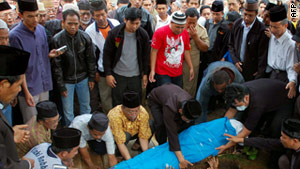
Men carry the coffin of a protester shot dead during demonstrations in Lilongwe, Malawi on July 22.  (Photo Courtesy of CNN.)
Men carry the coffin of a protester shot dead during demonstrations in Lilongwe, Malawi on July 22. (Photo Courtesy of CNN.)

The U.S. government agency providing development aid to countries, including Malawi, that show a commitment to good governance, the Millennium Challenge Corporation (MCC), announced it was halting $350 million in operations going to Malawi.  The announcement follows the State Department’s statement condemning the Malawi government’s use of force against demonstrators and urging restraint by both sides.  MCC’s move also echoes the United Kingdom’s suspension of aid to the country as of July 14 on the grounds that the government had suppressed demonstrations and intimidated civic groups.

Malawi is one of the poorest countries in the world and its president, Bingu wa Mutharika, 77, a former World Bank economist, had been widely credited with successful efforts to reduce hunger.  However, human rights activists have begun to criticize his increasingly authoritarian tendencies, reminiscent of Hastings Kamuzu Banda, the dictator who ruled the country for 40 years until 1994.

Sheila Herrling, a senior U.S. official, said Tuesday that the MCC was “deeply disturbed” by accusations that the police had fired live rounds on unarmed people and by claims that press coverage of the two-day demonstrations had been suppressed.

President Mutharika has rejected accusations that the police force under his command used excessive force against demonstrators and blamed the violence on his political opponents and the civic leaders who organized the protests.  His spokesman, Hetherwick Ntaba, said the police had to deal with looters, vandals and rioters.  Peaceful demonstrators were protected, not harmed, he said.

The government’s critics, however, say they are afraid.  Undule Mwakasungula, who organized the protests, said he had gone into hiding since the president named him as one to blame.

“We are being hunted so we can’t expose ourselves,” he told The New York Times.  “We’re a target of ruling party agents.”

The president has sworn in official statements to “smoke out” anyone who opposes him.  In a recent public statement to the Associated Press, Mutharika said that the protest leaders are “thugs and sons of Satan.”

The decision by both the U.S. and the United Kingdom will seriously injure the Malawi government’s budget, as almost of half of the annual budget of $2 billion comes from international donors.

For more information, please see:

CNN – U.S. suspends some aid to Malawi over violence – 27 July 2011

The New York Times – U.S. Freezes Grant to Malawi Over Handling of Protests – 26 July 2011

Time – From Malawi to Senegal, Signs of a Sub-Saharan ‘Arab Spring’ – 26 July 2011

U.S. imposes visa blacklist for officials involved in death of Russian lawyer

By Greg Hall
Impunity Watch Reporter, Europe

MOSCOW, Russia – The U.S. State Department has put certain Russian officials involved in the death of Russian lawyer Sergei Magnitsky on a visa blacklist.  At the same time, Moscow has threatened to back out of cooperating with the U.S. in connection with other nations, such as Iran and North Korea, if the Senate goes forward with a plan to impose human rights sanctions on Russia.

A handout file photo provided in November 2010 by Hermitage Capital Management and taken in Moscow on Dec. 29, 2006, shows Russian lawyer Sergei Magnitsky (Photo courtesy of The Washington Post).

Russia responded by stating that the United States cannot expect Russia to join in international sanctions with them while at the same time being sanctioned by the United States.  In addition, Russia threatens to end cooperation in allowing transit through their country to Afghanistan by the United States.

Despite possible threats to what the Obama administration calls the “reset” in U.S.-Russia relations and the implications for U.S. interests, supporters of the Senate proposal that has provoked the threats of retaliation say it is the right thing to do.  “The reset has brought about improvement in relations,” said former State Department official and Executive Director of Freedom House David Kramer, “but at the end of the day we’re still dealing with the same Russia, which shows no respect for human rights, no accountability and no respect for rule of law.”

The alleged human rights violation took place in 2009 when Magnitsky accused police and tax officials of a $230 million tax fraud. He was quickly arrested and charged with the crime. Magnitsky died in prison after being denied medical care for apparent pancreatitis and likely being badly beaten in his final hours.

Russia’s Investigative Committee said this month it has opened criminal probes against the doctor and deputy head of the Butyrskaya prison in Moscow where Magnitsky had been held for several months.  But the top officials cited as being at fault in the report of the council which advises President Dmitry Medvedev on rights issues have not been prosecuted.

The European Parliament, Canada and the Netherlands are also working on possible sanctions against Russia for the human rights violation.

Some sixty Russians are accused of involvement in the incident.  However, the number of people whose visas were blacklisted by the United States is not high.  In May, Senators Benjamin L. Cardin (D-Md.) and John McCain (R-Ariz.) introduced the Sergei Magnitsky Rule of Law Accountability Act.  The act would freeze assets as well as visas.  Though named for Magnitsky, it would apply to other future and past cases.

For more information, please see:

AFP – US visa blacklist after Russian lawyer’s death: report – 26 July 2011

The Washington Post – U.S. puts Russian officials on visa blacklist – 25 July 2011

The Library of Congress – Sergei Magnitsky Rule of Law Accountability Act – 19 May 2011

Journalist and Directors of Newspaper Jailed and fined in President Rafael Correa Libel Case

By Paula Buzzi
Impunity Watch Reporter, South America

QUITO, Ecuador – Directors and a former opinion editor of El Universo newspaper were sentenced to three years in prison on Thursday and are required to pay a $40 million dollar fine for an opinion article calling President Rafael Correa a dictator.

Libel case pits Ecuadors president against newspaper. (Photo Courtesy of CNN News).
Libel case pits Ecuador's president against newspaper. (Photo Courtesy of CNN News)

The article, which was published in February, accused President Correa of ordering his supporters to open fire at a hospital last September where he was being held hostage by the opposition party. President Correa called the negative press “baseless” and sued the newspaper for libel.

The day after the court ruling, El Universo published a quote from author Ayn Rand on a nearly blank front cover reading: “When you see corruption being rewarded and honesty becoming a self-sacrifice, you may know that your society is doomed.”

According to the former opinion editor, Emilio Palacio, the lawsuit was meant to serve as an example to other journalists of the consequences that result from publishing anything critical of the Ecuadorian government. Palacio also believes the lawsuit was motivated by financial gain since he believes the award money will go straight into President Correa´s pockets.

Jose Miguel Vivanco, the Americas director for Human Rights Watch, shared in El Universo´s outrage, stating that the decision constitutes a “major setback for free speech in Ecuador.” Reporters Without Borders, a France-based media watchdog, also accused the decision of being a contradiction to the freedom of expression laws set in place by the Inter-American Court of Human Rights.

Alembert Vera, President Correa’s attorney, however, refuted the accusations and said the motivation behind the lawsuit was simply a “defense of honor” and that all the award money would go straight to the Yasuni-ITT environmental project. He plans to appeal the decision and seek the full $80 million dollars in damages he initially sought.

With international support behind them, El Universo´s lawyers are also appealing the decision, claiming that they were denied the ability to present evidence to support their case.

For more information, please see:

CNN – Ecuadorian paper reacts to libel ruling with nearly-empty front page – 22 July 2011

Univision – Ecuador libel case, jailing, draws worldwide criticism – 21 July 2011

The Wall Street Journal – Ecuador President Correa Wins Lawsuit Against El Universo Newspaper – 20 July 2011

CNN – Libel case pits Ecuador’s president against newspaper – 19 July 2011

No end to extrajudicial killings in the Philippines

By Brianne Yantz
Impunity Watch Reporter, Oceania

MANILA, Philippines – On July 18, Human Rights Watch (HRW) published a report entitled, “‘No Justice Just Adds to the Pain’: Killings, Disappearances, and Impunity in the Philippines.” According to HRW’s accompanying press release, the report concludes that the Philippine government has failed “to investigate and prosecute extrajudicial killings” since President Benigno Aquino III took office on June 30, 2010.

President Benigno Aquino III addresses a large crowd of students and government officials during the celebration for his first year in office. (Photo Courtesy of AP)

Such inaction has further fueled the military abuses that have taken place across the Philippines for the past decade, the 98-page report alleges. To support this claim, HRW presents strong evidence of military involvement in the seven killings and three enforced disappearances of leftist activists that have taken place during the Aquino administration.

Prior to his election, Aquino had campaigned against the violence that plagued the Philippines and pledged to bring it to an end. As Ishaan Tharoor, a blogger for TIME, reported “the culture of impunity and rank injustice that seemed to permeate some of the country’s state institutions were things Aquino vowed to stamp out.”

Yet, Tharoor has been highly critical of Aquino, stating that he “has made slow progress forging a dent in that ‘endemic’ corruption” as “court cases against known corrupt officials of the previous Arroyo administration have been only sparsely lodged.”

Tharoor further noted that the HRW report “adds to the chorus of criticism.”

The HRW report, however, presents the most overwhelming evidence of Aquino’s inaction.  It details over 80 interviews, conducted across 11 provinces, with victims of abuses, their family members, witnesses, and police and military officials.

In one account from the report, Mary Dejos recalls finding the bodies of her husband and son after they were killed on February 27, 2011 in Davao del Sur province. Her husband Roderick “was lying with open wounds on his chest and neck” and her son, Rudyric, had “bullet wounds on his back with exit wounds on his upper chest.”

Dejos’ account is one of many, all of which indicate that Aquino has broken his promise to the people. Elaine Pearson, the deputy Asia director at HRW, illustrated how nothing has changed under the Aquino regime. According to Pearson, “activists are being gunned down in the street, while implicated soldiers walk free.”

Pearson went on to comment, “the Philippines can only bring an end to these horrific abuses if it is clear that anyone who orders or commits them will be jailed and their military careers will be over.”

For more information, please see:

The Philippine Star – Phl still fails to address extra judicial killings – July 21, 2011

BBC News – Philippines extrajudicial killings continue, says HRW – July 19, 2011

TIME – Extrajudicial Murders Are a Blot on Noynoy Aquino’s Year in Power in the Philippines – July 19, 2011

Human Rights Watch – Philippines: New Killings as Impunity Reigns – July 18, 2011