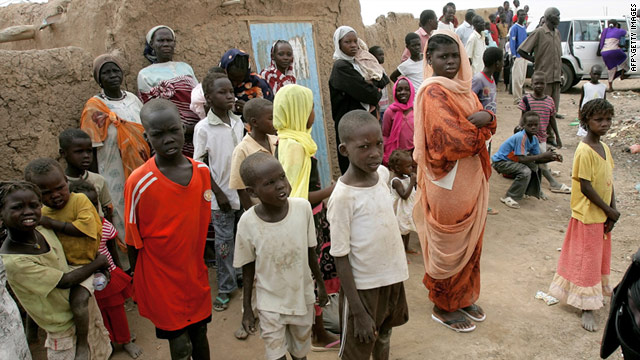
Hundreds of Ugandan Women sold into slavery in Iraq by Ugandan Company

by Reta Raymond
Impunity Watch Reporter, Africa

KAMPALA, Uganda – Earlier this year, with the help of  the U.S. Army in Iraq, eleven Ugandan women escaped from domestic slavery and were repatriated by the International Organization for Migration. These women are now suing the firm that sold them, Uganda Veteran’s Development Limited (UVDL), the Attorney General, the Director of Public Prosecution, and the Inspector General of Police for failure to protect and failure to prosecute. One of the women plaintiffs, identified only as “W,” called and “informed [Inspector General of Police, Kale Kaihura] about our situation of slavery in Iraq and he promised to rescue us but did nothing to that effect.”

In 2008, UVDL promised these women jobs as secretaries, nurses, supermarket clerks to earn as much as $700 per month including allowances. But the women had to pay approximately $1000 for a visa, application,airplane ticket and medical examination. Women were flown to Baghdad in groups of a dozen, and delivered to Abu Sami, who took their passports and sold them as servants for $3500. Abu Sami “yelled at us that we were his slaves he had purchased us with his money and we would have to work as housemaids for the people who were waiting for us in his office,” states Y in her affidavit.

Y was forced to clean a Sheik’s mansion from 5:00 a.m. to 2:00 a.m. After six days, Y refused to work and the Sheik held her at gunpoint and “threatened to throw me in a well of petrol.” Y was returned to Abu Sami, who kept her in a dark room with others until she could be resold. “Abu Sami said I would stay in the room locked up for the period of my contract of 2 years without food,” stated Y.

Z was beaten, raped six times, and given a venereal disease by the man who bought her. She was hospitalized four times for stress and a heart attack. “I could not escape because the family had my passport and I had spent my little salary on hospital bills, telephone calls …  in spite of my sickness I continued to work,” stated Z.

In July of 2009 eight Ugandan women sold by UVDL were rescued by U.S. Marines in Iraq. One of the women, Rachel Malagala testified before Parliament that she “was held in a dark room with three other women some of whom complained that their Iraqi masters sexually harassed them.” Shortly thereafter, the Ministry of Labour revoked  UVDL’s license to export labor, but they were relicensed in December 2010.

For more information, please see:

The Observer – Ugandan Iraq ‘slaves’ sue state – 8 June, 2011

BBC – Ugandan women tricked into domestic slavery in Iraq – 31 March, 2011

All Africa – Uganda: U.S. Marines Rescue Eight Ugandan Slaves in Iraq – 11 July, 2009

Iran Human Rights Documentation Center Publishes Report on Rape in Iranian Prisons

Iran Human Rights Documentation Center Press Release
Originally Published 10 June 2011

NEW HAVEN, CONNECTICUT – In commemoration of the second anniversary of the post-election violence and crack-down on dissent orchestrated by the Islamic Republic of Iran, the Iran Human Rights Documentation Center (IHRDC) today published a report on the use of rape as a method of torture by Iranian prison authorities. The report, Surviving Rape in Iran’s Prisons, may be found here.  The Persian version will be available next week.

Allegations of rape and sexual violence of political prisoners began to emerge after the Islamic Republic of Iran was established in 1979 and have continued, to varying degrees, to the present. However, not surprisingly, there is no reliable estimate of the number of prisoners raped in the Islamic Republic’s prisons. The reasons are simple:  few rape victims are willing to speak about their experiences due to (1) government pressure and acquiescence, and (2) social stigma. Iranian authorities have and continue to acquiesce to rapes of prisoners by guards and interrogators who use rape to crush detainees’ spirit, inflict humiliation, discourage their dissent, force them to confess to crimes, and ultimately to intimidate them and others – all in violation of international human rights and Iranian law.

This report documents the ordeals of five former prisoners – two women and three men. They span the almost 30 years of the Islamic Republic’s existence. Four witnesses were raped; one was threatened with rape and saw rape victims. All were traumatized and some considered suicide.

IHRDC is a nonprofit organization based in New Haven, Connecticut whose goal is to encourage an informed dialogue among scholars and the general public in both Iran and abroad.  The human rights reports and a database of documents relating to human rights in Iran are available to the public for research and educational purposes on the Center’s website.  www.iranhrdc.org.

For further information, please contact:
Renee C. Redman, Esq.
Executive Director
Iran Human Rights Documentation Center
Tel: (203) 772-2218 Ext. 215,
Email: rredman@iranhrdc.org

New WCRO Report Examines Expediting Proceedings at the International Criminal Court

War Crimes Research Office Announcement
Originally Published 9 June 2011

Washington, DC June 9, 2011 —The War Crimes Research Office (WCRO) launched a new report on the International Criminal Court (ICC) yesterday at the Colombian Embassy in The Netherlands, at an event co-hosted by the Group of Friends of the ICC.  The report, Expediting Proceedings at the International Criminal Court, examines means of avoiding delays in proceedings before the ICC.

In its less than one decade of existence, the International Criminal Court (ICC) has achieved a great deal, opening formal investigations into six situations involving some of the most serious atrocities seen since the birth of the Court in 2002 and commencing cases against a number of the individuals believed to bear the greatest responsibility for those atrocities. However, nearly ten years after coming into being, the ICC has yet to complete a single trial, raising concerns among States Parties to the Rome Statute and others regarding the effective functioning of the Court.  Hence, while recognizing that the ICC is still a relatively young institution faced with a variety of novel substantive and procedural challenges, the aim of this report is to identify areas of unnecessary delays in proceedings currently before the Court that are likely to arise again, and suggest ways in which such delays may be avoided in the future.

The report is the fourteenth in the WCRO’s ICC Legal Analysis and Education Project, an initiative aimed at producing public, impartial, legal analyses of critical issues raised by the ICC’s early decisions. The ICC Legal Analysis and Education Project benefits from the insights of an Advisory Committee comprised of the following experts in international criminal law:

–        Judge Mary McGowan Davis, former Acting New York State Supreme Court Judge and Board Member of the International Judicial Academy and the American Association for the International Commission of Jurists;

–        Justice Unity Dow, Commissioner of the International Commission of Jurists (ICJ), member of the ICJ’s Executive Committee and former judge of the Botswana High Court;

–        Siri Frigaard, Chief Public Prosecutor for the Norwegian National Authority for Prosecution of Organized and Other Serious Crimes and former Deputy General Prosecutor for Serious Crimes in East Timor;

–        Justice Richard Goldstone, former Chief Prosecutor of the International Criminal Tribunals for the former Yugoslavia (ICTY) and Rwanda (ICTR); and

–        Chief Justice Phillip Rapoza of the Massachusetts Appeals Court and former Chief International Judge serving as Coordinator of the Special Panels for Serious Crimes in East Timor.

—-

For a hard copy of the report or more information, contact the War Crimes Research Office at warcrimes@wcl.american.edu, or +1 (202) 274-4067. The reports are also available online at http://www.wcl.american.edu/warcrimes/icc/icc_reports.cfm.