Chilean Forces Storm Easter Island

By R. Renee Yaworsky
Impunity Watch Reporter, South America

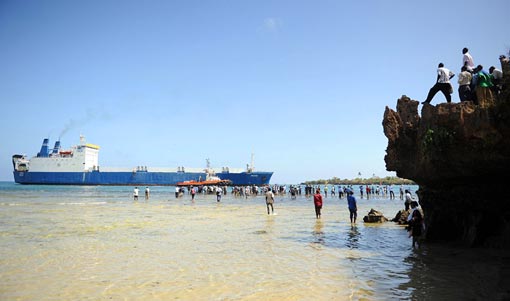
Chilean riot police have been evicting Rapanui by force.  (Photo courtesy of Stuff)
Chilean riot police have been evicting Rapanui by force. (Photo courtesy of Stuff)

EASTER ISLAND, Chile—Indigenous residents of Easter Island have suffered violence at the hands of Chilean authorities who are attempting to drive them out of government buildings they began inhabiting three months ago.  The indigenous individuals, or Rapanui, claim that Chilean officials stole those buildings from their ancestors.  The authorities have been tear-gassing and shooting rubber bullets and buckshot at indigenous individuals, and at least 24 have been injured.  Leviante Araki, president of the Rapa Nui Parliament, suffered two shots and had to be flown to Santiago for medical attention.

The Rapanui have been occupying several buildings such as the Hangaroa Hotel and government offices.  Chilean forces, acting on a court order, have stormed the buildings and subdued the occupants by force before arresting them.

According to the website Saverapanui.org, “When the Rapanui gathered to protest this action, Chilean Special Forces started firing their guns and using tear gas.  The Rapanui responded by throwing rocks.  [The Forces] are hunting for individuals who have been involved with the reoccupation and those they are targeting who have helped share the story with the international press.”

On Saturday, Chile sent a plane to the island to evict the indigenous people.  Filmmaker Santi Hitorangi, who was wounded in a clash on Friday, reported that the indigenous residents have not complied, saying, “The arrival of the C-130 cargo plane with more police and armed swat teams adds to the psychological duress that’s happening here. ”  He alleged that Chile is trying to “stop any attempt of the Rapanui people to reassert their right to the land.  All we’re asking for is title to the land.  It’s a rightful claim.”  He added:   “Many including women were shot in their faces, in their heads.”

Chile’s government has been unsympathetic.  Interior Minister Rodrigo Hinzpeter called the acts of the indigenous individuals “illegal takeovers that cause damage to the island,” and said:  “The police forces acted in compliance with a court order.  That’s how institutions function, and we all must follow them.”

Easter Island is located about 7000 kilometers east of New Zealand and was annexed by Chile in 1888.  Each year, approximately 50,000 tourists visit the island, which is a Unesco World Heritage Site and famous for its monolithic sculptures.

There is concern among indigenous people that Chile is not properly regulating immigration to the island, which is incapable of sustaining such a population influx.  Indigenous individuals make up 2200 of the 5000 residents of Easter Island.  Some Rapanui have expressed fear that indigenous residents of the island could be wiped out by such practices.

For more information, please see:

Radio New Zealand-Rapa Nui activists fear uncertainty as Chilean troops remain on island-6 December 2010

Stuff-24 injured in Easter Island land protests-6 December 2010

Epoch Times-Easter Island Clashes Leaves Two Dozen Injured-6 December 2010

Press Association-Evictions continue on Easter Island-5 December 2010

Amnesty Law Reduces Former Paramilitary Leader’s Sentence To 8 Years For 4,000 Murders

By Patrick Vanderpool
Impunity Watch Reporter, South America

Former paramilitary leader Jorge Ivan Laverde (photo courtesy of www.prensarural.org)

BOGOTA, Colombia – Jorge Ivan Laverde, a former Colombian paramilitary chief who confessed to ordering approximately 4,000 murders and using an oven to dispose of some of the bodies, was sentenced to eight years in prison.

Laverde, who turned himself in six years ago, led one of the fronts of the right-wing AUC militia federation’s Catatumbo Bloc.

Laverde was originally sentenced to 40 years in prison but his sentence was reduced as part of an amnesty law passed by the Colombian Congress in 2005.  Last week, Laverde was resentenced to the maximum prison term allowable under the law governing the paramilitaries’ demobilization.  He was also ordered to pay $3.2 million in reparation to the victims.

The 2005 Peace and Justice Law was passed to regulate the paramilitary fighters’ reinsertion into society.  Former AUC members face a maximum of eight years in prison if convicted of any of the egregious crimes which they are accused of, including kidnappings, murders and torture.  The law also shields former AUC members from extradition to the United States so long as they cooperate with Colombian authorities.

In Laverde’s case, the former paramilitary leader not only confessed that he ordered some 4,000 killings but he also admitted that he personally carried out 100 of those murders.

The AUC demobilized 31,000 fighters between the end of 2003 and mid-2006 as part of a peace process with then-President Alvaro Uribe.  However, new members have emerged, bringing the group’s numbers somewhere in the range of 4,000-10,000 fighters.  Although the AUC was originally founded to battle leftist rebels, it deteriorated into a “loose association of drug-dealing death squads.”

The aim of the amnesty law was to promote the demobilization of paramilitary groups through promises of relatively insignificant prison sentences.  Nonetheless, the notion of an eight year prison sentence for a man thought to have participated in thousands of killings may very well result in a public outcry.

For more information, please see:

The Herald Sun – Eight Years Jail for Man who Killed 4,000 – 4 December 2010

BBC – Colombia Reduces Jail Time for Paramilitary in Amnesty – 3 December 2010

Colombia Reports – “El Iguano” Convicted Through Justice of Peace Process – 3 December 2010

Latin American Herald Tribune – Ex-Militia Chief Sentenced Under Colombia’s Demobilization Law – 3 December 2010

‘Wikileaks’ Points Finger at Rajapaksa for Ethnic Massacre

David L. Chaplin II
Impunity Watch, Asia

 KOTTE, Sri Lanka – In the wake of the U.S. governments least proud moment in history, the scandal known as ‘WikiLeaks’ released earlier this week, have called into question more than the institutional  make-up of a nation. The US embassy cables implicate Sri-Lankan leadership juxtaposed with the massacre of 7,000, following the end of Tamil Tiger uprising or civil ethnic revolution which took ended  just last year.

Current President Rajapaksa of Sri Lanka

Whistle-blowing website WikiLeaks has given credence to calls for an independent analysis of the final days of Sri Lanka’s civil war.

“Thousands of Tamil civilians are estimated to have been killed in a few days during a military bombardment as the 26-year insurgency ended in May last year, as reported by Al Jazeera.

By reports of the US diplomats on the ground in Sri Lanka, they believe the country’s president responsibilities for the mass deaths of ethnic Tamil citizens as the civil war came to a close last year need to be analyzed.

The cable was written by Patricia Butenis, the US ambassador in Colombo and it implicates Mahinda Rajapaksa, his generals and family members.

Butenis wrote candidly in January, that accountability for many of the apparent crimes rests with the country’s senior civilian and military leadership, including President Rajapaksa and his brothers and opposition candidate General Fonseka,” she said, according to WikiLeaks. Gotabaya Rajapakse, the president’s brother, is the defense secretary, himself now implicated.

Due to past allegations, Rajapaksa has resisted external pressure for an international probe into charges that both the rebel Tamil Tigers and the military  have committed violation with the commission of war crimes during the conflict.

His unilateral call for an internal investigation was questioned by Butenis and the surrounding human rights community.

According to the cable, Butenis said that “there are no examples we know of a regime undertaking wholesale investigations of its own troops or senior officials for war crimes while that regime or government remained in power.”

The notion of the Tamil Tigers captured during battle receiving due process is alluded to within the cables. As quoted below according to Butenis:

“The Government of Sri Lanka is holding thousands of mid- and lower-level ex-LTTE [Tamil Tiger] combatants for future rehabilitation and/or criminal prosecution. It is unclear whether any such prosecutions will meet international standards.”

Earlier reports indicated that the military forces killed the top Tamil Tiger leadership, in what is understood to be a “four-decade campaign in which they fought for a separate Tamil homeland.”

For more information, please see:

Lanka Journal – Wikileaks: Sri Lanka’s Rajapaksa blamed for killings – 3 December 2010

BBC – Wikileaks: Sri Lanka’s Rajapaksa blamed for killings – 2 December 2010

Al Jazeera English – Rajapaksa ‘linked to Tamil deaths’ – 2 December 2010

Britain Imposes Ban On Export Of Lethal Injection Drug Used By The United States

By Erica Laster                                                                                                                       Impunity Watch Reporter, North America

NEW YORK, United States – At the behest of Human Rights groups and activists, the British have issued a ban on the export of lethal injection drug sodium thiopental to the United States.  The United Kingdom originally opposed the ban under the assumption that someone else would provide the drug to the U.S. and that the drug was only being used for medicinal purposes.  Some States have sought other means to execute prisoners, including the use of drugs commonly used to kill animals.

Sodium thiopenta banned by the British after learning of its use in executions.  Photo courtesy of static.guim.uk
Sodium thiopental banned by the British after learning of its use in executions. Photo courtesy of static.guim.uk

Reprieve, a legal charity, campaigned for the past month in support of banning the drug used in executions.  The charities Director, Clive Stafford Smith expressed concern that a number of prisoners are set to be executed in California this week.  According to Smith, “”There is urgent work to do. The California Department of Corrections and Rehabilitation – so named, notwithstanding their plan to execute a number of prisoners – expects to receive enough drugs to kill 86 people this week, perhaps as early as today, probably again from Britain.”  Smith remains hopeful that urgent steps are taken to prevent any current shipments from reaching the corrections facility.   

The charity further notes that British pharmaceutical company Archimedes Palma may have unknowingly been used as the U.S. source for supplying the drug used for lethal injections.  

With such protests and oppositions to the use of drugs for lethal injections, states are finding other methods to continue executions. Oklahoma for instance, is attempting to use Phenobarbital as a replacement: a common drug used to kill animals.  

An order issued by British Secretary of State for Business Vince Cable requires that companies seeking to export the drug abroad must prove that the sodium thiopental will be used for the purpose of legitimate medicinal purposes and not execution. 

The ban is the result of Reprieve and British based law firm Leigh Day’s suit in support of the ban.  Leigh Day attorney Jamie Beagent praised the Secretary of State’s decision as one that “has finally come to recognize that banning drugs from the UK for use in executions overseas is the morally right thing to do.”

For More Information Please Visit:

IPS – Britain Bans Exports of Execution Drug Sought by U.S. – 30 November 2010

 BBC News – US Lethal Injection Drug Faces UK export Restrictions – 29 November 2010

Washington Post – British Imposes Controls On Lethal Injection Drug – 29 November 2010

“Aggressive ban” on Falkland Islands

R. Renee Yaworsky
Impunity Watch Reporter, South America

STANLEY, Falkland Islands—Argentina has had a recent win in their long-standing struggle to assert sovereignty over the British-held Falkland Islands. The Union of South American Nations (UNASUR), which has 12 member countries, agreed with Argentina on Friday that ships headed to or from the Falklands should be denied docking and fuel at mainland ports. This decision could be “very costly” for shippers who do business with and on the islands.

The battle for sovereignty over the islands began in 1982 when Argentina invaded the Falklands but was overpowered by British troops in combat lasting 74 days. Over 1,000 people died.  More recently, Argentina’s President Cristina Fernandez de Kirchner has revitalized the claim to Las Malvinas, as Argentina refers to the archipelago.

UNASUR’s agreement to block incoming and outbound ships associated with the islands has promised to injure the Falklands’ economy. The heads of state present at UNASUR’s summit in Guyana last week agreed with Argentina that vessels flying “the illegal flag of the Malvinas” should be blocked from using any member nations’ ports. Naturally, shippers and members of the Falklands government are nervous.

“If all South American ports do decide to block all access to Falkland Islands-flagged vessels,” Adam Cockwell, a manager of Work Boat Services Ltd. said, “then it raises a serious issue for us as we will not be able to go to any ports for our dry docking requirements.”

Stuart Wallace of Fortuna Ltd. voiced concerns that “if such a policy were to be implemented it would have the unfortunate effect of a significant loss of business for some South American ports. It would inconvenience Falkland vessel owners, but we would deal with any new circumstances.” He added: “Perhaps most importantly, such an aggressive blanket ban would make it clear internationally that we face a tightening blockade aimed at destroying our economy.”

Gavin Short, member of the Falklands’ Legislative Assembly stated: “If anyone was in any doubt about the hostile intent that Argentina has towards us and their drive to blockade us then [this new development] should dispel those doubts.”

For more information, please see: