
MEXICO’S NUEVO LAREDO UNDER NEAR MEDIA BLACKOUT: DRUG CARTELS TIGHTENING CONTROL
By Erica Laster
Impunity Watch Reporter, North America
NUEVO LAREDO, Mexico – Nuevo Laredo, the busiest city along the United States-Mexico border with a population of over 360,000 is adhering to a near complete news blackout. Drug cartels have forced the population and news outlets to stop reporting events occurring from drug related violence. The Televisa affiliate in Nuevo Laredo suffered from a grenade attack thrown at the front door of its building less than two weeks ago. However, both Televisa and its competitors failed to report on the attack.
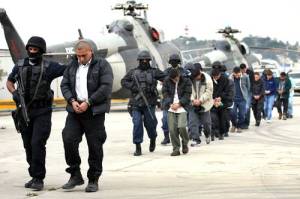
Using telephone calls, news releases and emails, drug smuggling organizations dictate the boundaries of what may be printed or aired to the public. “We are under their complete control,” claimed a veteran reporter speaking anonymously. Another editor claimed, “The cartels have eyes and ears inside our company.”
All of those who agreed to speak with the Washington Post insisted on anonymity and that any interviews take place at empty bars away from their offices.
Four journalists were recently kidnapped after covering a protest resulting from a warden’s alleged release of armed inmates. In murder for hire, 3 massacres occurred with the prisoners given access to jail guard’s vehicles and weapons. While many of the dead were rival gang members, authorities confirmed that 17 young people were killed in an attack on a birthday party after prisoners shot randomly into the crowd – and then returned to their cells. Ricardo Najera, a spokesman for the office of the attorney general indicated that ballistics matched four of the guns used in the shooting as the same assigned to guards in the northern Mexico jail.
Government officials and military representatives are also at the mercy of drug cartels. The mayor of Nuevo Laredo disappeared for four days, returning with the refusal to discuss violence resulting from drug cartels. Federal police, prosecutors and the military general presiding over city soldiers have refused to answer reporters’ questions or issue statements on drug violence. With the arrest of 62 cops allegedly suspected of helping drug cartels, the country is facing a serious crisis.
“Intimidation and coercion have been taken to an extreme level. This drug war is also a war of information. The cartels are now telling reporters what they can and cannot print, and the drug organizations themselves are the content providers,” the Latin America director of the Committee to Protect Journalists said. According to Director Carlos Lauria, 30 journalists have disappeared or been murdered since Mexico’s President launched a U.S. backed offensive against drug crimes.
Photo Courtesy of WordPress.com
For More Information Please Visit:
NY Times Mexican Officials Say Prisoners Acted As Hit Men 25 July 2010
Washington Post In Mexico’s Nuevo Laredo, Drug Cartels Dictate Media Coverage 2 August 2010
CNN 62 Cops Linked to Drug Cartels Arrested In Mexico 29 July 2010
IL.post Newsletter – 06 August 2010
The American Society of International Law posts a bi-weekly newsletter to keep ASIL members updated on the latest in international law.
The latest newsletter can be found at:
Silencing the Women’s Rights Movement in Iran
Courtesy of the Iran Human Rights Documentation Center
This report examines the Islamic Republic’s attempt to dismantle the women’s rights movement leading up to and following the June 12, 2009 presidential election. Members of the movement – from part-time volunteers to world-renowned human rights defenders – have been faced with a stark choice – cease their activism in order to protect themselves, their families and livelihoods, or continue their activism at the risk of facing criminal allegations, arbitrary arrest and detention, interrogation, torture and even death. Many have fled the country.
Peace Negotiations Watch
PEACE NEGOTIATIONS WATCH
Friday, August 6, 2010
Volume IX, Number 28
In this issue:
CONFLICT UPDATES
Afghanistan
Burma
Democratic Republic of the Congo
Kashmir
Kenya
Kyrgyzstan
Nepal
Somaliland
Sudan: Darfur
Sudan: Southern Sudan
Tanzania
Thailand
Uganda
Water Diplomacy
Zimbabwe
Afghanistan
Afghanistan Says It’s ‘Shocked’ by Leaked U.S. Documents
CNN, July 27, 2010
The Afghan government released a statement that officials were shocked by the 90,000 leaked documents of United States (U.S.) military and diplomatic papers on the war in Afghanistan. In response to documents claiming that Pakistan has provided support to the insurgency, the former head of Pakistan’s intelligence service, General Hamid Gul, said the reports were false. Pakistani Ambassador to the U.S. Husain Haqqani released a statement that the leaked documents do not accurately represent the current realities on the ground.
Taliban Congratulates Dutch on Withdrawal from Afghanistan
DutchNews, July 29, 2010
The Taliban in Afghanistan released a statement congratulating the Netherlands’ government and citizens for withdrawing from Afghanistan. The Taliban also said they hope that other countries with troops in Afghanistan will follow suit.
Burma
Than Swe May Free Suu Kyi before Election: Former Spy
The Irrawaddy, July 26, 2010
A former Burmese counter-intelligence officer believes General Than Swe may free Aung Sun Suu Kyi prior to the scheduled November release date. The junta extended Suu Kyi’s detention for an additional eighteen months last year. The General may release her and possibly other political prisoners as a last resort if the international community exerts strong pressure on the ruling junta to hold democratic elections. The former counter-intelligence officer also reported that the junta had led a disinformation campaign through Burmese diplomats regarding Suu Kyi and the democratic opposition, including disseminating reports that Suu Kyi was unwilling to negotiate with the military.
North Korean Foreign Minister Meets with Burmese Foreign Minister amid Nuclear Worries
Antara News, August 1, 2010
The Korean Central News Agency reported that a delegation led by Foreign Minister Pak Ui Chun met with Burmese Foreign Minister U Nyan Win in Burma on July 29. During the talks both parties discussed developing friendly relations, as well as addressing international and regional issues of mutual concern. Burma severed ties with North Korea in 1983 after North Korean operatives attempted to assassinate the South Korean President while he was visiting Burma. Recent reports suggest that Burma may be developing a nuclear weapons program with North Korean assistance. The United States has continued to express concern about military ties between the states.
Burma Official Media Hail Top Leader India Visit
Xinhua, August 1, 2010
Burma’s state-media called Senior-General Than Shwe’s recent five-day visit from July 25 – 29, to India a milestone of bilateral cooperation and friendship between the two states. General Than Shwe met with Prime Minister Manmohan Singh and President Pratibha Patil, signing five significant agreements. The agreements include a treaty on mutual assistance in criminal matters, and four Memoranda of Understanding on Indian grant assistance for the implementation of small development projects and bilateral cooperation in science, technology, and information.
Democratic Republic of Congo
Nearly 90,000 People Uprooted by Clashes in Eastern DR Congo, UN Reports
UN, July 30, 2010
Local authorities in the eastern Democratic Republic of Congo are reporting that almost 90,000 people have been displaced as a result of military operations in the region. Violence between the national army (FARDC) and the Allied Democratic Forces-National Army for the Liberation of Uganda (ADF-NALU) resulted in the death of six civilians, dozens of civilians injured, and robbing and looting of villages. In response, the UN Stabilization Mission in the DRC (MONUSCO) set up temporary base of operations and is delivering aid.
Kashmir
Kashmir Opposition Locks Up Ministers Inside Secretariat
Hindustan Times, July 29, 2010
Party Members of the Legislative Assembly locked the Chief Minister and numerous employees inside the Secretariat in an effort to show how many Kashmiris feel under he imposed curfew. Authorities imposed the curfew following clashes between military forces and protestors over the death of a boy killed by police forces.
Dialogue only Way to Resolve India-Pak Disputes: Qureshi
The Indian, July 30, 2010
Pakistani Foreign Minister Shah Mehmood Qureshi stated that India and Pakistan agreed to restart talks because they viewed dialogue as the only way to resolve issues in dispute. Qureshi encouraged focusing on Pakistani areas of concern, including Kashmir and water concerns.
Haqqani Calls for Result-Oriented India-Pak Dialogue over Kashmir
The Indian, July 30, 2010
Pakistani Ambassador to the U.S. Hussain Haqqani urged India to engage with Pakistan in a results-focused dialogue with the goal of resolving the Kashmir issue. He also said that Pakistan is committed to resolving the issue and is looking for the same commitment from the Indian government.
Kenya
No Poll Results Delay, IIEC Pledges
The Standard, August 4, 2010
Final referendum results will be released within forty-eight hours of the vote, according to the Interim Independent Electoral Commission (IIEC). IIEC Chairman Ahmed Isaack Hassan said that new election technology implemented since the 2007 election will allow for increased transparency and efficiency of referendum results. Provisional results will be transmitted electronically but the final official result will be determined by the receipt of physical forms.
Kenya Votes ‘Yes’ to New Constitution
Reuters Africa, August 5, 2010
Preliminary results from more than half of polling stations indicated that Kenyans voted by a significant margin in favor of the new Constitution in the referendum held yesterday. Higher Education Minister William Ruto, one of the leaders of the No campaign, publicly accepted the result but said that sixty percent of registered voters had abstained or voted no, indicating that there was support for amendments to the document. The vote appeared to be peaceful, with no major incidents reported at polling stations.
Church has not Lost Credibility Over Vote, Says Njue
Daily Nation, August 5, 2010
The Chairman of the Kenya Episcopal Conference, John Cardinal Njue, said the Church respects that Kenyans voted to approve the new Constitution, but that the result does not mean that the Church has lost credibility. Cardinal Njue asserted that the Church would continue to press for changes to clauses in the new Constitution regarding kadhi courts and abortion. The Church praised the IIEC for running a peaceful referendum process and called for continued peace following the vote.
Kyrgyzstan
Donors Pledge $1.1 Billion to Kyrgyzstan
VOA, July 27, 2010
In an effort to strengthen the country after June’s ethnic violence, international donors have pledged $1.1 billion in aid to Kyrgzystan. Over half of the aid will be distributed before the end of 2010 to support the caretaker government and to promote stability for the upcoming elections. Kyrgyzstan’s economy was expected to grow 5.5 percent in 2010, but is now forecasted to decline by 5 percent.
Troops Disperse Protestors in Kyrgyzstan
The Associated Press, August 5, 2010
Kyrgyz government forces dispersed hundreds of anti-government protestors near Bishkek, raising fears of further instability in Kyrgyzstan. The protestors, supporters of former presidential candidate Urmat Baryktabasov, were stopped by authorities entering the capital and were not permitted to proceed.
Nepal
“UML to Remain Neutral in Next PM Run-Off”
NepalNews, July 30, 2010
The Chairman of Communist Party of Nepal – Unified Marxist Leninist (CPN-UML), Jhana Nath Khanal, reaffirmed his party’s decision to remain neutral in the third round of elections for the post of prime minister. Khanal said that the CPN-UML would not support a majority government, as only a consensus government could ensure peace in Nepal.
Madhesi Front Nay to Dahal
The Kathmandu Post, July 31, 2010
The United Democratic Madhesi Front (UDMF) rejected a letter of commitment from the Unified Communist Party of Nepal – Maoist (UCPN – M) and reiterated its commitment to neutrality in the second run-off election for the position of prime minister. The UCPN-M’s letter refused to accept the UDMF’s demands for political pluralism and a single state for the Madhesi.
NC Submits its Stand on Madhesi Demands; Denies Single Madhes State
eKantipur, August 1, 2010
In response to demands issued by the UDMF, the Nepali Congress (NC) party submitted a letter in an attempt to win UDMF support in the second runoff for prime minister. The UDMF represents 82 seats, which could be decisive in electing a prime minister. The NC rejected UDMF demands for a single Madhes state, responding instead that self-determination rights needed to be elaborated in more detail.
Somaliland
Somaliland’s Silanyo Takes Oath in Show of Democracy
Reuters, July 27, 2010
In a move that furthers Somaliland’s legitimacy as an independent state, newly-elected President Ahmed Mohamed Silanyo has been officially sworn in following a largely peaceful democratic election. The outgoing president, Dahir Rayale Kahin, expressed his support for the newly-inaugurated Silanyo.
New Somaliland President Names Cabinet
Voice of America, July 28, 2010
Ahmed Mohamed Silanyo has named and appointed 26 ministers and deputies as his cabinet following his inauguration as president of Somaliland. According to Silanyo, it is the smallest Cabinet in Somaliland’s history. Silanyo also reiterated his commitment to building and strengthening Somaliland’s economy.
Time for Jaw-Jaw, Not War-War in Somaliland
IRIN, July 28, 2010
The International Crisis Group says the new President of Somaliland, Ahmed Mohamed Silanyo, must begin negotiations to end the violence that has displaced thousands. Fighting between government forces and Sool Sanaag and Cayn, an armed opposition group in the eastern Sool region, may be stopped only if their marginalization is addressed and community elders take a significant role in negotiations.
Sudan – Darfur
Darfur Peace Process Reaches Critical Juncture
All Africa, July 27, 2010
UNAMID official Ibrahim Gambari told the UN Security Council that there were encouraging signs pointing towards a possible deal to end the conflict in Darfur. He noted that the peace process in Darfur has reached a critical point, with the security situation deteriorating just as prospects for a negotiated settlement have improved.
Peace Deal Signed Between SLA-FREES and JRM
All Africa, July 28, 2010
Two Darfur rebel groups, the Sudan Liberation Army-FREES (SLA-FREES) and the Justice and Reform Movement (JRM), signed a peace deal on July 28. Both groups are splinter organizations: JRM from the Justice and Equality Movement (JEM) and SLA-FREE from the Sudan Liberation Amy (SLA).
Darfur Rebels Say Government Implementing New Security Plan
Sudan Tribune, July 30, 2010
Two senior Darfur rebel figures claimed that the establishment of a new commission by Sudanese President Bashir to oversee Darfur strategy is in reality a new security and military campaign aimed at dismantling the IDP camps. They cautioned that the commission may attempt to force the return of IDPs, and alleged that the government was behind recent violence in several IDP camps.
Thousands of Darfur IDPs Flee Violent Clashes in Camp
Sudan Tribune, July 31, 2010
Clashes between IDPs opposed to Darfur peace talks and others supporting the talks resulted in the death of eight people and injuries to dozens more in the Kalma IDP camp. Three supporters of the Liberation and Justice Movement (LJM), the only rebel group engaged in peace talks with the Sudan government, were killed. South Darfur’s Governor Abd-al-Hamid Musa Kasha accused the Sudan Liberation Army’s (SLM) Nur faction of attacking in effort to derail the Doha peace process.
Sudan – Southern Sudan
Sudan’s NCP Hints at Delaying the 2011 Referendum Over Border Demarcation
Sudan Tribune, July 30, 2010
A senior official of Sudan’s ruling National Congress Party (NCP), Ibrahim Ghandour, suggested that the 2011 referendum on secession might have to be delayed until the border demarcation process is complete. He also commented that a failure to reach a border agreement before the referendum could lead to a new conflict. This week, the Government of Southern Sudan representative on the border commission, Riak Degol, said that an agreement on the border would be impossible to complete before the January referendum.
South Sudan’s Kiir Says Referendum Must Take Place With or Without Borders
Sudan Tribune, August 1, 2010
President of Southern Sudan Salva Kiir Mayardit announced that the referendum on Southern Sudan’s secession will occur on January 9, 2011, whether or not the North-South border is demarcated at that time. Kiir made his remarks in front of a crowd of thousands during the commemoration of Martyrs Day on July 30, referencing the comments made by NCP senior official Ibrahim Ghandour earlier in the week. The U.S. States Department spokesman, PJ Crowley, told reporters that under the CPA, Southern Sudan is entitled to a referendum and the U.S. administration is working hard to help officials in Juba prepare.
Kiir Rules Out South Declaring Independence Unilaterally
Sudan Tribune, August 1, 2010
In an interview with Radio Netherlands Worldwide, President of the Government of Southern Sudan (GoSS) Salva Kiir Mayardit ruled out declaring independence unilaterally. Kiir reaffirmed Southern Sudan’s commitment to the 2011 referendum, a part of the Comprehensive Peace Agreement (CPA). Kiir’s comments stand in contrast to Southern Sudan’s Vice President Riek Machar, who told the southern parliament that a unilateral declaration of independence was an “uncomfortable” option that could not be ruled out.
Tanzania
Tanzania to Hang Blood-Drinking Killer of Albino Girl
Reuters, July 28, 2010
The killer of a five-year-old albino girl has been sentenced to death by hanging. On July 27, the Mwanza High Court convicted fifty-year-old Kazimiri Mashauri of killing the girl and severing her legs. The first albino member of the Tanzanian Parliament, Al Shaymaa Kwegyir, welcomed the conviction, noting that the ruling should serve as a lesson for others. He also noted that this is the second conviction for the killing of an albino, and murders of the albino population in Tanzania have declined in recent months.
Activists Unhappy With Death Penalty Against Albino Killers
The Citizen, July 29, 2010
Human rights activists are concerned by the death penalty imposed recently on the convicted murderer of a five-year-old albino girl. Representatives of the Legal and Human Rights Centre and the Southern African Human Rights Non-Governmental Organization (NGO) Network insisted that capital punishment is detrimental to the nation, and called for the government to deal with the root causes of albino killings rather than kill perpetrators.
Tanzanian Island of Zanzibar Votes for Unity Government
Associated Press, August 1, 2010
In order to avoid violence following the general elections in October, Zanzibaris voted preemptively on July 31 to form a unity government. Approximately two-thirds of Zanzibari voters supported unity. In a unity government, the winning party in October will take the presidency, and the two runners-up will each claim a vice-presidency.
Thailand
Thai Court Issues Warrant for Thaksin
AFP, July 29, 2010
Thailand’s Supreme Court issued a new arrest warrant for former Prime Minister Thaksin Shinawatra. The warrant alleges a false declaration of assets to the National Anti-Corruption Commission while in office, and is the latest in a series of warrants issued against him. The charges against Thaksin include terrorism for the role of his supporters in the violent street protests that took place in April and May. Thaksin has been out of the country to avoid serving a prison term since he was ousted in a bloodless coup in 2006.
Thailand’s Red Shirts Stage New Protest in Bangkok
Associated Press, August 1, 2010
Several hundred Red Shirt protesters peacefully protested at Bangkok’s Democracy Monument on July 29 in defiance of the ongoing state of emergency in the Thai capital. The Red Shirt protesters sought to remind the public of the spring protests in which nearly ninety Red Shirts died and to urge government accountability for the deaths.
Uganda
LRA Victims Want Justice From the ICC
New Vision, July 29, 2010
Victims of the Lord’s Resistance Army (LRA) met with a team from the Uganda Coalition on the ICC on July 26. The victims explained that they have waited too long for justice and asked the ICC to arrest top LRA rebels immediately. Worldwide, 111 countries have committed to apprehending LRA suspects and sending them to the ICC to be tried for war crimes and crimes against humanity.
Three Kenyan Men Charged with Uganda Bomb Attacks
BBC, July 30, 2010
Three Kenyans have been charged with three counts of terrorism, ten counts of attempted murder, and the murder of seventy-six people during the July 11 bombing in Kampala, Uganda. The men will appear in court again on August 27, but will not enter pleas until the Directorate of Public Prosecutions moves the case to the High Court. Al-Shabab, a Somali Islamist group with links to al-Qaeda, claimed responsibility for the attacks.
Terrorists Now Target Ugandan Embassies
Daily Monitor, August 1, 2010
An American-based terror monitoring group intercepted a video from al-Qaida-linked militants indicating that they may be targeting Ugandan and Burundian embassies throughout the world. The video raised security concerns in Uganda about another possible terrorist strike, and all countries that host embassies of Uganda are on high alert to ensure their security. The Coordinator of Intelligence Agencies in Uganda, General David Tinyefuza, promised to stop any terror attacks and emphasized the country’s determination to keep residents of Uganda safe.
Water Diplomacy
Water Dispute Increases India-Pakistan Tension
The New York Times, July 20, 2010
A move by India to build a hydroelectric dam to meet its increasing demand for electricity has caused concern in Pakistan that India, the upriver nation, could change the water flow and affect Pakistan’s agriculture industry. The dispute over water threatens to renew conflict between the two states, and anger over the dam has already gripped anti-India nationalists in Pakistan. The construction of dams on the Indus River system is governed by a fifty-year-old treaty that allows for India’s new project but raises concerns over the release and manipulation of water flow.
Arab Ministers Agree on Water Security Strategy
Ammon News, July 1, 2010
Arab water ministers met in Cairo to strategize on a water security plan in anticipation of an international water conference scheduled for 2012 in Marseille, France. Nineteen Arab states have water shortages, and the plan addresses funding for water projects, including investment in water desalination. Another emergency meeting is scheduled for September to finalize and endorse the strategy.
Protest Against Water Shortage Turns Violent
The Times of India, July 7, 2010
After ten days without water, residents of Mayur Vihar in east Delhi took to the streets to protest water scarcity in the area. Five hundred protesters destroyed buses and cars and clashed with police, injuring eight policemen. Police have so far arrested fourteen people as a result of the violent protests.
Zimbabwe
South Africa Continues to Mediate for the Unity Government
Voice of America, July 27, 2010
The top Zimbabwe mediator in South Africa was sent to Harare this week to meet with top officials in the unity government to help mediate the rising tensions between the parties. The visit was intended to reinvigorate negotiations in preparation for the South African Development Community summit in Namibia next month.
Mugabe Lashes Out at West Over Zimbabwe Sanctions
Reuters, August 1, 2010
In a public address during a family funeral, Zimbabwean President Robert Mugabe implied that western nations are conspiring to drive him out of power through financial sanctions and travel restrictions. Mugabe reiterated the importance of his plan to force all foreign forms to transfer 51% of their assets to Zimbabweans, a proposal that has deeply divided Zimbabwe’s ruling coalition.
Peace Negotiations Watch is a weekly publication detailing current events relating to conflict and peace processes in selected countries. It is prepared by the Public International Law & Policy Group (PILPG) and made possible by grants from the Carnegie Corporation of New York and the Ploughshares Fund.