Colombia: String of Murders and Threats Against Union Members Continues

By Ricardo Zamora
Impunity Watch Reporter, South AmericaBy Ricardo ZamoraBy Ricardo Zamora
By Ricardo Zamora
Impunity Watch Reporter, South America

BOGOTA, Colombia – Colombian gunmen have claimed the life of yet another trade union member, the latest casualty in a string of murders attributed to conflicts between paramilitary and guerilla groups.

Last week, union member, Nelson Camacho González, was gunned down by guerillas on motorbikes as he waited for the bus to go to work at 5:30am.  Nelson is the 31st trade union worker to be murdered this year in Colombia.  Despite government efforts to decrease paramilitary violence and harassment, this is just another instance indicating that those efforts are ineffective.

Indeed, since the murder, paramilitary groups have continued to send death threats to other human rights defenders and social activists – a sign that these armed groups are still a real threat against those who support the country’s laborers, especially the poor, against poor working conditions, facilities, and related workers’ benefits.  Human rights activists are therefore calling the Colombian government to take further action to curb such acts and have even appealed to the U.S. government to support Colombia’s Constitutional Court.

Paramilitary groups are no strangers to Colombia’s internal conflicts.  In fact, they play a crucial role in keeping those conflicts alive.  Throughout the country’s history these groups have, either alone or in collaboration with Colombian security forces, labeled human rights organizations, trade unions, and other social organizations as guerilla supporters.

Similarly, guerilla groups are weary of human rights activists who they fear support or merely concede to paramilitary groups.  Indeed, guerilla groups have, themselves, sent threats and have committed inhumane acts against activists considered to be siding with paramilitary groups

Thus, it is no surprise that this distrust and hatred between paramilitary and guerilla groups and their respective “supporters” has led to crimes against humanity committed against defenseless human rights organizations, trade unions, and other social organizations caught in the middle of the conflict.

Paramilitary groups view human rights organizations, trade unions, and other social organizations as barriers to achieving paramilitary and related governmental goals. Indeed, many members of such groups are victimized simply for union association.

Marco Romero of the Consultancy for Human Rights and Displacement, addressed the Washington Office on Latin America earlier this month to raise awareness of targeted groups and activist groups.  He aimed to increase support for a U.S. Resolution supporting Colombia’s Constitutional Court.

For more information, please see:

Trade Unions North International – Yet More Death Threats Against Human Rights Organisations In South-West Colombia – 28 June 2010

Amnesty International – Colombia: Further Information: Trade Unionist Killed, Many More At Risk: Nelson Camacho González – 23 June 2010

Trade Unions North International – Yet Another Trade Unionist Murdered in Colombia – 21 June 2010

Latin America News Dispatch – WOLA Announces Second Death Threat From Colombian Paramilitaries For Working With Displaced Peoples – 18 June 2010

NY Civil Liberties Union Investigates Improper Medical Care at Syracuse County Jail

By Ali Sprott-Roen
Impunity Watch Reporter, North America

(Photo courtesy of Michelle Gabel / The Post-Standard)

NEW YORK, United States – Maparo Ramadhan, a refugee from Burundi, escaped persecution, torture and murderous officers in his home country, only to be victimized by guards at the Onondaga County Justice Center in Syracuse, NY.

Ramadhan was arrested on Dec. 27, 2008, but was not provided an interpreter that spoke his language, Kirundi.  So Ramadhan had no idea what the charges were or why deputies came to take other inmates out of his cell one by one – to take them to their court appearances . Remembering African authorities who often took inmates away to their death, Ramadhan sat down when deputies came for him. In response, 8-10 deputies were called to his cell to place in him in restraints, and in the process of doing so a guard broke the humerus bone in his upper arm so severely that it protruded from the skin, as evidenced by video of the incident.

However, despite Ramadhan sobbing in pain and concerns voiced from the guards, the jail house nurse looked at his arm and simply said that it was bruised and swollen and nothing else. Moreover, her report indicated three times that the injury was to the lower arm, rather than to the upper arm.

As a result of the incident and lack of medical attention, Ramadhan now has a metal plate and screws in his arm holding the bone in place and a foot long scar along his tricep from the surgery. He can no longer raise his arm above his head, lift anything heavier than five pounds, and is prevented from obtaining a job to support his family.

The New York Civil Liberties Union is looking into Ramadhan’s case and also investigating the death of a pregnant inmate last year.

After spending hours in agony begging for care, 21 year old Chuneice Patterson died from a ruptured ectopic pregnancy on November 11, 2009 at the Onondaga County Justice Center.

Chuneice Patterson (Courtesy of 9WSYR.com)

Because Patterson was vomiting and complaining that she didn’t feel well, a nurse was called twice but declined to check Patterson’s vital signs or follow proper protocol for examining a pregnant inmate on both occasions. Patterson then suffered through the night, during which time she pressed the emergency button saying she couldn’t breathe but an officer said it sounded like a fake asthma attack. In the morning, a deputy heard her moaning, but only responded by telling her to knock it off and to come get her breakfast tray. Shortly thereafter Patterson was found unresponsive in her cell and taken to University Hospital where she was pronounced dead after fourteen hours of agony.

The state commission representative reviewing the case said the nurse “provided grossly and flagrantly negligent and incompetent nursing care to inmate Patterson in that she completely misinterpreted and minimized the significance of pain and vomiting at this juncture.” Typically most nurses in the same situation would err on the side of caution and get a physician to do an examination. An ectopic pregnancy can be diagnosed in as little as five to ten minutes, allowing the patient to receive emergency surgery in time to save her life.

Patterson is the second inmate to die from an ectopic pregnancy in the last 14 years. Like Patterson’s death, the previous death of Lucinda Batts was the result of the failure of nurses and doctors at the jail to provide proper medical care.

The New York Civil Liberties Union has been investigating the cases of Ramadhan and Patterson, as well as others, for more than a year. The director of the Syracuse chapter of the NYCLU claims that “The information we’ve been gathering indicates the possibility of a pattern that’s very disturbing.”

For more information, please see:

Syracuse.com – Refugee who fled war in Africa finds injury in a Syracuse jail – 7 June 2010

9wsyr.com – Inmate died without proper medical care – 25 June 2010

Syracuse.com – Pregnant inmate died after hours of agony in Syracuse jail –  16 May 2010

Parents of captured Israeli soldier march to obtain his release

By Polly Johnson
Impunity Watch Reporter, Middle East

Protesters joined Shalits parents to press for his release. [Photo Courtesy of The Observer.]
Protesters joined Shalit's parents to press for his release. (Photo Courtesy of The Observer.)

JERUSALEM, Israel – The parents of Staff Sgt. Gilad Shalit, an Israeli soldier who has been held captive in Gaza for the past four years, began a twelve-day march on Sunday from their home to Jerusalem, where they plan to camp out in front of Israeli Prime Minister Benjamin Netanyahu’s official residence until the Israeli government wins Shalit’s release.

“We won’t wait any longer in our home,” said Noam Shalit, Gilad’s father, at the start of the march, which drew approximately two thousand supporters, including dozens of local celebrities. Hundreds of the supporters waved Israeli flags and carried signs, many of which read, “Gilad Shalit, we’re waiting at home for you.”

Shalit was captured in a cross-border dispute in June 2006 by Palestinian militants, and has been held in Gaza by Hamas militants who are demanding the release of as many as one thousand Palestinian prisoners in exchange for Shalit’s release. Several prisoner swap deals between Israel and Hamas have failed in the past.

An Israeli poll indicated that seventy-five percent of Israelis would support the release of Palestinian prisoners, some of them convicted killers, in exchange for Shalit’s release.

Shalit has not been allowed any contact with the outside world nor with the International Red Cross. Apart from one audio tape and a video tape released by Hamas in October 2009 as a proof of life, the details of Shalit’s physical condition remain unknown. He was nineteen years old when he was captured.

Palestinians and Israelis alike are vested in the prospect of a prisoner exchange. Many Palestinians have relatives who are currently jailed in Israeli prisons. And in Israel, where military service is compulsory for most Jews and where most people have a family member or relative who serves in the military, the fate of Shalit resonates deeply.

Israel’s restriction of goods into and out of Gaza began shortly after Shalit’s capture in 2006 in an effort to pressure Hamas to release him. Later, a full blockade was imposed, but was eased after the recent deadly Israeli raid on the aid flotilla. The Shalits fear that the easing of the blockade has shown that the government is abandoning their son.

Negotiations for Shalit’s release have occurred through German and Egyptian mediators, since Israel does not deal directly with Hamas, considered by Israel to be a terrorist organization.

For now, Noam and Aviva Shalit will wait. “We don’t see any alternative after four years of government failure to obtain the release of my son,” Noam told England’s Observer, adding, “there have been many, many failures, but it’s time to put public pressure on the government.”

For more information, please see:

Al Jazeera – Israeli soldier’s family urges swap – 27 June 2010

BBC – Captive Israeli soldier Shalit’s parents begin march – 27 June 2010

CNN – Captured Israeli soldier’s family marches to bring about release – 27 June 2010

Los Angeles Times – Family of captured Israeli soldier launches march to Jerusalem to press for his release – 27 June 2010

Observer – Israeli protesters press Binyamin Netanyahu to help free abducted soldier Gilad Shalit – 27 June 2010

New York Times – Family of Captured Israeli Soldier Press for Deal – 27 June 2010

European Court of Human Rights Says Same Sex Marriage is Not a Universal Right

By Yoohwan Kim
Impunity Watch Reporter, Europe

Photo: All EU member states do not allow same sex marriages. [Source: Justout.com]

STRASBOURG, France – On June 24 the European Court of Human Rights ruled that European nations are not legally obliged to allow and recognize same sex marriages.

An Austrian couple, Hörst Schalk and Johann Kopf, brought a case against Austria in 2004 after the couple sought a marriage permit in Vienna in 2002.  Austrian law only recognizes marriages between a man and a woman, and the country refused to give the gay couple a marriage license.

Schalk and Kopf battled through the Austrian court system with no success.  After the constitutional court of Austria upheld the lower courts’ decision to refuse their permit, the couple brought their case to the European Court of Human Rights in Strasbourg, France.  They claimed that the Austrian courts’ ruling violated their right to marriage under the European Convention on Human Rights.

Following Article 9 of the EU Charter of Fundamental Rights, the seven judges of the European court held that the Austrian couple is not guaranteed a right to marriage.  Each European country should decide their individual laws and how far they wish to recognize the legal status of same sex marriages.

The court stated that marriage has “deep rooted social and cultural connotations which may differ largely from one society to another.”  Each nation should implement their own policy and the “court reiterates that it must not rush to substitute its own judgment in place of that of the national authorities, who are best placed to access and respond to the needs of society.”

Some countries, like Sweden and the Netherlands are socially liberal, while other ones are more religious and conservative, such as Poland.  Six out of European Union’s 27 member states have legalized same sex marriages.

Belgium, the Netherlands, Sweden, Portugal, Norway, and Spain are the six nations that allow gay marriages.  In addition, there are about a dozen other nations, such as Britain, Germany, France, and (since January 2010) Austria, which currently recognize legal partnerships that carry the same legal status as marriage.

Despite the lack of an EU-wide law, the European Court of Human Rights did acknowledge “an emerging European consensus” that same sex marriages should have legal recognition in Europe.  Furthermore, the court found that gay couples are entitled to protection under charter definitions of family life.

Although Austria does not recognize same sex marriages, the country passed a Registered Partnership Act in January 2010.  This Act permits a registered partnership between gay couples, but differs from a legal marriage under the Austrian law.  A same sex couple is restricted in having a choice of name, adopting children, and using artificial insemination.

For more information, please see:

AP – Court: Same-sex Marriage is Not Universal Right – 25 June 2010

BBC NEWS – European Human Rights Court Rejects Gay Marriage Bid – 25 June 2010

IRISH TIMES – Same-sex Marriage Ban Upheld by Court – 25 June 2010

Over 160 Arrested in a Violent Opposition Strike in Bangladesh

By David L. Chaplin II
Impunity Watch Reporter, Asia

DHAKA, Bangladesh – Dozens of political activists have been arrested in Bangladesh after the main opposition parties called for a dawn-to-dusk general strike across the country.  The Bangladesh Nationalist Party (BNP), led by Khaleda Zia, the former prime minister, said the strike on Sunday was in protest against misrule by the government.

Walid Hossain, a police spokesman, said at least 12,000 officers had been deployed in Dhaka to prevent violence as the shutdown of transportation and businesses brought much of the capital and the country to a standstill.  Hossain said around 200 opposition activists were arrested in a precautionary crackdown, many of whom were picked up for torching and damaging vehicles on Saturday night.


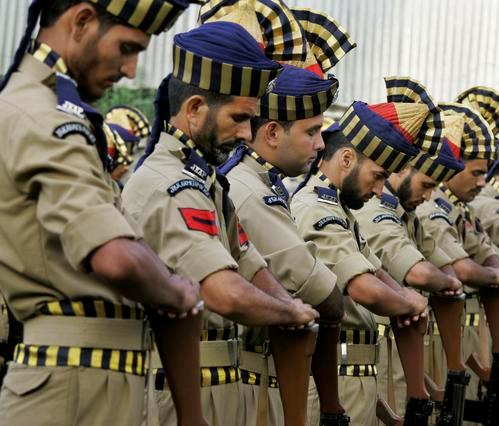
Over 100 opposition activists were arrested in a police crackdown in the run-up to the strike

Sahara Khatun, the interior minister, gave warning that the government would prevent violence and lawlessness by all means.

Among those held were at least five leaders of the opposition Bangladesh Nationalist Party (BNP).  Officers said they provoked the strikers to damage public property.

Security forces used tear gas and batons in some areas to break up unruly demonstrations, Police Commissioner A.K.M Shahidul Hoque told CNN by phone from Dhaka, the Bangladeshi capital.  About 18 officers were injured when protesters pelted them with stones, he said.

But Hoque claimed the 12-hour shutdown had little impact on attendance in government offices.  In addition, rail, river and air traffic was normal, although private long-route transport mostly stayed off the road, he said.

In Dhaka, between 1,000 and 1,500 activists held demonstrations in small groups, Hoque said.  The largest protest in the city numbered about 300 strikers, he added.

Bangladesh television said activists of the ruling Awami League party clashed with opposition supporters near a university in Dhaka where witnesses said a legislator and 10 others were injured as police used batons to halt street marches.

Public transport and most businesses remained closed across the country.

Prime Minister Sheikh Hasina, who leads the Bangladesh Awami League, said on Saturday: “The BNP and its stooges are out to frustrate democracy and create anarchy.”

Most Bangladeshis have observed a general strike called by the opposition.  Such general strikes are a regular part of political life in Bangladesh.  Many people treat them as holidays but others avoid going to work in case opposition supporters attack them, he adds.

For more information, please see:

CNN World – More than 160 arrested in violent Bangladesh strike – 27 June 2010

Al-Jazerra English – Bangladesh hit by general strike – 27 June 2010

BBC – Bangladesh opposition stages general strike – 27 June 2010