Peru: Human Rights High Court Too Lenient On Security Force Members

By Ricardo Zamora
Impunity Watch Reporter, South America
By Ricardo Zamora
Impunity Watch Reporter, South America

LIMA, Peru – Human rights groups in Peru are complaining about setbacks in trials and leniency of punishments for security force members responsible for crimes against humanity during the Peruvian Counterinsurgency War.

The court dealing with these trials is the Sala Penal Nacional, the highest-level court dealing with human rights cases against members of the armed forces.  Since 2009, the tribunal has acquitted 65 accused and convicted only 15.  The rate of impunity within these trials is worrying human rights groups all over the country.

“There’s a clear tendency towards impunity on the part of the Sala Penal Nacional in cases of extremely serious human rights violations, that benefits members of the military and police who should be punished for the crimes they committed,” said Ronal Gamarra, executive secretary of the National Human Rights Coordinating Committee.

Many facing the tribunal have committed several crimes against humanity pursuant to orders from former Peruvian president, Alberto Fujimori.  Gamarra, who took part in the trial against Fujimori, said that those defending the accused are, in essence, “paving the way for an amnesty for the members of the criminal commandos that acted under the former president’s orders.”

While support of the military is one of the main causes of delay in judicial proceedings, military supporters allege that the delay is actually caused by human rights groups and the judiciary.  Peruvian Defense Minister and military supporter, Rafael Rey, recently reported that there is no information on the members of the military who were posted at a number of army counterinsurgency bases.  The report noted that “there are no documents because in the counterinsurgency period military personnel were given their orders verbally, using aliases as a security measure.”  Therefore, Rey concludes, military members being accused are victims of “judicial persecution.” But the lack of documents raises the inference that there was an attempt at hiding crimes against humanity.

Legal Defense Institute lawyer, Carlos Rivera, said that “in many cases, the trials drag on because the armed forces refuse to hand over information about the identity of the members of the military, who operated under aliases, or because they resist putting the accused at the disposal of the justice system.”  In lights of these facts, the military nevertheless accuses human rights groups and the judiciary of dragging out the trials, he added.

In a related investigation of several acquittals, Rivera found an “alarming” willingness of the Sala Penal Nacional to acquit defendants based on “questionable arguments.”  He noted that when perpetrators could not be identified for whatever reason, the tribunal would just assume the murders never happened.

Floria Cano, a lawyer with the Association for Human Rights, said that “Rey asks us to be tolerant of the [military].  Our response is that we are, and we will remain, intolerant of impunity.”  She added that the survivors remain eager to find out the truth and to see justice done.

For more information, please see:

Terraviva – Peru Faces Severe Setbacks for Justice in Cases Involving Military – 21 June 2010

Global Issues – Rights-Peru: Severe Setbacks for Justice in Cases Involving Military – 19 June 2010

IPS – Severe Setbacks for Justice in Cases Involving Military – 19 June 2010

Iran hangs Sunni militant group leader

By Polly Johnson
Impunity Watch Reporter, Middle East

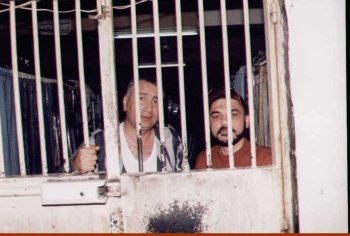
Sunni militant group leader Abdolmalek Rigi was hanged on Sunday. [Photo Courtesy of BBC.]

TEHRAN, Iran – The leader of a former Sunni militant group was hanged in Iran on Sunday after being convicted of seventy-nine crimes in Iran, including murder, terrorist activities, armed robbery, kidnapping, and assassination attempts, among other serious crimes.

On the orders of the Islamic Revolution Court, Abdolmalek Rigi was hanged at dawn at Tehran’s Evin prison in front of family members of the victims of his crimes. Intelligence agents arrested him in February over the Persian Gulf while on a flight from Dubai to Kyrgyzstan.

His younger brother, Abdulhamid, was executed last month in Iran.

Jundallah (Soldiers of God) has been blamed by Iran for carrying out bombings, abductions, and killings in the southeastern Sistan-Balochistan province, which borders Pakistan and is about seven hundred miles southeast of Tehran. The group says it is fighting to defend the rights of ethnic Baluchis, the majority of whom live in Sistan-Baluchistan. Iran has accused the group of trying to destabilize Iran. Jundallah claims that it just wants freedom from persecution.

Sistan-Baluchistan is a center of drug trafficking, kidnappings, and armed clashes. Iran claims that Jundallah is similar to Al Qaeda, and also that Jundullah receives support from the United States, the United Kingdom, and Pakistan. All three countries have vehemently denied such allegations.

On October 18, 2009, Jundallah killed forty-two people, including six senior Revolutionary Guards commanders, in Sistan-Baluchestan. A bombing in a Shia mosque in Zahedan killed twenty-five people in May 2009.

Tehran authorities said that Rigi was en route to a meeting with U.S. or Western officials in Kyrgyzstan. Ragi, in a video statement broadcast on Iranian television said, “They said they would cooperate with us and would give me military equipment.”

According to a court statement, Rigi “collaborated and ordered fifteen armed abductions, confessed to three murders, and order the murders of tens of citizens, police and military personnel through bombings and armed actions.”

“The execution of Abdolmalek Rigi is the result of his shameful acts, and other criminals should be aware that if they continue with their outrageous acts against Islam in the country, they will meet the same fate as this criminal,” state news agency IRNA quoted Nazir Ahmed Salami, a top Sunni cleric who represents the province in the Assembly of Experts, as saying.

For more information, please see:

Tehran Times – Terrorist mastermind Abdolmalek Rigi hanged – 21 June 2010

BBC – Iran hangs Sunni militant leader Abdolmalek Rigi – 20 June 2010

CNN – Iran executes militant group leader – 20 June 2010

Los Angeles Times – Iran hangs leader of outlawed Sunni militant group – 20 June 2010

Jakarta Globe – Iran’s top Sunni rebel hanged – 20 June 2010

FOX News – Iran hangs man accused of leading insurgent group active near border with Pakistan – 19 June 2010

War Crimes Prosecution Watch, Vol. 5, Issue 6 – June 21, 2010

War Crimes Prosecution Watch is prepared by the International Justice Practice of the Public International Law & Policy Group and the Frederick K. Cox International Law Center of Case Western Reserve University School of Law.


INTERNATIONAL CRIMINAL COURT

Central African Republic & Uganda

Darfur, Sudan

Democratic Republic of the Congo (ICC)

Kenya

AFRICA

International Criminal Tribunal for Rwanda

Special Court for Sierra Leone

EUROPE

European Court of Human Rights

Court of Bosnia & Herzegovina, War Crimes Chamber

International Criminal Tribunal for the Former Yugoslavia

Serbia

TOPICS

Terrorism

Piracy

Universal Jurisdiction

Kyrgyzstan Chaos Shows Signs of Ethnic Cleansing

By David L. Chaplin II
Impunity Watch Reporter, Asia

JALAL-ABAD, Kyrgyzstan – A Humanitarian crisis and signs of ethnic cleansing is exposed as homes and business have been marked with ethnic background identifying symbols, forcing the displacement of 1 in 4 people and questionable survival for those whom remain.

The ethnic bloodletting has killed hundreds and set off a massive wave of refugees, with 400,000 people crammed in squalid camps with little access to clean water and food.

Men cry in the village of Shark, outside Osh, by a destroyed building

The Central Asian state’s interim leader believes the number of people killed since violence erupted just over a week ago may be as high as 2,000.

Up to a million people are said to have been affected by fighting between the Kyrgyz majority and minority Uzbeks. Many of those who fled their homes are staying in Uzbekistan.

“Where can we go now? Our belief in the future is dead,” said Mamlyakat Akramova, who lived in the center of Osh, Kyrgyzstan’s second-largest city and the epicenter of the violence that broke out last week.

Entire Uzbek neighborhoods of southern Kyrgyzstan have been reduced to scorched ruins by rampaging mobs of ethnic Kyrgyz who forced nearly half of the region’s roughly 800,000 Uzbeks to flee for their lives.

John Holmes, head of the UN Office for the Co-ordination of Humanitarian Affairs urged a “generous and rapid response” from donors.

“I have been shocked by the extent of the violence and appalled by the deaths and injuries, widespread arson, sexual violence, looting of state, commercial and private property and destruction of infrastructure,” he said.

Muslim tradition of burying the dead before sunset on the day of death meant many hundreds of victims had not been counted.  Eyewitnesses and victims have repeatedly said that the violence was orchestrated, and many have accused soldiers from the Kyrgyz military of being involved.

Uzbeks in Osh complained the government was doing too little to alleviate their suffering and said they were relying on small amounts of aid from Uzbekistan.  Many refugees complained humanitarian supplies were being blocked and stolen by Kyrgyz officials.

“This is our nation, this is a holy land, but I can’t live here anymore,” said Mukhabat Ergashova, a retiree who had taken shelter with dozens of other in a crowded tent.

“We are all witnesses to the fact that innocent citizens were fired upon from an armored personnel carrier by soldiers in military uniform.  I don’t know whether they were from the government or some third party, but they only shot at Uzbeks,” said Sabir Khaidir, and ethnic Uzbek in Jalal-Abad.

For more information, please see:

CNN World – Kyrgyzstan investigating whether troops involved in ethic violence – 20 June 2010

BBC – UN launches $71m appeal for Kyrgystan refugee crisis – 19 June 2010

The Huffington Post – Kyrgyzstan Violence Claims Up to 2,000 Lives – 18 June 2010

Unsafe Conditions in Mine Result in Deadly Explosion

By R. Renee Yaworsky
Impunity Watch Reporter, South America

Mourners in shock after blast. Photo courtesy of Colombia Reports.

AMAGA, Colombia—Little hope remains for dozens of workers who are trapped in a coal mine after an explosion.  At least 18 workers were killed and over 50 are still unaccounted for.  Rescue efforts have been stifled by dangerous gases and the fact that rescuers do not have oxygen tanks.

The mine explosion occurred late Wednesday in the San Fernando mine, located in a rural town south of the Antioquia state capital.  The blast happened during a shift change in an access tunnel.  It is believed that a buildup of methane gas was to blame.

“It’s unlikely that there are any survivors given the accumulation of methane gas and carbon monoxide,” Luz Amanda Pulido, Colombia’s National Disaster director, told the Associated Press.  Rescuers have been hindered by intense heat and a collapse in the tunnel.  Officials estimate that the rescue and recovery operation could take two weeks.

President Uribe, who met with miners’ relatives, admitted he felt “helpless” given the dire situation.  “They are now bringing in some fans that were unfortunately not in place before,” he explained, referring to gas extractor fans that were missing in the mine.

Mining Minister Hernan Martinez said the mine lacked basic safety features common to the mining industry, such as a methane ventilation pipe or gas detector. Relatives of the trapped miners said temperatures inside the mine often ranged from 104 to 113 degrees.

A school near the mine was set up as a makeshift morgue.  Coroners said most of the victims died from burns caused by the explosion.  Several bodies were burned beyond recognition.  Survivor Walter Restrepo, who escaped the mine in time, recalled: “A rain of fire fell on top of me.”

The San Fernando mine has about 600 workers and is one of Colombia’s 3,000 underground mines that produce 6 million metric tons of coal each year.  Mine disasters seem increasingly common.  A similar incident occurred a year and a half ago, trapping five miners, one of whom died.  Last year, at a nearby mine, nine miners were killed by an explosion.  No new safety regulations were instituted.

Colombia’s Institute for Geology and Mining will conduct an investigation into the inadequate safety regulations in the mine.  According to Martinez, the mine will not reopen until the investigation is complete.

Half of Colombia’s population lives beneath the official poverty line and working conditions are notoriously inadequate.  High levels of unemployment force youth to risk their lives in dangerous mines that lack safe conditions.  Often the pay in these mines is very low, especially when compared to the hazards involved.

For more information, please see:

Colombia Reports-Government to take care of families of deceased miners-19 June 2010

Axis of Logic-Over 50 miners trapped in a Colombian coal mine-19 June 2010

LA Times-Little hope for 53 missing miners in Colombia-19 June 2010

AP-Little hope for trapped Colombian miners-18 June 2010