War Crimes Prosecution Watch, Vol. 5, Issue 6 – June 21, 2010

War Crimes Prosecution Watch is prepared by the International Justice Practice of the Public International Law & Policy Group and the Frederick K. Cox International Law Center of Case Western Reserve University School of Law.


INTERNATIONAL CRIMINAL COURT

Central African Republic & Uganda

Darfur, Sudan

Democratic Republic of the Congo (ICC)

Kenya

AFRICA

International Criminal Tribunal for Rwanda

Special Court for Sierra Leone

EUROPE

European Court of Human Rights

Court of Bosnia & Herzegovina, War Crimes Chamber

International Criminal Tribunal for the Former Yugoslavia

Serbia

TOPICS

Terrorism

Piracy

Universal Jurisdiction

Kyrgyzstan Chaos Shows Signs of Ethnic Cleansing

By David L. Chaplin II
Impunity Watch Reporter, Asia

JALAL-ABAD, Kyrgyzstan – A Humanitarian crisis and signs of ethnic cleansing is exposed as homes and business have been marked with ethnic background identifying symbols, forcing the displacement of 1 in 4 people and questionable survival for those whom remain.

The ethnic bloodletting has killed hundreds and set off a massive wave of refugees, with 400,000 people crammed in squalid camps with little access to clean water and food.

Men cry in the village of Shark, outside Osh, by a destroyed building

The Central Asian state’s interim leader believes the number of people killed since violence erupted just over a week ago may be as high as 2,000.

Up to a million people are said to have been affected by fighting between the Kyrgyz majority and minority Uzbeks. Many of those who fled their homes are staying in Uzbekistan.

“Where can we go now? Our belief in the future is dead,” said Mamlyakat Akramova, who lived in the center of Osh, Kyrgyzstan’s second-largest city and the epicenter of the violence that broke out last week.

Entire Uzbek neighborhoods of southern Kyrgyzstan have been reduced to scorched ruins by rampaging mobs of ethnic Kyrgyz who forced nearly half of the region’s roughly 800,000 Uzbeks to flee for their lives.

John Holmes, head of the UN Office for the Co-ordination of Humanitarian Affairs urged a “generous and rapid response” from donors.

“I have been shocked by the extent of the violence and appalled by the deaths and injuries, widespread arson, sexual violence, looting of state, commercial and private property and destruction of infrastructure,” he said.

Muslim tradition of burying the dead before sunset on the day of death meant many hundreds of victims had not been counted.  Eyewitnesses and victims have repeatedly said that the violence was orchestrated, and many have accused soldiers from the Kyrgyz military of being involved.

Uzbeks in Osh complained the government was doing too little to alleviate their suffering and said they were relying on small amounts of aid from Uzbekistan.  Many refugees complained humanitarian supplies were being blocked and stolen by Kyrgyz officials.

“This is our nation, this is a holy land, but I can’t live here anymore,” said Mukhabat Ergashova, a retiree who had taken shelter with dozens of other in a crowded tent.

“We are all witnesses to the fact that innocent citizens were fired upon from an armored personnel carrier by soldiers in military uniform.  I don’t know whether they were from the government or some third party, but they only shot at Uzbeks,” said Sabir Khaidir, and ethnic Uzbek in Jalal-Abad.

For more information, please see:

CNN World – Kyrgyzstan investigating whether troops involved in ethic violence – 20 June 2010

BBC – UN launches $71m appeal for Kyrgystan refugee crisis – 19 June 2010

The Huffington Post – Kyrgyzstan Violence Claims Up to 2,000 Lives – 18 June 2010

Unsafe Conditions in Mine Result in Deadly Explosion

By R. Renee Yaworsky
Impunity Watch Reporter, South America

Mourners in shock after blast. Photo courtesy of Colombia Reports.

AMAGA, Colombia—Little hope remains for dozens of workers who are trapped in a coal mine after an explosion.  At least 18 workers were killed and over 50 are still unaccounted for.  Rescue efforts have been stifled by dangerous gases and the fact that rescuers do not have oxygen tanks.

The mine explosion occurred late Wednesday in the San Fernando mine, located in a rural town south of the Antioquia state capital.  The blast happened during a shift change in an access tunnel.  It is believed that a buildup of methane gas was to blame.

“It’s unlikely that there are any survivors given the accumulation of methane gas and carbon monoxide,” Luz Amanda Pulido, Colombia’s National Disaster director, told the Associated Press.  Rescuers have been hindered by intense heat and a collapse in the tunnel.  Officials estimate that the rescue and recovery operation could take two weeks.

President Uribe, who met with miners’ relatives, admitted he felt “helpless” given the dire situation.  “They are now bringing in some fans that were unfortunately not in place before,” he explained, referring to gas extractor fans that were missing in the mine.

Mining Minister Hernan Martinez said the mine lacked basic safety features common to the mining industry, such as a methane ventilation pipe or gas detector. Relatives of the trapped miners said temperatures inside the mine often ranged from 104 to 113 degrees.

A school near the mine was set up as a makeshift morgue.  Coroners said most of the victims died from burns caused by the explosion.  Several bodies were burned beyond recognition.  Survivor Walter Restrepo, who escaped the mine in time, recalled: “A rain of fire fell on top of me.”

The San Fernando mine has about 600 workers and is one of Colombia’s 3,000 underground mines that produce 6 million metric tons of coal each year.  Mine disasters seem increasingly common.  A similar incident occurred a year and a half ago, trapping five miners, one of whom died.  Last year, at a nearby mine, nine miners were killed by an explosion.  No new safety regulations were instituted.

Colombia’s Institute for Geology and Mining will conduct an investigation into the inadequate safety regulations in the mine.  According to Martinez, the mine will not reopen until the investigation is complete.

Half of Colombia’s population lives beneath the official poverty line and working conditions are notoriously inadequate.  High levels of unemployment force youth to risk their lives in dangerous mines that lack safe conditions.  Often the pay in these mines is very low, especially when compared to the hazards involved.

For more information, please see:

Colombia Reports-Government to take care of families of deceased miners-19 June 2010

Axis of Logic-Over 50 miners trapped in a Colombian coal mine-19 June 2010

LA Times-Little hope for 53 missing miners in Colombia-19 June 2010

AP-Little hope for trapped Colombian miners-18 June 2010

Female Genital Mutilation Remains Widespread Practice Among Iraqi Kurds

By Dallas Steele
Impunity Watch Reporter, Middle East

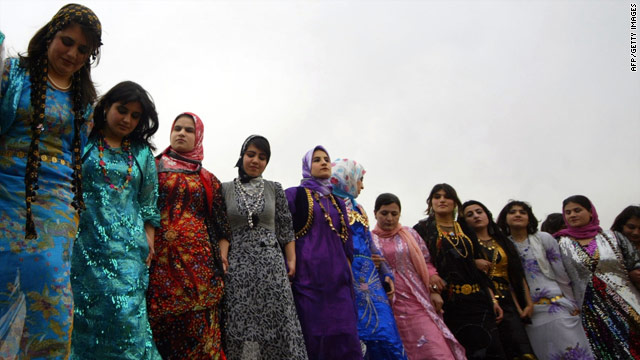
Kurdish Girls and Women are at Risk of Forced Female Circumcisions. (Photo Courtesy of CNN)
Kurdish girls and women remain at risk of receiving forced circumcisions. (Photo Courtesy of AFP)

SULAIMANIYA, Iraq– In the autonomous Iraqi region of Kurdistan, female circumcision continues to occur, and has become increasingly prevalent in the last decade. The procedure, medically known as clitoridectomy, involves the partial or total removal of the clitoris.

In Kurdistan, the operation is typically performed by individuals who have not received medical training, and often conducted with an unsantized razor blade. The practice, which is neither mandated by Islam nor found in the Koran, is intended to deprive young girls and women of any sexual urges or desires in order to preserve their fidelity.

Although the Kurdish Regional Government (KRG) does not keep statistics on female circumcisions or post-operative medical consequences, it is believed that at least forty percent of girls and women in Iraq’s Kurdistan region have undergone the procedure. Other studies have found that up to eighty percent of women fourteen years of age and older have had at least a partial clitoridectomy.

The KRG has received increasing pressure to enact legislation banning the practice on young girls and unconsenting adult women. The KRG’s Justice Ministry circulated an order in 2007 announcing that it would arrest and punish any practitioners of female genital mutilation. Furthermore, a draft law banning the practice was enacted by the Kurdistan Regional Parliament in 2007.  However, both efforts by the KRG to suppress the practice have largely been ignored.  

Kurdish women who have undergone the procedure have testified to the damaging effects that procedure has, physically and mentally. Baxcha A., a twenty-two-year-old married woman, relayed her nightmarish experience to members of Human Rights Watch as they conducted a survey on the topic in 2009. Baxcha told the advocacy organization how, at the age of five, she was held to the ground, and was forced to undergo the surgery. Baxcha reported that she only given water and ash to place on the wound after the procedure.

Human Rights Watch, and other human rights groups, have called on Kurdish authorities to outlaw the practice and enforce a ban on female genital mutilation. Kurdish officials have responded by downplaying the statistics of various studies concerning female circumcision in the area. Furthermore, Mariwan Naqshbandi, spokesman for Kurdistan’s Ministry of Endowment and Religious Affairs, has dismissed the surveys and stated that Kurdistan has “issues far more important” to confront than female genital mutilation.

For more information, please see:

CNN – Human rights group urges Kurds to ban female circumcision – 17 June 2010

BBC – HRW presses Iraqi Kurds to ban female circumcision – 16 June 2010

The New York Times – Kurdistan Is Urged to Ban Genital Cutting – 16 June 2010

Anniversary of Iranian Election Passes Quietly, but not Unnoticed

By Warren Popp
Impunity Watch Reporter, Middle East

Green Revolution Protesters (Photo by jeffmcneill on Flickr)
Large numbers of "Green Revolution" Protesters took to the streets last year (Photo by "jeffmcneill" on Flickr)
TEHRAN, Iran – Last Saturday marked the one-year anniversary of the “Green Revolution” in Iran, the protest movement that formed in reaction to the outcome of the Iranian presidential elections, with many Iranians believing that the opposition candidate, Mir Hossein Mousavi, was the legitimate winner over incumbent President Mahmoud Ahmadinejad. The massive protests were met by a violent government crackdown which killed dozens of people and led to the imprisonment of many others.

Iranian authorities, most prominently Supreme Leader Ayatollah Ali Khamenei, blamed last year’s massive protests on Western powers, accusing them of orchestrating the protests as part of an attempt to topple the Iranian regime.

While opposition leaders made plans to organize major protests to mark the anniversary, they called off the plans, “to protect the lives and property of people,” when the government both denied their protest permit and vowed to suppress any protests. Mousavi told his supporters that the “best means” to voice their discontent is to expand the social networks and websites: The same sources that originally propelled the movement and gave it the nickname, the “Twitter Revolution.”

The one-year anniversary was met with a relatively calm response in Iran, with small protests, sporadic clashes, and reports of ninety one  protesters arrested, including a political ally of Mousavi’s, Davoud Roshani, and a labour union activist, Reza Shahabi.

Iran’s Intelligence Ministry reportedly sent text messages to random citizens that were clearly designed to intimidate them. Bloomberg Businessweek cited the website Rahesabz as reporting that the messages said: “Dear citizen, you have been deceived by the foreign media and are cooperating with them. If repeated, you will be dealt with according to the Islamic punishment law.”

The international community takes notice

GENEVA, Switzerland – While the response to the June 13th anniversary inside Iran was limited, the international community seized the opportunity to condemn the extensive human rights abuses in Iran. On June 11, 2010, criticism was levelled against Iran when the Human Rights Councils conducted its Universal Periodic Review of Iran. Countries such as the United States, Britain, and Norway accused Iran of violating human rights, freedom of speech and expressions, and denying access to the Council’s special rapporteurs—specialists who are given mandates to report on various human rights issues.

The Iranian delegation responded that they welcomed visits by the special rapporteurs in “due course”; however, no special rapporteur has been given access to Iran since 2005. Some of Iran’s allies and neighbors in the Council, such as Kuwait, Pakistan, Venezuela, and Cuba, praised and defended Tehran’s human rights record in the same Council meeting.

On 17 June, 2010, Iran also became a contentious topic in the Human Rights Council when Norway, on behalf of fifty-four countries, gave a statement marking the anniversary of Iran’s election crackdown, criticizing Iran’s human rights record, especially since last year’s election, including, “the violent suppression of dissent, detention and executions without due process of law, severe discrimination against women and minorities including people of the Bah’ai faith, and restrictions on freedom of expression and religion.”

Iran responded to the crticism by issuing a procedural challenge, claiming that country-specific statements are not allowed under the particular topic, the Vienna Declaration and Program of Action. With the support of several other countries on the Council, the Council was delayed by several hours as the Council sought to avoid a contentious vote on the issue.

World leaders, including United States President Barack Obama, and NGOs such as Amnesty International also used the June 13th anniversary as an opportunity to criticize the human rights record of Iran, and to call for the World community to support the Iranian people in the fight for freedom. In a statement, President Obama said, “It is the responsibility of all free people and free nations to make it clear that we are on the side of those who seek freedom, justice and dignity, as surely as hope and history are.” He also said the election will be “remembered for how the Iranian government brutally suppressed dissent and murdered the innocent, including a young woman left to die in the street.”

For more information, please see:

Tehran Times – 91 Detained in Tehran on Presidential Poll Anniversary: Police – 17 June 2010

Washington Times – Editorial: Iran’s Twitter Revolution – 16 June 2009

Wall Street Journal – On Vote Anniversary, Iran Is Quiet Amid Heavy Security – 14 June 2010

Al Jazeera – Iran Marks Poll Anniversary – 13 June 2010

Bloomberg Businessweek – Iran Authorities Say 91 People Detained on Election Anniversary – 13 June 2010

BBC – Tehran Clashes Reported on Iran Vote Anniversary – 12 June 2010

Inter Press Service – Iran Pressured to Open Doors to U.N. Rights Investigators – 11 June 2010

AFP – Obama Urges Support for Iranian ‘Freedom’ – 10 June 2010

AP – US Urges Iran to Fulfill Human Rights Pledges – 10 June 2010

N.Y. Times – Iran Defends Rights Record as Opposition Cancels Rally – 10 June 2010