Refugee Hunter Arrested in South Korea for Spying

By M.E. Dodge
Impunity Watch Reporter, Asia

SEOUL, South Korea – A South Korean man was recently arrested in Seoul, for allegedly ‘hunting’ North Korean refugees hiding in China and sending them back to North Korea. According to numerous news sources, Kim, the man identified as the refugee hunter, is also accused of spying on the South’s military and on people aiding refugees.

Map Map of South Korea. Image courtesy of BBC World News.
Kim, age 55, was recruited by North Korea during an illegal visit to China in the late 1990s. According to Yonhap news agency, he received espionage training in Pyongyang in 2000 before being sent to China as an agent to locate defectors. One news source reported that Kim went to Pyongyang not only for spy training, but also to get $10,000 and 4.4 pounds (2 kilograms) of narcotics from the North. 

Kim allegedly was involved in finding some of the tens of thousands of North Koreans believed to be in China after fleeing to escape hardship or persecution at home. Human rights activists claim that North Korean individuals captured in China and sent back face severe punishment or even execution.

An undisclosed number of South Korean activists and missionaries also secretly operate in China to smuggle North Koreans from their homeland and shelter and feed defectors before they take refuge in South Korea, the U.S. and elsewhere in the world. However, it is believed that almost 18,000 North Koreans have arrived in South Korea since the 1950-1953 war.

Kim was arrested after returning to North Korea on a flight from China. Officials commented that Kim’s case was being investigated to see whether he had any further accomplices engaged in spying. Seoul prosecution spokesman Oh Se-in made a statement to AP news agency that Kim had denied all charges brought against him. Oh went on to say that Kim was charged with violating South Korea’s National Security Law, which prohibits nationals from engaging in activities which could benefit Pyongyang or having unauthorized contact with North Koreans.

It is unclear what Kim’s sentence will be if convicted. His case could theoretically lead to a death sentence. The South’s anti-communist National Security Law bans citizens from contacting North Koreans without government approval and punishes activities benefiting the North. Any violation of the law is subject to a maximum penalty of death, although Seoul has imposed an unofficial moratorium on hangings since 1997.

For more information, please see:

The Washington PostProsecutors arrest SKorean for spying for NKorea – 12 April 2010

BBC World News – Seoul detains ‘North Korean refugee hunter’ – 12 April 2010

C NewsSouth Korean man accused of spying for North – 12 April 2010 

115 Haitians Arrested at U.S.-Canadian Border

By William Miller

Impunity Watch Reporter, North America

QUEBEC, Canada – United States Border Patrol has arrested at least 115 people of Haitian descent this year trying to cross the border illegally from Quebec, Canada to Vermont, United States. Authorities say that this record increase coincides with the earthquake in Haiti on January 12.

Several reasons have been cited for the spike in illegal immigration. Many have family in the U.S. and are attempting to reunite with them. Others are looking to make more money working in the U.S. to send to family still in Haiti.

Many of the illegal immigrants falsely believe that a temporary ban in the U.S. on deportations to Haiti will protect them. The ban, however, only applies to those who were already in the U.S. when the January 12 earthquake struck.

Almost all of the Haitians originally entered the U.S. and were ordered deported. Instead, many of them went to Canada in an attempt to take advantage of their refugee program. They attempted to re-enter the United States after the ban was passed thinking it would protect them from deportation. Many of those caught trying to re-enter the U.S. had already filed for refugee status in Canada.

Authorities believe that there may be an underground network of human traffickers assisting the Haitians attempting to enter the United States. This organized ring may be contributing to the rumors that the eighteen-month ban on deportation to Haiti will apply to those entering the country now.

Most of the Haitians caught were attempting to cross at night at unguarded boarder areas and were headed to New York and Miami where there are large populations of Haitians.

The U.S. Attorney will prosecute at least thirty-five of the Haitians for re-entering the country with an outstanding deportation order. The illegal aliens could face up to two years in prison if found guilty.

The U.S. Attorney’s Office has discretion in deciding to prosecute those entering the country illegally. They have already said that they cannot ignore such a large influx of immigrants. “Having this scale of individuals from one nationality [Haitian] over a short period of time is unusual. It’s an issue that requires us to respond with a significant message of deterrence. We have laws against illegal immigration,” Tristram Coffin, the U.S. Attorney for Vermont, said from Burlington on Monday.

For more information, please see:

CBC – Illegal Haitians Caught at U.S. Border – 6 April 2010

Globe and Mail – Haitian Illegally Travelling to U.S. Looking for Asylum get Jail Time – 5 April 2010

Digital Journal – Vermont a Hotspot for Haitians Sneaking into U.S. – 4 April 2010

Up to 400 Dead in Favela Landslide Despite Known Risks

By Sovereign Hager
Impunity Watch Reporter, South America

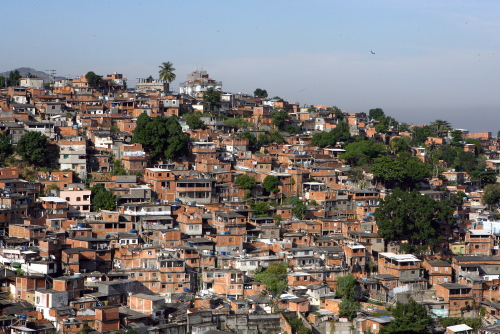
Photo Courtesy of banco.agenciaoglobo.com

RÍO DE JANIERO, Brazil-At least two hundred and fifty six people are dead after a hillside collapsed due to heavy rain. A landslide caused the collapse that buried a favela or shantytown. Recent reports indicate that the Brazilian government was aware of the danger the favela posed, but did nothing to mitigate the risk. People on the ground fear that the death toll will rise as high as four hundred as bodies are uncovered. There are also fears of disease as the bodies begin to decompose.

The favela, known as Favelo Moro do Bumba was built on a former landfill. Researchers who studied the community argue that the risk to the nearly 400 residents was clear. The Federal Flumininse University (UFF) published two reports on the risks that the illegal occupation of the landfill posed, but the government did nothing. The reports included suggestions of measures the government could take to prevent death by landslide.

A 2007 report by UFF found one hundred and forty three areas that are susceptible to landslides. Other experts point to global climate change and overpopulation as sources of the extreme weather hitting Brazil. In another favela, known as Guararapes, a recent landslide has been traced to the diversion of a former source of drinking water for a private real estate development located at the peak of a hill. A local resident told IPS that since the development, water has been filtering down and eroding the hillside which allegedly caused the landslide.

The new community water tank in Guararapes burst after record rainfall, fell, and killed three children. A local resident told IPS that the government is “covering it all up, because this is a tourist area.” The train to the giant statue of Christ the Redeemer runs up the hill where Guararapes is located. People in the Gurarapes are reportedly sleeping outside, exposed to the elements now that their homes have been destroyed.

The Brazilian government has expressed embarrassment, but does not admit any prior knowledge of risk. Further rainfall is expected in the coming weeks.

For more information, please see:

Kaosenlared-Río de Janiero: Micro y Macro Razones de la Trajedia-11 April 2010

IPS-Brazil: A Trajedy of Local and Global Dimensions-9 April 2010

Hoy.com-Riesgo de deslave en Niterói se conocía desde 2004-10 April 2010

Somalia’s Al Shabaab Pulls Forces BBC off the Air

By Jared Kleinman
Impunity Watch Reporter, Africa Desk

MOGADISHU, Somalia — Somali Islamists insurgents seized radio transmitters that let the local population hear news programs from the British Broadcasting Corporation Friday. Militia group al-Shabaab, who profess loyalty to al Qaeda and are fighting a deadly insurgency in the anarchic Horn of Africa nation, also said they had looted transmission equipment belonging to the BBC.

“Starting from today all BBC FM stations in the areas controlled by al Shabaab will be off air and their equipment will be taken over,” the group said in an emailed statement. “BBC is owned by England and it spreads (a) colonial and Christian agenda in the Muslim world. BBC fights Islam … it is against the Islamic administration in Somalia.”

The BBC broadcasts its London-based programming onto its own local FM frequencies in Somalia and local stations relay its signal. The BBC does not have any studios in Somalia.

Jerry Timmins, BBC Head of International Relations & Africa Region, said, “We are disappointed in this interference with our broadcasts in Somalia as in the end, it is the Somali people who are most affected.”

“The BBC speaks to all sides in Somalia — including al-Shabaab — and reports events as they unfold. It is essential for the people of Somalia that the BBC is allowed to continue to report accurately and impartially on the situation in the country without undue interference from anyone,” he said. The BBC has been broadcasting in Somali for 50 years.

The National Union of Somali Journalists (NUSOJ) has decried a crackdown on press freedom in recent weeks and called the clampdown on the BBC an act of repression. “This…is a strong demonstration of the gravity of media repression by al Shabaab. We are very concerned at the obvious intent…to get tough on journalists and media organizations that have taken an independent attitude of reporting,” NUSOJ said.

Al-Shabaab insurgents control much of southern and central Somalia, including large portions of Mogadishu. They frequently threaten or assassinate journalists whose coverage they disagree with.

The group wants to topple the country’s weak U.N.-backed government and replace it with an Islamic state. Somalia has not had an effective government for nearly 20 years.

For more information, please see:

Reuters – Somalia’s al Shabaab Takes BBC Off Air – 9 April 2010

Garowe Online – Al-Shabaab orders BBC off air in Somalia – 9 Apr 2010

Associate Press – Somali Islamists seize radio transmitters for BBC – 9 April 2010

Religious Leader Visit Creates Controversy in Nigeria

By Jennifer M. Haralambides
Impunity Watch Reporter, Africa

LAGOS, Nigeria –  Nigerian President Umaru Yar’Adua’s critics are accusing the ailing president’s allies of working to undermine the country’s acting president’s efforts.

President Yar’Adua has not appeared in public for months due to his health.  In November 2009, the President left Nigeria for Saudi Arabia for medical treatment of a heart condition.   Most recently, a groups of clergymen have made visits to the President.   On separate occasions, both Muslim and Christian religious leaders made visits offering support and prayers.

After the visits, all of the religious leaders declined to offer any details regarding the health of the ailing leader.

Acting President, Goodluck Jonathan, who was formerly the Vice President, has been able to see or access President Yar’Adua since his return to Nigeria in February.  Many fear that the President’s family may be restricting access to him.

Human Rights lawyer Femi Falana has spoken out claiming that the visits by religious leaders were, “part of the moves by Yar’Adua’s wife to cause further confusion in politics . . . to give the impression that her husband will soon return to office.”

She goes on to say that, “[t]he timing of the visits was also important.  The motive was to frustrate the inauguration of Jonathan’s newly-appointed ministers.”

This tension between the ailing President and Goodluck Jonathan, who was thrust into office by parliament, has caused political uncertainty.  According to AFP, this has also come at a time where there is existing tension between Muslim and Christian groups.   “Religion is a powerful force in Nigeria, with the country roughly split in half between Christians and Muslims,” said AFP.

There have been no updates on President Yar’Adua’s health since November.

For more information, please see:

NEXT – Yar’Adua and the Missing Billions – 11 April 2010

The Punch – Enough of this Yar’Adua Distraction – 11 April 2010

AFP – Critics Fear Allies of Nigeria’s Ailing Leader Interfering – 10 April 2010

VOA – Controversy Grows in Nigeria Over Visit With Ailing President by Ten Religious Leaders – 8 April 2010