
|
||||||||||||||||||||||||||||||||||||||||||||||


Turkish government continues journalistic suppression, prosecution of reporters
By: Justin D. Santabarbara
Impunity Watch Reporter, Middle East
ISTANBUL, Turkey – On 2 September, Turkish security officials arrested Çagdas Erdogan for allegedly photographing the National Intelligence Agency building. Upon the initial court appearance on 3 September, Turkish officials accused Erdogan of being a member of the Kurdistan Workers’ Party (PKK). The PKK has long been categorized as a domestic terrorist organization by the Turkish government. Moreover, the charges against Erdogan are tailed toward committing acts of terrorism as a member of the PKK, rather than a photojournalist who took illegal pictures. Moreover, Turkish prosecutors have carefully made the distinction between the charges placed against Erdogan and less severe “mistakes”.
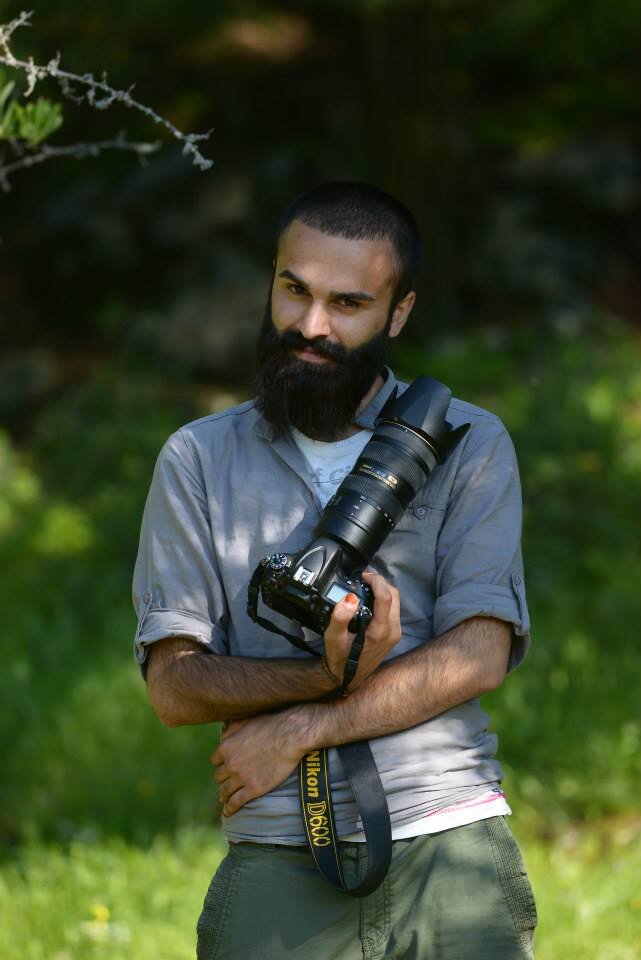
The International Committee to Protect Journalists has vocally expressed its displeasure with the investigation. “Photographing a building is not even a crime, much less an act of terrorism,” exclaimed the Committee’s Executive Director, Robert Mahony, at a recent press conference. Additionally, the International Committee to Protect Journalists has launched a number of other initiatives, including appealing to the international human rights community for support and requesting that sanctions be placed against the Turkish government for suppressing members of the media. Further, Erdogan’s extensive photojournalistic coverage of the Kurdish conflict is said to have subjected him to additional scrutiny. Aside from his alleged membership in the PKK, Erdogan is said to have been critical of the Turkish government’s treatment of the Kurdish population and the rejection of their participation in the policymaking process. Erdogan’s work is not only highly critical of the collective Turkish government, but also the security forces’ gross violation of human rights in the Kurdish regions – alleging the involvement of enforced disappearances and torturous detainment of Kurds, regardless of their purported membership in the PKK.
Erdogan’s prosecution marks the continuation of a concerted effort by the Turkish government to suppress journalistic interests under a veil of national security. There is little determinative evidence of a time frame for prosecutions against journalists. For example, Turkish prosecutors just tried thirty journalists after they were held for 414 days after their arrest. Although the trials continue to be pending, past cases have shown that prosecutors often seek lengthy prison terms, despite criticism from the international community.
Though the majority of the cases receive adverse dispositions, there are limited instances in which the international pressures influence a humanitarian release, such as the release of French journalist Loup Bureau on 18 September, who spent seven weeks in Turkey after his arrest for criticism of the Turkish government. Although the future remains uncertain for Erdogan, an intense effort by the international community has shown to have positive effects, when conducted appropriately. It will be important to note how long the Turkish government waits before progressing in the trial.
For more information, please see:
Turkish Minute – 30 Zaman journalists appear in court after 414 day detention – 18 September 2017
British Journal of Photography – Cagdas Erdogan arrested in Istanbul – 14 September 2017
ICC Asked to Investigate Crimes Against Humanity in Burundi
By: Ethan Snyder
Impunity Watch Reporter, Africa
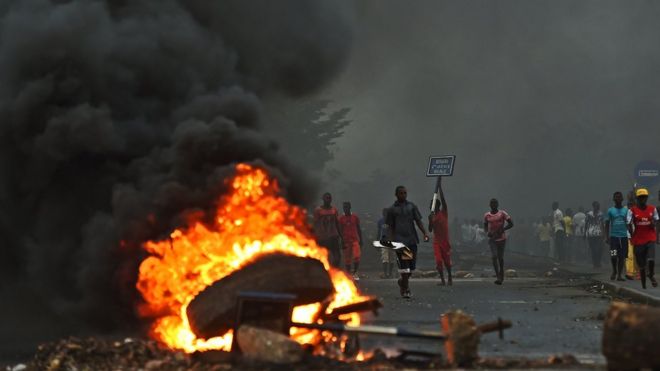
BUJUMBRA, Burundi – On Monday, September 4, the United Nations Commission of Inquiry on Burundi called upon the International Criminal Court (ICC) to investigate alleged crimes against humanity. Established in 2016, the commission was charged with examining reports of human rights violations from April 2015 to present.
President Nkurunziza announced in April 2015 that he intended to seek incumbency for a third term in conflict with Burundi’s Constitution. After an unsuccessful coup and increasing political unrest, security forces cracked down violently on suspected opposition throughout the country. It is estimated that more than 350,000 people have fled to neighboring countries that include the Democratic Republic of the Congo, Rwanda, Tanzania, and Uganda.
The commission interviewed approximately 500 witnesses who corroborated allegations of sexual violence, detention of opposition and journalists, extrajudicial executions, torture, and inhuman or degrading treatment. The Burundian government denies all allegations relating to state agents being responsible for crimes against humanity.
Chair of the Commission of Inquiry, Fatsah Ouguergouz, announced that the commission is “struck by the scale and the brutality of the violations” and that they are concerned by the “lack of will on the part of the Burundian authorities to fight against impunity and guarantee the independence of the judiciary.”
Despite multiple requests over the year-long period of investigation, the U.N. Commission was not allowed to go to Burundi and was forced to conduct the majority of their inquiry from neighboring countries.
Burundi’s lower house of parliament passed a law in 2016 to withdraw from the Rome Statute – the treaty that established the ICC. Burundi would be the first country to withdraw from the ICC. Many countries on the continent have threatened similar action citing a disproportionate number of cases and charges being brought against African nations for human rights violations. Burundi is projected to exit the ICC by October of 2017.
The ICC continues to have jurisdiction to investigate allegations of human rights violations in Burundi until their formal exit. If Burundi successfully withdraws from the Rome Statute, the ICC investigation would require a resolution from the U.N. Security Council referring the case to the ICC to continue its inquiry.
Presently, only African states have been charged in the six cases that are either ongoing or about to begin since the court was established. There are preliminary investigations that have been opened into events elsewhere in the world.
The Burundi commission noted that “[t]here is a climate of pervasive fear in Burundi. Victims have been threatened, even in exile.” Many witnesses have reported that they have been threatened or confronted by supporters of the Nkurunziza regime after fleeing to nearby countries.
Although Burundi has a history of high ethnic tensions, the commission does not find that the human rights violations are ethnically motivated.
For more information, please see:
Human Rights Council: Interactive Dialogue on Burundi – Oral Briefing by Fatsah Ouguergouz – 19 September 2017
Africa News – UN asks ICC to investigate Burundi ‘crimes against humanity’ – 5 September 2017
New York Times – U.N. Group Accuses Burundi Leaders of Crimes Against Humanity – 4 September 2017
United Nations Human Rights: Office of the High Commissioner – Burundi: Commission of inquiry calls on the International Criminal Court to investigate possible crimes against humanity – 4 September 2017
Human Rights Watch – Burundi’s refusal to cooperate with inquiry in contempt of membership on UN rights body – 4 September 2017
United Nations Human Rights: Office of the High Commissioner – Burundi: UN investigation urges strong action in light of gross, widespread and systemic human rights violations – 20 September 2016
Syria Justice and Accountability Centre: De Mistura versus the Commission of Inquiry: Where does the Syrian conflict actually stand?
|


|

According to UN Report, Migrant Children Endure Severe Human Rights Abuses
By Jenilyn Brhel
Impunity Watch Reporter, Europe
GENEVA, Switzerland – According to a September 5th report released by the United Nations Children’s Fund (UNICEF), more than 75 percent of migrant children attempting to reach Europe are victims of severe human rights abuses.

The findings are based on testimonies obtained from over 22,000 migrants and refugees, including 11,000 children, given to the International Organization for Migration, the UN’s Migration Agency.
Afshan Khan, UNICEF Europe Regional Director, said of the findings, “the stark reality is that it is now standard practice that children moving through the Mediterranean are abused, trafficked, beaten and discriminated against.”
The victims reported being subjected to a myriad of abuses, including sexual exploitation, forced labor, child marriage and beatings.
A 17-year-old girl from Nigeria reported being raped, held captive and threatened with violence. An Afghan boy recalled being forced into labor and beaten if he stopped working. Another child said, “if you try to run, they shoot you. If you stop working, they beat you. We were just like slaves. At the end of the day, they just lock you inside.”
UNICEF reports that children originating from sub-Saharan Africa are particularly at risk. Those travelling from Libya along the Mediterranean route are vulnerable due to the route being laden with crime and a lack of policing. The risk also increases for children who are travelling alone and over long periods of time.
The UNICEF report comes amid a substantial increase in the number of children migrating to Europe in recent years. Between 2010 and 2011, 66,000 children travelers were reported. That number has now surged to over 300,000.
The children making these harrowing journeys are often unaccompanied. Of those under 18 years of age arriving to Italy via the Mediterranean Sea passages from North Africa in 2016, 92% were alone.
“For people who leave their countries to escape violence, instability or poverty, the factors pushing them to migrate are severe, and they make perilous journeys knowing that they may be forced to pay with their dignity, their wellbeing or even their lives,” said IOM Regional Director for the European Union, Norway and Switzerland, Eugenio Ambrosi.
UNICEF’s report has prompted calls for the European Union and other parties to “put in place lasting solutions that include safe and legal migration pathways, establishing protection corridors and finding alternatives to the detention of migrant children,” said Khan.
For more information, please see:
ABC News – CORRECTION: United Nations – Children Migrants Story – 12 September 2017
Abdolu Agency – UNICEF says Many Young Migrants Face Exploitation – 12 September 2017
UNICEF – Up to Three Quarters of Children and Youth Face Abuse, Exploitation and Trafficking on Mediterranean Migration Routes – 12 September 2017
UN News Centre – Abuse, Exploitation and Trafficking ‘Stark Reality’ for Migrant Children Trying to Reach Europe – 12 September 2017
Reuters – ‘Just Like Slaves’; African Migrant Children Face Highest Risk of Abuse: Report – 11 September 2017
Yahoo! News UK – Young Migrants Face Abuse on Way to Europe – UN – 11 September 2017