Germany cracks down on far-left internet platforms

By: Sara Adams
Impunity Watch News Reporter, Europe

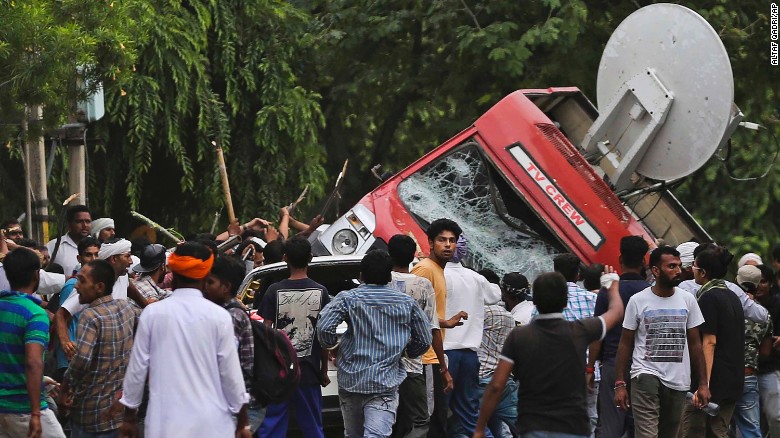
Riots erupted in Hamburg at the G20 summit in July. Image courtesy of Getty Images.

BERLIN, Germany – The German government shut down a far-left anti-capitalist website on August 25th.

The crackdown on extremism comes several weeks after anti-capitalist groups stormed the G20 summit in Hamburg. In July, the groups clashed with police, ending in violence between the two parties.

At the summit, hundreds of anti-capitalist protestors descended on Hamburg. The protestors lit cars on fire and looted near where the world leaders were convening.

The police used water cannons and tear gas to disburse the protestors. The skirmish ended with 76 police officers injured. An unknown number of protestors were injured as well.

Germany decided to take down the websites they alleged had ties to the violence at the G20 summit. The main website, linksunten.indymedia.org, was said to have been used to organize the unauthorized protest in Hamburg.

German Interior Minister Thomas de Maiziere told reporters that the websites were taken offline because they were “sowing hate against different opinions and state officials.”

While there is a Constitutional right to freedom of expression and right to peaceably assemble in Germany, de Maiziere argues that the “alt-left” websites are outside the realm of constitutional protection.

Defining the online portal as an “association” rather than a media outlet is one way the websites are not protected.

As an association, Constitutional applications are less strict. A postwar statute criminalized inciting hatred against “segments of the population.” Since the websites are not considered media outlets, they run counter to the criminal codes.

According to authorities, officers searched the home of the websites operator. They seized laptops and minor weapons like knives and pipes.

Authorities have been grabbling with the rise of digital platforms for extremist views since the recent rise of the “alt-right” both in western Europe and elsewhere. Germany has already banned a far-right website, taking “Altermedia Deutschland” offline in January.

But this is one of the first reported aimed at “leftist” groups. One of the main reasons for such was the resonance of encouraging violence online. It was alleged that one of the websites shut down had instructions on building a Molotov cocktail, along with calling police officers “murderers” and “pigs.”

Spokesperson Ula Jelpke for German political party The Left, has called the decision an “illegitimate act of censorship.”

De Maiziere disagrees, saying that the websites “legitimize violence against police officers,” and that “this is absolutely unacceptable and incompatible with our liberal democratic order.”

For more information, please see:

The New York Times – Germany, in a First, Shuts Down Left-Wing Extremist Website – 25 August 2017

BBC News – Germany bans far-left protest website over G20 riots – 25 August 2017

Reuters – Germany Bans Far-Left Website After G20 Violence – 25 August 2017

The Washington Post – In clampdown on left-wing ‘hate’, Germany bars website tied to G-20 violence – 25 August 2017

Reuters – Dozens of police injured in G20 protests as Merkel seeks consensus – 6 July 2017

The Guardian – G20 protests: police fire water cannon into anti-capitalist rally – 6 July 2017

CNN – G20 protests: Police, demonstrators clash in Germany – 6 July 2017

Vehicular terror attack in Barcelona leaves Spain shaken

By: Sara Adams
Impunity Watch News Reporter, Europe

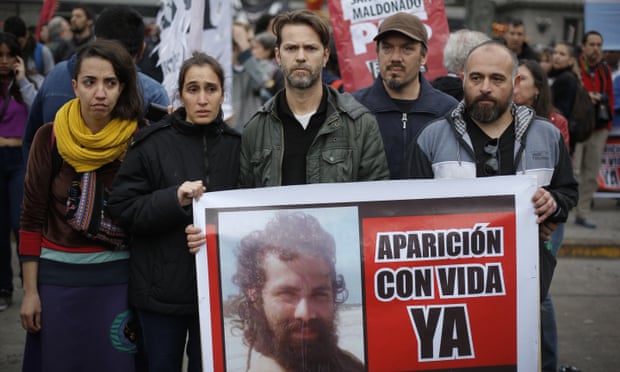
Crowds gather to honor the lives of the 13 victims of the van attack on Las Ramblas. Image courtesy of the New York Times.

BARCELONA, Spain – It was yet another day of terror in the world on August 17th as a van rammed into tourists in Barcelona.

It was the deadliest terror attack in Spain since 2004, when nearly 200 people were killed in an attack on commuter trains in Madrid.

A van plowed into crowds walking on one of Barcelona’s most popular tourist areas, Las Ramblas. 13 people were dead while over 100 were left wounded by the attack.

South of Barcelona, another victim was hit by a second attacker. The victim died from the injuries she sustained in the attack.

Five of the attackers have been shot dead by Barcelona police. Four other suspects have been detained across the Catalan region in Spain.

The attack on Las Ramblas was set into motion when a house in the Spanish countryside was destroyed by a bomb on the previous night. Police suspected the house was part of a terror ring, and that it was used to make bombs. One person died in the explosion. Another was critically wounded.

While terror group ISIS has stated that the attackers were “soldiers of the Islamic State”, they have offered no proof of such.

People from 34 different countries have been reported among the victims. Of those, one 7-year-old boy from Australia remains missing. Australia’s prime minister Malcom Turnbull told the Tasmanian State Liberal Conference that attacks by vehicles are becoming the “new approach to terrorism.”

Indeed, this attack settles in as the sixth of its kind in the past year. Similar terror attacks were carried out in Nice, Berlin, London, and Stockholm all within the past thirteen months.

Vehicles, once considered safe, have become a mode of weaponry unexpected by experts.

One reason for this may be the fact that it is difficult to protect against attacks by vehicles. Automobiles are on every street, and people trust that drivers will follow the rules of the road. Any accidents are considered random, not targeted as an attack.

Turning vehicles into weapons may increase fear and distrust among individuals. Terror groups seek to instill fear into victims, and cars may be seen as a way to increase that fear.

“This kind of attack, using one of the most ordinary objects of daily life, could heighten that effect,” writes Amanda Taub for the New York Times.

Yet these attacks have brought people together, especially in Barcelona. People united on Las Ramblas shortly after the attacks to honor the victims.

“No tinc por!” crowds chanted in Catalan after a moment of silence. Translated, the chant states, “I’m not afraid!”

For more information, please see:

The New York Times – Van Hits Pedestrians in Deadly Barcelona Terror Attack – 17 August 2017

The New York Times – As Vehicle Attacks Rise, an Ordinary Object Becomes an Instrument of Fear – 17 August 2017

NBC News – Spain Terror: American Among 14 Killed in Van and Car Attacks – 18 August 2017

CNN – Deadly Barcelona attack is worst day of violence in Spain – 18 August 2017

BBC News – Barcelona and Cambrils attacks: ‘I’m not afraid’ – 18 August 2017

CNN – Spain attacks: Police hunt Barcelona driver, probe suspected bomb factory – 19 August 2017

Syria Deeply: The many battles against ISIS: Lebanese-Syrian border, Deir Ezzor and Raqqa


Aug. 25th, 2017


Welcome to our weekly summary of Syria Deeply’s top coverage of crisis in Syria.

Lebanon-Syria border: The Syrian army and Lebanese Hezbollah launched a joint operation against the so-called Islamic State on the Syrian-Lebanese frontier this week with the aim of expelling the militant group from its last border stronghold.

Hezbollah chief Sayyed Hassan Nasrallah said in a televised speech on Thursday that the Syrian army and its Lebanese allies had captured more than 270 square kilometers [100 square miles] from ISIS on the Syrian side of the border since launching the operation on Saturday. He added that 40 square kilometers remained under militant control.

The Lebanese army launched a simultaneous but separate operation against ISIS on the Lebanese side of the border, and has captured more than two-thirds of the militants’ local territory. The extremist group now holds only a patch of territory on the outskirts of Ras Baalbek, an area gradually falling under the army’s control.

ISIS is reportedly seeking an evacuation agreement that would grant fighters safe passage from the Lebanese border to militant-held areas in eastern Syria but the Lebanese army has ruled that out.

Deir Ezzor: Russian warplanes have carried out an intensified aerial campaign on Islamic State positions in eastern Syria this month with the aim of helping the Syrian government drive the jihadi group from one of its other last strongholds.

Colonel General Sergei Rudskoi said this week that Russian fighter jets had flown more than 900 missions, killed 800 ISIS militants and destroyed 40 armored vehicles this month alone, the Associated Press reported.

He added that Russian jets were now making 60 to 70 flights a day targeting ISIS militants coming from other areas to join the upcoming battle in Deir Ezzor.

Last week, a Russian airstrike targeted an ISIS convoy in the western countryside of Deir Ezzor, killing at least 70 militants and destroying several armored vehicles, according to the U.K.-based Syrian Observatory for Human Rights.

Meanwhile, Syrian troops and allied fighters are pushing toward the militant bastion from two directions. Pro-government forces advancing south from Raqqa city joined up with their counterparts advancing from the east on Thursday, effectively surrounding ISIS in a large enclave in the Homs desert, according to Reuters.

The U.S.-backed Syrian Democratic Forces are also gearing up for the battle against ISIS in Deir Ezzor. The head of the Deir Ezzor military council, which fights under the SDF, told Reuters on Friday that his forces would launch an attack on ISIS in eastern Syria within several weeks in conjunction with the battle for Raqqa city.

Raqqa: ISIS regained control this week of territory previously lost to pro-government fighters in the eastern countryside of Raqqa province.

In a counter-attack on Thursday, ISIS retook areas along the southern banks of the Euphrates river and positions near Raqqa’s provincial border with Deir Ezzor, according to the Syrian Observatory for Human Rights. At least 34 Syrian troops and allied fighters were killed in the offensive.

Meanwhile, U.S. coalition warplanes continued to carry out intense air strikes on the city. At least 42 civilians, including 12 women and 19 children, were killed in an attack on Monday, according to the AP.

Amnesty International said on Wednesday that airstrikes and artillery attacks launched by the U.S.-led coalition on the city of Raqqa had killed hundreds of civilians over the past three months.

It also accused the Syrian government and Russia of carrying out “indiscriminate air bombardments against towns, villages and displaced people’s shelters full of civilians” south of Raqqa, on the southern bank of the Euphrates River.

“Civilians are thus trapped in the city, under fire from all sides, as the fighting intensifies,” the report said.

The following day, the United Nations called for a humanitarian pause in airstrikes to allow an estimated 20,000 trapped civilians a chance to escape the embattled city.


Read our Daily Executive Summaries


MOST POPULAR

This Week’s Top Articles


HEALTH

Mapping Attacks On Women And Children’s Healthcare In Syria

Syria Deeply has gathered data and mapped major attacks on Syrian health facilities that provided maternity, pediatric and obstetrics and gynecology services.


DIPLOMACY & FOREIGN AFFAIRS

Analysis: Assad’s Allies Trying to Reshape Lebanon’s Syria Policy

Since the start of the Syrian conflict, Lebanon’s government has officially adopted a policy of ‘disassociation’ toward the war next door. However, now some Lebanese political parties and organizations allied with Bashar al-Assad seem to be trying to overthrow the policy.


EDITOR’S PICKS

Community Insight


GOVERNMENT & PRO-GOVERNMENT FORCES

Deeply Talks: The Battle Against ISIS in Deir Ezzor

Alessandria Masi,  Managing Editor of Syria Deeply


As pro-government fighters inch closer to ISIS’ last Syrian stronghold, Deir Ezzor, Syria Deeply talks with Hassan Hassan of the Tahrir Institute for Middle East Policy about the main stakeholders involved and the battle’s potential impact on Syria’s balance of power.


FIRST LOOK

Upcoming coverage

We are always looking for new writers, experts and journalists who are covering the crisis in Syria and are interested in writing about a variety of topics. Please send us your ideas, story pitches and any other thoughts about our coverage via email, Twitter or Facebook.