War Crimes Prosecution Watch: Volume 12, Issue 13 – September 5, 2017


FREDERICK K. COX
INTERNATIONAL LAW CENTER

Founder/Advisor
Michael P. Scharf

War Crimes Prosecution Watch

Volume 12 – Issue 13
September 5, 2017

Editor-in-Chief
James Prowse

Technical Editor-in-Chief
Samantha Smyth

Managing Editors
Rina Mwiti
Alexandra Mooney

War Crimes Prosecution Watch is a bi-weekly e-newsletter that compiles official documents and articles from major news sources detailing and analyzing salient issues pertaining to the investigation and prosecution of war crimes throughout the world. To subscribe, please email warcrimeswatch@pilpg.org and type “subscribe” in the subject line.

Opinions expressed in the articles herein represent the views of their authors and are not necessarily those of the War Crimes Prosecution Watch staff, the Case Western Reserve University School of Law or Public International Law & Policy Group.

Contents

AFRICA

CENTRAL AFRICA

Central African Republic

Sudan & South Sudan

Democratic Republic of the Congo

WEST AFRICA

Côte d’Ivoire (Ivory Coast)

Lake Chad Region — Chad, Nigeria, Niger, and Cameroon

Mali

EAST AFRICA

Uganda

Kenya

Rwanda (International Criminal Tribunal for Rwanda)

Somalia

NORTH AFRICA

Libya

EUROPE

Court of Bosnia & Herzegovina, War Crimes Chamber

International Criminal Tribunal for the Former Yugoslavia

Domestic Prosecutions In The Former Yugoslavia

MIDDLE EAST AND ASIA

Iraq

Syria

Yemen

Extraordinary Chambers in the Courts of Cambodia

Special Tribunal for Lebanon

Bangladesh International Crimes Tribunal

War Crimes Investigations in Burma

Israel and Palestine

AMERICAS

North & Central America

South America

TOPICS

Truth and Reconciliation Commission

Terrorism

Piracy

Gender-Based Violence

WORTH READING


You received this message because you are subscribed to the Google Groups “warcrimeswatch – War Crimes Prosecution Watch” group.
To unsubscribe from this group and stop receiving emails from it, send an email to warcrimeswatch+unsubscribe@case.edu

The Daily Orange: Former international prosecutor weighs in on YouTube deleting thousands of videos documenting Syrian Civil War

Former international prosecutor weighs in on YouTube deleting thousands of videos documenting Syrian Civil War

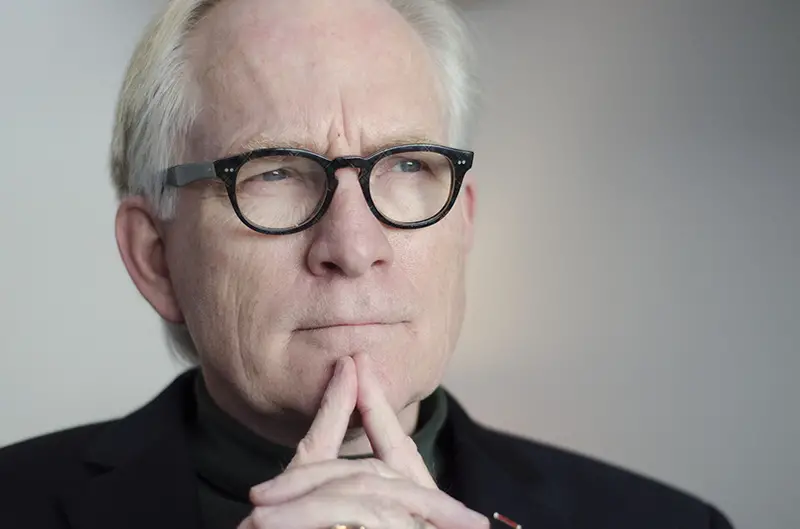
David Crane, a former international prosecutor, thinks YouTube allowing the videos to remain on the site will help prosecutors catalog data on war crimes.

Daily Orange File Photo

David Crane, a former international prosecutor, thinks YouTube allowing the videos to remain on the site will help prosecutors catalog data on war crimes.

In an attempt to rid extremist propaganda from its website, the Google-owned platform YouTube has removed thousands of videos documenting human atrocities occurring in the Middle East, according to CNN.

This past June, YouTube announced the transfer from workers monitoring its content to an advanced algorithm that identifies videos containing violent extremism and terrorism. The new technology has inadvertently deleted thousands of videos. Any content stemming from Syria, or various other conflict zones, are at a high risk of being deleted, according to The New York Times.

The Daily Orange spoke with David Crane, professor of practice at the Syracuse University College of Law, to discuss the implications of deleting such videos. Crane is a former chief prosecutor of the Special Court for Sierra Leone and founder of the Syrian Accountability Project.

The Daily Orange: To start off, can you talk about what kind of human atrocities are occurring in places like Syria?

David Crane: The conflict in Syria has been going on since March of 2011. It has consumed the lives of over half a million human beings, it has moved out of the country over 10 million human beings and it amounts to many international crimes — what we would call war crimes — and crimes against humanity being perpetrated by all sides.

The D.O.: What role do social media platforms, like YouTube, have in modern warfare?

D.C.: Well, it’s interesting. It’s a fascinating scenario. When I was the chief prosecutor of the International War Crimes Tribunal in West Africa, we went and found the information out the old-fashioned way. There was no such thing — even as late as 2005 — as social media.

All of these social media outlets have really affected the investigation of war crimes, crimes against humanity and genocide throughout the world in both a positive and a negative way. YouTube is just one of the social media (platforms) that collects, records and puts out on social media information related to war crimes … It’s a new challenge for international prosecutors like myself, as what to do with all of this information. Most of which is not useable in the court of law. So, that’s in a general sense my point.

The D.O.: Recently, YouTube changed its policy from workers manually taking down videos to an advanced algorithm that does it for them. This occurred in June, and since then thousands of videos documenting humanitarian crises have been deleted. What do you think are the immediate implications of removing such videos?

D.C.: What ends up happening is, instead of the consumer deciding whether to look at (the video) or not, we now have an arbitrary decision made by an algorithm that keeps it from the consumer, whether that be someone just interested in Syria, an investigator or a nongovernmental organization using that information for consideration for action.

The arbitrariness of it bothers me. I think it should be left to the consumer and the user of the data versus an algorithm. What ends up happening is that we don’t know what we don’t know.

Someone takes a video of an atrocity taking place in northern Iraq, Kurdistan or something in South Sudan or in Syria … a lot of times YouTube is very useful. You may hear of an incident and go on YouTube and actually see the incident itself, which confirms just in a general way that the incident took place. But, you know, sometimes we don’t even know if something took place now.

The D.O.: One way that YouTube has dealt with the backlash of removing videos is by reinstating them but with an 18-year-old age restriction. Do you think that this suffices? Or, do you think that there are negative implications of creating this image of an “adult-only” war?

D.C.: I’d rather have it the way they have compromised rather than completely shutting it off. It is gruesome. It is difficult. I don’t have a problem with an age restriction based on the content. I’m willing to have that compromise if it allows us to then have the adult consumer have the ability to observe and use this data.

The D.O.: What are the long-term effects of deleting so many of these videos?

D.C.: Well, then we don’t have them. And so we have potential corroborative information that could be of use to those who are cataloging, archiving or investigating war crimes taking place, wherever that may be around the world.

The National: Syria war crimes prosecutor vows justice for atrocities

Syria war crimes prosecutor vows justice for atrocities

Secretary-General Antonio Guterres appointed a French judge after UN General Assembly took rare action

French Catherine Marchi-Uhel, newly appointed head of the International, Impartial and Independent Mechanism, IIIM, on Syria crimes, talks to the media during a press conference at the European headquarters of the United Nations in Geneva, Switzerland

War crimes prosecutors have set to work to establish cases against those accused of some of Syria’s worst atrocities, Catherine Marchi-Uhel, the judge who will run the unit, has revealed.

The International, Impartial and Independent Mechanism was created on the orders of the United Nation General Assembly. Mrs Marchi-Uhel, who was appointed to head the body last July by UN Secretary-General Antonio Guterres, has served as an international judge in Kosovo, Cambodia and at the war crimes court for the former Yugoslavia.

“It is tasked with collecting, consolidating, preserving and analysing information and evidence,” she said of the body. “On the other hand, with preparing files in order to facilitate and expedite fair and independent criminal proceedings, in accordance with international law standards, in national, regional or international courts or tribunals.”

Speaking in Geneva, she said the creation of the mechanism would promote prosecutions of the  most serious violations in Syria. Its mandate was to  “avoid perpetrators enjoying  impunity”.

_______________

Read more:

Veteran prosecutor Carla Del Ponte quits Syria inquiry panel

_______________

The team of some 50 people includes lawyers, analysts and computer specialists, some of whom will have to be Arabic speakers to study and analyse all the information collected about the crimes committed in Syria.

“We are talking about crimes against humanity, war crimes, attacks on schools or hospitals, summary executions, violence against women or children,” she said.

She said experience shows that when a prosecutor or an examining magistrate begins to gather evidence in a file, there is an “effect” on the situation.

Mrs Marchi-Uhel promised to work closely with the UN Commission of Inquiry on Syria. It publishes a report on its findings every six months and has concluded that all the warring parties have used torture, arbitrary executions or other atrocities.

The UN General Assembly in December set up the international panel to help collect evidence to be used in future cases of war crimes prosecution in a vote of all members in December.

The deaths of more than 320,000 people in Syria have been examined by the UN Commission of Inquiry that has documented cases of torture, summary killings and other atrocities by all sides in the conflict.

The French national previously worked as the ombudsman for a Security Council committee that deals with the Islamic State group and Al-Qaeda.

The Swiss judge Carla Del Ponte quit the commission in July, decrying the lack of political backing for its work. “We are powerless, there is no justice for Syria,” she said.

“Everyone in Syria is on the bad side. The Assad government has perpetrated horrible crimes against humanity and used chemical weapons. And the opposition is now made up of extremists and terrorists.”

Violence Erupts in India after Guru is Sentenced to 20 years for Rape

By: Brian Kim
Impunity Watch Reporter, Asia

NEW DELHI, India – On Friday, August 18th, India’s spiritual guru was sentenced to 20 years in prison. India’s Central Bureau of Investigation announced that Gurmeet Ram Rahim Singh was convicted of raping two of his followers. Two women accused Singh of rape at the headquarter of his sect. In India, the minimum sentence for rape is seven years.
Singh’s followers are protesting their leader’s 20 year prison sentence in northern India. Photo courtesy of CNN.

Singh, leader of the Dera Sacha Sauda sect, has an immense following in Haryana and Punjab states. He is an influential figure in the country as thousands consider him as a cult icon. Also known as “the guru of bling,” he is the star of five films and many popular music videos. He currently has 3.75 million Twitter followers and claims to have 60 million worldwide followers. On his website, Singh’s work is described as a “social humanitarianism and selfless services to others.”

On the day of his sentencing, thousands of troops were deployed to control Singh’s supporters. Since the conviction, 30 people were killed and 200 were injured when clashes occurred across northern India. Many followers came out to the streets and smashed cars, torched buses and attacked police officers. An army officer stated that the troops were deployed because “the police couldn’t control the situation.”

His followers mostly sit at the bottom of the social hierarchy in India. They have relied on Singh and his sect for basic needs, such as food, medicine, and a sense of equality.

Indian Prime Minister Narendra Modi reminded the Indian people on his monthly address that India was the home of “Gandhi and Lord Buddha.” He went on to condemn the violence.

Singh is also facing murder charges in connection with the death of a reporter.

NYT – Violent Protests in India Turn Deadly After Guru’s Rape Conviction – 25 August, 2017

The Guardian – Indian states in lockdown for guru’s rape sentencing after deadly protests – 27 August, 2017

CNN – Indian guru Gurmeet Ram Rahim Singh sentenced to 20 years for rape – 28 August, 2017

NPR – After ‘Guru Of Bling’ Sentencing, Indian State Stays On Alert For Violence – 28 August, 2017

Chile Faces Final Obstacle in Reforming Draconian Abortion Law From the Pinochet Era

By: Max Cohen
Impunity Watch Reporter, South America

SANTIAGO, Chile – In the early days of August 2017, and after two years of debate, lawmakers in Chile overwhelmingly approved a dramatic change in the country’s abortion laws allowing women to terminate a pregnancy under certain conditions. Before becoming law however, the Constitutional Tribunal must approve of the law.

A woman participates in a pro-abortion march in Santiago, Chile. Photo courtesy of AP.

Currently, Chile has an absolute ban on abortion in all circumstances. Abortions were originally allowed for medical reasons in Chile since 1931, but in 1989 during the last years of the Pinochet dictatorship the ban was implemented and has remained law ever since. Anyone who participates in an abortion could serve up to 15 years in prison, although in recent years courts have tended to order therapy rather than incarceration for the women involved. Between 2010 and 2014 there were nearly 500 people charged and 73 convictions for abortion related offenses, 12 of which are men currently serving prison sentences.

The new law would only allow for abortion in certain circumstances such as if the pregnancy endangers the life of the mother, or if the fetus is not viable, or if the pregnancy resulted from rape. If a pregnancy may endanger a woman’s life however, abortion would not be allowed. It’s only when the woman’s health is in danger that the law would allow her to get an abortion, and even then, only after requiring the opinion of two doctors.

According to a survey poll taken last month about 70% of Chileans support the change in the country’s abortion laws. Approximately 60,000 – 70,000 illegal abortions are performed each year in Chile. Despite this, the new law has its share of opposition which forced it to be referred to the Constitutional Tribunal.

However, whether the law will be approved by the Constitutional Tribunal is uncertain. Even though proponents seek to argue that it is a human right to be able to have an abortion, opponents point to a clause in Chile’s constitution which protects the life of the unborn. However if the ban is approved it will end Chile’s status as the only South American country with an outright ban on abortion.

For more information, please see:

New York Times – Thrust Into Chile’s Abortion Fight, Women Who Urged Change May See It – 17 Aug, 2017

The Guardian – Endgame nears in Chile president’s fight to temper draconian abortion ban – 16 Aug, 2017

CNN – Chilean lawmakers vote to ease abortion ban – 3 Aug, 2017

New York Times – Chile’s Congress Approves Abortion In Limited Cases – 3 Aug, 2017