International Center for Transitional Justice: In Focus World Report

ICTJ World Report
April 2017


In Focus

Laundering the Corrupt Is a National Priority? Tunisian Civil Society Again Opposes the National Reconciliation Law

This is the third time that the Tunisian government, supported by several Members of Parliament, has put debate of the National Reconciliation Law on the political agenda. Rearranged in form but with the same substantial faults, this law has mobilized the opposition — for the third time — of approximately 20 civil society organizations that met yesterday and plan to soon hold a press conference.

Read More…


Subscribe


Forward to a Friend
Do you know someone that may be interested in the ICTJ newsletter?


View Newsletter Archive


World Report

Africa

A court in Cote d’Ivoire cleared former First Lady Simone Gbagbo of war crimes and crimes against humanity charges after a trial on her alleged role in post-election abuses that led to the deaths of thousands. However, she must still serve 20 years in prison after being found guilty in 2015 of offenses against the state. The United Nations found 17 mass graves in the Democratic Republic of Congo as well as gathered reports of rapes and killings by soldiers. The International Criminal Court said the violence may amount to war crimes. According to the International Criminal Court, Uganda will not withdraw from the Rome Statute. In Kenya police watchdog groups are investigating a video that appears to show police officers executing an alleged gang member in Nairobi. The Gambia held its first parliamentary elections since long-time leader Yahya Jammeh left power. The country is expected to establish a Truth and Reconciliation Commission in upcoming months. The bodies of victims of Rwanda‘s 1994 genocide are still being discovered today, some with the aid of information from prisoners convicted for their involvement. Rwanda’s high court also convicted a man accused of leading and coordinating attacks on minority Tutsis during the genocide and sentenced him to life in prison. Protests in South Africa continued to call for honest and transparent governance. Former rebels in Mali agreed to attend a peace conference after previously saying they would boycott the talks.

Read More…

Americas

In Colombia, a truth commission has been officially launched to investigate what happened during the 52-year conflict that led to the victimization of 8 million people. Meanwhile, the demobilization and disarmament of FARC rebels continues with the building of “peace villages” to help facilitate their reintegration into society, which includes female combatants taking on the role of battling gender inequality. Former Guatemalan dictator Efrian Rios Montt will face a second trial on genocide charges for the deaths of around 200 people in the 1982 Dos Erres Massacre. Victims of Peru‘s forced sterilization program between 1996 and 2000 are seeking justice with the help of the Quipu Project, which hopes to change attitudes about the often taboo subject and help people speak out about their experiences. The number of “disappeared” in Mexico rose to 30,000 as of the end of 2016, according to the National Human Rights Commission (CNDH). The organization has also counted 1,143 mass graves containing 3,230 bodies in 30 Mexican states, all secretly buried within the last decade.

Read More…

Asia

Myanmar leader Aung San Suu Kyi denied that ethnic cleansing of the Rohingya population was occurring, while a top official called a potential UN probe into alleged human rights abuses in Rakhine state an unwanted obstacle. Too many tourists visiting Cambodia’s “killing fields” has raised concerns that commercialism might compromise efforts to preserve memorials for the 2 million or so lives lost under Pol Pot. Meanwhile, the Khmer Rouge Tribunal is seeking funding for its reparation efforts. A retired police officer who testified to killing hundreds of people while working for a “death squad” under Philippines President Rodrigo Duterte has fled the country for fear of his life. The people of Tamil Nadu in Sri Lanka continued their demand for justice for war crimes committed during the country’s civil war. In Thailand, a brass plaque commemorating the historic proclamation ending 700 years of absolute monarchy in Thailand was mysteriously removed and replaced by a new plaque honoring the monarchy. The Chinese National Party (KMT) proposed a transitional justice bill that urged the inclusion of compensation for those affected by wartime missions after 1949.

Read More…

Europe

Files archived by the United Nations with early evidence of Holocaust death camps were opened for the first time to the public and online. The UN urged Kosovo to investigate the threat of “ethnic cleansing” by a senior official. The Council of Europe also said the country must end impunity for the crimes committed during the conflict by ensuring that the perpetrators are brought to justice. Bosnia tried nine former Bosnian Serb soldiers and policemen on charges related to the capture, abuse, and murder of Bosniak civilians in 1992.

Read More…

Mena

In Tunisia, parliament today is debating a “reconciliation law” that would grant amnesty to businessmen accused of corruption during the rule of autocrat Zine El-Abidine Ben Ali – a bill already delayed two years by popular opposition. Meanwhile, the country’s Truth and Dignity Commission has made efforts to confront past horrors and bring some perpetrators to justice. US Senators introduced a bipartisan bill in a bid to investigate war crimes in Syria, including the creation of a “hybrid tribunal.” Witness testimony and documentation from Syria’s secret torture wards housed in military hospitals offered some of the most concrete evidence of crimes against humanity to date. In Lebanon, families of the missing urged the government to approve a project to collect DNA samples to try to trace victims’ whereabouts on the 42nd anniversary of the start of the nation’s civil war. A court in Egypt sentenced former interior minister Habib el-Adly, who served under ousted president Hosni Mubarak, to seven years in jail for corruption. Israel marked annual Holocaust Remembrance Day with the ritual wailing of sirens across the country.

Read More…


Publications

Assessing the Prospects for Transitional Justice in Georgia

Since Georgia’s independence in 1991, successive governments have struggled to deal with endemic corruption, organized crime, and various disputes along its borders, which sometimes sparked into armed conflict. Efforts to combat corruption and organized crime through its “zero-tolerance” policy on crime degenerated into extensive human rights violations.

View Report

Media and Transitional Justice: A Dream of Symbiosis in a Troubled Relationship

In transitional contexts, reporting does not simply present the facts, but instead shapes the parameters for interpreting divisive political issues. Coverage in such polarized contexts can mitigate or obscure the substance of transitional justice efforts to establish what happened, who the victims were, and who was responsible for the violations.

View Report

More Publications

Upcoming Events

May 09, 2017

‘Adjudicating Rights’ – Manuel Cepeda in conversation with Octavio Ferraz and Sandra Fredman Location: University of Oxford View Details

June 08 – 09, 2017

Transnational and Global Dimensions of Justice and Memory Processes in Europe and Latin America Location: Paris View Details

More Events


Copyright 2011 International Center for Transitional Justice Unsubcribe from this newsletter.


You are receiving this email because you subscribed to our mailing list.
ICTJ | 40 Fulton Street, Floor 20 | New York, NY USA 10038 | Tel: +1 917 637 3800

Global Centre for the Responsibility to Protect: Atrocity Alert

Atrocity Alert, No. 52, 26 April 2017 No Images? Click here  


Atrocity Alert is a weekly publication by the Global Centre for the Responsibility to Protect highlighting and updating situations where populations are at risk of, or are enduring, mass atrocity crimes.


Iraq

On 25 April a senior military commander in the Iraqi Security Forces (ISF) reported that the so-called Islamic State of Iraq and the Levant (ISIL) had been driven out of the al-Tanek neighborhood, the largest in western Mosul. The Iraqi government has been engaged in an offensive to militarily retake western Mosul from ISIL since 19 February.

Despite recent military gains, much of the western half of the city remains under ISIL control and up to 7,500 civilians continue to flee the city each day. According to the UN Office for the Coordination of Humanitarian Affairs, over 382,000 people have been displaced from western Mosul since 19 February. The situation for hundreds of thousands of civilians who remain trapped inside western Mosul continues to deteriorate, with ISIL committing war crimes, including targeting civilians as they try to flee and using them as human shields. Members of the ISF and Kurdish Peshmerga forces have also carried out reprisals against Sunni civilians and have been accused of extrajudicial killings of captured ISIL fighters. Airstrikes by the United States-led coalition in densely populated areas have also resulted in increased civilian casualties.

While confronting ISIL and other armed groups, it is essential that the Iraqi government ensures the protection of all civilians, and addresses the underlying sources of conflict in Iraq. The UN Security Council, with Iraqi government support, should immediately establish an international investigative commission to collect and protect evidence regarding mass atrocity crimes perpetrated by ISIL in Iraq, including the genocide against the Yazidi. All perpetrators of atrocities in Iraq should be held accountable for their actions, regardless of their position or affiliation.


Photo credit: Reuters

Photo credit: Al Jazeera


Philippines

On 24 April Jude Sabio, a Filipino lawyer, filed a complaint with the International Criminal Court (ICC) accusing President Rodrigo Duterte and 11 other senior officials of crimes against humanity and mass murder.

Since President Duterte took office on 30 June 2016 almost 9,000 people have been killed during the government’s violent crackdown on alleged dealers and users of illegal drugs. While police have killed over 2,555 people in “anti-drug operations,” the rest have died in vigilante-style killings carried out by unidentified gunmen. President Duterte has publicly encouraged vigilante groups to join his violent campaign and has also threatened human rights lawyers and other critics.

If the Philippines government continues with its campaign of extrajudicial killings, and fails to hold perpetrators of possible crimes against humanity accountable, the international community should support calls for accountability under international law, potentially including via the ICC.


Photo credit: Mike Corder/AP

Photo credit: Getty Images


Connect With Us


Global Centre for the Responsibility to Protect
Ralph Bunche Institute for International Studies
The Graduate Center, CUNY
365 Fifth Avenue, Suite 5203
New York, NY 10016, USA

Phone: +1 212-817-1929
info@globalr2p.org

Copyright © 2017 Global Centre for the Responsibility to Protect
All rights reserved.

 
Preferences  |  Unsubscribe


Uruguayan Senate Approves Femicide Bill

By Cintia Garcia

Impunity Watch Reporter, South America

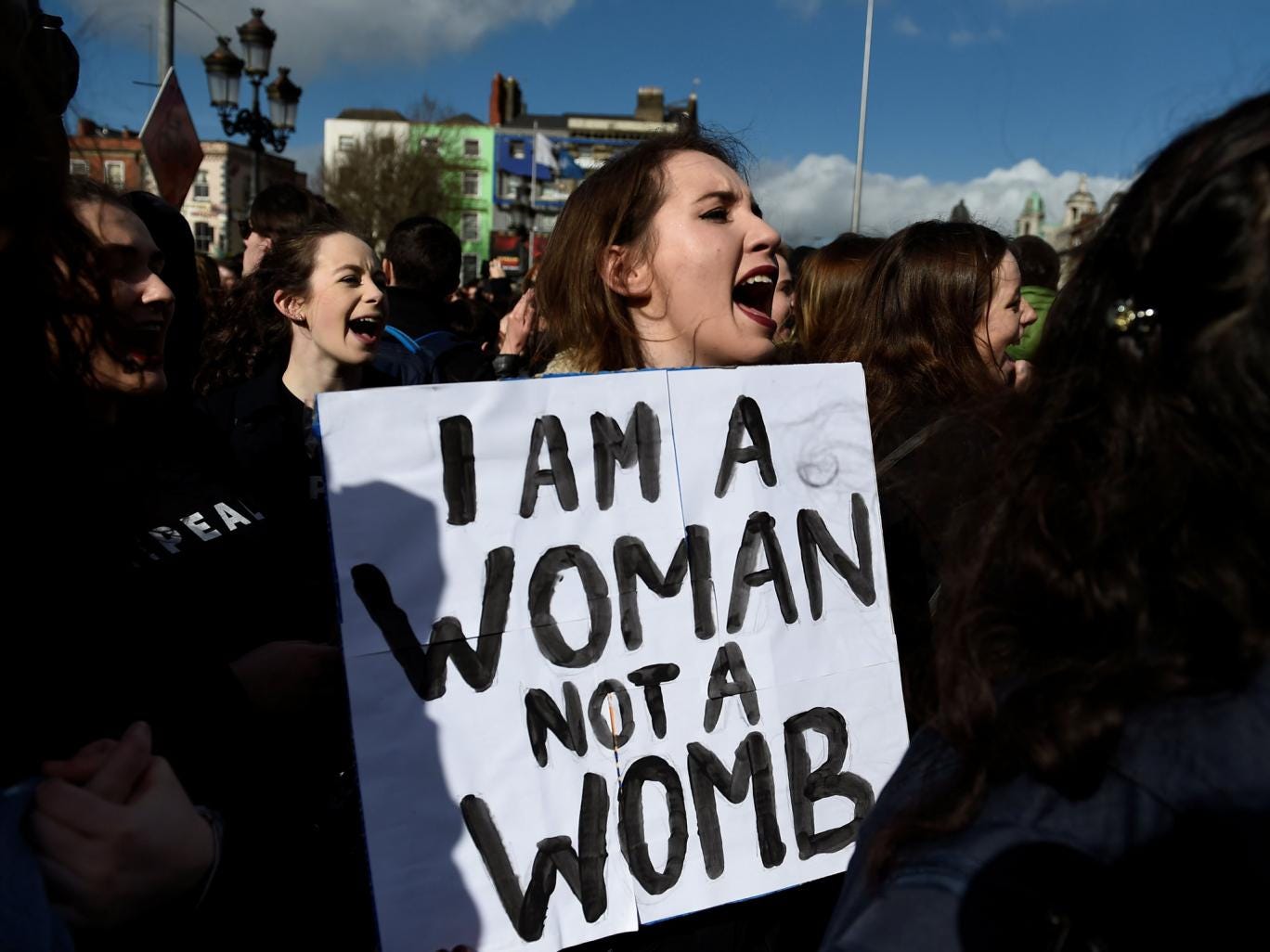
Montevideo, Uruguay—The Uruguayan Senate with thirty-one votes has unanimously voted in a favor of a bill that will make femicide a criminal offence. The bill is accompanied with two penal codes that will now be submitted and voted on in the House of Representatives. Furthermore, the senate is also working to approve a project that will target gender violence by modifying the penal code.

Women rejoice as the Uruguayan senate approves femicide bill. (Photo Courtesy of El Observador)

If a femicide is committed, an individual will be sent to prison for thirty years. The bill is a result of the increase of femicides in Uruguay. In February alone, there were five recorded femicides in a 37-day period. The rise in femicides led to large demonstrations in Uruguay. In addition to condemning the killings, demonstrators called for a femicide law that would make the killings a crime. The chairwoman of the Gender Equity and Diversity Commission at the Association of bank Employees stated, “We can’t say violence is over and decree it. We will not end the violence with law. But, we do understand every grain of sand, every decision we can make, and every unit of organization is a step towards a better society.”

The Frente Amplio and the National Party, two of the nations leading political parties that make up 80% of the Uruguayan parliament, called for action. They revisited a bill that was written in and sent to the senate in December of 2015 addressing Femicides—the bill has been dormant ever since. The gender violence bill was also submitted to the senate in April of 2016 with no action. Neighboring nations, Colombia, Ecuador, Bolivia, and Brazil, have all instituted a penal code that criminalizes femicides. In many of these nations, femicides have been considered a crime of passion which is treated in a lesser degree. School teacher, Mary Nunez, stated, “We want femicide to be a specifically enshrined in our law, because in our law, there is only homicide. And homicide, as a word says, comes from man. And we are not men, we are women and men kill us.”

For more information, please see:

El Observador10 Coasa que Usted Debería Saber Sobre la ley de Femicidio, y Bánquese la Reacción—19 April 2017.

Telesur—In Uruguay, Women Rejoice as Femicide Bill is Approved—19 April 2017.

El Observador—Senado Aprobó por Unanimidad Ley de Femicidios—18 April 2017.

Segundo Enfoque—Senado Uruguayo Aprobó ley de Femicidios—18 April 2017.

Human Rights Organizations Warn Against Vietnam’s Human Rights Offenses

By: Nicole Hoerold
Impunity Watch Reporter, Asia 

HANOI, Vietnam – The Vietnamese government is receiving international criticism for its human rights offenses. According to a study which measures global levels of human rights offenses, Vietnam is considered one of the world’s most authoritarian police states. Activists are concerned that too little attention is paid to the human rights abuses in Vietnam, despite the fact that its neighboring states are often criticized for their offenses.

Protesters hold signs calling for justice in the trials of dissident blogger Nguyen Huu Vinh and land protection activist Can Thi Theu in Hanoi, Vietnam in September 2016. Photo courtesy of Reuters.

One major human rights offense propagated by the Vietnamese government is the imprisonment of anyone voicing political opposition to the communist state. Amnesty International reports that Vietnam detained 91 prisoners for their political beliefs in 2016, eight of which were journalists.

Amnesty International has also called attention to Vietnam’s execution rate, as it is the third largest executioner over the last three years. The government executed 429 people between August 2013 and June 2016, the human rights organization reported. The high death toll raises questions about the victim’s cases, legal proceedings, as well as the nature of their crimes. The government, however, has yet to release answers to such probes.

Vietnam is a communist country, so the government is able to control much of society, culture, and political philosophy. Recently, citizens have begun to act out in protest against the government and in favor of more rights and liberties. Villagers in a Hanoi suburb are holding twelve police officers and more than a dozen others hostage over a land dispute. The government attempted to seize land for official use, but villagers were unhappy with the stipend they were paid in turn. Activists are applauding the effort and encourage more to speak out against oppressive state action.

For more information, please see:

The Diplomat – Vietnam’s Quiet Human Rights Crisis – 17 April, 2017

Foreign Policy – This Village In Vietnam Is Holding A Dozen Police Officers Hostage – 17 April, 2017 

Asian Correspondent – Vietnam’s ‘conveyer belt of executions’ condemned by human rights watchdog – 11 April, 2017 

Radio Free Asia – Detained Vietnamese Human Rights Attorney to Receive Award For His Work – 4 April, 2017

Impunity Watch: IW Headlines

IW Headlines

First Phase of Syrian Evacuations Completed Following Agreement to Release Hostages

Posted: 24 Apr 2017 09:46 AM PDT

by Yesim Usluca
Impunity Watch Reporter, Middle East

DAMASCUS, Syria — On Friday, April 21st, the evacuation of thousands of Syrian civilians from four besieged areas was completed following a forty-eight-hour delay. The population transfer was resumed after an agreement to release hundreds of government detainees was reached.

30,000 people are expected to be evacuated as part of the population transfer deal (Photo courtesy of ABC News)

Friday’s evacuations marked the completion of the first phase of a population swap deal in Syria. Approximately 11,000 individuals, 8,000 from the pro-government towns of Foua and Kfarya and 3,000 from the rebel-held towns of Zabadani and Madaya, were evacuated. Forty-six buses carrying residents from Foua and Kfarya arrived at a suburb of Aleppo, and fifteen buses carrying residents and rebels from Zabadani departed for Idlib.

The fate of one of the largest population transfers in Syria’s civil war had been tied to twenty-six hostages who had been held in Iraq by members of the Shiite militia. Evacuees were forced to spend two nights in their buses after a disagreement emerged regarding the release of the hostages. The prisoners, which included members of Qatar’s royal family, were released after Qatar led negotiations for the deal. Under the deal, the Syrian regime will release 500 prisoners which will be transferred to a rebel-held area outside of Aleppo.

The evacuation plan, which has been dubbed “demographic engineering” by the opposition, entails the transfer of approximately 30,000 people from their hometowns over a period spanning sixty days. Most of those being evacuated will be from pro-government villages in the northern province of Idlib.

The agreement has been protested by rights groups, which stated that the evacuations were a “forcible displacement that is altering the country’s demographics along political and sectarian lines.” The head of the United Nations investigative panel on Syria, Mr. Paulo Sergio Pinheiro, cautioned that those evacuated into Idlib and Aleppo are “likely to be caught in escalating fighting from increasingly radicalized extremist groups.” Mr. Pinheiro noted that the panel is concerned that a “disaster” will happen in Idlib, and stated that the newly situated individuals “are under serious risk about their lives[.]” He linked the concerns to the strong presence of extremists in the areas of Idlib and western Aleppo.

The second phase of the population transfer is scheduled to begin in June.

For more information, please see:

The Washington Post—UN panel: Syria evacuees likely to be caught in new fighting—21 April 2017

ABC News—In Syria, first phase of population transfer concludes—21 April 2017

TRT World—Syria evacuation resumes after agreement on prisoner swap deal—21 April 2017

BBC News—Kidnapped Qatari hunting party of 26 freed in Iraq after 16 months—21 April 2017

Reuters—Evacuations from besieged Syrian towns end after two-day halt—21 April 2017

Syrian Accountability Project – Idlib Left Breathless: The Chemical Attack in Khan Sheikhoun

Posted: 24 Apr 2017 09:02 AM PDT

Final Idlib Left Breathless 17

Jurist: The Fist in a Velvet Glove-Hardened Humanitarianism

Posted: 24 Apr 2017 08:57 AM PDT

The Fist in a Velvet Glove-Hardened Humanitarianism

Friday 21 April 2017 at 12:16 AM ET edited by Yuxin Jiang

JURIST Guest Columnist David M. Crane, Syracuse University College of Law, discusses the necessity of use of force in the Syrian conflict…

©  WikiMedia (Voice of America News: Scott Bob report from Azaz, Syria.)

The cornerstone to the UN paradigm is to settle disputes peacefully, using force only as a last resort. Yet, restoring international peace and security sometimes requires a hardened approach to ensure that peace and security.

There are decades of international treaties, custom and precedent that support what I call hardened humanitarianism. When we have to deal with a tyrant, thug, dictator or rogue head of state who turns on his own citizens, the international community or a member state of that community should step forward with a clear and firm position-stop it or force will be used.

A tyrant only understands one thing-power. When he feels the sting of consequence for his actions that tyrant begins to focus on that use of force against him. The use of this more hardened approach in using force to stop a tyrant’s actions will cause that tyrant to pause, to consider his next steps.

Appeasement in the face of tyranny never works. History is replete with anecdotal evidence of this from the Armenian genocide to the Sudetenland. A hardened policy of seeking a peaceful dialog with the assurance of a forceful resolution, should that dialog fail, makes for a more meaningful discourse.

Our international legal and policy system has drawn lines related to protecting civilians in a conflict and banning certain type of weapons systems per se. Most, if not all, states parties have signed onto these norms. We don’t have to be histrionic when a tyrant ignores these clear lines beating our chests with empty words. When that tyrant steps over a line hit them hard, use force, show the world there are consequences!

US action against Al Qaeda after they attacked the US Embassies in Kenya and Tanzania are examples of facing down the lawless elements of our society under the international legal concept of reprisal. In 2005 the world came together to create a doctrine that laid down a marker that declared that the international community has a right to step in to block a tyrant or head of state who is turning against his own citizens committing war crimes and crimes against humanity. Called the Responsibility to Protect (R2P), the doctrine was a clarion call to arms should there be alleged violations of international law. Unfortunately, R2P has fallen short of the ideal based on the political perception that it is a doctrine that can be easily used by various powers against weaker nation states for alleged violations. Despite this the principle idea of this responsibility to protect citizens from their own leaders remains.

The long and tragic kaleidoscopic conflict that is Syria has now gone beyond peaceful resolution. A hardened sense of humanity calls for continued cruise missiles strikes and other military action every time Assad crosses the lines laid out under international norms. Kaleidoscopic conflict is fast becoming a new concept in the dirty little wars of the 21st century. Old doctrines for war fighting and the legal set of rules that surround warfare that have been tested over time are being challenged at all levels. Just when planners think there is a viable course of action developing related to a conflict, such as in Syria, one thing changes and everything changes, hence the term kaleidoscopic. This impacts on what is called the deliberate planning cycle in modern parlance throwing out how international and domestic organizations plan for and deal with conflict on a day to day basis. At the end of the day we are beginning to face situations where there is no solution under current policy and doctrine. This gives us pause as to how to advise world leaders in dealing with any given conflict. This pause can allow a tragedy, such as in Syria, to go on and on without any foreseeable ending.

These dirty little wars have a direct impact on how parties to a conflict deal with civilians found in and around the battlefield. One of the key cornerstone concepts of the international humanitarian law is that civilians are to be protected and that the intentional targeting of a civilian is a war crime plain and simple. We see around the globe today parties to a conflict flagrantly ignoring this key legal concept. With no apparent repercussion to these attacks on civilians, actors move about the battlefield with impunity. Again this is the conflict in Syria, but can be seen also in the fighting in South Sudan. This is why a more hardened approach to our humanitarian principle of using force where legally appropriate will cause actors to pause and reconsider wholesale destruction in any given conflict.

This hardened approach must be done under law or we weaken our international norms, yet it must be done. Enough is enough in Syria. States parties who for whatever reason give that tyrant support should also be dealt with for their aiding and abetting of international crimes with legal sanctions. We charged President Charles Taylor with aiding and abetting a conflict, among other modes of liability, in next door Sierra Leone, and he was convicted on those charges I signed in an indictment against him on an aiding and abetting theory. The aiding and abetting mode of liability in international criminal law is alive and well and certainly can be touted as a possible ramification for a country who aids a party to a conflict that gasses its own people with sarin. Russia’s complicity in that gas attack sets Putin and his regime up for political sanction and possible legal action in the future.

Certainly, dialog and appropriate diplomatic discourse should continue. An end to the Syrian conflict must be the goal, hopefully a peaceful end, yet the hardened fist of a legal use of force to protect humanity should be a viable course to bolster that dialog. The missile strike on the airfield in Syria changed the political discourse on how the world’s is looking at the quagmire that is the Syrian conflict. Regardless of how one feels about the motives or the rationale behind the strike, it is posited that Assad, with the advice of Russia and Iran will think carefully about another sarin gas attack. If they know that force could be used again in reprisal for clear violations of international norms such as gas, perhaps they will refrain. This is the outcome that is hoped in using this new concept of hardened humanitarianism.

Suggested citation: David M. Crane, The Fist in a Velvet Glove-Hardened Humanitarianism, JURIST – Forum, Apr. 20, 2017, http://jurist.org/forum/2017/04/David-Crane-hardened-humanitarianism.php

This article was prepared for publication by Yuxin Jiang, a Senior Editor for JURIST Commentary service. Please direct any questions or comments to her at commentary@jurist.org

U.N. Peacekeepers Ran Sex-Ring in Haiti

Posted: 24 Apr 2017 06:00 AM PDT

By Sarah Lafen
Impunity Watch Desk Reporter, North America


Port-au-Prince, HAITI — Over 100 U.N. Peacekeepers stationed in Haiti are implicated in a child sex ring.  According to an investigation which focused on the presence of the Peacekeepers across the world over the past 12 years, over 2,000 allegations of sexual abuse by Peacekeepers were reported.  From 2004 to 2007 in Haiti, over 134 Sri Lankan Peacekeepers exploited an average of nine children per day.  While 144 Peacekeepers were sent home after an internal U.N. report on the abuse, none have been sent to jail.

A woman who was raped and impregnated by a Peacekeeper wipes her tears during an interview (Photo Courtesy of AP).

One teenage Haitian boy said he was gang-raped in 2011 by Uruguayan Peacekeepers who filmed the assault on a cell phone.  The report also revealed that dozens of Haitian women were also raped, while dozens of others engaged in “survival sex” with the Peacekeepers.  One victim girl told U.N. investigators that from ages 12-15 she had sex with about 50 Peacekeepers, including a “Commandant” who paid her 75 cents.

Haitian lawyer Mario Joseph is working towards getting compensation for victims of a cholera outbreak, which has been linked to Nepalese Peacekeepers, that killed an estimated 10,000 people.  Joseph is also trying to get child support for a dozen Haitian women who were impregnated by   Peacekeepers.  Joseph asked people to “Imagine if the U.N. was going to the United States and raping children and bringing cholera,” noting that “[h]uman rights aren’t just for rich white people.”

U.S. Senator Bob Corker agreed with Joseph, and recalled his own disgust at the hearing of the U.N. sexual abuse cases uncovered last year in Africa.  Corker commented that “If [he] heard that a U.N. peacekeeping mission was coming near [his] home in Chattanooga, [he would] be on the first plane out of here to go back and protect [his] family.”

This past March, U.N. Secretary-General Antonio Guterres announced several new measures to help combat sexual abuse by Peacekeepers.  However, the report had little impact and never materialized.

This sex-ring scandal comes on the heels of the April 13th vote by the U.N. Security Council to end the Peacekeeping mission in Haiti.  On the same day, Nikki Haley, U.S. Ambassador to the U.N., mentioned the scandal in her remarks to the U.N.  Haley asked “[w]hat do we say to these kids? Did these peacekeepers keep them safe?”

The U.N. has no jurisdiction over Peacekeepers, which means the countries who provide the troops are left responsible for their punishment.


For more information, please see:

Telesur — UN Peacekeepers Gave Haitian Kids Snacks to be Part of Sex Ring — 15 April 2017

Foreign Policy — U.N. Peacekeepers Ran a Child Sex Ring in Haiti — 14 April 2017

Independent — UN Peacekeepers in Haiti Implicated in Child Sex Ring — 14 April 2017

Associated Press — AP Exclusive: UN Child Sex Ring Left Victims but no Arrests –12 April 2017


You are subscribed to email updates from Impunity Watch.
To stop receiving these emails, you may unsubscribe now.
Email delivery powered by Google
Google Inc., 1600 Amphitheatre Parkway, Mountain View, CA 94043, United States