Somali Town Bans Lavish Wedding Spending

By Samantha Netzband 

Impunity Watch, Africa Desk Reporter

MOGADISHU, Somalia– Beled Hawa, a town in western Somalia, has banned lavish weddings.  Leaders are growing concerned that the large, lengthy, and costly ceremonies are slowing down marriage rates.  Leaders hope this measure will help increase marriages and therefore reduce migration from the area.
somali-wedding.jpg

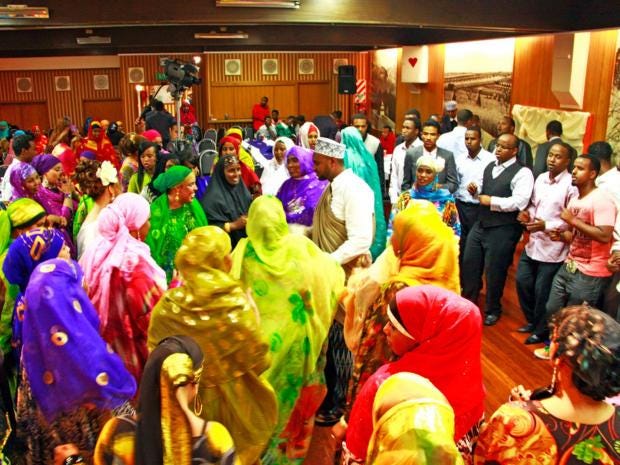
A wedding of Somali migrants in Wellington, New Zealand. (Photo Courtesy of The Independent)

There are many different types of restrictions.  First, is the limit on spending for gifts.  For new household furnishings for the couple, no more than $600 can be spent.  Then, there is a restriction on bride price, which still exists in Somalia.  Brides can be purchased for no more than $150.  Finally,  there are restrictions on the actual ceremony and reception.  No wedding receptions are to be held in hotels, and no more than three goats may be slaughtered to feed guests.

Although none of the new restrictions are aimed at it, Somali wedding celebrations can go on for weeks and leaders hope these restrictions may help curb that.  It is not unusual for a groom to spend $5,000 on a wedding, and some women were refusing to get married if they did not get lavish expensive weddings.  Beled Hawa’s commissioner told BBC that “Islamic teachings indicated that getting married should be cheap.”

For more information, please see: 

BBC Africa – Somali town bans lavish wedding spending – 13 January 2017

The Independent – Somali town bans expensive weddings in bid to reduce migration – 13 January 2017

XOGDOON News – Somali town bans lavish wedding spending – 14 January 2017

WB News – Somali town bans lavish wedding spending – 13 January 2017
Venezuelan Government Releases Political Prisoners

By Cintia Garcia

Impunity Watch Reporter, South America

 CARACAS, VENEZUELA—The Venezuelan government released several political prisoners from the Helicoide prison. Among the political prisoners released included former opposition presidential candidate. The release of the prisoners comes as talks mediated by the Vatican continue between the Venezuelan government and the opposition.

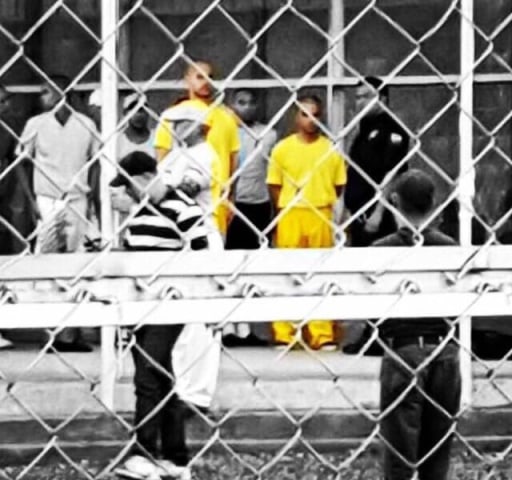
Francisco Marquez shares his experience as a Venezuelan political prisoner.
Francisco Marquez shares his experience as a Venezuelan political prisoner. (Photo Courtesy of NBC News)

The political prisoners released included former 2006 opposition presidential candidate Manuel Rosales who was detained and imprisoned in October 2015 for illicit enrichment upon his return from exile in Peru. He is the leader of the Venezuelan political party “A New Era.” Mr. Rosales will continue in house arrest until trial. In addition to his release five other activists belonging to the opposition were released. The prisoners included, Nixón Leal, Yeimi Varela, Skarlyn Duarte, Gerardo Carrero and Ángel Contrera who were all detained during a violent barricade protest in 2014. The released prisoners will not be able to leave Venezuela and will report to a parole officer. Furthermore, opposition journalist and owner of Venezuelan media outlet “6 to Poder”, Leocenis García was released after being detained in 2013 for tax fraud, money laundering, and tax evasion.

Their release comes after the opposition demanded the Venezuelan government to release political prisoners. The opposition claimed that they will not attend the following mediation talks on January 13 until 100 political prisoners are released and a new board to the government-controlled electoral council is put in place. Alfredo Romero, executive director of Foro Penal, a group that defends jailed activist stated, “Without a doubt, Venezuela is living a deep social crisis and these releases in some way are an escape valve that takes some pressure, especially international, off Maduro. But it is important to remember that in 2016 there 55 people jailed and only 43 released.”

Most recently, ex- Venezuelan Prisoner, Francisco Marquez, was released in October 2016 after being detained on his way to obtain signatures for the recall referendum against president Maduro. He stated that “people need to know that Venezuela is a country that systematically tortures its political and common prisoners.” He recounted his time in prison, although he was never tortured, he recounted the torture of other prisoners.

For more information, please see:

NBC News—Ex-Venezuela Political Prisoner Still Raining Voice for Others’ Freedom—06 January 2017.

Venezuela Analysis—Former Opposition Presidential Candidate Freed in Venezuela—02 January 2017.

USA Today—Venezuela Frees Jailed Activists, Ex-Presidential Candidate—31 December 2016.

United Nations Expert Addresses Concerns Over Health Problems Faced By Iranian Prisoners Engaged in Prolonged Hunger Strikes

by Yesim Usluca
Impunity Watch Reporter, Middle East

TEHRAN, Iran — A United Nations expert on Iranian human rights issued a warning regarding the health risks faced by prisoners of conscience who have been on a prolonged hunger strike protesting their legality of their detention.

Ms. Jahangir expressed concern over the health problems faced by inmates who are engaged in prolonged hunger strikes (Photo courtesy of U.N. News Center)

The United Nations expert, Ms. Asma Jahangir, reported that in recent weeks, at least eight prisoners of conscience have been “on life-threatening hunger strikes.” She called upon Iranian authorities to “immediately and unconditionally release [prisoners] who have been arbitrarily arrested, detained and prosecuted for exercising their rights.”

Among the prisoners of conscience is Mr. Arash Sadeghi, who ended his three-and-a-half month hunger strike last week after his spouse was released from prison on bail. Ms. Jahangir reported that the spouses are “human rights defenders who have been imprisoned for peacefully exercising their rights to freedom of expression and association.” She stated that Mr. Sadeghi is being kept in his cell and denied treatment at a specialized medical facility despite his critical health. She called upon Iranian authorities to comply with international human rights standards and medical ethics.

Ms. Jahangir expressed concern over the continued detention of Iranian human rights defenders who have been “tried [based on] vaguely defined offenses and heavily sentenced following trials marred with due process violations.” She indicated that such prisoners have no alternatives other than “to put their life at risk to contest the legality of their detention.”

Mr. Ali Shariati, another prisoner, has been on a hunger strike since October 31, 2016. He was sentenced to five years in prison for peaceful activism, which included a “non-violent protest to condemn acid attacks against women in Iran.” Ms. Jahangir expressed concern over the health issues faced by Mr. Saeed Shirzad, a children’s rights activist who has been on a hunger strike since December 7, 2016, and Mr. Mohammed Ali Taheri, who cannot be located after starting a hunger strike on September 28, 2016 and being transported to a military hospital in October 2016. A further prisoner, Mr. Hassan Rastegari Majd, is reportedly being held in solitary confinement as retaliation for undertaking an extensive hunger strike.

For more information, please see:

Fox News—UN flags risks faced by prisoners on hunger strikes in Iran—9 January 2017

National Council of Resistance of Iran—“Prisoners of Conscience at Risk of Dying …” – United Nations Expert Warns—9 January 2017

United Nations News Center—Iran: UN rights expert warns prisoners of conscience at risk of death after prolonged hunger strike—9 January 2017

Sputnik—UN Concerned Over Hunger Strikes of Iran ‘Prisoners of Conscience’—9 January 2017

Jurist—UN rights expert condemns Iran for continued imprisonment of activists on hunger strike—9 January 2017

British Red Cross Calls Overcrowded Hospitals a “Humanitarian Crisis”

By Sarah Lafen

Impunity Watch Desk Reporter, Europe


LONDON, England — The British Red Cross has issued a warning to the British National Health Service (NHS) of overcrowding in United Kingdom hospital emergency rooms, calling the situation a “humanitarian crisis.”  The warning comes after two patients passed away after long waits on trolleys in the hallways of a Worcester hospital.  One of the patients passed away after suffering cardiac arrest in a hallway after waiting 35 hours for a hospital bed.

Two deaths occurred within the past week at Worcestershire Royal Hospital's A&E department (Photo Courtesy of Times of Malta)
Two deaths occurred within the past week at Worcestershire Royal Hospital’s A&E department (Photo Courtesy of Times of Malta)

In response to the issue, the group has dispatched volunteers across the UK to transport patients from the hospital to their homes in order to free up hospital beds.  The crisis is also affecting ambulatory services, and the Red Cross has provided support to staff in Nottingham, Leicester, Lincoln, Kettering and Northampton.  Mike Adamson, chief executive of the British Red Cross, stated that people are “sent home without clothes, some suffer falls and are not found for days, while others are not washed because there is no carer there to help them.”

Dr. Mark Holland, president of the Society for Acute Medicine, told reporters that “people dying after long spells in hospital corridors shows that the NHS is now broken.”  Holland emphasized that the efforts of staff to prop up the system are no longer enough to keep the system afloat.”  The system is being strained due to the demand for a world-class service that is only provided third-world levels of staffing and beds.

Health Secretary Jonathan Ashworth admonished the British government for not acting to prevent this situation, calling the need for Red Cross assistance “staggering.”  Ashworth noted that “[f]or the Red Cross to brand the situation a ‘humanitarian crisis’ should be a badge of shame for Government ministers.”

The Red Cross is urging the government to spend more money on social care for the sick and elderly populations.  According to the Red Cross, cuts to social care funding has resulted in the inability of some patients to be discharged because there is no medical support available for them outside of the hospitals.

In September, the membership organization for the NHS warned that the healthy system was on the verge of collapse unless immediate funding was provided.

Hospitals across the UK have issued public please for people to stay away from Accident and Emergency wards (A&E) unless they have a “genuine emergency.”


For more information, please see:

Newsweek — Red Cross: Britain’s Health Faces ‘Humanitarian Crisis’ — 7 January 2017

Press TV — NHS Faces ‘Humanitarian Crisis’ at Hospitals, British Red Cross Warns — 7 January 2017

The Republic — Red Cross Calls UK Hospital Crowding a “Humanitarian Crisis” — 7 January 2017

Times of Malta — Britain’s Health Service in ‘Humanitarian Crisis’ – Red Cross — 7 January 2017

Ivory Coast Now Calm After Two Day Mutiny

By Samantha Netzband

Impunity Watch,  Africa Desk Reporter

YAMOUSSOUKRO, Ivory Coast– Things are now quiet in the Ivory Coast after a mutiny involving the country’s military.  On Friday  January 6th soldiers began a mutiny in Ivory Coast’s second largest city of Bouake.  The soldiers took over the city and demanded that they receive bonus pay.

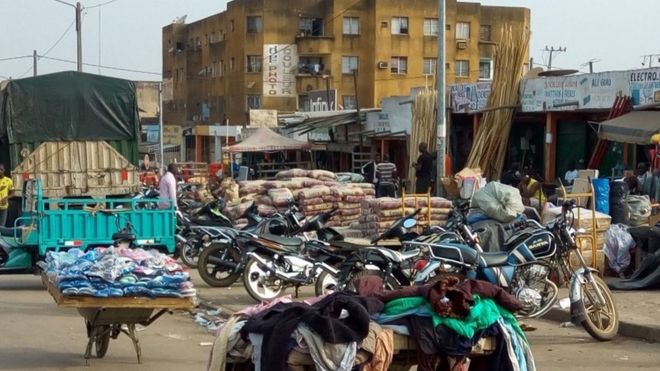
Street scene in Bouake in Ivory Coast where calm returned after a mutiny by soldiers over pay, 8 January 2017

The streets of Bouake. (Photo Courtesy of BBC Africa)

While the main mutiny took place in Bouake other military camps in cities across the Ivory coast took place in the mutiny as well.  The mutiny stopped as Defense Minister Alain-Richard Donwahi brokered a deal that allowed the soldiers to get paid on Monday the 9th.  Reports stated that soldiers were demanding 5 million francs each which is about 8,000 USD.  It is unclear what amount the soldiers received.

Despite the cessation of violence many citizens are still concerned that violence will break out again.  After all, it has only been six years since the end of the countries civil war which lasted ten years.

For more information, please see: 

BBC Africa – Ivory Coast unrest: Calm reported after two-day mutiny – 8 January 2017

IOL – Calm in Ivory Coast after Ceasefire – 9 January 2017

Reuters – Streets of Ivory Coast cities calm after soldier mutiny – 8 January 2017

Stratfor – Ivory Coast: A Short Lived Mutiny Comes to an End – 9 January 2017