Mining is Exacerbating Drought in Bolivia

By Cintia Garcia

Impunity Watch Report, South America

LA PAZ, BOLIVIA—Environmental and Land rights organizations have released reports claiming that the boom in the mining industry has exacerbated the severe drought hitting Bolivia. Bolivia is currently facing a water shortage. President Evo Morales declared a state of emergency in late November due to the shortage.

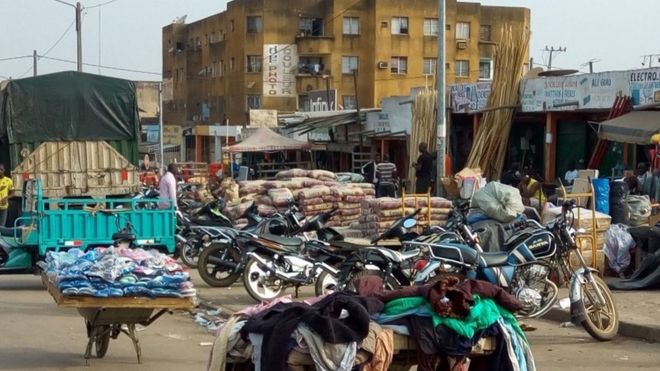
Frustrated citizens protest the water shortage in Bolivia. (Photo Courtesy of Reuters)

Although the drought has severely impacted the water supply, the mining companies have further reduced the water supply, according to Environmentalist. Mining companies use an estimated 100,000 cubic meters of water on a daily basis which is the same amount of water used by the capital. As the mineral market continues to increase, the mining companies, regardless of the shortage of water, will increase the water intake. Hector Cordova, a mine engineer stated that “mining companies would continue to put an increase in profits ahead of drought-relayed consequences.” The mining companies have diverted water supplies and contaminated the water supply—an accusation the president of Bolivia denies. Reports have shown that the groundwater reserves are now below fifty percent.

Bolivia is currently facing the worst drought in over 25 years leading to water cuts in the country. The capital city is receiving water for three hours every three days. In the Corque municipality seventy percent of the population does not have drinking water. The drought has affected 177,000 families and has threatened both the agriculture and cattle industry. The President has allocated funds to local governments to drill wells in order to transport water.

The water shortage has caused frustration among residents. The leaders of the Federation of Town Councils held water and city official’s hostage demanding a resolution to the water shortage.

For more information, please see:

Al Jazeera—Bolivia Declares National Emergency Amid Drought—21 November 2016.

Reuters—Bolivia Declares State of Emergency Due to Drought, Water Shortage—21 November 2016.

Reuters—Mining Projects, Big Plantations Mean Bolivia’s Drought Hurts More: Campaigners—28 November 2016.

Al Jazeera—Is Mining to Blame for the Drought in Bolivia?—7 December 2016.

Germany Offers “Rent a Jew” Program to Combat Anti-Semitism

By Sarah Lafen

Impunity Watch Desk Reporter, Europe


BERLIN, Germany —  Germany’s most recent attempt to combat anti-Semitism comes in the form of a program titled “Rent a Jew.”  Through the outreach program, those interested in learning more about the everyday lives of Jewish people are able to book a Jewish person for an informational session.  The program sends Jewish volunteers into German schools to speak about their experiences and to dispel commonly-held myths about the group.  The goal of the program is to draw light to the “ordinariness” of the Jewish community, and away from the view of the Jewish community as victims through the “Holocaust lens.”

The Rent-a-Jew website hopes to introduce Jewish people to the German community (Photo Courtesy of NY Daily News)

Mascha Schmerling, one of the program’s leaders, tells reporters that the group’s aim is to “give people the chance to talk to the Jewish community.”  The group wants others to see that they are “completely normal people.”  Program organizer Alexander Rasumny explains that “[a] lot of people want to be more than just the regular Jewish stereotypes in Germany, reduced to victims. A lot of people want to be seen in their own right.”

As for the odd name of the program, Shmerling recognizes that they made the title “deliberately provocative” so that it would promote conversation.  According to Schmerling, the Jewish community is tired of hearing the anti-Semitic view that Jewish people are less valuable than other people.  The title of the program mixes humor and “chutzpah” as a step towards refuting such stereotypes.

On one recent trip to a German college, Shmerling and fellow speaker Monty Aviel Zeev Ott asked the students about rumors they have heard about Jewish people, and encouraged them to speak to any rumor even if it was unflattering.  On the trip, the Rent a Jew speakers also spoke to their holiday traditions, worship practices, and family recipes.

The Jewish speakers volunteer the time and do not get paid for their services, although the organization’s website suggests that hosts are welcome to pitch in for travel expenses of the volunteers if they are willing.  Students who have participated in the program thus far have described their experiences as “enlightening.”


For more information, please see:

NY Daily News — Germany’s Rent a Jew Program Hopes to Combat Anti-Semitism — 17 December 2016

Arutz Sheva — Germany Offers ‘Rent A Jew’ Services — 16 December 2016

Vox — “Rent a Jew” is an Actual Thing in Germany.  And, Amazingly, its a Good Idea. — 15 December 2016

Telegraph — Rent a Jew Service Now Available in Germany — 12 December 2016

Chemical Attack Blamed for Deaths and Injuries of Civilians and Children in Syria

by Yesim Usluca
Impunity Watch Reporter, Middle East

DAMASCUS, Syria — The Syrian Observatory for Human Rights reported that hundreds of civilians have been killed or injured in an attack believed to have been caused by chemical weapons.

At least 28 children have died following a suspected chemical attack in Syria (Photo courtesy of Daily Mail)

The Union of Medical Care and Relief Organizations (UOSSM) indicated that an odorless and colorless gas was released during heavy airstrikes which lasted over one hour near the ancient city of Palmyra. The odorless characteristic of the gas lends itself to the suggestion that the attack may have been sarin, rather than chlorine, which has a distinct smell.

The attacks are being blamed for the deaths of at least 90 individuals, including at least 28 children, and the injuries of over 300 civilians. The organization further stated that the number of casualties was high due to shortages of medical staff trained in chemical weapons response. The UOSSM stated that the majority of those who lost their lives appear to be children who “died very quickly after foaming at the mouth due to exposure to the gas.” Medics at the scene indicated that the children appear to have experienced symptoms such as “convulsions, suffocation, vomiting, dilated pupils and coughing blood.”

The UOSSM released pictures of the bodies of deceased children lined up on the ground in Syria, with discoloration around the eyes and foaming of the mouth. The graphic images did not appear to display any evidence of visible, physical injuries.

The attacks have attracted international outrage. The CEO of UOSSM, Dr. Khaula Sawah, released a statement in which she indicated “I just cannot describe the situation any more. 100 people, mostly children and women, die instantly from exposure to an unknown chemical gas.” She went on to say that the international community and responsible parties have not responded to constant calls for ending this “massacre.” Her statement indicated that “genocide is occurring, people are being massacred and action has yet to be taken.” The Chair of UOSSM in Canada, Dr. Anas Al Kassem, declared “we cannot stand one more day of horrors. Every day a new sadistic action is taken against the people of Syria as the world looks on dumbly.”

The head of the Syrian Observatory on Human Rights, Mr. Rami Abdel Rahman, indicated that he could not confirm whether the airstrikes were carried out by Syrian or Russian warplanes.

The Syrian government, and its Russian supporters, have long denied using chemical weapons. A U.N. panel which conducted a year-long probe into Syrian attacks, however, determined that Syrian government forces carried out three chlorine gas attacks on villages in 2014 and 2015. The panel, which included experts from the Organization for the Prohibition of Chemical Weapons, further found that ISIS was responsible for a mustard gas attack in Syria in August 2015.

For more information, please see:

Daily Mail—Heartbreaking images show the bodies of dead children lined up on the streets in Syria after they died in a ‘gas attack’—13 December 2016

Independent—While the world watches Aleppo, Assad may have just used sarin gas on civilians near Palmyra—14 December 2016

BBC News—Palmyra: ‘Chemical gas attack’ hits IS-held Syrian area—12 December 2016

Reuters—Syrian Observatory reports suspected gas attack in Islamic State area near Palmyra—12 December 2016


David M. Crane Helps Draft UN General Assembly “Syrian Accountability Center” Resolution

UPDATE: According to Reuters, the UN General Assembly passed the resolution “to establish a special team to ‘collect, consolidate, preserve and analyze evidence’ as well as to prepare cases on war crimes and human rights abuses committed during the conflict in Syria” on Dec. 21, 2016. The vote was “105 in favor, 15 against and 52 abstentions. The team will work in coordination with the U.N. Syria Commission of Inquiry.” Read more.

Evidence that war crimes have been committed during the five-year-old Syrian Civil War is hard to ignore. TV images, photographs, news reports, and social media posts from the front lines and throughout Syria have documented the torture of political enemies, the use of chemical weapons, sexual violence as a weapon of war, indiscriminate aerial attacks on civilian centers, the siege of cities, attacks on humanitarian efforts, and more.

Not all of this documentary, eyewitness, or anecdotal evidence can be used to bring justice to those who have perpetrated crimes against humanity or war crimes, but in cases where it will be useful to future prosecutors, it must be carefully collected, filed, and analyzed. There are a number of ongoing documentation efforts, one of the most thorough being that of David M. Crane, Professor of Practice at Syracuse Law, INSCT Faculty Member, and Founding Prosecutor of the Special Court of Sierra Leone. Over the past five years Crane has kept track of the evidence of atrocities with help from his students in the Syrian Accountability Project (SAP).

Now Crane is pushing the international community to make further use of his, and others’, documentation by helping to draft a resolution, which is being brought before the United Nations General Assembly, to establish an “International, Impartial and Independent Mechanism to Assist in the Investigation and Prosecution of Those Responsible for the Most Serious Crimes Under International Law Committed in the Syrian Arab Republic Since March 2011.”

The UN General Assembly is expected to vote on the resolution on Dec. 21, 2016. The vote’s outcome is hard to predict. Although many in the international community recognize and condemn Syrian atrocities, that does not mean there is political will to create a postconflict justice mechanism for the people of Syria. As The New York Times explains, “The International Criminal Court, whose reason for being is to try the worst perpetrators of the world’s worst war crimes, has no jurisdiction over Syria, which is not a member of the court [and efforts] by the United Nations Security Council to refer the conflict in Syria to the court have been blocked by Russia.”

Nor is there currently any appetite, the article continues, to set up a special tribunal like the one in which Crane prosecuted former Liberian President Charles Taylor, helping to bring justice to the people of Sierra Leone. But, as Crane says, “We have to be seen to be doing something for the people of Syria!”

Specifically, the proposal suggests the UN assist Syrian justice by developing what Crane calls an “accountability center” to collect, consolidate, preserve, and analyze evidence of alleged war crimes, such as that being collected by the SAP. Work done by the accountability center would be “in accordance with international standards, in national, regional or international courts or tribunals that have or may in the future have jurisdiction over these crimes.”

“I proposed this effort to the ambassadors of Qatar and Lichtenstein in September and briefed a dozen ambassadors in November,” explains Crane. “The resolution, which I helped draft, is the result of these conversations. The accountability center concept is a way to standardize the collection of evidence and to build a solid, legally supportable case against those who are committing war crimes and crimes against humanity in Syria.”

Although its backing would carry a great deal of weight, The New York Times reports that “the United States has not said whether it supports the measure [but it] is separately funding a group of lawyers who are collecting evidence that can be used in future legal proceedings.” Nevertheless, the resolution has received support from one of the most influential, US-based rights organizations. On Dec. 19, 2016, Kenneth Roth, Executive Director of Human Rights Watch, wrote a letter urging governments “to support the UN General Assembly resolution … The creation of such a mechanism could deter those contemplating further atrocities against civilians in Syria. Potential perpetrators need to know that the world is watching and they may one day find themselves behind bars. This is fully within the General Assembly’s authority.”

——————————————————–

Resolution: International, Impartial, and Independent Mechanism to Assist in the Investigation and Prosecution of Those Responsible for the Most Serious Crimes Under International Law Committed in the Syrian Arab Republic Since March 2011 (Proposed by Lichtenstein)

http://un-report.blogspot.com/2016/12/liechtenstein-unga-draft-resolution-on.html

The General Assembly,

¶1 Guided by the Charter of the United Nations,

¶2 Reaffirming its commitment to the sovereignty of the Syrian Arab Republic,

¶3 Recalling the relevant resolutions of the General Assembly, the Security Council and the Human Rights Council, in particular Human Rights Council resolution S-17/1 that established the Independent International Commission of Inquiry on the Syrian Arab Republic,

¶4 Welcoming the ongoing work carried out by the Independent International Commission of Inquiry on the Syrian Arab Republic and recalling its reports1 and the recommendations contained therein,

¶5 Expressing its appreciation for the work carried out by the Organization for the Prohibition of Chemical Weapons-United Nations Joint Investigative Mechanism and recalling its reports2 and the conclusions contained therein,

¶6 Recognizing the work of Syrian and international civil society actors in documenting violations of international humanitarian law and violations and abuses of human rights law in the Syrian Arab Republic during the conflict,

¶7 Noting with concern the impunity for serious violations of international humanitarian law and violations and abuses of human rights law committed during the conflict, in the Syrian Arab Republic which has provided a fertile ground for further violations and abuses,

¶8 Recalling the statements made by the Secretary-General, the United Nations High Commissioner for Human Rights and the special procedures of the Human Rights Council that crimes against humanity and war crimes are likely to have been committed in the Syrian Arab Republic,

¶9 Noting the repeated encouragement by the Secretary-General and the High Commissioner for Human Rights for the Security Council to refer the situation in the Syrian Arab Republic to the International Criminal Court,

  1. Emphasizes the need to ensure accountability for crimes involving violations of international law, in particular of international humanitarian law and international human rights law, some of which may constitute war crimes or crimes against humanity, committed in the Syrian Arab Republic since March 2011, through appropriate, fair and independent investigations and prosecutions at the domestic or international level, and stresses the need to pursue practical steps towards this goal to ensure justice for all victims and contribute to the prevention of future violations;
  2. Stresses the need for any political process aimed at resolving the crisis in the Syrian Arab Republic to ensure credible and comprehensive accountability for the most serious crimes committed in the country to bring about reconciliation and sustainable peace;
  3. Welcomes the efforts by States to investigate and prosecute crimes within their jurisdiction committed in the Syrian Arab Republic, in accordance with their national legislation and international law, and encourages other States to consider doing the same and to share relevant information to this end with other States;
  4. Decides to establish an “International, Impartial and Independent Mechanism to assist in the Investigation and Prosecution of those Responsible for the Most Serious Crimes under International Law committed in the Syrian Arab Republic since March 2011” under the auspices of the United Nations to collect, consolidate, preserve and analyse evidence of such crimes and prepare files in order to facilitate and expedite fair and independent criminal proceedings in accordance with international standards, in national, regional or international courts or tribunals that have or may in the future have jurisdiction over these crimes;
  5. Requests the Secretary-General, in this regard, within 20 working days of the adoption of this resolution, to develop Terms of Reference of the International, Impartial and Independent Mechanism with the support of OHCHR, and requests further that the Secretary-General undertakes without delay the steps, measures and arrangements necessary for the speedy establishment and full functioning of the Impartial and Independent Mechanism, initially funded by voluntary contributions, in coordination with the Independent International Commission of Inquiry on the Syrian Arab Republic and building on existing capacities, including recruiting or allocating impartial and experienced staff with relevant skills and expertise in accordance with the Terms of Reference;
  6. Calls upon all States, all parties to the conflict as well as civil society to cooperate fully with the International, Impartial and Independent Mechanism to effectively fulfill its mandate, and in particular to provide it with any information and documentation they may possess pertaining to the above-mentioned crimes as well as any other forms of assistance;
  7. Requests the United Nations system as a whole to fully cooperate with the International, Impartial and Independent Mechanism and to promptly respond to any request, including access to all information and documentation, and decides that the Mechanism closely cooperate with the Independent International Commission of Inquiry on the Syrian Arab Republic in all aspects of its work;
  8. Requests the Secretary-General to report on the implementation of the present resolution within 45 days of its adoption and decides to revisit the question of funding of the International, Impartial and Independent Mechanism as soon as possible.

( This article was originally published by Syracuse University’s Institute for National Security and Counterterrorism and can be found here.)

Global Centre for the Responsibility to Protect: Atrocity Alert: Syria, South Sudan, Burma/Myanmar and Nigeria

Atrocity Alert is a weekly publication by the Global Centre for the Responsibility to Protect highlighting and updating situations where populations are at risk of, or are enduring, mass atrocity crimes.

Syria

Following a three-week pause in airstrikes on opposition-held Eastern Aleppo, the Syrian government renewed their bombardment on 15 November. As of 20 November the World Health Organization reported that the 250,000 Syrians still trapped inside the city are entirely without access to emergency medical care following airstrikes on the few remaining hospitals. Local health authorities have also reported civilians suffering symptoms of chlorine exposure following a suspected 22 November chemical attack by government helicopters. Non-state armed groups have also continued shelling residential areas of western Aleppo, including a direct hit on a school on 20 November, killing eight children. In his briefing to the UN Security Council on 21 November, UN Under-Secretary-General for Humanitarian Affairs and Emergency Relief Coordinator Stephen O’Brien called for an end to all attacks on civilians and an immediate lifting of the siege by Syrian government forces. According to the Syrian Observatory for Human Rights, in the 60 days since the cessation of hostilities collapsed, 834 civilians have been killed in East Aleppo. In light of the failure by the Security Council to uphold its responsibility to protect the long-suffering people of Syria, the UN General Assembly should immediately take up the issue.

South Sudan

On 17 November the UN Special Adviser on the Prevention of Genocide, Adama Dieng, briefed the UN Security Council on his recent visit to South Sudan, warning that there is a “strong risk of violence escalating along ethnic lines, with the potential for genocide.” Special Adviser Dieng called upon the Council to request that the UN mission in South Sudan (UNMISS) monitor, investigate and report on all incidents of hate speech and urged Council members to impose an arms embargo, noting the devastating impact of the proliferation of arms. During the meeting the Permanent Representative of the United States, Samantha Power, announced her delegation’s intention to put forward a resolution for an arms embargo on South Sudan. The draft resolution should be adopted without delay.

Burma/Myanmar

Burma/Myanmar’s army continues to undertake violent “clearance operations” in ethnic Rohingya areas of Arakan/Rakhine state following the 9 October attacks on border posts. According to Human Rights Watch, during these operations security forces have razed more than 1,250 homes in five Rohingya villages, with more than 820 destroyed since 10 November. On 18 November the UN Special Rapporteur on the human rights situation in Myanmar, Yanghee Lee, criticized the government for placing the region on “lockdown” for six weeks and for its “blanket denial” of human rights violations, urging an immediate investigation into reports of torture, sexual violence and summary executions. An estimated 30,000 people have been displaced from Arakan/Rakhine state since 9 October and emergency humanitarian access remains suspended for an estimated 160,000 people. The UN Refugee Agency has appealed for neighboring countries to allow safe passage to civilians fleeing violence amidst reports that Bangladesh has closed its border to Rohingya asylum seekers.

Nigeria and the Lake Chad Basin

Despite a Nigerian government offensive against Boko Haram, over the past two weeks the extremist group has reportedly escalated its attacks. Employing scorched earth tactics, Boko Haram has razed nine villages in Borno state. The town of Chibok, where hundreds of schoolgirls were kidnapped in April 2014, is currently under siege by Boko Haram. The group also carried out multiple suicide attacks in Maiduguri, the capital of Borno state, on 18 November, and perpetrated three attacks in northern Cameroon on 21 and 22 November, including an attempted suicide bombing of a camp for displaced civilians.

Connect With Us