Ukrainian Pilot Savchenko Launches Opposition Movement

By Sarah Lafen

Impunity Watch Desk Reporter, Europe


KIEV, Ukraine — Nadia Savchenko, former military aviator and current Ukrainian lawmaker, has launched a new opposition movement following a split with her former political party.  The new movement is called RUNA, which is an acronym for Ukrainian People’s Revolution.   Savchenko claims that RUNA will be a “mechanism” she describes as a “naturalist association of people” who stray from “populist slogans.”  She does not consider the new platform to be a “political project” just yet, however expects it to be formed into such when the time is right.

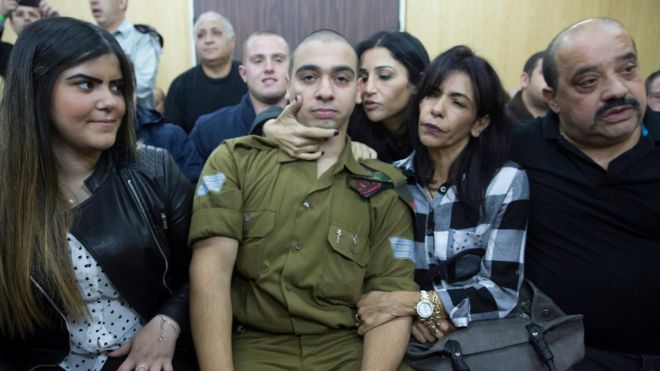
Savchenko announces the launch of her new opposition movement at a press conference (Photo Courtesy of RadioFreeEurope RadioLiberty)

RUNA’s Facebook page display’s the movement’s logo, which is four red and black leaves.  It also sets forth the movement’s goals of active thinking and the revolution of Ukrainians to fulfill the aims of the EuroMaidan Revolution.  The announcement of the press conference officially launching RUNA was made online, and was entitled “Conception of systemic change in Ukraine as a unitary and decentralized republic.”

After being sentenced to 22 years in prison on charges of alleged complicity in the murder of two Russian journalists, Savchenko was pardoned by Vladimir Putin in May and was released in a swap for two Russians held in Kiev.  The release of the prisoners came after Savchenko had a private meeting with the heads of separatist regions in Ukraine.

Savchenko denied the charges against her, and took part in two hunger strikes as a result.  Upon her release from prison, Savchenko was hailed as a hero upon her return to Ukraine, however has since faced criticism from nationalists.

In October, Savchenko quit the Batkivschyna political party headed by former Prime Minister Yulia Tymoshenko, and was formally expelled from it earlier this month.  Batkivschyna was critical of Savchenko’s meeting with Russian-backed separatist leaders from eastern Ukraine to discuss a prisoner swap.  This month she was also formally expelled from Ukraine’s delegation to the Parliamentary Assembly of the Council of Europe (PACE) as well as the Parliamentary Committee for National Defense and Security.

Mikheil Saakashvili, former president of ex-Soviet Georgia, has also recently created an opposition movement with intentions of overturning Poroshenko.


For more information, please see:

The Daily Star — Hero Pilot Savchenko Launches Ukraine Opposition Movement — 28 December 2016

The Guardian — Ukraine Insurgents Release Two Women Thanks to Savchenko — 27 December 2016

Kyiv Post — Savchenko to Launch New Political Project in Lviv — 27 December 2016

RadioFreeEurope RadioLiberty — Ukraine’s Savchenko Unveils New Public Movement — 27 December 2016

ISIS Releases Video of Two Turkish Soldiers Being Burned Alive

by Yesim Usluca
Impunity Watch Reporter, Middle East

ANKARA, Turkey — The Islamic State (“ISIS”) released a video showing terrorists filming themselves burning two captured Turkish soldiers.

The two Turkish soldiers were burned alive in the video released by ISIS (Photo courtesy of Daily Mail)

The 19-minute video released by the terror group is being described as “gruesome,” while the killers are being characterized as “barbarians.” It showed two servicemen with freshly-shaved heads, dressed in fuel-doused camouflage army gear, being dragged from a cage and forced to crawl on their hands and knees by two armed, unmasked ISIS militants, dressed in black clothing and brown suicide vests. Standing barefoot in the middle of a desert with chains around their necks, the soldiers were “connected by the neck to a torched fuse.” With a third terrorist standing guard, the executioner criticized Turkey’s president, Recep Tayyip Erdogan, and called for “destruction to be sowed” in Turkey. The men were made to stand a few feet from each other, with their backs to the long fuse. One of the militants then pressed a button on a small device, and both men were engulfed in flames shortly thereafter.

The video, titled “The Cross Shield,” was released shortly after Turkey vowed to combat terrorism in Syria when 16 of its troops were killed in battle. Amaq, a news agency linked to ISIS, stated last month that the terror group had captured two Turkish soldiers. The Turkish army had subsequently issued a statement indicating that it had lost contact with two soldiers. The video purportedly accused the Turkish government and President Erdogan of “burning Muslims.” ISIS stated that the executions were “payback” for Turkey’s involvement in the “war against Muslims.”

Following the video’s release, Turkey allegedly blocked access to Twitter, YouTube and Facebook to prevent the victims’ families and loved ones from seeing the execution. Turkey Blocks, a website that identifies and verifies reports of mass online censorship, stated that the blocks appeared to be implemented at the ISP level. It further indicated that this blackout was the second in one week, following a shutdown that occurred after the assassination of Russia’s ambassador to Turkey.

Turkish troops had entered Syria in August with the aim of overthrowing ISIS and Kurdish militia from the border region.

For more information, please see:

New York Post—ISIS burns Turkish soldiers alive—23 December 2016

AlJazeera—ISIL video shows ‘Turkish soldiers burned alive’—23 December 2016

Daily Mail— Sick ISIS savages film themselves burning two Turkish soldiers alive in disturbing new execution video after capturing them in Aleppo—22 December 2016

Reuters—ISIS burns 2 Turkish servicemen alive, releases gruesome video—23 December 2016


FACT SHEET: Principles for Middle East Peace

In his December 28, 2016 Remarks on Middle East Peace, Secretary of State John Kerry presented the Administration’s view on the broad consensus that has emerged regarding principles for a final status agreement that could meet the needs of both sides, reflecting the Secretary’s efforts and discussions with the parties and key stakeholders over the past four years.

These principles were offered not to prejudge or impose an outcome, but to provide a possible basis for serious negotiations when the parties are ready.

Principle 1. Provide for secure and recognized international borders between Israel and a viable and contiguous Palestine, negotiated based on the 1967 lines with mutually agreed equivalent swaps.

Resolution 242, which has been enshrined in international law for 50 years, provides for the withdrawal of Israel from territories it occupied in 1967 in return for peace with its neighbors and secure and recognized borders. It has long been accepted by both sides, and it remains the basis for an agreement today.

The Arab League has previously agreed, following the Secretary’s engagement, that the reference in the Arab Peace Initiative to 1967 lines now includes the concept of land swaps, which the Palestinians have acknowledged. This is necessary to reflect practical realities on the ground, and mutually agreed equivalent swaps will ensure that the agreement is fair to both sides.

There is also broad recognition of Israel’s need to ensure that the borders are secure and defensible, and that the territory of Palestine is viable and contiguous. There is also a clear consensus that no changes by Israel to the 1967 lines will be recognized by the international community unless agreed to by both sides.

Principle 2. Fulfill the vision of the UN General Assembly Resolution 181 of two states for two peoples, one Jewish and one Arab, with mutual recognition and full equal rights for all their respective citizens.

This has been the foundational principle of the two-state solution from the beginning: Creating a state for the Jewish people and a state for the Palestinian people, where each can achieve their national aspirations. Resolution 181 is incorporated into the foundational documents of both the Israelis and Palestinians. Recognition of Israel as a Jewish state has been the U.S. position for years, and many others have expressed that they are prepared to accept it as well, provided the need for a Palestinian state is also addressed.
There are some 1.7 million Arab citizens who call Israel their home and must now and always be able to live as equal citizens. That is why it is so important that in recognizing each other’s homeland – Israel for the Jewish people and Palestine for the Palestinian people – both sides reaffirm their commitment to upholding full equal rights for all of their respective citizens.

Principle 3. Provide for a just, agreed, fair, and realistic solution to the Palestinian refugee issue, with international assistance, that includes compensation, options and assistance in finding permanent homes, acknowledgment of suffering, and other measures necessary for a comprehensive resolution consistent with two states for two peoples.

As part of a comprehensive resolution, the Palestinian refugees must be provided with compensation, their suffering must be acknowledged, and there will need to be options and assistance in finding permanent homes. The international community can provide significant support and assistance, including in raising money to help ensure the compensation and other needs of the refugees are met, and many have expressed a willingness to contribute to that effort. But there is a general recognition that the solution must be consistent with two states for two peoples, and cannot affect the fundamental character of Israel.

Principle 4. Provide an agreed resolution for Jerusalem as the internationally recognized capital of the two states, and protect and assure freedom of access to the holy sites consistent with the established status quo.

Jerusalem is the most sensitive issue for both sides, and the solution must meet the needs not only of the parties, but of all three monotheistic faiths. That is why the holy sites that are sacred to billions of people around the world must be protected and remain accessible, and the established status quo maintained. Most acknowledge that Jerusalem should not be divided again like it was in 1967. At the same time, there is broad recognition that there will be no peace agreement without reconciling the basic aspirations of both sides to have capitals there.

Principle 5. Satisfy Israel’s security needs and bring a full end to the occupation, while ensuring that Israel can defend itself effectively and that Palestine can provide security for its people in a sovereign and non-militarized state.

Security is the fundamental issue for Israel. Everyone understands that no Israeli Government can ever accept an agreement that does not satisfy its security needs or risks creating an enduring security threat like Gaza in the West Bank. Israel must be able to defend itself effectively, including against terrorism and other regional threats. There is a real willingness by Egypt, Jordan, and others to work together with Israel on meeting key security challenges. The U.S. believes that those collective efforts, including close coordination on border security, intelligence-sharing, and joint operations, can play a critical role in securing the peace.
Fully ending the occupation is the fundamental issue for the Palestinians: They need to know that the military occupation will really end after an agreed transitional process, and that they can live in freedom and dignity in a sovereign state while providing security for their population even without a military of their own. This is widely accepted as well.

Principle 6. End the conflict and all outstanding claims, enabling normalized relations and enhanced regional security for all as envisaged by the Arab Peace Initiative.

It is essential for both sides that the final status agreement resolves all the outstanding issues and finally brings closure to this conflict, so they can move ahead to a new era of peaceful coexistence and cooperation. For Israel, this must also bring broader peace with its Arab neighbors. That is the fundamental promise of the Arab Peace Initiative, which key Arab leaders have affirmed.

(This article was originally published by the U.S. Department of State and can be found here.)

Opposition Calls on President Jammeh to Step Down after he Rejects Election Results

By Samantha Netzband 

Impunity Watch, Africa Desk Reporter

BANJUL, The Gambia–Opposition leaders in Gambia are calling for President Jammeh to step down after he rejected the countries recent election results.  Originally President Jammeh had accepted the election results and was going to allow for a smooth transition of power to President-elect Adama Barrow.  He has sense changed his mind which is not much of a surprise to the international community that does not have much faith in President Jammeh.  Jammeh has a questionable record as President of the Gambia as he has been accused of human rights violations

Source: Fatu Network

President Jammeh. (Photo Courtesy of Premium Times)

President-elect Adama Barrow has also been calling on Jammeh to step down in order to ensure a good transition.  Because of the countries lack of Supreme Court (it currently only has one justice) an election challenge would surely either drag on for a long time or be unduly influenced by Jammeh as he would appoint the remaining justices.  Either way opposition party members are eager to see Jammeh go not only in order to get the power that they won in the election, but also to ensure that The Gambia does not become a country of chaos after failed elections.

President Jammeh is due to leave office on January 18, 2017 which is the end of his mandate.  Should Jammeh actually step down opposition members have said they are planning to prosecute Jammeh for crimes he committed during office.

For more information, please see:

BBC News – Gambia election row: Yahya Jammeh ‘should step down now’ – 12 December 2016

Joll of News – Gambia: President-elect Rejects Jammeh’s Election Challenge – 12 December 2016

NPR – Gambia’s Opposition Calls On President To Step Down After Election Defeat – 12 December 2016

Premium Times – Gambia election: Jammeh heads to Court – 12 December 2016

Magnitsky Campaign Releases Names of 28 Russian Officials Currently Involved in the Posthumous Cases Against Magnitsky for Inclusion on New International Sanctions Lists

PRESS RELEASE

For Immediate Distribution

27 December 2016 – Today, the Global Campaign for Justice for Sergei Magnitsky published a list of 28 Russian officials involved in current criminal cases against Sergei Magnitsky in spite of the fact that he was killed in police custody in 2009.

The list includes 28 officials from the Russian Interior Ministry, Prosecutor’s Office, FSB and the Investigative Committee.

The release of these new names coincides with the consideration or passage of Magnitsky sanctions legislation in the United States, Canada, the U.K., Estonia and at the EU.

The two Russian officials who had instigated the persecution of Sergei Magnitsky posthumously – Deputy General Prosecutor Victor Grin and Interior Ministry investigator Oleg Urzhumtsev – have already been sanctioned under the “Sergei Magnitsky Rule of Law Accountability Act.”

The Russian officials listed below have rejected numerous complaints filed by Magnitsky’s mother, Natalia Magnitskaya.

Mrs Magnitskaya’s most recent complaint filed by her lawyer with the Russian authorities seeking to end the posthumous persecution of her son, said:

” It is currently known that the same criminal group [which stole US$230 million] perpetrated a number of similar crimes, and the amount of funds stolen from the budget is about US$800 million. S. Magnitsky was placed into custody on 24 November 2008 soon after he gave testimony implicating members of this criminal group. In a little less than a year, on 16 November 2009, he was found dead in the cell of the collection unit of Matrosskaya Tishina detention center. The location and nature of injuries on his body indisputably testify to the violent causes of the death of S.Magnitsky.

After S. Magnitsky was physically eliminated, investigator O. Urzhumtsev created a knowingly false version of the crime, as purportedly committed by S. Magnitsky himself, which was aimed to compromise the deceased and was monstrous in its cynicism and injustice.”

The Russian Interior Ministry refused Mrs Magnitskaya’s complaint against her son’s posthumous persecution on the ground that Mrs Magnitskaya did not have a procedural status to lodge this complaint, and said:

“The investigation sees no grounds to treat Mrs Magnitskaya as a person whose interests are affected by the criminal prosecution.”

The refusal of Mrs Magnitskaya’s complaint was prepared by Russian Interior Ministry investigator Ranchenkov pursuant to a criminal case about the laundered US$230 million proceeds of fraud – the crime uncovered by Sergei Magnitsky and in which he is being posthumously accused by the Russian authorities. This posthumous proceeding is currently overseen by deputy head of the Russian Interior Ministry’s Investigative Department Krakovsky and deputy head of the Interior Ministry’s Directorate of Investigations of Organised Criminal Activity Shneiderman.

List of Officials Persecuting Sergei Magnitsky Posthumously – 2011-2016:

1. R. Filippov – investigator of the Russian Interior Ministry’s Investigative Department, responsible for the posthumous persecution of Sergei Magnitsky under case No 678540

2. P. Tambovtsev – investigator of the Russian Interior Ministry’s Investigative Department, responsible for the posthumous persecution of Sergei Magnitsky under case No 678540

3. A. Ranchenkov – investigator of the Russian Interior Ministry’s Investigative Department, responsible for the posthumous persecution of Sergei Magnitsky under case No 678540

4. Y. Shinin – first deputy head of the Russian Interior Ministry’s Investigative Department who sanctioned the posthumous persecution of Sergei Magnitsky

5. M. Alexandrov – head of Directorate of Investigations of Organised Crime and Corruption of the Russian Interior Ministry’s Investigative Department, deputy head of the Interior Ministry’s Investigative Department, and then deputy head of the General Prosecutor’s Office Directorate of the Oversight over Investigations of Especially Important Cases, overseeing cases against Sergei Magnitsky posthumously

6. A. Saribzhanov – deputy head of Directorate of Investigations of Organised Crime and Corruption of the Russian Interior Ministry’s Investigative Department who refused complaint from Magnitsky’s mother against the posthumous persecution of her son

7. S. Shamin – head of 2nd section of Directorate of Investigations of Organised Crime and Corruption of the Russian Interior Ministry’s Investigative Department who sanctioned posthumous persecution of Sergei Magnitsky

8. A. Ryabtsev – head of the Russian Interior Ministry’s Main Department of Economic Security and Combating Corruption(Department “K”), involved in the posthumous persecution of Sergei Magnitsky and exoneration of those involved in Magnitsky’s death

9. D. Mityaev – official of the Russian Interior Ministry’s MainDepartment of Economic Security and Combating Corruption(Department “K”), involved in the posthumous persecution of Sergei Magnitsky and exoneration of those involved in Magnitsky’s death

10. A. Krakovsky – deputy head of the Russian Interior Ministry’s Investigative Department responsible for the posthumous persecution of Sergei Magnitsky seven years after his death in custody

11. S. Shneiderman – deputy head of the Russian Interior Ministry’s Investigative Department responsible for the posthumous persecution of Sergei Magnitsky seven years after his death in custody

12. S. Murashev – deputy head of second section of the Directorate of the Russian Interior Ministry’s Investigative Department responsible for the posthumous persecution of Sergei Magnitsky seven years after his death in custody

13. V. Yudin – head of the Russian General Prosecutor’s Office Directorate of Oversight over Investigations of Especially Important Cases, responsible for the posthumous persecution of Sergei Magnitsky

14. V. Ignashin – deputy head of the Russian General Prosecutor’s Office Directorate of Oversight over Investigations of Especially Important Cases, responsible for the posthumous persecution of Sergei Magnitsky

15. S. Bochkarev – prosecutor of the Russian General Prosecutor’s Office Directorate of Oversight over Investigations of Especially Important Cases, responsible for the posthumous persecution of Sergei Magnitsky

16. A. Kulikov – prosecutor of the second section of the Russian General Prosecutor’s Office Directorate of Oversight over Investigations of Especially Important Cases, responsible for the posthumous persecution of Sergei Magnitsky

17. D. Stroitelev – head of section of the FSB’s Directorate K (Financial Counterintelligence) involved in the posthumous persecution of Sergei Magnitsky and refusal of complaint from Magnitsky’s mother

18. V. Komarov – officer of the FSB’s Directorate K (Financial Counterintelligence) involved in the posthumous persecution of Sergei Magnitsky

19. A. Pogrebnyak – officer of the FSB’s Directorate K (Financial Counterintelligence) involved in the posthumous persecution of Sergei Magnitsky

20. E. Golubev – investigator of the Russian Investigations Committee who exonerated tax officials from liability for the US$230 million theft and posthumously persecuted Sergei Magnitsky in spite of complaints from Magnitsky’s mother

21. V. Alyshev – deputy head of the Main Investigative Directorate of the Russian Investigations Committee who exonerated from liability Interior Ministry officials who persecuted Sergei Magnitsky

22. A. Iskantsev – acting head of the Main Investigative Directorate of the Russian Investigations Committee who exonerated from liability Interior Ministry officials who persecuted Sergei Magnitsky

23. S. Olkhovnikov – deputy head of the second investigative section of the first investigative department for Central District of the Main Investigative Directorate of the Russian Investigations Committee overseeing the posthumous persecution of Sergei Magnitsky and the exoneration of officials implicated by Magnitsky in the US$230 million theft

24. S. Kiryukhin – head of the second investigative section of the first investigative department of the Main Investigative Directorate of the Russian Investigations Committee overseeing the posthumous persecution of Sergei Magnitsky and the exoneration of officials implicated by Magnitsky in the US$230 million theft

25. L. Kolobkova – deputy head of the first investigative department of the Main Investigative Directorate of the Russian Investigations Committee overseeing the posthumous persecution of Sergei Magnitsky and the exoneration of officials implicated by Magnitsky in the US$230 million theft

26. A. Prokopets – acting head of the first investigative department of the Main Investigative Directorate of the Russian Investigations Committee overseeing the posthumous persecution of Sergei Magnitsky and the exoneration of officials implicated by Magnitsky in the US$230 million theft

27. R. Erdniev – deputy head of the Directorate of Procedural Oversight over Investigations of Especially Important Cases in Federal Districts of the Russian Investigations Committee overseeing the posthumous persecution of Sergei Magnitsky and the exoneration of officials implicated by Magnitsky in the US$230 million theft

28. Y. Tyutyunnik – acting head of the Main Investigative Directorate of the Investigations Committee overseeing the posthumous persecution of Sergei Magnitsky and the exoneration of officials implicated by Magnitsky in the US$230 million theft.

For further information please contact:

Global Justice for Sergei Magnitsky

+44 207 440 1777

info@lawandorderinrussia.org

www.lawandorderinrussia.org

www.billbrowder.com

twitter.com/Billbrowder

 
Extract from Mrs Magnitskaya’s Complaint against her son’s posthumous persecution

Below is an extract from the complaint filed with the Russian Interior Ministry by Mrs Magnitskaya’s lawyer against her son’s posthumous persecution:

“The investigation of this criminal case affects the constitutional rights of Mrs Magnitskaya and her deceased son.

Since the end of 2007 and in 2008 Sergei Magnitsky took active part in exposing the criminal group responsible for the theft of 5.4 billion roubles [US$230 million] from the state budget under the disguise of a tax refund.

Today, the investigation has numerous proofs that the theft had been committed by the criminal group which comprised heads of Moscow Tax Inspectorates No 25 and 28 E.Khimina and O.Stepanova and their subordinates; owner and employees of Universal Savings Bank; previously convicted Markelov, Kurochkin and Khlebnikov; officials from the Moscow Interior Ministry’s Tax Crime Department who assisted them, and others.

Furthermore, it is currently known that the same criminal group perpetrated a number of similar crimes, and the amount of funds stolen from the budget is about US$800 million. The theft of 5.4 billion roubles was not the first and not the last in the list of their crimes. Having unlimited financial resources at their disposal and having secured protection at the high administrative level, they have organised persecution against those who disrupted and exposed their criminal activity.

S. Magnitsky was placed into custody on 24 November 2008 soon after he gave testimony implicating members of this criminal group. In a little less than a year, on 16 November 2009, he was found dead in the cell of the collection unit of Matrosskaya Tishina detention center. The location and nature of injuries on his body indisputably testify to the violent causes of the death of S.Magnitsky.

After S. Magnitsky was physically eliminated, investigator O. Urzhumtsev created a knowingly false version of the crime, as purportedly committed by S. Magnitsky himself, which was aimed to compromise the deceased and was monstrous in its cynicism and injustice.

The decree to commence a criminal case, investigator O.Urzhumtsev included data about alleged complicity of S. Magnitsky in the 5.4 billion roubles theft, which in fact S.Magnitsky had uncovered.”

The complaint from Mrs Magnitskaya’s lawyer further says that the conclusion on complicity of S. Magnitsky in the wrong-doing is a knowing lie and slander, contrary to the article 8 of the Russian Criminal Procedure Code which stipulates that no one can be recognised as guilty in committing the offence in the absence of a court judgment.