Protests in Morocco After Fish Seller Crushed to Death in Morocco

By Samantha Netzband

Impunity Watch, Africa Desk Reporter

RABAT, Morocco– Protests have rocked Morocco after fish seller Mouhcine Fikri, 31, was crushed to death in a city garbage truck.  Fikri, dove into the truck after municipal workers confiscated his swordfish and threw it away.  It is illegal to catch and sell swordfish during the current season.  The fish that was confiscated is was estimated to be worth a large sum of money.

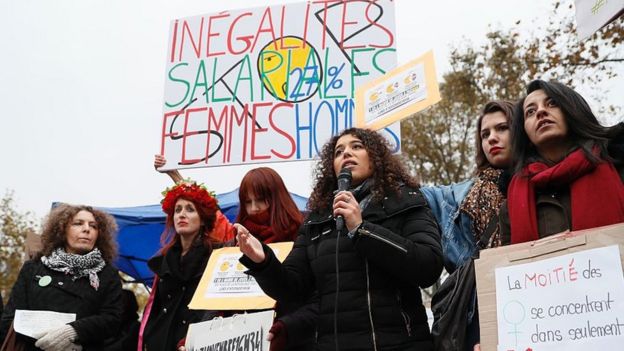
Protests take part in a rally called by the February 20 Movement in Rabat after a fishmonger in the northern town of Al Hoceima was crushed to death inside a rubbish truck as he tried to retrieve fish confiscated by police October 30, 2016. REUTERS/Stringer

Moroccans protest in Rabat. (Photo Courtesy of Thomson Reuters)

Protests are extremely rare in Morocco and this protest has paralleled the 2010 death of a fruit seller in  Tunisia.  The protest that followed the fruit seller’s death in Tunisia eventually lead to the Arab Spring in that country.  Many protesters that are taking to the street to protest the death of Fikri are shouting “hogra” which is a term for abuse and injustice.

The Moroccan royalty, which has managed to prevent any Arab Spring like protests from consuming the government, is growing irritated with the protests that are not ending.  Morocco is seen across the world as a progressive North African country and is welcoming the United Nations Climate Change Conference in November.  The “February 20 Movement” which started Arab Spring like protests in Morocco in 2011 is said to be taking advantage of the current protests to show the Moroccan people that the government still does not care for its people.  The King of Morocco has visited Fikri’s family in hopes of smoothing over the feeling of ill will in the country.

For more information, please see: 

Al Jazeera – Fishmonger’s Gruesome Death Sparks Protests in Morocco – 31 October 2016

BBC News – Morocco Protests: Death of Fish Seller Triggers Rare Demonstrations – 30 October 2016

Thomson Reuters – Morocco protesters take to streets again over Fishmonger’s death – 31 October 2016

Thomson Reuters – Protests at fishmonger’s death test Moroccan monarchy nerves – 3 November 2016

Justice for Sergei Magnitsky: Bill Browder to Give Damning Testimony On the Criminality of the Putin Regime to UK Parliament’s Foreign Affairs Committee

8 November 2016 – Bill Browder, author of the best-selling book, “Red Notice: How I Became Putin’s Number One Enemy,” and leader of the global Magnitsky Justice campaign, will testify in the British parliament today, 8 November 2016, at 3:45 pm.


The hearing entitled “Critics of the Kremlin give evidence” is part of an inquiry on the UK’s relations with Russia and is organized by the Foreign Affairs Committee of the House of Commons.


Mr Browder will speak about his personal experience of dealing with Russian authorities, who have declared him a threat to national security; his campaign’s recent discoveries connecting illicit funds stolen from the Russian people directly to President Putin’s cronies; the role of Western enablers in attempting to protect Russia’s kleptocrats in the UK, and the implications for UK-Russia policy.


Mr Browder will talk about the fate of his young Russian lawyer, Sergei Magnitsky, who uncovered the theft of US$230 million from the Russian treasury by a criminal enterprise involving Russian officials, and who was killed in Russian police custody at the age of 37.
After Magnitsky’s death, Russian authorities posthumously accused him of the crime he had uncovered and exonerated all officials.


The Global Magnitsky Justice campaign has uncovered illicit funds connected to the US$230 million laundered in multiple jurisdictions, including the UK, and a number of proceedings around the world have been initiated as a result.


The Global Magnitsky Justice campaign also calls for targeted visa and financial sanctions on those connected to Sergei Magnitsky’s death and the crime he had uncovered. A law imposing such sanctions was introduced in the USA in 2012. A similar legislation has been initiated in the UK.


The testimony by Mr Browder on UK-Russia relations will take place at Boothroyd Room, Portcullis House, and will start at 3.45pm on Tuesday, 8 November 2016.


Mr Browder will be preceded by Russian dissident Mikhail Khodorkovsky who will also give evidence to the committee.


For more information, please contact:


Justice for Sergei Magnitsky

+44 207 440 1777

e-mail: info@lawandorderinrussia.org

www.lawandorderinrussia.org

billbrowder.com

twitter.com/Billbrowder


Announcement of the hearing on UK-Russia relations at the Commons Select Committee:

https://www.parliament.uk/business/committees/committees-a-z/commons-select/foreign-affairs-committee/news-parliament-2015/russia-critics-evidence-16-17/

The UN Calls for the Release of Activist Milagro Sala

By Cintia Garcia

Impunity Watch Reporter, South America

BUENOS AIRES, ARGENTINA—The United Nations demanded the release of Milagro Sala, an indigenous activist, claiming the Argentine government arbitrarily detained her.  Milagro Sala was detained on January 16, 2016 while protesting reforms implemented by Jujuy’s provincial government.

Milagro Sala was detained by the Argentine government. (Photo Courtesy of The Argentina Independent)

Milagro Sala was arrested for “inciting criminal acts” in connection to the protests she has led against the government, specifically her attempt to block roads around the municipal buildings in San Salvador de Jujuy. The UN Working Group on Arbitrary Detention report identified “a system of consecutive accusations and court cases that maintain Sala’s detention indefinitely and violate judicial independence.” The report continues by stating that there is no legal justification for her detention and “it has not been demonstrated that there is a risk of escape or of obstruction of the investigation.” A judge had ruled for Sala’s release on January 29th, but three days before her release, she was charged with extortion, fraud, and conspiracy. In addition, the report claims that the State blocked her right to defense by not informing her of the charges or the crimes accused of.

The United Nations is demanding the immediate release of Sala and for an investigation of the violations of her rights. The UN has asserted her detention was based on her exercising her human rights.

Milagro Sala is the head of the 70,000 member Tupac Amaru organization, as well as a representative in Parlasur, the parliamentary institution of the Mercosur trade bloc for South America. Sala has protested against President Mauricio Macri’s government since he took office. Sala is his administration’s first political prisoner. She was a supporter of former President Cristina Fernandez, who was accused of mismanaging money by constructing lower income housing in Jujuy province.

Many in Argentina have protested President Macri’s cuts in education, jobs, revisions to the tax and tariff rate, and the expansion of privileges for commercial exporters at the cost of farmers.

For more information, please see:

The Argentina Independent—UN Work Group Demands Milagro Sala’s Release—28th October 2016.

Telesur—UN Demands Argentina release Indigenous Leader Milagro Sala—28 October 2016.

Washington Post—UN Panel Tells Argentina to Release Activist Milagro Sala—28 October 2016.

La Nacion—La Carta de Milagro Sala en la que Pidió Jurar Como Diputada de Parlasur Desde la Cárcel—03 November 2016.

Syria Deeply Weekly Update: ‘Excuse Me If We Smash You’


WEEKLY UPDATE
November 4, 2016

Dear Readers,Welcome to the weekly Syria Deeply newsletter. We’ve rounded up the most important stories and developments about Syria and the Syrians in order to bring you valuable news and analysis. But first, here is a brief overview of what happened this week:The battle for Aleppo is expected to become even more intense this weekend, as Russia’s Friday deadline for rebels to leave the eastern side of the city passed. “We asked you to leave. You did not leave. So excuse me if we smash you,” Aleppo parliament member Fares Shehabi told the BBC.Russia announced on Wednesday that rebels would be able to bring their weapons with them and must evacuate through two unobstructed exit corridors by Friday evening. Six additional corridors were set up for civilians and the sick and wounded to evacuate, according to the Russian defense ministry.On Thursday, Syrian rebels rejected the demand to evacuate. Zakaria Malahifji of the Fastaqim rebel group told Reuters, “This is completely out of the question. We will not give up the city of Aleppo to the Russians and we won’t surrender.”Earlier this week, rebels launched phase two of their operation on the western, government-held part of the city in an attempt to break the three-month-long siege of eastern Aleppo. Rebel fire killed at least 12 people between Thursday and Friday morning. On Friday, at least three commanders from the Soqor al-Sham rebel group were killed in clashes.Government forces advanced in the Damascus countryside this week. On Wednesday, pro-regime forces took control of two hilltop villages in Eastern Ghouta, an area that has been under siege since early 2013. On Friday, Syrian army units advanced inside the town of Khan al-Sheeh. The advance comes after more than 50 days of fighting with Jaish al-Islam, the largest rebel faction in the area.Meanwhile, the U.S.-led coalition is preparing for their battle against the so-called Islamic State (ISIS) in the group’s Syrian stronghold of Raqqa. Turkey and Syrian Kurdish YPG forces were expected to participate in the operation, but on Thursday, the U.S.-backed Syrian Democratic Forces (SDF) said they would not accept Turkish involvement.

Weekly Highlights:

Long Read: The U.S. Has Intervened in Syria, But Not In The Way You Think

The United States intervened militarily in Syria under the premise of the “war on terror” and the fight against ISIS, but their presence is actually helping the Syrian government.

Smoke rises from the Syrian city of Kobani, following an airstrike by the U.S.-led coalition, seen from a hilltop outside Suruc, on the Turkey-Syria border. AP/Vadim Ghirda, File

When It Comes to Humanitarian Aid, Syrians Must Play the Numbers Game

Mohamad Katoub, a former doctor who escaped from Eastern Ghouta, was quick to point out that Syria’s daily toll of deaths and casualties were more than just numbers – until he saw the power those statistics had. Here, he explains why he changed his mind.

Syrian children on the first day of Eid al-Adha visiting the graves of family lost during the Syrian Civil War, in Douma, Eastern Ghouta, on September 12, 2016. Samer Bouidani/NurPhoto

Lessons from Russia’s Intervention in Syria

Atlantic Council experts Faysal Itani and Hossam Abouzahr have analyzed hundreds of Moscow’s Syria-related actions in order to piece together an analysis of the “Russia problem” facing the next White House administration.

Russian president Vladimir Putin, left, shakes hands with U.S. secretary of state John Kerry at this year’s G20 meeting. Alexei Druzhinin, Sputnik, Kremlin Pool Photo via AP

Additional Reading:

Top image: The scene outside the Russian embassy in London where 25 activists from two campaign groups The Syria Campaign and Syria Solidarity UK scattered over 800 limbs around the gates of the building in a protest at the bombing of civilians in east Aleppo. Dominic Lipinski /PA Wire

Bahrain Government Imposes Travel Ban on Wife and Child of Human Rights Activist

by Yesim Usluca
Impunity Watch Reporter, Middle East

MANAMA, Bahrain — The wife and infant son of a London-based human rights activist were prevented from departing Bahrain, and detained and questioned for several hours.

Human rights activists’ wife and son were subjected to a travel ban following protests in London (Photo courtesy of The Guardian)

Bahraini immigration officers prevented Mrs. Duaa Alwadaei and her 19-month-old son from boarding a flight to London. Mrs. Alwadaei’s husband, Sayed Ahmed Alwadaei, who is the Director of Advocacy at the Bahrain Institute for Rights and Democracy, was arrested hours before her travel ban for protesting a visit by the king of Bahrain in London.

Mr. Alwadaei claimed that his wife was subjected to a seven-hour interrogation, during which a senior official told her that she was being subjected to a “travel ban” because of his work. He alleged that Bahraini police questioned his spouse on his appearance at the protest, his organization, and her life in London. He stated that the officials told his wife they are “coming after my family, asked her about my brothers, sister and parents.” He claimed that his wife’s interrogator threatened to charge her with assaulting a police officer, which carries a prison sentence of three years, if she spoke out about her treatment. He further alleged that his wife was left “terrified” after being dragged across the airport floor, and that she was beaten by two female police officers when she refused to accompany them into custody.

In response, the Bahraini embassy in London released a statement which indicated that Mrs. Alwadaei was “briefly detained for questioning, searched and released.” The embassy further noted that “at no time was she abused or mistreated by authorities.” The Bahrain government noted that Mrs. Alwadaei had been released after her questioning “to make her onward destination.”

Bahrain has faced international criticism over its human rights crackdown which has led to the arrest of opposition figures, the stripping of citizenship, and the dissolution of the main opposition party. The country is now being censured by human rights groups for imposing travel bans and arresting its opponents. A researcher for the Human Rights Watch stated that the Bahraini authorities’ act was a “contemptible and cowardly attempt” to take vengeance against the family of a “prominent U.K.-based Bahraini exile and activist.” A director of the human rights group, Reprieve, stated that the organization is “seriously concerned” about the country’s retaliations against Mr. Alwadaei’s family for his peaceful protest in the U.K. The director further noted that although Bahrain may have banned freedom of expression, the U.K. government could not permit Bahrain to punish individuals who demonstrate in the U.K. against human rights abuses such as torture. She called upon the Bahraini government to allow Mrs. Alwadaei and their son to return to their home in London.

Mr. Alwadaei is a “fierce critic” of the Bahrain government and has addressed dozens of events in the U.K., U.S. and Europe. He protests the government of Bahrain on a regular basis since he was imprisoned and tortured for his role in Bahrain’s 2011 pro-democracy protests. In 2015, he was stripped of his Bahraini citizenship after claiming asylum in the U.K. in 2012.

For more information, please see:

Middle East Eye—Wife and baby of Bahraini rights activist on ‘travel ban’ after London protest—30 October 2016

Reuters—Bahrain blocks exit of activist’s wife: rights group—30 October 2016

The Guardian—Bahrain prevents family of dissident from flying to London to join him—29 October 2016

Daily Mail—Family of activist who jumped on Bahrain king’s car targeted—29 October 2016