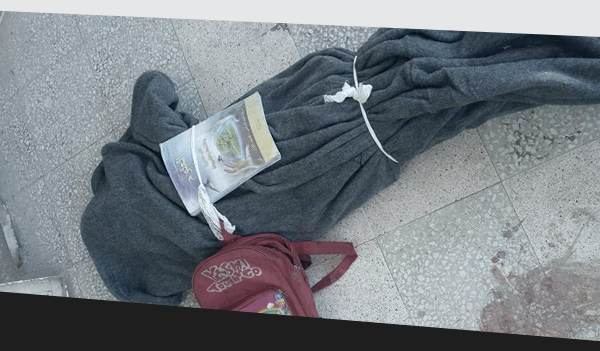
ISIS Using Thousands of Civilians as “Human Shields”

by Yesim Usluca
Impunity Watch Reporter, Middle East

BAGHDAD, Iraq — The UN stated that ISIS has executed over 200 people near the city of Mosul and has taken thousands of individuals hostage to use as “human shields” against Iraqi forces.
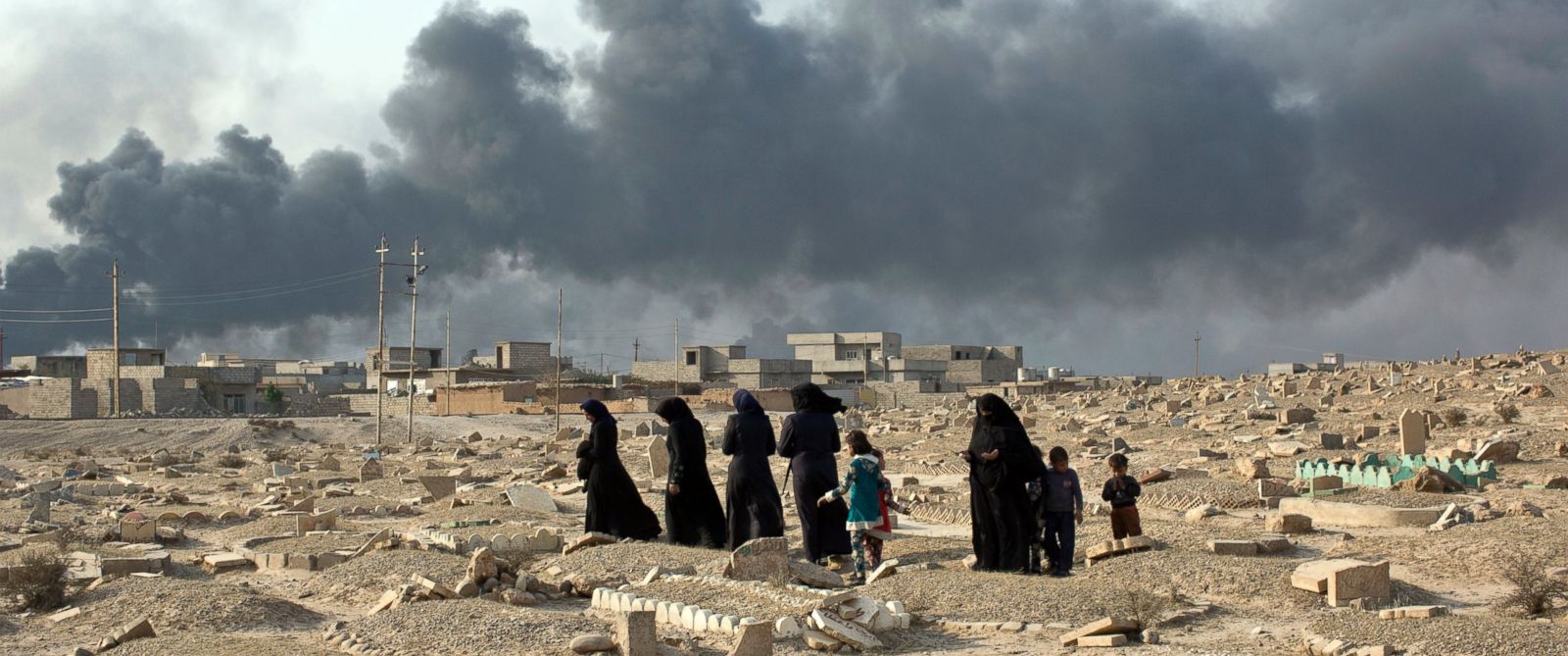
ISIS is using thousands of civilians as “human shields” (Photo courtesy of ABC News)

The Office of the UN High Commissioner for Human Rights stated that ISIS carried out the mass execution as revenge against individuals who refused its orders to join them. The UN further noted that it fears the group intends on using those held hostage as “human shields” against the advance of Iraqi forces on Mosul.

High numbers of civilian deaths have been reported over the last week as ISIS attempts to gather people into its last major stronghold in Iraq. Over 7,500 families have reportedly been abducted by ISIS at gunpoint from surrounding Iraqi cities and have been moved to “strategic locations where ISIS fighters are located.” The civilian death toll is expected to grow exponentially once ISIS enters Mosul, which is Iraq’s second largest city.

The use of human shields is banned under international humanitarian law. The UN refugee agency stated that it is considered a violation of the right to not be arbitrarily deprived of life. The Deputy Director for Research at Amnesty International further stated that using a civilian to “shield yourself from attack is a war crime.”

An increasing number of civilians have been fleeing their homes as the fighting around Mosul intensifies. The International Organization for Migration reported that the operation in Mosul has displaced over 16,000 people thus far. UNICEF warned of an impending, “unprecedented humanitarian crisis” due to the millions of civilians that are expected to escape the city in the upcoming days and weeks.

Some civilians who were able to flee indicated that ISIS fighters had deliberately prevented them from escaping conflict areas. One civilian recounted an attack in which ISIS fighters based in a neighbor’s house shot his brother. Due to the ongoing crossfire, they were unable to escape their home for two days, during which his brother lost consciousness from severe blood loss. He was only able to carry his brother to a hospital after an air strike created an opportunity for escape. Another civilian reported that he lost his wife after she was struck by a mortar because ISIS fighters would not let them leave their house. He further stated that the fighters shot at neighbors who tried to escape.

The UN High Commissioner for Human Rights indicated that ISIS’ “depraved, cowardly strategy” is to use the presence of civilians to render certain areas immune from military operations by effectively using thousands of men, women and children as “human shields.” The Commissioner urged those fighting ISIS to withhold revenge attacks. He further called on the government of Iraq to ensure the application of international humanitarian law.

For more information, please see:

ABC News—ISIS Using Tens of Thousands as ‘Human Shields’ as Iraqi-Led Forces Advance on Mosul—28 October 2016

Daily Mail—ISIS slaughters more than 200 people and abduct nearly 8,000 families to use as human shields as it retreats into the centre of Mosul—28 October 2016

Amnesty International—Iraq: new testimony shows ISIS taking human shields in battle for Mosul—27 October 2016

CNN—ISIS ‘executes’ 232 near Mosul, takes thousands as human shields, UN says—28 October 2016

The Guardian —Islamic State using hostages as human shields in Mosul – UN—28 October 2016

Global Centre for the Responsibility to Protect: Atrocity Alert: Central African Republic, Iraq, Syria and Eritrea

Atrocity Alert is a weekly publication by the Global Centre for the Responsibility to Protect highlighting and updating situations where populations are at risk of, or are enduring, mass atrocity crimes.

Central African Republic

On 28 October clashes between ex-Seleka and anti-Balaka militias near Bambari resulted in 15 people killed. The following day at least 10 people, including 6 gendarmes and 4 civilians, were also killed in an ambush outside Bambari. These attacks are part of a growing trend of violence that is threatening to destabilize the Central African Republic (CAR) and reignite widespread violence throughout the country. Despite the growing risk to vulnerable civilians, on 31 October France concluded Operation Sangaris, withdrawing 2,000 French troops that had supported the UN Mission in CAR throughout the conflict. The UN Deputy Secretary-General, Jan Eliasson, is currently on a two-day mission to CAR to meet with the new government, visit camps for internally displaced persons and receive updates on demobilization, disarmament and reintegration programs.

MINUSCA: The UN Deputy Secretary-General and Special Representative of the Secretary General to CAR meet with President Touadera

Iraq

On 28 October the Office of the UN High Commissioner for Human Rights (OHCHR) announced that as coalition forces advance on Mosul, there have been credible reports that the so-called Islamic State of Iraq and the Levant (ISIL) is moving civilians to strategic locations to be used as human shields. Initial reports suggested nearly 8,000 families had been abducted from districts around Mosul, and at least 232 civilians were killed by ISIL on 26 October alone. OHCHR subsequently reported that ISIL had attempted to forcibly transfer another 25,000 civilians, but these efforts were largely unsuccessful. On 1 November Iraqi forces breached Mosul’s city limits – the first time government forces have entered the city in over 2 years. At least 17,748 people have been internally displaced since the start of the offensive on 17 October, and thousands more are expected to flee as the fighting intensifies. It is essential that all parties participating in the battle for Mosul take effective measures to ensure the protection of all civilians in accordance with international humanitarian law.

Syria

Following two attacks on schools in Idlib governorate and western Aleppo last week that resulted in over 25 children killed, the UN Security Council issued a Press Statement on 28 October condemning the attacks and calling for impartial investigations. Meanwhile the Syrian opposition has launched another offensive to break the siege of eastern Aleppo. Both the UN Secretary-General and his Special Envoy to Syria, Staffan de Mistura, condemned the use of indiscriminate weapons by armed opposition groups. Some groups have indiscriminately attacked the suburbs of western Aleppo, damaging civilian infrastructure and resulting in the deaths of more than 30 civilians, including at least 10 children, since 29 October.

Eritrea

On 28 October the UN Special Rapporteur on the situation of human rights in Eritrea briefed the UN General Assembly and asserted that since 1991 populations have endured crimes against humanity perpetrated by the government. The Special Rapporteur was presenting the final report of the UN Commission of Inquiry on Eritrea, which found that “the crimes of enslavement, imprisonment, enforced disappearances, torture, other inhumane acts, persecution, rape and murder have been committed as part of a widespread and systematic campaign against the civilian population.” Noting that the government lacks the political will and capacity to prosecute these crimes, the Commission strongly recommended that the UN Security Council refer the situation in Eritrea to the International Criminal Court.

UN Photo: UN Special Rapporteur on the situation of human rights in Eritrea.

Syrian Network for Human Rights: 1106 Civilians Killed in October 2016

I. Introduction
The report includes only the death toll of civilians that were killed by the main six influential parties in Syria:
– Government forces (Army, Security, local militias, Shiite foreign militias)
– Russian forces
– Self-management forces (consisting primarily of the Democratic Union Party forces, a branch for the Kurdistan Workers’ Party)
– Extremist Islamic groups
– Armed opposition factions
– International coalition forces
– Unidentified groups