LONDON, England — A bill put forth in Parliament which would have currently and posthumously excused gay men convicted of same-sex offenses when homosexuality was illegal in the United Kingdom was prevented from progressing to a vote after a member filibustered the proposed bill. The bill, named the ‘Turing Bill’ after Alan Turing, was proposed by John Nicolson MP. The Turing Bill would have granted a blanket pardon for approximately 65,000 men – 15,000 of which are alive today.
Conservative Sam Gyimah MP filibusters the Turing Bill in Parliament (Photo Courtesy of Surrey Mirror)
Sam Gyimah, Justice Undersecretary of the Conservative party in the UK, spoke for 25 minutes, which took up the allotted time allowed for voting on the bill. Gyimah argued that the bill did not protect against men who engaged in sexual relations with a minor, or those who engaged in non-consensual sex.
The government countered Nicolson’s bill by proposing an amendment to the Policing and Crimes Bill, which would posthumously pardon those men who were wrongfully convicted, and allow those who are still alive go through a “disregard process” in order to clear their names. The government stated that it does not support the Turing Bill because they believe it might lead to people being cleared of offenses that are still considered crimes.
LGBTQ-rights organization Stonewall UK voiced their disappointment in the filibuster, however vowed to work with the government and Nicolson to build on the government’s proposed bill and “reach the best possible outcome for those wrongly accused and convicted men.” Iain Stewart, a conservative MP, stated that while he would support the government’s amendment, he believed it would not do enough for those affected.
One of the signatories to the bill was Turing’s great niece, Rachel Barnes. Barnes told reporters that her family has “always considered that it is totally unjust that only Alan was given a pardon. There were 50,000 other homosexuals who were convicted and not given a pardon. We would really like this to be put right now.”
Debate on the Turing Bill will start again in December, however many are skeptical as to how far the bill can progress without support from the government.
CARACAS, Venezuela—Venezuelan opposition protestors clashed with security forces on Wednesday. One police officer was shot and killed. At least 20 people have been injured, including 3 that were shot, and an estimated 208 arrests occurred nationwide.
Venezuelan opposition protestors marched across the nation. (Photo Courtesy of Reuters)
Hundreds of thousands of opposition protestors took to the streets throughout Venezuela after a referendum was blocked. A referendum is being pushed by the opposition to remove president Maduro from office by hosting elections. The opposition was able to gather 1.8 million signatures demanding a referendum; 400,000 signatures were validated by the electoral authorities that would have authorized the election. If an election is held, the opposition would need to get over 7,587,579 votes to oust president Maduro. The referendum was halted after officials ruled that there was identity fraud. In the National Assembly, which is dominated by the opposition, voted to launch a political trial against President Nicolas Maduro. But the Supreme Court has overruled every decision made by the National Assembly since it became the majority. In addition, opposition leaders have called for a 12-hour national strike and a march on November 3 to the presidential palace if the referendum does not go forward. A protestor stated, “If they don’t want to let us choose in an electoral voting process, they are going to have to listen to us as we march in the streets peacefully, overwhelmingly, and tirelessly until they meet the demands of the Venezuelan people.”
The Vatican has announced it will serve as a neutral party to mediate talks between the opposition and the government—but many do not believe this will work. President Maduro on a televised address, stated that the opposition leaders are seeking a coup with the support of the US. He stated, “They are desperate, they have received the order form the north to destroy the Venezuelan revolution.” He also called for a dialogue and peace.
Venezuela has suffered an economic crisis due to falling crude oil prices. This has lead to a food shortage and inflation. The opposition has blamed President Maduro for the crisis and President Maduro has blamed the opposition.
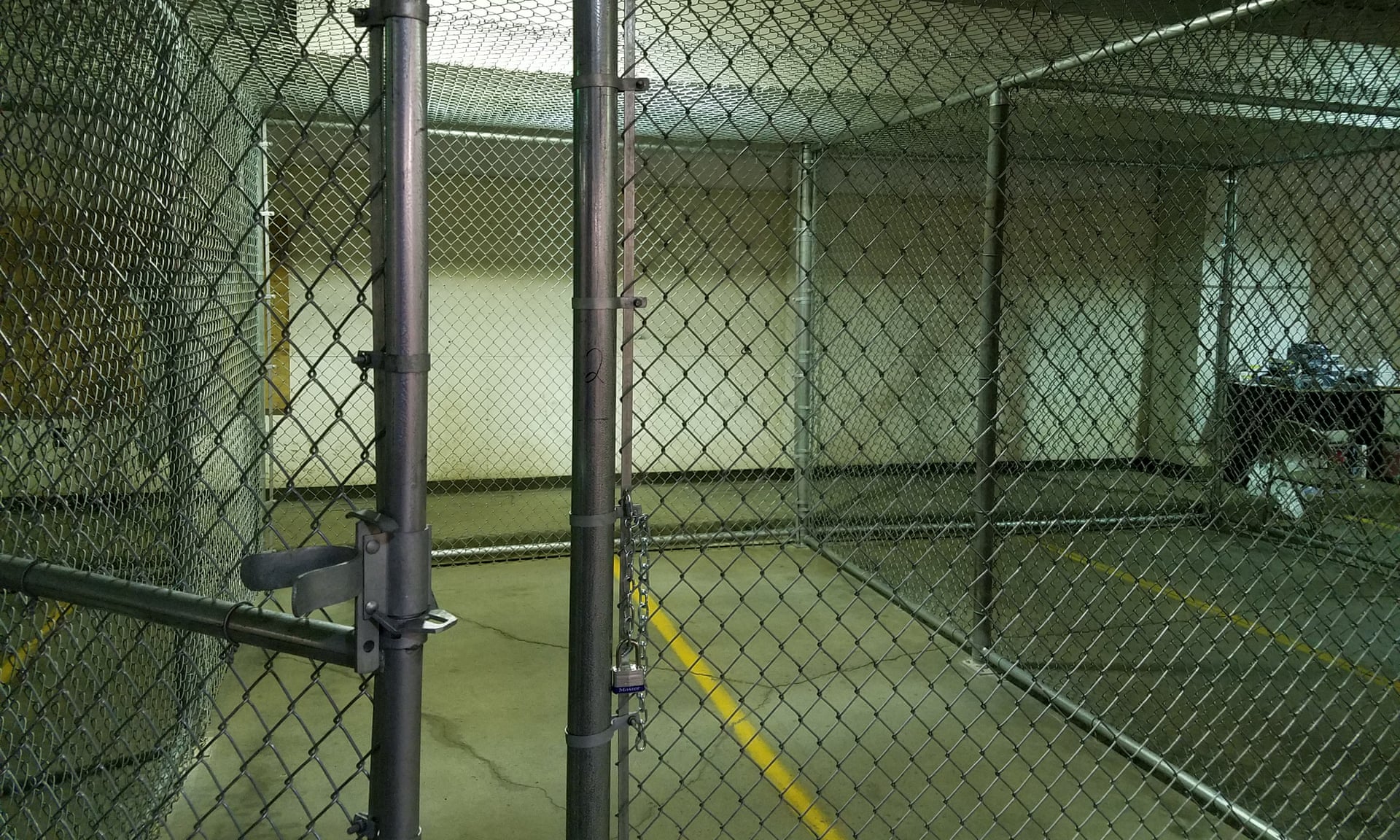
Jailed protesters say they were temporarily kept in cages that felt like ‘dog kennels’, but officials say the allegations of poor treatment are untrue. Photograph: Morton County correctional center
A United Nations group is investigating allegations of human rights abuses by North Dakota law enforcement against Native American protesters, with indigenous leaders testifying about “acts of war” they observed during mass arrests at an oil pipeline protest.
A representative of the UN’s permanent forum on indigenous issues, an advisory group, has been collecting testimony from Dakota Access pipeline protesters who have raised concerns about excessive force, unlawful arrests and mistreatment in jail where some activists have been held in cages.
“When you look at what the international standards are for the treatment of people, and you are in a place like the United States, it’s really astounding to hear some of this testimony,” said Roberto Borrero, a representative of the International Indian Treaty Council.
Borrero, a Taino tribe member who is assisting the UN forum in its interviews, told the Guardian on Sunday night that the activists’ stories of human rights violations raised a number of serious questions about police response. “A lot of it was just very shocking.”
The pipeline protests have become increasingly intense over the last two weeks as construction has moved closer to the Missouri river and as police have aggressively responded to activists’ demonstrations with arrests, pepper spray, riot gear and army tanks.
The Standing Rock camps first emerged in April and have since drawn thousands of Native Americans and climate change activists from across North America and beyond to rally against the $3.7bn oil pipeline, which would carry crude oil from the Bakken oil field to a refinery near Chicago.
Native American dancers perform during a peaceful demonstration near the Dakota Access pipeline site on 29 October. Photograph: STRINGER/Reuters
The tribal leadership’s attempts to block construction in court have been unsuccessful, and the pipeline operator, Texas-based Energy Transfer Partners, has moved forward at a rapid pace, building on lands that indigenous leaders say contain sacred burial grounds.
Despite the 22 October arrests of more than 120 people, activists set up new camps on the sites where construction is planned, not far from the river that they fear could be contaminated by the pipeline.
The Morton County sheriff’s office responded on 27 October by surrounding the protesters and arresting 141 people.
Officials have accused activists and journalists of a range of charges, including criminal trespassing, rioting, and a number of serious felonies. Law enforcement have also set up strictly enforced traffic blockades protecting the pipeline site from protesters and the general public.
Native Americans recently released from jail, including elderly women and young activists, have since shared stories with the Guardian of the treatment they faced behind bars, which they said was cruel and inhumane.
Jailed protesters said it seemed clear that police weren’t prepared to handle hundreds of people at once in their local correctional facilities. A day after their release, many still had numbers and charges written on their arms in marker – which advocates said was an unusual and dehumanizing way for police to track inmates – and some were temporarily kept in cages that they said felt like “dog kennels”.
On Monday, Borrero and Grand Chief Edward John, a Native American member of the UN permanent forum, met with police officials in the local town of Mandan and visited the controversial cages.
The Guardian was planning to join the UN on the visit, and a police spokesman initially told a reporter, “We have nothing to hide.”
But sheriff Kyle Kirchmeier, the controversial law enforcement official leading the response to the protests, later refused to let the media in, saying allegations of poor treatment were “not true”, before shutting a door on a reporter.
Another official with the sheriff’s office also appeared to be hostile toward the UN representatives when they arrived. In the presence of a Guardian videographer, that police official told Borrero and John it seemed as if they weren’t neutral and had already made up their minds that police had mistreated protesters.
A spokeswoman later sent photos of the holding cells, adding in an email that the “temporary fenced cubicles” were “at least” 10 by 14ft. The images show a windowless room with a number of parallel cages with ceilings of fencing.
Temporary holding cells have been installed at the Morton County correctional center to deal with the mass arrests. Photograph: Morton County Correctional Center
The spokeswoman also claimed that while in the cells, the inmates have access to bathrooms, food, water and medical attention.
But several arrested protesters said they had to wait for basic necessities.
Johanna Holy Elk Face, a 63-year-old woman arrested last week, told the Guardian that she is diabetic and had very high blood sugar while behind bars. Police were slow to respond to her request for help, she said.
“I was scared,” she said, adding that she was worried she was going to have a seizure.
Phyllis Young, a member of Standing Rock Sioux tribe, also provided testimony to the UN representatives on Sunday inside a small tent that shook as strong winds blew outside.
Young said she intended to help the tribe file a lawsuit against North Dakota law enforcement, saying the police’s violent acts against native people were “not only conditions of colonialism, but conditions of war”.
“We embarked upon a peaceful and prayerful campaign,” she said. “They were placed in cages. They had numbers written on their arms very much like concentration camps.”
The UN forum, which has previously urged the US to allow the Sioux tribe to have a say in the pipeline project, plans to issue a report and possible recommendations after its inquiry is complete.
Kandi Mossett, a 37-year-old protester and member of the Mandan, Hidatsa and Arikara nation, got emotional while standing in the rain recounting the mass arrests last week.
“The government is allowing the police force to be used as a military force to protect an oil company,” she said.
Mossett said she would like to see the sheriff investigated and major reforms instituted in the department to stop the violent response to peaceful demonstrators.
“This started out as defending water, but now it’s so much more.”
Young said she was particularly disturbed to hear police talk of shielding pipeline property from activists, considering the long history of abuse against Native Americans in North Dakota and across the US.
“When they tell us we should protect property, they need to eat their words. Who is the thief here?”
War Crimes Prosecution Watch is a bi-weekly e-newsletter that compiles official documents and articles from major news sources detailing and analyzing salient issues pertaining to the investigation and prosecution of war crimes throughout the world. To subscribe, please email warcrimeswatch@pilpg.org and type “subscribe” in the subject line.
Opinions expressed in the articles herein represent the views of their authors and are not necessarily those of the War Crimes Prosecution Watch staff, the Case Western Reserve University School of Law or Public International Law & Policy Group.
Towards Accountability for Atrocity Crimes in Mexico
Just over two years ago, 43 students were disappeared in the Mexican state of Guerrero by police officers acting in collusion with organized crime. The case captured the world’s attention but is only one part of Mexico’s history of impunity for atrocity crimes. Join us for a panel discussion of the Open Society Justice Initiative’s new report,Undeniable Atrocities: Confronting Crimes Against Humanity. Based on over three years of research together with five Mexican partner organizations, the report finds a reasonable basis to believe that both Mexican federal forces and cartels have perpetrated murder, enforced disappearances, and torture on a widespread and systematic scale — amounting to crimes against humanity — and makes important recommendations for reforming the country’s criminal justice system.
Panel Discussion Featuring:
Michael Chamberlin, Diocesan Center for Human Rights Fray Juan de Larios
Christian De Vos, Open Society Justice Initiative
Ina Zoon, Open Society Justice Initiative
Claudia Paz y Paz, Inter-American Commission on Human Rights Interdisciplinary
Group of Independent Experts (TBC)
Moderated by Susana SáCouto, War Crimes Research Office
Tuesday, November 1, 2016
Panel 4:30 PM-6:00 PM, Washington College of Law, Warren NT07
Reception to follow, 6:00-7:00 PM in the Capital Hall Atrium
Copies of the report will be available in English and Spanish