War Crimes Prosecution Watch: Volume 11, Issue 17 – October 31, 2016

Case School of Law Logo

FREDERICK K. COX
INTERNATIONAL LAW CENTER

Founder/Advisor
Michael P. Scharf

War Crimes Prosecution Watch

Volume 11 – Issue 17
October 31, 2016

PILPG Logo

Editor-in-Chief
Kevin J. Vogel

Technical Editor-in-Chief
Jeradon Z. Mura

Managing Editors
Dustin Narcisse
Victoria Sarant

War Crimes Prosecution Watch is a bi-weekly e-newsletter that compiles official documents and articles from major news sources detailing and analyzing salient issues pertaining to the investigation and prosecution of war crimes throughout the world. To subscribe, please email warcrimeswatch@pilpg.org and type “subscribe” in the subject line.

Opinions expressed in the articles herein represent the views of their authors and are not necessarily those of the War Crimes Prosecution Watch staff, the Case Western Reserve University School of Law or Public International Law & Policy Group.

Contents

CENTRAL AFRICA

Central African Republic

Sudan & South Sudan

Democratic Republic of the Congo

WEST AFRICA

The Gambia

Côte d’Ivoire (Ivory Coast)

Lake Chad Region — Chad, Nigeria, Niger, and Cameroon

Mali

EAST AFRICA

Burundi

Uganda

Kenya

Rwanda (International Criminal Tribunal for Rwanda)

Somalia

NORTH AFRICA

Libya

SOUTH AFRICA

South Africa

MIDDLE EAST AND ASIA

Syria

Yemen

Extraordinary Chambers in the Courts of Cambodia

Special Tribunal for Lebanon

Bangladesh International Crimes Tribunal

War Crimes Investigations in Burma

Israel and Palestine

North Korea

TOPICS

Truth and Reconciliation Commission

Terrorism

Piracy

Gender-Based Violence

Commentary and Perspectives

Open Society Justice Initiative: Ayotzinapa and Beyond

Towards Accountability for Atrocity Crimes in Mexico

Just over two years ago, 43 students were disappeared in the Mexican state of Guerrero by police officers acting in collusion with organized crime. The case captured the world’s attention but is only one part of Mexico’s history of impunity for atrocity crimes. Join us for a panel discussion of the Open Society Justice Initiative’s new report,Undeniable Atrocities: Confronting Crimes Against Humanity. Based on over three years of research together with five Mexican partner organizations, the report finds a reasonable basis to believe that both Mexican federal forces and cartels have perpetrated murder, enforced disappearances, and torture on a widespread and systematic scale — amounting to crimes against humanity — and makes important recommendations for reforming the country’s criminal justice system.

Panel Discussion Featuring:

Michael Chamberlin, Diocesan Center for Human Rights Fray Juan de Larios

Christian De Vos, Open Society Justice Initiative

Ina Zoon, Open Society Justice Initiative

Claudia Paz y Paz, Inter-American Commission on Human Rights Interdisciplinary

Group of Independent Experts (TBC)

Moderated by Susana SáCouto, War Crimes Research Office


Tuesday, November 1, 2016

Panel 4:30 PM-6:00 PM, Washington College of Law, Warren NT07

Reception to follow, 6:00-7:00 PM in the Capital Hall Atrium


Copies of the report will be available in English and Spanish

Register at https://www.wcl.american.edu/secle/registration

1,000 Arrested in Ethiopia During Month of Unrest

By Samantha Netzband 

Impunity Watch, Africa Desk Reporter

ADDIS ABABA, Ethiopia– Unrest continues in Ethiopia as protests spark 1,000 arrests in the Sebeta town just outside of the capital Addis Ababa.  On October 9, 2016 the country proclaimed a state of emergency after protesters were killed by security forces.  Under the state of emergency movement of diplomats, protests, and access to the internet and social media have been restricted.

Ethiopia Oromo Oromia

Demonstrators in the Oromia region protest while security forces hold back the crowd. (Photo Courtesy of International Business Times)

People in the Oromia region of Ethiopia have been protesting since late last year.  Unhappy with the current government and the lack of their ability to self determine they have conducted peaceful protests.  The government however, has hit back hard.

According to Amnesty International over 600 people have been killed since November.  Outsiders, like Angela Merkel, are calling on Ethiopia to allow protest, and if necessary curb protests with proportionate force.  Many see the countries use of a state of emergency as a way to curb protests in a violent fashion.

Ethiopia’s state of emergency is expected to last for six months.  During this time the Oromia people show no sign of stopping their protests.

For more information, please see: 

Africa News – Ethiopia: Western Diplomat Fears Repression Over New Curfew Restrictions – 18 October 2016

International Business Times – Mass arrests in Ethiopia’s Oromia region days after state of emergency declared – 17 October 2016

New York Times – 1,000 Arrested This Month After Violence: Ethiopia Mayor – 18 October 2016

OPride – Ethiopia’s alarming trend of State Terrorism should Rattle Everyone – 15 October 2016

Syrian Network for Human Rights: The Syrian Regime Targets Children in Schools

I. Introduction
Hass village is located between Ma’aret Al No’man city, to its east, and Kafr Nobbol, to its west. It is eight kilometers away from Ma’aret Al No’man city. The village is under the joint control of Armed opposition factions and Fateh Al Sham Front.
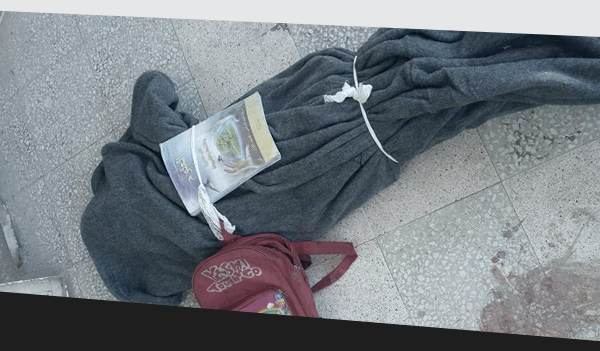
This report documents the targeting of a school complex that includes three schools in the village by fixed-wing government forces warplanes where SNHR team have contacted a number of residents, eyewitnesses, survivors, and local media activists. The report includes two accounts. We have explained the purpose of the interviews to the witnesses who gave us their permission to use the information they provided in this report.

Global Centre for the Responsibility to Protect: 2017-2019 UN Human Rights Council Elections and the Responsibility to Protect

2017-2019 UN Human Rights Council Elections and the Responsibility to Protect

The Global Centre for the Responsibility to Protect welcomes the election of 14 members to the Human Rights Council for the period of 2017 to 2019. The Global Centre also notes that Iraq, Croatia, and Rwanda will serve their first term on the Human Rights Council. With the election of Rwanda, Japan, Hungary, United Kingdom and United States, 17 of the 47 Council members are also members of the Group of Friends of the Responsibility to Protect.

Mass atrocity crimes – genocide, war crimes, crimes against humanity and ethnic cleansing – are usually the culmination of sustained human rights abuses. By addressing specific risk factors for mass atrocities, the Human Rights Council and its mechanisms (including the Universal Periodic Review (UPR), Special Procedures and treaty bodies) help to uphold our collective responsibility to protect.

Since 2008, the Human Rights Council has referred to states’ responsibility to protect their populations in over 20 thematic and country resolutions. However, more work is needed to translate the rhetoric of prevention into a practical reality.

The Global Centre has compiled profiles on each of the newly-elected Human Rights Council members. These provide a basic overview of their engagement with R2P and their commitment to the promotion and protection of human rights.

Human Rights Council profiles are available here: 2017-2019 UN Human Rights Council Elections and the Responsibility to Protect.