|
||||||||||||||||||||||||||||||||
|
||||||||||||||||||||||||||||||||
|


Turkish Police Accused of Torturing Detainees
by Yesim Usluca
Impunity Watch Reporter, Middle East
ANKARA, Turkey — Human Rights Watch published a 43-page report on Tuesday, in which it accuses Turkish police of beating, sexually abusing, and threatening to rape detainees.
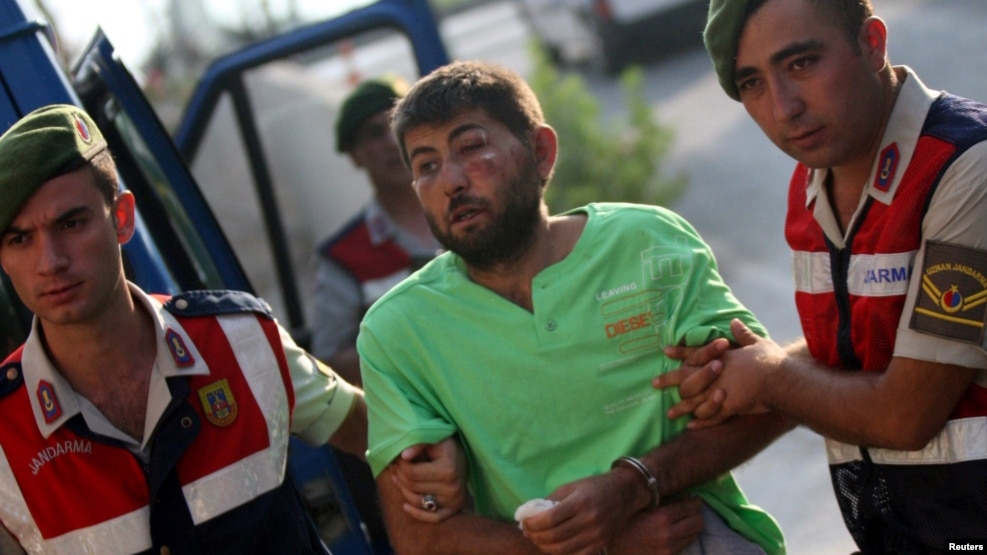
The human rights group said that a “climate of fear” has prevailed since thousands of people were arrested after President Erdogan declared a state of emergency in response to July’s failed coup attempt. The state of emergency has allowed the government to limit or suspend rights and freedoms as it deems necessary. In September 2016, prison monitoring boards were dissolved under an emergency rule decree. The report noted that several new regulations, which infringe on detainees’ rights, have been enacted. These include the extension of the maximum length of police detention without judicial review from four to thirty days, denying detainees access to lawyers for up to five days, restricting detainees’ choice of lawyer, and restricting detainees’ right to confidential conversations with their lawyers.
Human Rights Watch indicated that thirteen alleged cases of abuse had been uncovered, in which the detainees claim abuse of power, sleep deprivation, severe beatings, sexual abuse and threat of rape. These cases were not limited only to alleged coup supporters, but also include detainees suspected of ties to Kurdish militant and leftist groups.
In one case, Human Rights Watch found that several detainees had been forced to undress and were left outside under a “baking sun” for several hours. The case further noted that these detainees were then severely beat by police officers and threatened with sodomy by a baton. In another case, a detainee noted he was blindfolded and then beaten by police. He stated that the police chief “began to slap me in the face and eyes. They beat me on the soles of my feet, on my stomach, then squeezed my testicles, saying things like they’d castrate me.” A further case quotes a detainee as stating that a police officer told him “because of the state of emergency, nobody will care if I kill you.” The report further states that many lawyers are reluctant to represent detainees held in connection with the coup attempt. Attorneys who do represent these individuals are noted as expressing fear that they would become the target of the ongoing crackdown. One lawyer stated that she tried to represent a detained soldier, only to see him repeatedly beaten in front of her. Although she attempted to stop the beating, she was unable to do so and had to turn away out of fear.
The Europe and Central Asia Director of Human Rights Watch stated that “by removing safeguards against torture, the Turkish government effectively wrote a blank check to law enforcement agencies to torture and mistreat detainees as they like.” The organization called on authorities to “immediately rescind” the provisions of the state of emergency decrees which “enable abuse.” Human Rights Watch also urged the Turkish government to permit the U.N. Special Investigator on Torture to visit Turkey.
Mr. Bekir Bozdag, Turkey’s Justice Minister, argued that the country is being unfairly accused of torture, while strongly denying ill-treatment of prisoners. He further stated that the Ministry has assembled a task force to investigate all claims.
For more information, please see:
Voice of America—Human Rights Watch Report Accuses Turkish Police of Torture—25 October 2016
Chicago Tribune—Human Rights Watch: Torture reports after failed coup in Turkey—25 October 2016
Demolition of Calais Migrant Camp Begins
By Sarah Lafen
Impunity Watch Desk Reporter, Europe
PARIS, France — On Tuesday, a group of workers in orange jumpsuits and hardhats began demolishing the migrant camp in Calais, France known as “the jungle” by tearing down shelters used by the migrants with sledgehammers. The workers also disposed of migrants’ possessions by throwing them into dumpsters.
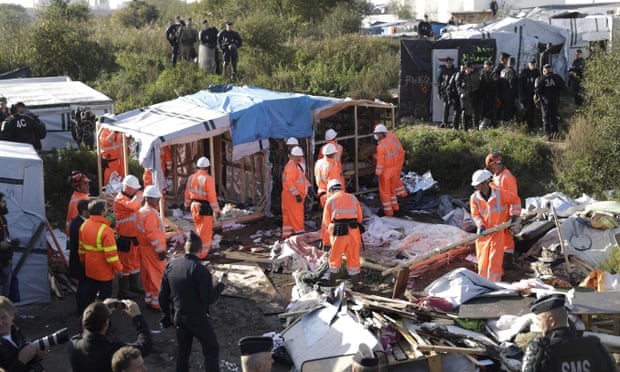
Tuesday was the final day that residents were officially allowed to reside in the camp. On Monday, over 3,100 migrants were bussed out of the camp and sent to other regions around France to begin the process for resettlement.
Some migrants appear determined to stay in the camp for as long as possible. On Monday evening, a group of migrants threw stones at police officers, who responded by firing tear gas back at them. Two migrants from Afghanistan told reporters that they refuse to leave the camp because doing so would mean giving up on their dreams to make it to Britain.
Other migrants are ready to leave the camp in hopes of finding better living conditions elsewhere. One Sudanese migrant, Hassan Jibril, explained how “it is a very bad situation here” and that he and his companions are “ready to leave.” Another Sudanese migrant, Abdullah Umar, explained that “[t]he Jungle is no good” and “[t]here are problems. Sometimes there’s fighting. And it’s cold.”
It is unclear how French authorities will enforce removal from the camp. Prior to the destruction process, Interior Ministry spokesman Pierre-Henry Brandet said that migrants would not be forced to leave the town of Calais. Brandet maintained that the evacuation process was to be “done on a voluntary basis and no coercive measures will be taken towards the migrants.”
Children are the only group allowed to remain in Calais throughout the demolition process. They will be housed in converted shipping containers while the deconstruction process continues throughout the rest of the camp. Save the Children, a non-governmental organization working with the children in the camp, fears “many children may disappear” or end up in the hands of traffickers if the camp is cleared completely before the children are secured safe places to stay.
The French government’s goal is to remove all migrants from the camp by the end of the week, and clear the camp site completely by the end of December.
For more information, please see:
BBC — Calais ‘Jungle’: Demolition Crews Pull Down Migrant Camp — 24 October 2016
CNN — Calais ‘Jungle’: Demolition of Massive Migrant Camp Begins — 24 October 2016
The Guardian — Calais Camp: Demolition Crews Move In — 24 October 2016
NY Times — ‘We Are Ready to Leave’: France Clears Out Calais ‘Jungle’ — 24 October 2016
Saudi Arabia Executes Prince Following Murder Conviction
by Yesim Usluca
Impunity Watch Reporter, Middle East
RIYADH, Saudi Arabia — On Tuesday, October 18th, Saudi Arabia executed a member of the royal family after he was convicted of shooting and killing another man during a brawl.
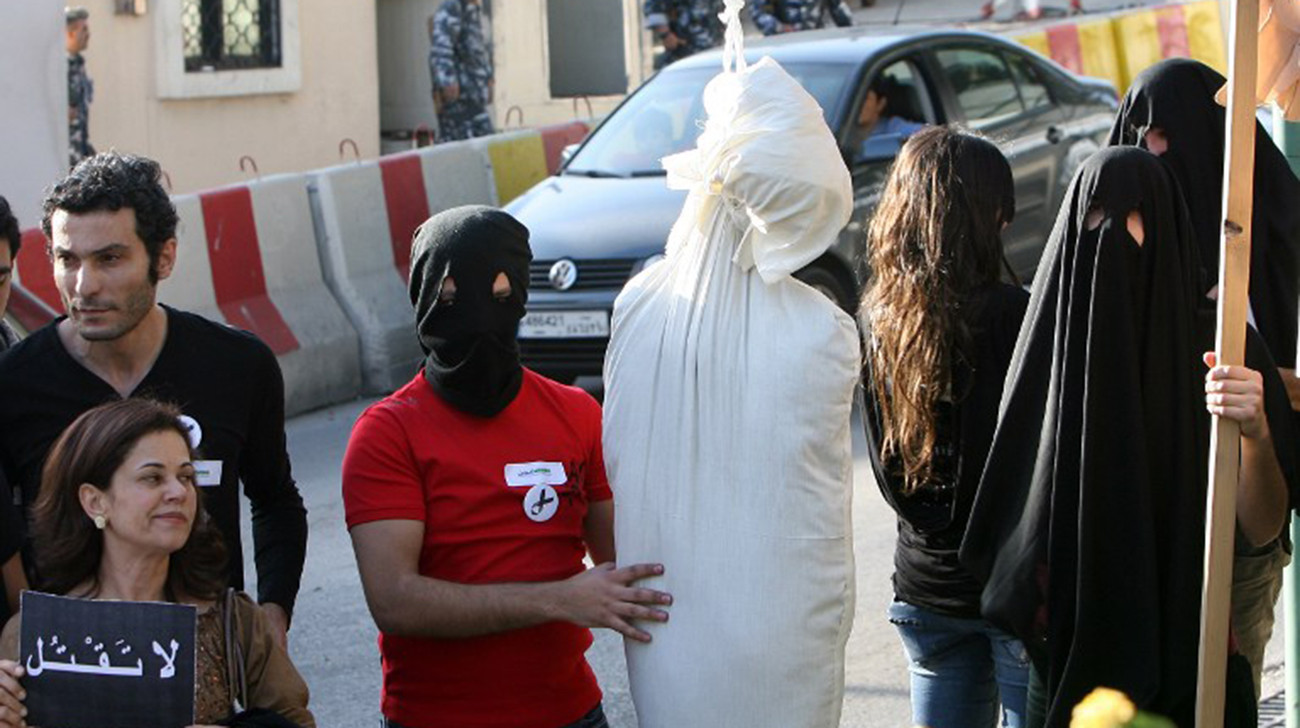
Saudi Prince Turki bin Saud bin Turki bin Saud al-Kabeer was executed in the capital, Riyadh, for killing a man during a group fight three years ago. Although details on the method of execution were not provided, most death penalties in Saudi Arabia are carried out by beheading in a public square.
The guilty verdict was supported by an appeals court, and later authorized by the Supreme Court of Saudi Arabia. A royal order was then issued to carry out the Courts’ ruling. The Saudi Gazette reported that the prince’s family made several attempts to reach an agreement with the victim’s father prior to his execution. The victim’s family, however, refused offers of “blood money” and instead demanded justice.
This is the first execution carried out by Saudi Arabia in over four decades. The Interior Ministry stated that King Salman was keen on “enforcement of security, justice and God’s judgments.” The statement released by the Ministry further warned “that legitimate punishment would be the fate of whoever tries to assault innocent people and shed their blood.”
Saudi Arabia is one of the world’s few remaining absolute monarchies, in which the members of the royal family enjoy perks not available to rest of the country’s citizens. The royal execution has been widely interpreted as a message from the monarch that “no one in the kingdom is above the law.” A prominent Saudi lawyer, Mr. Abdul-Rahman al-Lahim, stated “the greatest thing is that the citizen sees the law applied to everyone, and that there are not big people and other small people.” Other Saudis praised the monarch, King Salman, under an Arabic hashtag which translated to “Decisive Salman orders retribution for the prince.”
Saudi Arabia follows a strict interpretation of Shariah law and is often criticized by human rights groups and Western governments for what they consider to be harsh and arbitrary punishments. Human Rights Watch stated that the country has executed 134 people as of January 2016. Amnesty International reported that at least 158 people were executed in Saudi Arabia in 2015.
For more information, please see:
CNN—Saudi Arabia executes member of royal family—20 October 2016
New York Times—Saudi Arabia Executes a Prince Convicted in a Fatal Shooting—18 October 2016
Al Arabiya—Saudi Arabia: Prince executed for murder—18 October 2016
Khaleej Times—Saudi Arabian prince’s last hours before execution—21 October 2016
Ex-Congolese Vice President Bemba Convicted of Witness Tampering
By Samantha Netzband
Impunity Watch, Africa Desk Reporter
KINSHASA, Democratic Republic of Congo– Ex-Congolese Vice President Bemba was convicted of witness tampering at the International Criminal Court. Bemba and four members of his legal team were convicted on October 19th, just months after Bemba’s conviction for leading a campaign of rape and murder across the Central African Republic. This was a ground breaking conviction for the International Criminal Court which has struggled with witness tampering since its inception.

Bemba at the International Criminal Court in March. (Photo Courtesy of The New York Times)
The Court’s conviction is based off of evidence that Bemba and his attorneys used a coded exchange in order to ensure testimony that was in Bemba’s favor. Evidence shows that 14 witnesses were tampered with. These witnesses testified in Bemba’s crimes against humanities case at the International Criminal Court. Bemba was sentenced to 18 years in prison of the rape and murder of hundreds in the Central African Republic.
“No legal system in the world can accept the bribing of witnesses, the inducement of witnesses to lie or the illicit coaching of witnesses. Nor can the International Criminal Court,” Presiding Judge Bertram Schmitt said after the convictions were made. This conviction strengthens the power of the International Criminal Court, showing that it takes witness tampering seriously. Bemba and his attorneys could face up to five years in prison because of their convictions.
For more information, please see: