British Troops to be Exempt from Human Rights Laws during Combat

By Sarah Lafen

Impunity Watch Desk Reporter, Europe

LONDON, England —  Britain has announced plans to exempt British soldiers from legal claims brought on behalf of the European Convention on Human Rights so as to prevent unnecessary lawsuits against the soldiers while in combat and when they return home.  The rules of the Convention allow for countries to exempt themselves in specific situations, including those on the battlefield.
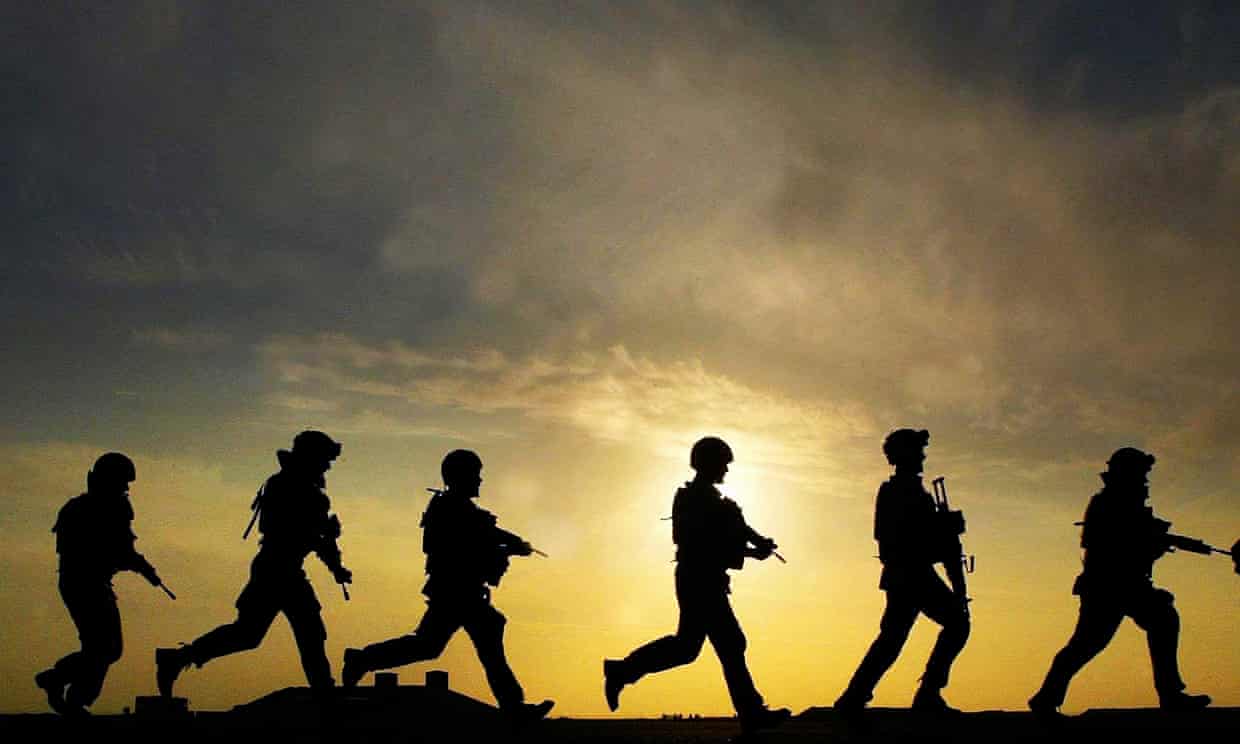
British troops march in Iraq (Photo Courtesy of The Guardian)

The exemption announcement follows the closure of the law firm Public Interest Lawyers, which was the firm responsible for filing many claims against British troops.  Since 2004, about £100 million has been spent on lawsuits against soldiers who served in Iraq, a portion of which is taxpayers’ money.

At the Conservative Party conference, the United Kingdom’s Defense Secretary Michael Fallon announced the change, which he believes will prevent the misuse of the Convention.  Fallon argues that the Convention has strayed from its original purpose to help maintain peace within Europe.  According to Fallon, the UK has found “several thousand” claims against British troops who allegedly detained potential terrorists who had fired at the British soldiers.  Also at the conference, UK Prime Minister Theresa May emphasized the importance of not leaving soldiers in the position to fight legal cases against them when they return home from combat.

Marth Spurrier, the director of Liberty, argued against this movement, claiming that the majority of suits against the military are not “vexatious” and are rather issues which the Ministry of Defence (MoD) “should be trying to eradicate, not permit.”  Similarly against the exemption, the Law Society accuses the government of undermining the rule of law by intimidating people who try to pursue legitimate cases against soldiers.  Law Society President Robert Bourns maintains that “[l]awyers must not be hindered or intimidated in carrying out their professional duties and acting in the best interests of their clients within the law.”

The UK’s derogation follows those of other nations, including Ukraine’s derogation in June 2015 in relation to combat on the Russian border and France’s derogation in November 2015 following a terrorist attack on a Parisian nightclub.

Certain rights under the Convention, including the prohibition of torture, remain in place for the British troops.  Soldiers will still be subject to International Humanitarian Law, which includes the Geneva conventions and UK criminal law.


For more information, please see:

CNBC — British Soldiers now Exempt from Europe’s Human Rights Convention — 4 October 2016

The Guardian — Plan for UK Military to Opt Out of European Convention on Human Rights — 4 October 2016

Newsweek — Britain to Opt Out of Human Rights Law in Wartime — 4 October 2016
The Independent –British Troops to be made Exempt from European Human Rights Laws During Combat — 3 October 2016

Stalled Peace Talks with ELN to Resume

By Cintia Garcia

Impunity Watch Reporter, South America

BOGOTA, COLOMBIA—The Colombian government announced it will resume peace talks with the National Liberation Army (ELN), the second largest rebel group in Colombia. The largest rebel group being FARC. The talks will commence in Quito, Ecuador on October twenty-seventh.

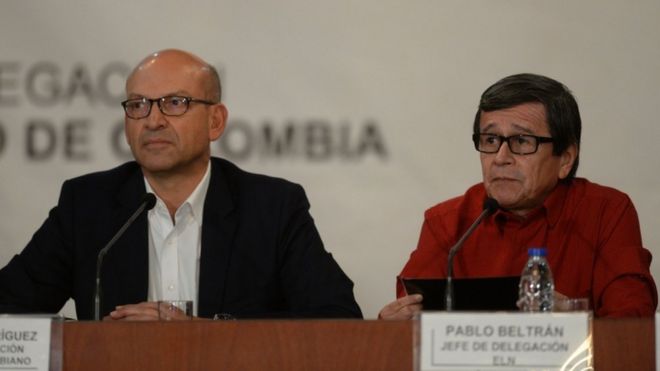
The Colombian government delegate and ELN delegate announce the beginning of the peace talks. (Photo Courtesy of BBC).

The ELN announced they were ready to negotiate with the government in March, but the process was never formalized, until now. ELN in a brief statement from Caracas, Venezuela announced it would release two captives the group has been holding for months. On Monday, ELN released a rice farmer, Nelson Alarcon, to the International Red Cross. He was held captive for months. Nelson Alarcon was the third person released in the past two weeks near the Colombian border. One of the remaining captives is politician Odin Sanchez, for whom ELN has been demanding a 1 million ransom. Odin Sanchez stepped in as a captive for his brother who was being held for ransom. ELN has stated it will release their captives before the talks begin and no longer committee kidnaps. ELN has an estimated 1,500-2,500 fighters that first formed in 1964 during the Cuban revolution. The organization is composed of urban students and intellectuals. They have financed their efforts through extortion and kidnapping.

The peace talks will be led by Colombian government delegate Mauricio Rodriguez and ELN commander Pablo Beltran. The countries that will be guarantors of the process include Venezuela, Cuba, Norway, Chile, Brazil, and Ecuador. The UN Secretary General Ban Ki-moon stated, “This is a source of encouragement to the Colombian people and all those involved in supporting a peaceful and comprehensive end to conflict.”

President Juan Manuel Santos all announced in a televised address that, “Now that we’re advancing with the ELN our peace will be a fuller one.”

Colombia Reports—ELN Peace Talks to Begin on October 27, Guerrillas vow to Release Hostages First—10 October 2016.

The New York Times—Colombia Reviews Stalled Peace Talks With ELN Rebels—10 October 2016.

BBC—Colombia and ELN Rebels Announce Historic Peace Talks—11 October 2016.

UN New Centre—Colombia: Ban Welcomes Announcement of Talks between Government and National Liberation Army—12 October 2016.

Saudi Arabia Urged to End Executions of Children

by Yesim Usluca
Impunity Watch Reporter, Middle East

RIYADH, Saudi Arabia — The United Nations demanded that Saudi Arabia end “severe” discrimination against girls and abolish laws which allow the stoning, amputation, flogging and execution of children.

At least four children were under 18 when sentenced to death (Photo courtesy of Deccan Chronicle)

On Friday, October 7th, the U.N. Committee on the Rights of the Child issued its review of Saudi Arabia’s record of compliance with the U.N. Convention on the Rights of the Child. The report declared that in Saudi Arabia, children over fifteen years old are tried as adults and can be executed after “trials falling short of guarantees of due process and fair trial.” The U.N. Convention, however, defines “children” as individuals under eighteen. The report further stated that Saudi Arabia continues to “sentence to death, and execute, persons for offenses that they allegedly committed when they were under the age of eighteen.”

The Committee consists of eighteen independent experts who monitor the implementation of the U.N. Convention. It highlighted several cases where minors had been sentenced to death, including at least four of the 47 people executed in January 2016, who were under eighteen when they were sentenced to death. It determined that a major problem in the country is that the decision of whether an individual will be treated as an adult is left to judges.

Mr. Jorge Cardona, who is a Committee member, stated that the possibility of imposing the death penalty on children as well as the possibility of sanctions and mistreatment, including harsh punishments such as torture and being flogged, are very serious concerns. The Committee Chair, Mr. Benyam Mezmur, indicated that it had consistently received reports of the death penalty being applied to offenses committed by individuals under the age of eighteen. Mr. Mezmur noted that there are only five countries in the world, including Saudi Arabia, that the U.N. engages on this issue with. He identified the other countries as Iran, Pakistan, China and the Maldives.

Mr. Bandar Bin Mohammed Al-Aiban, who is the Head of the Saudi delegate to the Committee and Chairman of the U.N. Human Rights Commission, indicated that Islamic law is above all laws and treaties, including the Convention on the Rights of the Child. He insisted, however, that the kingdom had the political will to protect children’s rights. The Saudi Arabian government has not issued a statement in response to the conclusions set forth in the U.N. report.

For more information, please see:

Daily Mail—UN watchdog demands Saudis stop child executions—7 October 2016

Reuters—U.N. body calls on Saudi Arabia to end laws allowing executions of children—7 October 2016

International Business Times—UN hits out at Saudi Arabia over stoning, amputation and execution of children—7 October 2016

Middle East Monitor—UN, Saudi disagree over abuse of children—7 October 2016

Syrian Network for Human Rights: Last Two Hospitals in their areas in Damascus Suburbs Rendered out of Commission following a Bombing by the Syrian Regime

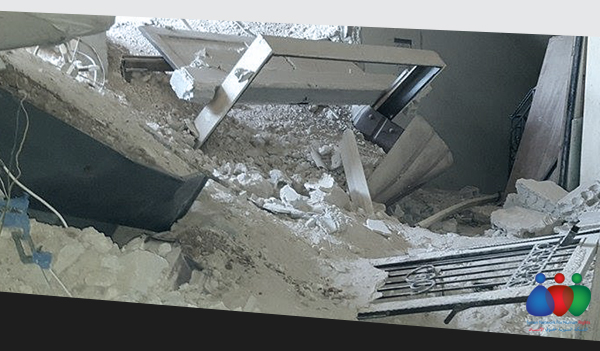
The targeting of medical personnel and centers by the Syrian and Russian regimes in Syria is unmatched in modern history and in this statement we record two hospitals that have been rendered out of commission. These two hospitals were the last operating hospitals in their respective areas.
The Syrian regime’s strategy has become glaringly blatant where the regime targets hospitals, markets, and schools in the areas that are out of its control in order to force the residents to agree to a settlement that would end in them being forcibly displaced to north of Syria or abroad.
More…
Website
Facebook
Google Plus
Twitter
YouTube
Instagram
RSS
Email

Global Centre for the Responsibility to Protect: Atrocity Alert: Burma/Myanmar, Syria and Yemen

Atrocity Alert is a weekly publication by the Global Centre for the Responsibility to Protect highlighting and updating situations where populations are at risk of, or are enduring, mass atrocity crimes.

Burma/Myanmar

Following a series of attacks on border posts on 9 October in Burma/Myanmar’s Arakhan/Rakhine state, it was reported that nine police officers and eight attackers were killed. The identity or affiliation of the attackers has not been established. The government subsequently declared a state of emergency in Maungdaw and in three other townships in Arakhan/Rakhine state and deployed security forces to the area. Reports of mass arrests and extrajudicial killings  of Rohingya have surfaced since a joint army-police counter-operation began on 10 October. The current situation risks exacerbating existing inter-communal tensions in Arakhine/Rakhine state between Buddhists and members of the Rohingya group, a distinct Muslim ethnic minority, which has been systematically persecuted by the government.

Syria

On 8 October the UN Security Council (UNSC) failed to adopt two separate draft resolutions on the conflict in Syria, highlighting the entrenched political divisions between Council members. A draft resolution put forward by the French and Spanish, which would have had the UNSC demand an immediate halt to airstrikes and military flights over the city of Aleppo and urged the immediate implementation of a cessation of hostilities, was vetoed by Russia, with Venezuela also voting against the proposal. The UNSC subsequently voted on a Russian draft text, which would have urged an immediate cessation of hostilities and demanded that all parties prevent material and financial support from reaching terrorist groups. The resolution only received 4 votes in favor, and thus did not have enough support to be adopted. With over 280,000 people already dead, Saturday’s veto condemns countless more Syrians to unnecessary suffering.

A growing number of UN member states and civil society organizations believe that the UNSC demonstrated on Saturday that it is unable to uphold its UN Charter mandate to maintain international peace and security with regard to Syria, and that, therefore, the UN General Assembly should be allowed to take up the issue, utilizing the “Uniting for Peace” mechanism.

Yemen

On 8 October forces from the Saudi-led military coalition reportedly bombed a reception hall in Sana’a during the funeral of a Yemeni government minister’s father. The airstrike resulted in more than 140 people killed, one of the largest death tolls resulting from a single attack since the conflict in Yemen escalated in March 2015. The UN Humanitarian Coordinator in Yemen and the Head of the UN Office for the Coordination of Humanitarian Affairs both immediately condemned the attack, calling for increased measures to ensure the protection of civilians, respect for international humanitarian law, and accountability for the airstrike. The United States and United Kingdom both released statements indicating they would review their support for the Saudi-led coalition. On 10 October the UN High Commissioner for Human Rights issued a statement, later supported by Secretary-General Ban Ki-moon, that reiterated his call for an independent, international inquiry into violations of international humanitarian law and human rights law since the start of the conflict.

Connect With Us