|
||||||||||||||||||||||||||||||||
|
||||||||||||||||||||||||||||||||
|


Global Centre for the Responsibility to Protect: Atrocity Alert: Syria, Democratic Republic of the Congo and Burundi
Atrocity Alert, No. 23
No Images? Click here

Atrocity Alert is a weekly publication by the Global Centre for the Responsibility to Protect highlighting and updating situations where populations are at risk of, or are enduring, mass atrocity crimes.
Syria
The temporary cessation of hostilities was declared to be over by the Syrian government on 19 September, one week after it started, following an escalation in clashes between government forces and armed rebels across the country. The fighting culminated on Monday in a horrific air strike on a UN humanitarian convoy in transit to opposition-held areas of Aleppo. At least 12 humanitarian workers were killed, including the Syrian Arab Red Crescent director Omar Barakat, and 18 aid trucks were destroyed.
Deliberate targeting of humanitarian workers is a war crime. The UN and other relief agencies have suspended all humanitarian convoys across combat lines in Syria. The United States government, which negotiated the ceasefire with Russia, has declared that it considers Russia responsible for the convoy bombing, based upon the terms of the cessation of hostilities agreement. Russia has stated that there is no evidence that the convoy was destroyed in an airstrike and has suggested that the trucks may have caught fire.
As world leaders meet this week for the opening of the 71st UN General Assembly, the conflict in Syria has featured prominently in speeches and side events, and will be highlighted in a UN Security Council meeting today, 21 September.
It is imperative that words of condemnation and horror finally translate into action. The Security Council must pressure all parties to the conflict to re-establish and respect the ceasefire, safely facilitate the delivery of unrestricted humanitarian aid, and recommit to negotiations for a political solution. The Security Council must investigate and hold the perpetrators of Monday’s airstrike and all other mass atrocity crimes in Syria accountable under international law.


Democratic Republic of the Congo
On 19 September political demonstrations throughout the DRC resulted in violent clashes between protestors and security forces. According to reports from Kinshasa, more than 17 people were killed, hundreds were detained by police, and five opposition headquarters were burnt down as violence continued overnight. The UN Secretary-General and Office of the High Commissioner for Human Rights have condemned the violence. As discontent regarding the presidential election process grows, there is a risk of increasing state violence targeting perceived opposition supporters. Given DRC’s long history of civil war, mass atrocities and political instability, it is essential that all political leaders urge their supporters to refrain from further violence. The government should ensure that security forces exercise maximum restraint in response to protests. The UN Mission in the DRC must be prepared to protect populations at risk of further violence.
Burundi
On 20 September 2016 the UN Independent Investigation on Burundi (UNIIB) issued its final report to the Human Rights Council. The report detailed gross human rights abuses, attributing responsibility for the vast majority of violations to the government. Although it acknowledged that relative levels of violence in Burundi have decreased since December 2015, UNIIB asserted that this has come largely as a result of increased oppression. UNIIB concluded that some incidents may amount to crimes against humanity and that, “given the country’s history, the danger of the crime of genocide looms large.” It is essential for the government of Burundi to immediately end its assault on organized dissent, strengthen the rule of law and end impunity for crimes and abuses committed since April 2015. In light of the UNIIB report, the UN Security Council and African Union should urgently reassess options for human rights monitoring and an enhanced UN policing mission in Burundi.

Connect With Us


New Tactics in Human Rights: Violence against Women: Advocating for Legal Reform
Violence against Women: Advocating for Legal Reform
New Tactics’ September Conversation is live online NOW
Across the world, women are abused, trafficked, raped and killed. Violence against women is a grave violation of human rights, negatively affecting women’s well-being and precluding women from fully participating in society. It not only leads to severe physical, sexual and mental consequences to each individual victim, but tears their families, community and society apart.
In Guatemala, two women are murdered, each day. In India, as many as 22 women are killed daily for dowry. In Australia, Canada, Israel, South Africa and the United States, between 40 and 70 percent of female murder victims were killed by their intimate partners. 120 million girls worldwide have experienced forced sexual acts at some point in their lives. According to 2016 estimates published on the United Nations’ International Day of Zero Tolerance for Female Genital Mutilation, at least 200 million women and girls have been subjected to female genital mutilation. Women and girls account for about 70 per cent of trafficking victims. Many victims suffer in silence for fear of losing the economic support of the male perpetrator or fear of victim blaming and even when a victim reports to law enforcement agents, the issue is often trivialized.
Although decades of women’s movements have made unprecedented progress towards ending gender-based violence, according to UNIFEM (formerly the UN agency for gender equity, now UN Women), chasms in legal frameworks remain: states fail their international obligations and commitments to prevent violence against women; many perpetrators escape from being held accountable; and women continue to be re-victimized through the legal process. Legal reform could provide effective protections. Such reform must make legislation easy to be enforced, monitored and adequately allocate resources to address the problem. Governments, UN agencies, civil society organizations and other institutions should partner in this process of adopting and enacting legal reforms.
In this conversation, we seek to discuss tactics for developing effective legal reform to prevent violence against women, monitoring and enforcing laws, and building advocacy for legal reform.
Go to www.newtactics.org/conversation/violence-against-women-advocating-legal-reform to follow or join the conversation.


Saudi Arabian Women Sign Petition to End Guardianship System
by Yesim Usluca
Impunity Watch Reporter, Middle East
RIYADH, Saudi Arabia — Over 14,000 women in Saudi Arabia have signed an online petition to end the country’s practice of male guardianship.
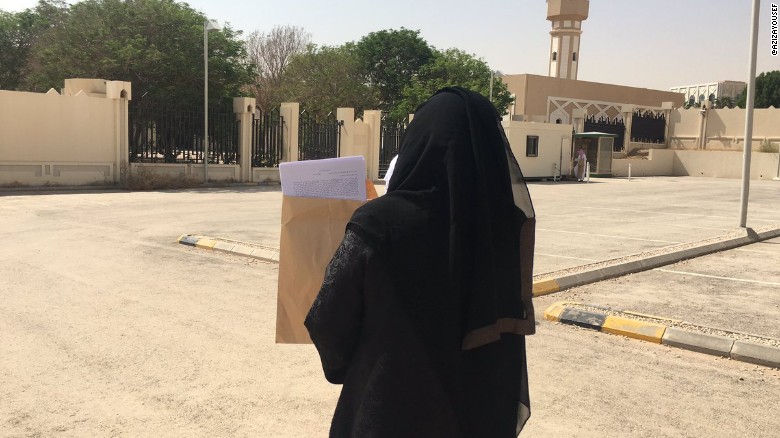
The official number of signatures on the petition is currently reported as approximately 14,000. However, there are many more signatures that were submitted anonymously due to fear of reprisal from their families or the religious police. Furthermore, approximately 2,500 women have also sent personal messages to King Salman demanding the guardianship law be abolished.
An online women’s rights movement has been building for the past few months, and became more prevalent this summer after Human Rights Watch released a report on the guardianship system. The report found that the guardianship system is “the most significant impediment to realizing women’s rights in the country.” It gave way to the hashtag #IAmMyOwnGuardian, which has become the slogan for the campaign. Activist Aziza Al-Yousef, who has been fighting the guardianship system for a decade, stated that “women should be treated as a full citizen.” Ms. Al-Yousef further noted that the petitioners “want women over 18 or 20 to be treated as adults, to be responsible for their own acts and allowed to make their own decisions.”
Ms. Al-Yousef stated that she tried to deliver the petition to the Royal Court on Monday, September 26th. However, she was turned away and told to submit the petition by mail. Accordingly, as instructed, activists will now send the petition by mail. There has been no response to the petition by the Saudi Arabia government.
The petition is protesting a Saudi Arabia law in which women are treated as legal minors and close male relatives make important legal decisions on their behalf. The male guardian is typically a woman’s father or husband, if she is married. A widow may be required to seek permission from her son if she does not have any other male relatives of age. Alternatively, uncles and brothers can also serve as the male guardian. Under this law, women are required to obtain their male guardian’s permission to marry, travel, obtain a passport, rent property, file any legal claim, or be treated at a hospital, among other things. Furthermore, many institutions also require the guardian’s permission for a woman to pursue an education or hold a job. Many women report that their guardians extort them for money or other favors. Due to the limited recourse options available to women, some are “trapped with extortionate or abusive men.”
The Saudi Arabia government had agreed to abolish the guardianship system in 2009 as well as in 2013 in response to a review by the United Nation’s Human Rights Council. Although some reforms were instituted at the time, they did not provide basic rights to women.
For more information, please see:
The Guardian—Thousands of Saudis sign petition to end male guardianship of women—26 September 2016
Daily Mail—Saudi petition seeks ‘full’ rights for women—27 September 2016
CNN—Saudis petition king to end male guardianship system—26 September 2016
Inquisitr—Saudi Women Take Stand Against Male Guardianship, Oppression—26 September 2016
UN to Discuss Report on US Police Killings of Black Americans
by Portia K. Skenandore-Wheelock
Impunity Watch Reporter, North America
UNITED STATES — The United Nations Working Group of Experts on People of African Descent has released their final report based on a visit to the United States in January. A five-member group chaired by Filipino law professor Ricardo A. Sunga III made the trip to evaluate the human rights situation of African Americans. The report concludes that “Contemporary police killings and the trauma that they create are reminiscent of the past racial terror of lynching” during the 19th and 20th centuries and calls on the government to do more to protect its citizens. The Equal Justice Initiative, a non-profit organization, reported in 2015 that 3,959 black people were killed in lynchings between 1877 and 1950.
The report has been released while two days of protests and a riot over the shooting of Keith Scott are taking place in Charlotte, North Carolina. Last Friday another incident occurred in Tulsa, Oklahoma where an officer fatally shot an unarmed black man.

The report states, “the legacy of colonial history, enslavement, racial subordination and segregation, racial terrorism and racial inequality in the United States remains a serious challenge, as there has been no real commitment to reparations and to truth and reconciliation for people of African descent. Impunity for state violence has resulted in the current human rights crisis and must be addressed as a matter of urgency.” The UN group says these killings go unpunished due to a number of factors. The initial investigations are often conducted by the police departments where the alleged perpetrators are employed, prosecutors have wide discretion over the charges, and the use of force is only subject to domestic standards, not to international standards.
The UN group recommends that the US create a national system to track excessive use of force and killings by law enforcement officials, end racial profiling, and have federal and state laws that recognize the negative impact of enslavement and racial injustice. The report finds education accompanied by acts of reconciliation key to improving race relations and the trust between African Americans and law enforcement officials. The report is being debated at the UN Human Rights Council on Monday.
For further information, please see:
Mint Press News – UN: Police Killings of Black Men Are Modern-Day Lynchings – 24 September 2016
PressTV – US Police Killings Redolent of Lynching: Report – 23 September 2016
Reuters – U.S. Police Killings Reminiscent of Lynching, U.N. Group Says – 23 September 2016
RT – Police Killings of Black People Reminiscent of Lynchings – UN Working Group – 23 September 2016