Colombian Government Acknowledges its Role in Assassinations

By Cintia Garcia

Impunity Watch Reporter, South America

Bogota, Colombia—The president of Colombia, Juan Manuel Santos, acknowledged in a public statement on Thursday, the governments role in the assassination of leftist activists in the 1980s. The statement precedes the peace accord signing between the Revolutionary Armed Forces of Colombia (FARC) and the government.

President Santos confirms the involvement of the Colombian government in the killings of thousands. (Picture Courtesy of The Wire)

After the peace agreements of the 1980s between the government and the FARC, the FARC formed the Patriotic Union (UP) political party. The political party was very successful in the 1986 election. Right-wing paramilitary groups, with government backing, assassinated thousands of its members and leaders, including the president of the UP, Jaime Pardo. An estimated 5,000 people were killed. A moment in history the FARC continues pin point during the new peace accord.

President Santos stated, “the tragedy should never have happened, and we must recognize that the government didn’t take sufficient measures to impede and prevent the assassinations, attacks, and other violations even though there was evidence the persecution was taking place.” He spoke in front of 200 survivors and family members of the UP—some wore shirts saying “They can cut the flowers, but they can’t stop the birth of spring.”

Santos continued by stating, “I make the solemn commitment before you today to take all the necessary measures and to give all the guarantees to make sure that never again in Colombia will a political organization have to face what the UP suffered.” President Santos has promised the safety and the protection of the FARC through the process.

Similarly, the FARC on Monday released a statement apologizing for the various kidnappings they committed in order to sustain themselves as a group. The FARC kidnapped thousands for ransom, including members of the elite.

The conflict in Colombia will soon come to end after the peace accords are signed on the 26th of September. The people of Colombia will vote on October 2, deciding whether to accept the peace accords.

For more information, please see:

Colombian Reports—Santos Admits Colombia State Role in 1980s Killings of Leftist Politician—16 September 2016.

The Atlantic—Colombia’s Role in a Rebel Crackdown—16 September 2016.

The Wire—Colombia: President Santos Acknowledges Government’s Role in 1980’s Killings—16 September 2016.

VOA News—Colombian President acknowledges Government’s Role in 19080’s Killings—16 September 2016.

Syrian Network for Human Rights: No less than 59 Medical Centers have been Targeted by Russian Forces since its Intervention in Syria

Introduction and Methodology
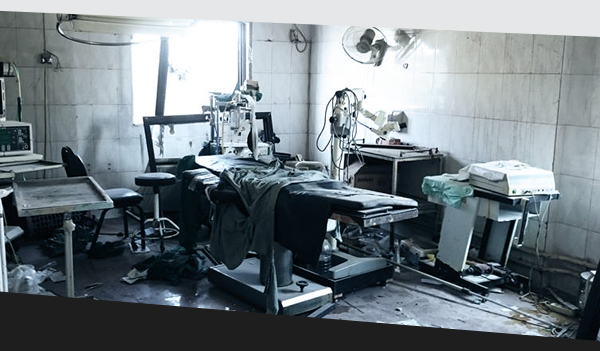
Since the Russian attacks began in Syria, SNHR has issued 16 different reports on incidents that involved bombing civil targets in opposition-held and ISIS-held areas. These attacks have caused casualties, destruction, and displacement that constitute war crimes.
We focused in some of the previous reports on major massacres in particular, and we will devote the 17th report to document the targeting of medical centers. This report is an update on a previous report that documents the targeting of medical centers particularly by Russian forces. The first report “The Grozny Holocaust in Aleppo”, published on 19 February 2016, documents the bombing of 27 medical centers.
Website
Facebook
Google Plus
Twitter
YouTube
Instagram
RSS
Email

Syria Deeply Weekly Update: Aleppo Under Fire Again, Opposition’s New Peace Plan

The most important updates on the war in Syria.
View this email in your browser

WEEKLY UPDATE
September 10, 2016

Dear Readers,Welcome to the weekly Syria Deeply newsletter. We’ve rounded up the most important stories and developments concerning Syria and the Syrians in order to bring you valuable news and analysis. But first, here is an overview of what happened this week:At least 47 people were killed when six bombs exploded in four Syrian provinces between 8 a.m. and 9 a.m. local time on Monday. The deadliest of the attacks was a double bombing in the government-held coastal province of Tartous in which at least 35 people died. Bombs also went off in the Kurd-held province of Hasaka and government-controlled areas of Homs and Damascus.The battle in northern Syria continues with Turkish and Syrian government forces both making gains. Over the weekend, Turkish troops and their allied opposition forces pushed ISIS militants out of the Syrian border area with Turkey. On Wednesday, Turkish shelling killed six Kurdish security forces in Afrin, a northwestern city controlled by the Kurdish People’s Protection Units (YPG).Forces loyal to Syrian president Bashar al-Assad retook parts of Aleppo early in the week, effectively putting the eastern part of the city under siege. On Tuesday night, at least 120 people, including 10 women and 37 children, were hurt in a suspected chlorine gas attack in the al-Sukkari district of opposition-held eastern Aleppo. Two days later, shelling from Islamist groups in the Kurdish-majority Sheikh Maqsoud district killed the last remaining pediatrician in the area.A group of doctors in Aleppo also urged the international community to respond to a crisis in the south of the city. They say the only hospital in the area, which serves roughly 125,000 people, will be relocated to another district by the end of the month.Pro-government forces are also in the midst of a major battle with opposition forces in Hama. At the end of August, several opposition factions launched the biggest offensive in the western central province since 2014. In the two weeks since fighting began, some 100,000 people have been displaced.On the diplomatic front, Russia and the U.S. failed to reach a cease-fire agreement this week, just as the Syrian opposition revealed its plan for political transition that would see President Assad and members of his government step down. The three-phase plan presented by the High Negotiations Committee includes a six-month negotiation and cease-fire, an interim government in power for roughly a year and a half, followed by the establishment of a new constitution and United Nations-supervised elections.Although no nationwide cease-fire has been agreed on the international stage, another local truce was negotiated in the Damascus suburbs this week following the earlier evacuation of Darayya city. Under the terms of the deal, fighters in Mouadamiya will be transferred to the rebel-held province of Idlib. Those who wish to remain must surrender their weapons by Monday.

Weekly Highlights:

The Long Road From Raqqa to Europe

After ISIS militants executed his 17-year-old son, Khalaf and his family fled their home in Raqqa, Syria for Europe. This is the story of their journey, which has yet to end, as border closings continue to tear the family apart.

Tamadur al-Muhawish and five of her daughters in Greece. The family fled Raqqa after al-Muhawish’s son was executed by the Islamic State. Al-Mu’tasim Khalaf

Analysis: How Evacuating al-Waer and ‘Other Darayyas’ Will Help Assad

The recent ultimatum directed at the besieged city of Darayya is just one example of a larger strategy of population displacement that the Assad government will use to regain control of opposition-held Syria.

Syrian soldiers are seen at the entrance of Darayya, a blockaded Damascus suburb, on August 26, 2016. AP Photo

Inside the Turkish Camps Where Syrian Refugees Work for $8 a Day

Thousands of Syrian refugees are now employed as migrant farm workers across Turkey, and they are particularly vulnerable to exploitation – especially as the government has effectively sanctioned their use as cheap labor.

Children play inside a concrete warehouse outside Torbali, Turkey, where hundreds of refugees working as migrant laborers sleep. Danielle Villasana

Additional Reading:

Find our new reporting and analysis every weekday at www.newsdeeply.com/syria.

You can reach our team with any comments or suggestions at info@newsdeeply.org.

Top image: Residents of the Damascus suburb of Darayya leave the Mouadamiya area on Thursday, Sept. 8. The second phase of an agreement reached by the Syrian government for people to leave Mouadamiya was implemented Thursday, with nearly 150 people heading to a nearby suburb. AP Photo

Become A Fan
Follow Us

Syrian Network for Human Rights: The Syrian Regime Uses Chemical Weapons again and Insults the Security Council for a 137th Time

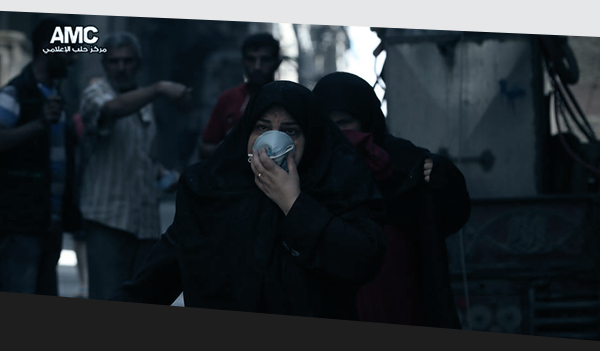
On Monday 6 September 2016 around 1:30 PM, government forces helicopters dropped a barrel bomb loaded with poison gases near “Wafaa Kharsa” pharmacy in Al Sukkari neighborhood, Aleppo city. We documented the killing of one individual, Mohammad AbdulKarim Afifa, in that attack while no less than 80 others were injured showing symptoms such as suffocation and shortness of breath.
SNHR contacted a number of residents who witnessed the bombardment incident (some of them suffered breathing difficulties), they told us about the symptoms they saw on the injured such as suffocation, red eyes, limbs tremoring which was also confirmed by the pictures and videos we received and have stored.
Website
Facebook
Google Plus
Twitter
YouTube
Instagram
RSS
Email