Combating Corruption in the Public Sector
August 22-16, 2016
Online NOW. Join the New Tactics community for an online conversation on Combating Corruption in the Public Sector from August 22 to 26, 2016.
According to Transparency International, sixty-eight percent of the world has a serious corruption problem and this includes half of G20. More than six billion people live in countries with serious corruption issues. The Corruption Perceptions Index is a global indicator of public sector corruption, providing an annual level of corruption by ranking countries. The characteristics of the countries which score well are countries with liberal open democracies with an independent judiciary and a free press.
In Nepal, customary homebirths pose significant risks to health; approximately six women die per day in childbirth. To combat this, the Nepalese government created a program that provides women a small monetary incentive should they give birth in a hospital. In one district, local officials reported a list of fake mothers to the government and kept the money for themselves. A local whistleblower reached out to Transparency International, which publicized the story to the media. Fearing a public scandal, the officials returned the money to the state, which was reallocated to the expectant mothers. The issue prompted both the Nepalese government and local actors to maintain heightened awareness of public sector corruption.
In this conversation, we seek to discuss tactics for illuminating issues of and advancing the cause for good governance, protection for whistle-blowers, and the necessary tools for developing successful advocacy efforts. Join us for this important discussion!
A billboard in Gulu, Uganda, reminds citizens to say no to corruption.
© 2015 Mark Brennan, MIT CITE, Courtesy of Photoshare


Global Centre for the Responsibility to Protect: R2P in Focus: R2P in United Nations Resolutions
R2P in Focus, No. 4

R2P in Focus
R2P in Focus is a monthly publication from the Global Centre for the Responsibility to Protect designed to highlight recent events and political developments concerning the Responsibility to Protect (R2P).
R2P in UN Resolutions

UN Photo/JC McIlwaine
Following the adoption of R2P at the UN World Summit in 2005, the inclusion of R2P and mass atrocity prevention language in UN Security Council and Human Rights Council resolutions represents the consensus among members of both Councils that indifference to mass atrocities is unacceptable.
To date 50 UN Security Council resolutions and 17 Human Rights Council resolutions have included direct references the responsibility of states to protect civilians from mass atrocity crimes and the responsibility of the international community to assist them in doing so. UN Security Council resolutions that reference R2P have addressed 11 country situations, including 10 resolutions on the crisis in South Sudan and 8 resolutions on the situation in the Central African Republic. Additionally, references to R2P can be found in resolutions on thematic issues, including the Protection of Civilians, Small Arms and Light Weapons and the Prevention of Genocide. UN Human Rights Council references include 13 resolutions on the situation in Syria as well as 2 thematic resolutions on the Prevention of Genocide.
Despite this progress, the international community still struggles to match words with deeds. While Security Council resolutions are binding under international law, state forces and some non-state actors in Syria, South Sudan, Yemen and elsewhere continue to commit atrocities and ignore international humanitarian and human rights law.
With the recent election of new non-permanent members to the UN Security Council for the 2017-2018 term and the anticipated selection of a new UN Secretary-General, member states must ensure that mass atrocity prevention remains a core priority of the UN. The UN must ensure the international community consistently upholds its collective responsibilities wherever and whenever populations are threatened by mass atrocity crimes.

UN General Assembly Informal Interactive Dialogue on R2P
On 17 August the UN Secretary-General, Ban Ki-moon, released his annual report on the Responsibility to Protect, entitled: Mobilizing collective action: The next decade of the responsibility to protect. The report highlights the progress made by the international community in upholding R2P, but argues that consistently protecting populations remains dependent upon the willingness of member states to live up to the commitment made at the UN World Summit in 2005.
The annual Informal Interactive Dialogue on R2P will be held in the UN General Assembly on 6 September, focusing on the recent report of the UN Secretary-General. The Global Centre strongly encourages member states to reiterate their support for R2P and the prevention of mass atrocities at this important event, including through signing on to important initiatives such as the ACT Group’s “Code of Conduct” for Security Council members, as well as the Kigali Principles for Protection of Civilians.
Any Other Business
- Straw poll for the next UN Secretary-General. On 5 August the UN Security Council held the second round of “straw polls” to signal their level of support for candidates to become the next UN Secretary-General. For the results, see thisgraphic by the World Federation of United Nations Associations. The next straw poll is scheduled to take place on 29 August.
- Opening of the 71st session of the UN General Assembly. On 13 September the 71st session of the UN General Assembly will commence. UN High-Level week will take place during 20-26 September. The Global Centre will be co-hosting and participating in many events throughout this important time.
Calendar Highlights
6 September 2016
UN General Assembly Informal Interactive Dialogue on R2P
13-30 September 2016
Human Rights Council 33rd Session
20-26 September 2016
UN High-Level Week
Connect with us


War Crimes Prosecution Watch Volume 11, Issue 12 – August 22, 2016
FREDERICK K. COX
INTERNATIONAL LAW CENTERFounder/Advisor
Michael P. ScharfWar Crimes Prosecution Watch Volume 11 – Issue 12
August 22, 2016
Editor-in-Chief
Kevin J. VogelTechnical Editor-in-Chief
Jeradon Z. MuraManaging Editors
Dustin Narcisse
Victoria SarantWar Crimes Prosecution Watch is a bi-weekly e-newsletter that compiles official documents and articles from major news sources detailing and analyzing salient issues pertaining to the investigation and prosecution of war crimes throughout the world. To subscribe, please email warcrimeswatch@pilpg.org and type “subscribe” in the subject line.
Opinions expressed in the articles herein represent the views of their authors and are not necessarily those of the War Crimes Prosecution Watch staff, the Case Western Reserve University School of Law or Public International Law & Policy Group.
CENTRAL AFRICA
Democratic Republic of the Congo
- Business Standard: Three aid workers kidnapped in DR Congo: Caritas
- Al Jazeera: Scores ‘hacked to death’ in machete attack in DR Congo. At least 64 bodies recovered near Beni town in North Kivu, but local authorities warn death toll could rise.
WEST AFRICA
Lake Chad Region � Chad, Nigeria, Niger, and Cameroon
- Reuters: Nigeria Riven By New Battles Over Scarce Fertile Land
- All Africa: Nigeria: Four Officers, 16 Soldiers Court Martialled in Maiduguri for Gunrunning, Murder
- AfricaNews: EU Chastises Chad For Failing To Arrest Sudan’s Omar Al-Bashir
- PBS: What happened to 10,000 boys kidnapped by Boko Haram?
- The New York Times: Nigeria Is Freeing Children From Boko Haram, Then Locking Them Up
- UN News Centre: Mali: UN condemns attack on peacekeepers in Kidal
- The Guardian: Refugees claim abuse by soldiers as Mali’s conflict spreads
- allAfrica: Africa: Mali Seeks Geingob’s Backing in Conflict
EAST AFRICA
- Human Rights Watch: Uganda: Police Attack LGBTI Pride Event: Arrests, Beatings, Assaults on Participants
- The Washington Blade: Uganda Pride events cancelled after violent police raid
- Norwegian Refugee Council: 2,000 South Sudanese flee to Uganda each day; Another 80,000 expected by yearend
- Amnesty International: Uganda: Minister’s remarks against LGBTI people amount to advocacy of hatred
- AllAfrica: The Monitor: Uganda: Lira Moots By-Law to Bar Men From Divorcing Barren Wives
- Footprint to Africa: World Bank Group Releases Inspection Panel Report on Uganda Project
- Daily Monitor: UPDF pull out of Kony hunt
- Daily Nation: Al-Shabaab Commander Suspected of Running Businesses in Nairobi
- Daily Mail: Kenya Clears Out Electoral Officials After Deadly Protests
Rwanda (International Criminal Tribunal for Rwanda)
- Open Democracy: Why does the west turn a blind eye to Rwanda’s dictatorship?
- Bloomberg: Congo’s Kabila in Rwanda as Rebel Attacks Roil Mineral Region
- AllAfrica Global Media: Somalia, Small Step Towards Prosecutions for Abuses
- Gulf News People: Somalia’s battle to criminalise sexual violence
- AllAfrica Global Media: Somalia: President Signs Human Rights Commission Bill.
- International Business Times: Fadumo Dayib: Somalia’s first female presidential candidate urges talks with al-Shabab
- The Irish Times: Man ‘who was tortured’ gets new hearing over refugee status
NORTH AFRICA
EUROPE
Court of Bosnia & Herzegovina, War Crimes Chamber
- Balkan Insight: Bosnian Army Ex-Soldier Indicted for Prozor Attack
- Balkan Insight: Bosnia Denies Investigating Croatian General Gotovina
MIDDLE EAST AND ASIA
Extraordinary Chambers in the Courts of Cambodia
- The Cambodia Daily: Hor Namhong was Khmer Rouge Prison chief, Tribunal Told
- Cambodia Daily: At Tribunal, Farmer Tells of Escape from Well of Corpses
- The Phnom Penh Post: Defence says Samphan Ignorant of Khmer Rouge Crimes
- Reuters: Islamic State captures up to 3,000 fleeing Iraqis: UNHCR
- The Washington Post: Iraqis flee Mosul campaign for packed and underequipped camp
- The New York Times: Kurdish Forces Launch Fresh Thrust to Retake Mosul From Islamic State
Islamic State of Iraq and the Levant
Bangladesh International Crimes Tribunal
- The Daily Star: 5 war crimes accused held in Mymensingh, Panchagarh
- Newsnext Bangladesh: Verdict in Shakhawat’s war crime case begins
- The Jurist: Bangladesh war crimes tribunal sentences former MP to death
- Al Jazeera: Bangladesh: Sons of convicted war criminals detained
- Amnesty International: Bangladesh: End illegal detentions immediately
AMERICAS
- Open Democracy: Amnesty law nullified in El Salvador: knowing the truth and taking the victims into account
- Reuters: El Salvador court denies extradition of former colonel to Spain
- The Guardian: US deports ex-Guatemalan soldier accused of role in 1982 massacre
- Telesur: Gunmen Raid Home of Leading Human Rights Lawyer in Guatemala
- Reuters: Argentine judge starts inquiry into death of Spain’s Garcia Lorca
- Colombia Reports: 2nd poll confirms majority in Colombia opposes peace deal with FARC
- Colombia Reports: A 15-year history of peace with impunity in Colombia
- DW.com: Colombia, rebels seek help of Pope Francis, UN chief with peace court
TOPICS
Truth and Reconciliation Commission
- My Republica: No blanket amnesty, Dahal assures TRC
- Daily News: The Great U-Turn
- The Chronicle Journal: Indigenous parents more fearful, distrusting of education system: study
- Reuters: Suicide bomber kills at least 70 at Pakistan hospital, IS claims responsibility
- The Wall Street Journal: Singapore Is a Terrorist Target, Prime Minister Says
- ABC News: Social Media Posts Could Be Key at Terrorism Trial in Texas
- Bloomberg: Germany Sees Turkey as Platform for Islamist Groups, Leak Shows
- The Guardian: Refugees did not bring terrorism to Germany, says Angela Merkel
- BBC News: Russia St Petersburg: ‘Militants’ killed in counter-terrorism raid
- Maritime Executive: $250 Ransom Demand Made for Indonesian Master
- Maritime Executive: Duterte: Philippine Army Must “Destroy” Kidnappers
- News Ghana: Togo sees launching of African journalists network for maritime security
- Sina English: Interview: High expectations for AU summit on maritime security: Togolese minister
- Maritime Executive/Reuters: Tanker Hijacked and Taken to Indonesia
- Maritime Executive: Two Kidnapped Seafarers Escape Abu Sayyaf
- The Star, Kenya: Gender-based violence among factors pushing 1.2m children out of school
- The Daily Times: Gender based violence
- The Sidney Morning Herald: Alleged Timor war crimes forgotten as ministers fly in for Bali terror summit
- Inquirer: Extrajudicial killings as crime against humanity
- Xinhua: Commentary: Fixing distorted view of history, reflecting on past only way for Japan to avoid future mistakes
- The New York Times: America Is Complicit in the Carnage in Yemen
—

Black Lives Matter Protest Shuts Down London City Airport Runway
By Sarah Lafen
Impunity Watch Desk Reporter, Europe
LONDON, England — Nine activists of Black Lives Matter UK (BLMUK) staged a protest on a runway of London City Airport in London last Tuesday. Protestors reportedly swam or traveled via a dinghy across the Thames River from a dock across from the airport in order to reach the runway. Once on the runway, the protestors constructed themselves into an interlocked tripod formation.
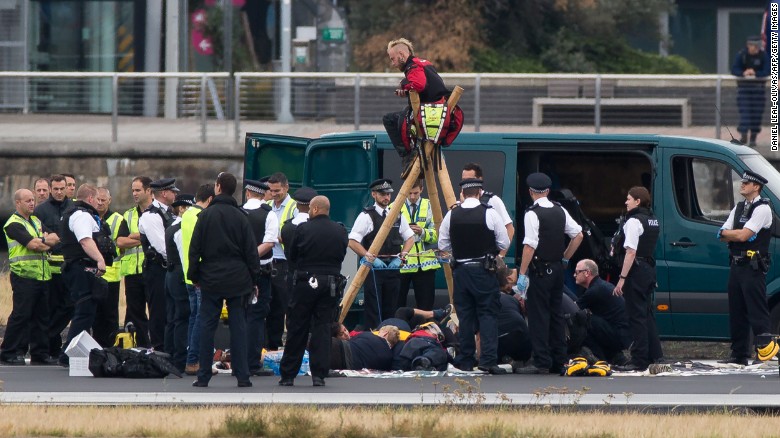
Flights at the airport were suspended until the protesters were arrested and removed from the runway. According to local police, the seven of the nine protestors were arrested on charges of aggravated trespass, being unlawfully airside, and for breaching the bylaws of the London City Airport. The remaining two protestors remained interlocked on the runway and continued to engage in negotiations with police officers.
BLMUK stated that London City Airport is planning to expand, which would likely impact the surrounding neighborhoods which are located in a highly deprived part of London. One reason given by BLMUK for the protest was to highlight the economic disparity between airport travelers and the people who live in the neighborhoods surrounding the airport. The activist group claims that the airport was “designed for the wealthy,” and compares the salaries of the average London City Airport user (€136,000) to the average population in the surrounding town of Newham (£20,000 or less).
In this same sense, BLMUK provides that the reason for the protest was to “highlight the environmental impact of air travel on the lives of black people locally and globally.” The group estimates that by 2020, there will be 200 million climate refuges across the world. They claim that in 2016, 3,176 migrants either died or went missing in the Mediterranean as a result of fleeing conditions they did not create because cheaper, easier, and safer avenues of travel have been blocked or ignored by the UK.
The protest aggravated many affected travelers at London City Airport. One traveler whose flight was delayed said she understood the purpose of the protest and the concerns surrounding it, but highlighted that there are other ways the group can get their point across without impacting “young families.” Another set of African American travelers recognizes that “many issues always affect the poorest in society…but it has stopped these two black lives from going on holiday.”
For more information, please see:
BBC — Black Lives Matter Protestors Close London City Airport Runway — 6 September 2016
The Guardian — Black Lives Matter Protest Stops Flight at London City Airport — 6 September 2016
Dozens Injured by Chlorine Bomb Attack in Syria
by Yesim Usluca
Impunity Watch Reporter, Middle East
DAMASCUS, Syria — Dozens were injured in a suspected chlorine bomb attack by Syrian government forces in the city of Aleppo on Tuesday, September 6th.

The Syrian Observatory for Human Rights indicated that barrel bombs were allegedly dropped from helicopters by Syrian government forces on a crowded neighborhood. Use of chlorine in weapons is banned by the Chemical Weapons Convention. Chlorine gas can be fatal in high concentrations. In lower doses, it can damage lungs or cause severe breathing difficulties, vomiting and nausea, among other symptoms.
Syrian activists and volunteer emergency rescue workers stated that the attack caused dozens of cases of suffocation and at least one death. The volunteer rescuers noted that individuals in the area were rushed to hospitals due to severe breathing difficulties following the bombing. The victims’ clothing was reported to smell of chlorine and their symptoms were allegedly the same as those experienced in former attacks. These observations led to the suspicions of a chlorine gas attack. According to reports from the affected area, a majority of the injured individuals were women and children, with a pregnant woman being one of the patients in critical care.
Accusations involving use of chlorine and other poisonous gases are not uncommon in Syria’s civil war. An inquiry conducted in August 2016 by the U.N. and the Organization for the Prohibition of Chemical Weapons found that the government of Syrian President Bashar Assad had used toxic chlorine gas in at least two attacks in 2014 and 2015. The U.N. is further investigating an allegation by the Syrian Civil Defense which accused the government of another chlorine attack in August 2016.
The Syrian government is maintaining its position that it has never used chemical weapons. In August 2013, President Assad agreed to surrender and destroy all chemical weapons and facilities. This resolution authorizes militarily enforceable sanctions for use of any chemical weapons in Syria.
For more information, please see:
New York Post — Dozens recovering after suspected chlorine bomb attack in Syria — 7 September 2016
AlJazeera — Aleppo: Syrian forces blamed for ‘chlorine gas attack’ — 7 September 2016
BBC — Syria conflict: Government helicopters ‘drop chlorine’ on Aleppo — 7 September 2016
USA Today — 2 dead, scores wounded in alleged Syrian gas attack — 7 September 2016