|
|||||||||||
|


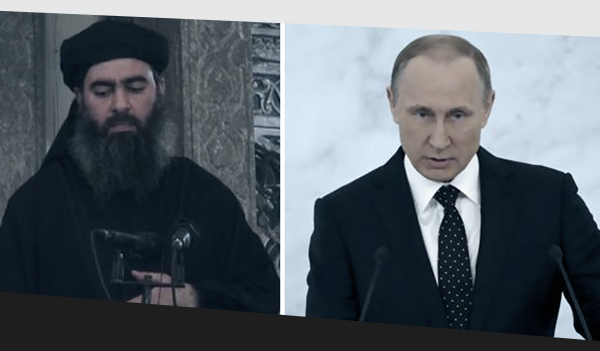
Syrian Network for Human Rights: Russian Forces Surpasses ISIS in Killing Syrian Civilians
|









Syria Deeply Weekly Update: Toxic Bombs, Air Raids on Hospitals Hit Syria
|
||||||||||||||||||
|


Global Centre for the Responsibility to Protect: Atrocity Alert: South Sudan, Yemen and Nigeria

Atrocity Alert is a weekly publication by the Global Centre for the Responsibility to Protect highlighting and updating situations where populations are at risk of, or are enduring, mass atrocity crimes.
South Sudan
On 15 August, the one-year anniversary of the signing of a peace agreement to end South Sudan’s civil war, Human Rights Watch released a report documenting widespread abuses perpetrated by soldiers from the Sudan People’s Liberation Army during five days of fighting with rebel soldiers between 7 and 11 July. The report details widespread rape, noting that the UN has documented more than 200 cases of sexual violence since 7 July, as well as indiscriminate armed attacks on civilian-populated areas. Government forces also targeted populations based upon ethnicity, particularly non-Dinka civilians.
Last Friday, 12 August, the UN Security Council passed Resolution 2304 authorizing the creation of a Regional Protection Force within the UN Mission in South Sudan (UNMISS) to “engage any actor that is preparing attacks or engages in attacks” against UN protection of civilians sites, humanitarian actors or civilians. This Regional Protection Force needs to be deployed as soon as possible to bolster the efforts of UNMISS. In keeping with Resolution 2304, any further obstruction of UNMISS’ mandate or continued violations of international humanitarian and human rights law should result in the UN Security Council imposing an arms embargo on South Sudan.

IOM


Ibrahem Qasim

UNICEF/UN026956/Madhok
Yemen
Fighting in Yemen significantly escalated following the 6 August cessation of UN-mediated talks to end the civil war. On 12 August the UN Humanitarian Coordinator in Yemen raised alarm at the impact of the intensification of violence, with widespread reports of civilians killed and homes destroyed. On 13 August ten children were killed when airstrikes hit a religious school in Sa’ada and the following day fourteen people were killed when a Médecins Sans Frontières-supported hospital was bombed in Hajjah. The Saudi-led coalition has been implicated in both attacks. Meanwhile, the midterm report of the UN’s Panel of Experts on Yemen, leaked to the media last week, includes evidence of violations of international human rights and humanitarian law by all sides, noting that Houthis have used civilians as human shields to avoid attacks. All parties to the conflict must strictly adhere to international humanitarian and human rights law and take all necessary measures to avoid further civilian casualties. It is essential that all parties to the conflict reestablish peace talks without delay and commit to a long-term political solution to the civil war.
Nigeria
On 14 August Boko Haram published a video showing some of the more than 200 girls kidnapped from a secondary school in Chibok, Borno state, during April 2014. The video has been released during a leadership struggle within the extremist group between Abubakar Shekau, who has led the group since 2010, and Abu Musab al-Barnawi, who was recently appointed by the so-called Islamic State of Iraq and the Levant. Infighting within the leadership could result in dire consequences for populations as the rival leaders attempt to assert their control over the group. Al-Barnawi has declared his intention to increase Boko Haram’s targeting of Christians, putting these populations at greater risk of atrocities and potentially exacerbating religious tensions across the country. The government must provide protection to all vulnerable communities and renew efforts to secure the release of the Chibok girls, as well as the hundreds of other women and children abducted by Boko Haram.

Sam Olukoya/IRIN

Obinna Anyadike/IRIN
Connect With Us


ICTJ: What We Need: Asking Victims About Reparations in Côte d’Ivoire
 8/10/2016
By Cristián Correa and Didier Gbery
For more than a year, in collaboration with the National Commission for Reconciliation and Compensation for Victims (CONARIV), ICTJ’s Reparative Justice Program has made an effort to consult with victims of Côte d’Ivoire’s 2010 post-election violence and its national government. These consultations are meant to push forward a definitive reparations policy that is based on the following four fundamental pillars: the need to prioritize the victims of the most serious violations; the need to focus on natural persons as victims; the need to implement a comprehensive policy that responds to the different consequences caused by those violations; and the need for a clear implementation strategy that provides certainty to victims.
ICTJ has worked with CONARIV, victims’ groups, and other government entities on reparations since 2012. A new briefing paper, titled “Recommendations for Victim Reparations in Côte d’Ivoire,” presents the conclusions of these consultations and makes recommendations to encourage the state of Côte d’Ivoire to advance its process of implementing a credible reparations policy through a participatory and transparent process.
Côte d’Ivoire faces a challenge in how to define a reparation policy that includes not just the victims who are near Abidjan or are politically connected, but also those in remote areas or with with more limited political access. Although the Programme National de Cohesion Sociale (PNCS), the Directorate of War Victims, and the Commission for Dialogue, Truth and Reconciliation (CDVR) made efforts to listen to victims and define a policy of reparations that would respond to the most serious consequences of the armed conflict, the policies fell short and failed to engage victims. Victims’ organizations did not have enough of a role in the process, and what limited participation they did have excluded those in the rural areas most affected by the post-election violence.
In establishing these consultations, we knew we had to encourage a process of dialogue in which victims in isolated regions, female victims, and victims of the most serious crimes could be involved in the process of policy-making. So we started by selecting the areas of the country that suffered the most during these periods of violence. We identified two neighborhoods in Abidjan, Abobo and Yopougon, and two other cities, Bouaké and Duékoué – the former near the center of the country who had suffered mainly during the 2002-2005 period of conflict, and the latter in the west, who had been affected by all the successive eruptions of political violence. Once selected, we began a process of mapping the victims’ groups in the area. The process of mapping heavily relied upon existing organizations located in the selected areas and we were able to identify 225 grassroots organizations.
We asked the groups the following questions: What are the most serious violations that occur in the area? What are the consequences of each one of those violations? What are the daily obstacles the victims face, and how are the effects felt differently by different groups of victims (widows, women, youth, etc.)?
We decided to work with separate women-specific victims groups in order for them to have their own definitive voice on the issue of reparations. This allowed for us to better understand the perspective of women victims and for all other organizations to grasp their perspective as well. Actually, having women presenting their own recommendations, and making concrete gender-based proposals while male leaders listened, resulted on an unintentional boost for their power and capacity in very traditional community organizations. In some cases, we also created youth-focused victims’ groups.
Through these discussions, we prompted the organizations to suggest concrete and prioritized proposals that would help victims of the most serious violations in overlooked and isolated regions overcome these various consequences and obstacles.
Meanwhile, we also worked closely with the government, making them acknowledge the need for consultation in the reparations process while also demonstrating to them that we were already working with victims. This pushed the government to organize a conference where 50 representatives of various organizations convened in Abidjan, the economic capital of Côte d’Ivoire, to present their proposals and conclusions. The conference went beyond simply providing an initial list of the most vulnerable victims to the government; instead it addressed how to register victims, how to implement reparation policies beyond monetary compensation, and how to formulate a clear and comprehensive implementation strategy nimble enough to adapt to the different challenges different victims face.
In this way we sought to transform basic principles into action according to the opinions of the numerous organizations. We felt encouraged by victims being able to speak so clearly, so strongly, and with even more knowledge than the authorities had on these issues.
Part of being a ‘victim’ is an experience of being passive, of not being strong enough. Part of a reparations process is to strengthen the capacity of victims to be agents. We seek to restore a political process that is respectful of people as citizens and not just recipients of charity, allowing victims to attain political dignity through their participation. We are not simply saying: “Let’s just propose a draft law that will have the principles embedded in them,” because that does not work.
The question is how many proposals are implemented and how many are implementable. The solution for reparation processes can be found in victims’ participation. Victims know best when telling us what might work and what will not and how to be realistic under different conditions for each country. This does not mean that government does not need to play a role, as those priorities need to be translated into budgets and policy implementation strategies, frequently checking with victims if those strategies are working well enough.
The briefing paper aims to help to organize Côte d’Ivoire’s reparations policy in a practical way. It includes some concrete definitions for forms of compensation, rehabilitation, and satisfaction of individual victims. It also includes proposals for community reparations, the search of the forcibly disappeared, access to documentation for those what have either lost them or have never been properly documented, a reconstruction policy specially focused on the areas most affected by the conflict, and symbolic reparations based on community participation.
It also highlights the need to undergo a budgetary exercise based on the profile and numbers of victims registered, which could help define responses to the priorities outlined.
In order to create lasting reconciliation between the victims of post-election violence and the Côte d’Ivoire state, the reparations program must respond to the most serious consequences of the violence for victims through measures that address their long-lasting socioeconomic, psychosocial, and education-related effects for victims and their children.
We recommend an implementation strategy that requires a timeline for the different actions to follow. Reparations should be a joint effort between policies that work to guarantee the non-repetition of political violence and repression and policies that enforce the respect for human rights and humanitarian law in all state institutions. Both sets of policies require mechanisms that oversee the conduct of armed forces and state institutions while also investigating and prosecuting serious violations of human rights.
We hope that, with the recommendations included in this briefing paper, the Côte d’Ivoire government will be able to take state responsibility and recognize the serious consequences caused by its violence and thus set the foundation for a better, more just future.
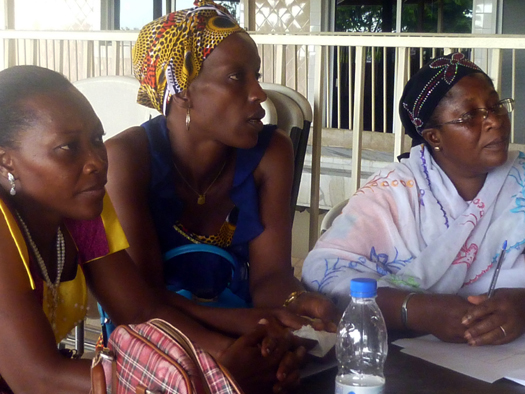
Follow Didier and Cristián on a series of consultations in our photo gallery.
PHOTO: During group consultations, Moussa Soulama stresses the urgent need for school infrastructure in Bouaké.