Global Centre for the Responsibility to Protect: International Day of United Nations Peacekeepers

29 May 2016 Web Version

Statement on the International Day of UN Peacekeepers

Today marks the International Day of United Nations Peacekeepers. The Global Centre for the Responsibility to Protect pays tribute to UN peacekeepers deployed around the world and recognizes the sacrifice of those who lost their lives in the service of peace and the protection of civilians.
As we recognize the International Day of UN Peacekeepers we recall that ten out of sixteen current UN peacekeeping missions have Protection of Civilians mandates, which involve more than 95 percent of all UN peacekeepers. Peacekeepers are also increasingly called upon to uphold the international community’s Responsibility to Protect civilians from mass atrocity crimes; namely genocide, war crimes, ethnic cleansing and crimes against humanity.
As crises around the world have grown more complex and volatile, with increasing disregard for international humanitarian and human rights law, the personal risks to peacekeepers have deepened. Attacks against UN peacekeepers constitute war crimes. Last year 128 peacekeepers were killed, including those in military and civilian roles.
So far this year the UN has registered more than a dozen attacks against the UN mission in Mali while several attacks have been perpetrated against UN bases in South Sudan, which continue to shelter more than 180,000 civilians displaced by the civil war. Meanwhile, in Sudan the government continues to obstruct one of the world’s largest peacekeeping operations, UNAMID, leaving civilians in Darfur inadequately protected from ongoing crimes against humanity. It is critical that the neutrality of UN bases is maintained and that all parties to a conflict respect international humanitarian and human rights law.
We welcome the recommendations of last year’s High-Level Independent Review Panel on UN Peace Operations (HIPPO) as well as the Kigali Principles on the Protection of Civilians. The HIPPO recommendations and Kigali Principles offer practical ways to address current challenges in peacekeeping, including on issues relating to training, early warning, resources and capabilities, use of force and accountability. We acknowledge the 29 states that have already endorsed the Kigali Principles, and encourage all other UN member states to do so.
We must do more to ensure that all UN peacekeepers are better prepared to protect civilians from mass atrocity crimes. The Framework of Analysis for Atrocity Crimes produced by the UN Office on Genocide Prevention and the Responsibility to Protect should be mainstreamed into pre-deployment training, operational planning and the day-to-day work of UN peacekeeping missions.
Dr. Simon Adams, Executive Director of the Global Centre for the Responsibility to Protect, noted that, “all too often in the world today UN peacekeepers are all that stand between vulnerable civilians and those who prey on human misery. We pay tribute to all UN peacekeepers who risk their lives while providing protection to displaced or threatened populations where ever they may be.”

The Guardian: Former Chad dictator to learn fate after alleged victims’ long fight for justice

Dakar court to give verdict on Monday on whether Hissène Habré is guilty of murder, torture, rape and crimes against humanity

Current Time 0:00
/
Duration Time 0:28
Loaded: 0%
Progress: 0%

Mute

This is a modal window.

More World news videos

  • Hundreds compete in race in Sweden’s swimrun season – video

  • Canada wildfires: South African firefighters break into song and dance as they arrive at Edmonton airport

  • Houses collapse during severe floods in southern Germany

  • Victims ‘hope for justice’ as former Chad dictator Hissène Habré awaits verdict

Victims ‘hope for justice’ as Hissène Habré awaits verdict

Chad’s former dictator is to learn his fate on Monday after a 26-year battle by his alleged victims to bring him to justice.

A court in Dakar will decide whether Hissène Habré is guilty of murder, torture, rape and crimes against humanity in the culmination of a five-month trial.

The landmark case is the first time the courts of one country have prosecuted the former leader of another for alleged human rights crimes. Activists say it gives hope to the victims of dictators that it is possible to bring their tormentors to justice.

Habré, hiding his face behind sunglasses and a voluminous white turban, sat in court each day to hear dozens of Chadians describe the horrors they suffered at the hands of his officials.

On one of the most dramatic days of the trial, a woman who had been imprisoned at the presidential palace revealed a secret she said she had been hiding for 30 years: she accused Habré of raping her four times.

Habré did not speak and stared straight ahead as she made the allegation, as he did throughout the trial except the first day, on which soldiers dragged the former desert warlord into the courtroom kicking and shouting insults, and pinned him down. Later, his legal team dismissed the woman, Khadija Zidane, as a “nymphomaniac prostitute”.

Habré’s alleged victims have pinned all their hopes on a conviction. Clément Abaifouta, who was a young student when he was arrested and imprisoned for four years, during which he became known as the “gravedigger” because he was forced to bury the bodies of his cellmates, said the experience had ruined his life.

Current Time 0:00
/
Duration Time 0:28
Loaded: 0%
Progress: 0%

Mute

This is a modal window.

Pinterest
Watch: Victims ‘hope for justice’ as Hissène Habré awaits verdict

“For my four years of detention, I did not exist. I was like a tiny coin, buried in a hole,” Abaifouta said. “For four years I went through terrible treatment, I slept on the floor. You get sick and you don’t get medicine. You just wait for death to come.

“This has marked my life. I was forced to bury people – my friends – who, maybe, if they had just had an aspirin or some other small treatment, would have survived. Men were taken out of prison only to be killed, and women to be raped. This was a nightmare for me. I was a victim of a system that has broken my life.

Clément Abaifouta testifying in the trial, which was televised.
Pinterest
Clément Abaifouta testifying in the trial, which was televised.

“When I hear people ask ‘what if Hissène Habré is not convicted?’, I can’t even think about it. Just put me in the fire and burn me now. I was out of my mind when I gave evidence – I could have jumped on him. I couldn’t stand that I was sitting one metre away from the person who did this to me, and he didn’t say a word. It was the worst insult. It was like he took all the victims, and just threw them away.”

Advertisement

Habré’s legal strategy was to not recognise the Extraordinary African Chambers, which was set up by the African Union and Senegal, the country to which he fled in 1990 when Chad’s current president, Idriss Déby, marched on the capital, Ndjamena, and overthrew his former ally. Before he left the country, Habré is accused of emptying its coffers, money that prosecutors hope can be clawed back and paid to his alleged victims.

The trial breaks new ground in Africa, where there has been growing resistance to the international criminal court’s perceived racism: all the investigations the latter has opened so far have been in African countries. Senegal’s method is being seen as an alternative, and a precedent-setter for the continent.

However, Reed Brody, a Human Rights Watch campaigner nicknamed the “dictator hunter” for his tenacity in pursuing both Habré and Chile’s Augusto Pinochet, thinks the greatest precedent is not a legal one but the message it sends to survivors of other regimes.

“What’s really precendential here is that survivors have fought to bring their dictator to justice. It serves as an inspiration for other victims,” he said.

A document showing the note ‘No prisoner to leave the prison except in case of death’ scrawled in Habré’s handwriting.
Pinterest
A document showing the note ‘No prisoner to leave the prison except in case of death’ scrawled in Habré’s handwriting.

Prisoners under Habré’s regime were allegedly forced into cells so cramped that they could not turn around; many suffocated to death in the 50-degree heat. Souleymane Guengueng, one of the leaders of the victims’ campaign, stopped breathing three times and nearly died: he considers it an act of God that he did not. He vowed that if he got out he would fight to bring his torturers to justice.

Guengueng’s meticulous documentation of survivors’ stories was key to the prosecution’s case, along with a huge tranche of documents that Brody found strewn in an old Chadian army building. The documents point to 1,208 people dying in detention and 12,321 victims of human rights violations, though in 1992 the Chadian Truth Commission put the death toll at 40,000.

Dapper in a black fedora adorned with bright feathers and a large silver crucifix around his neck, Guengueng, in Dakar to hear the verdict, took off his glasses to reveal damaged eyes, ringed with pale blue. He was locked up in pitch-dark solitary confinement for three months and almost went blind.

“All the suffering we went through in prison, the torture, the deprivation of food and healthcare, led me to wonder how someone could make people endure that – could treat them like animals,” he said. “In court, I was scared Habré would just explode – it was incredible for a human being to take in all the things we said about him and not crack. I will forgive him after justice, not before.”

For Abaifouta, the trial should serve as a warning to other tyrants, and though a conviction cannot mend his broken life, would nevertheless be a relief. “For a victim like me, it’s going to be one of the greatest days of my life,” he said. “For 26 years we have braved fear, violence and humiliation. It’s the climax of our struggle.”

Syria Deeply Weekly Update: Syrians Struggle for Room in Turkish Schools

WEEKLY UPDATE May 28, 2016

Dear Readers,

Welcome to the weekly Syria Deeply newsletter. We’ve rounded up the most important stories and developments about Syria and the Syrians in order to bring you valuable news and analysis. But first, here is a brief overview of what happened this week:

On Saturday, Free Syrian Army rebels gave the regime a 48-hour deadline to halt the attacks against the group’s strongholds of Daraya and Eastern Ghouta in the suburbs of Damascus, or they would abandon the “cessation of hostilities.”

The FSA successfully seized the town of Deir Khaiba in rural Damascus on Thursday following clashes with regime forces. The opposition described the fighting as a “precautionary battle” to prevent the Syrian regime, which has sent reinforcements into the area, from besieging the towns of Khan and Zakia.

On Monday, Russia called for a temporary truce in the same areas, following deadly attacks by the so-called Islamic State (ISIS) on the government-controlled coastal cities of Tartous and Jableh.

ISIS launched a coordinated attack on the two cities, killing nearly 150 civilians and wounding 200. The militant group claimed responsibility for the attacks, which involved suicide bombers and cars filled with explosives.

Later in the week, Russia’s defense ministry announced that it had agreed to hold back targeted airstrikes on the al-Qaida-backed al-Nusra Front positions in Aleppo and Damascus, in an attempt to give other armed rebel groups time to distance themselves from al-Nusra Front positions.

In northern Syria, the new commander of U.S. forces in the Middle East, Gen. Joseph Votel, made a secret visit to Kurdish-controlled areas on Saturday to assess U.S. troops and the organization of local Arab and Kurd fighters in combating ISIS. On Tuesday, following the visit, reports surfaced of an upcoming attack on the ISIS stronghold of Raqqa, by the U.S.-trained Syrian Democratic Forces.

A few days later, on Thursday, photographs surfaced of U.S. special operations forces aiding the main Syrian Kurdish militia, and wearing YPG patches, as they advanced toward Raqqa.

In other news, warring rebel factions Jaish al-Islam and Failaq al-Rahman in Eastern Ghouta finally agreed to a truce after a round of negotiations in Qatar on Tuesday. Around 500 people have been killed since April, when fighting broke out between rival factions.

A new report released by the U.K.-based Syrian Observatory for Human Rights revealed that at least 60,000 people have died in regime detention facilities since the beginning of the conflict. The figure was calculated by adding up numbers provided by sources inside government jails and security services.

On an international level, a statement by U.N. special envoy for Syria Staffan de Mistura, following a round of consultation with the Security Council, said there would be no talks on Syria for at least two or three weeks. The envoy said he is waiting for progress on the ground regarding the cessation of hostilities and humanitarian access.

Weekly Highlights:

Video: Syrians Struggle for Room in Turkish Schools

As Istanbul geared up to host the inaugural World Humanitarian Summit, Turkish support for Syrians – including its policy of granting access to education to Syrian children officially registered as refugees – was in the spotlight.

Syrian refugee child Omar al-Ali, 6, watches television with his siblings as they sit in the commercial space their family has rented to live in, Gaziantep, southeastern Turkey, on May 16, 2016. AP/Lefteris Pitarakis

World Humanitarian Summit: New Thinking, Old Feuds

This week’s WHS promised wide-ranging consultations and a break with convention in order to find solutions fast, but with some high-profile absences – from MSF to Syria and the Saudis – just how effective can it be?

United Nations security personnel, left, and Turkish armed forces officers, right, attend a flag-raising ceremony, marking the opening of business at the World Humanitarian Summit in Istanbul, on Saturday, May 21, 2016. AP/Lefteris Pitarakis

Syrian NGOs Lament ‘Dreadful Silence’ at Summit

After the United Nations lavishly highlighted its achievements during the World Humanitarian Summit, Syrian NGOs expressed their dismay that the gathering failed to help develop sustainable solutions to the crisis.

Seven-month-old Syrian refugee Mariam Mohammed, whose family fled from Hama, Syria, sleeps under a mosquito net inside their tent at an informal tented settlement in the Jordan Valley, Wednesday, March 30, 2016. AP

More Recent Stories to Look Out for at Syria Deeply:

Find our new reporting and analysis every weekday at www.newsdeeply.com/syria. You can reach our team with any comments or suggestions at info@newsdeeply.org.

Top image: United Nations Secretary-General Ban Ki-moon delivers a speech at the opening ceremony of the World Humanitarian Summit, in Istanbul, Monday, May 23, 2016. AP

Justice for Sergei Magnitsky: US Criminal Grand Jury Convened to Examine Involvement of Son of Senior Russian Government Official in $230 Million Fraud exposed by Sergei Magnitsky

27 May 2016 – A US crim­i­nal grand jury has been con­vened to exam­ine the involve­ment of Denis Kat­syv, son of Russ­ian gov­ern­ment offi­cial Petr Kat­syv, in the US$230 mil­lion fraud uncov­ered by Sergei Mag­nit­sky.  In 2008, Pre­ve­zon, a Cyprus-based com­pany owned by Denis Kat­syv, received funds traced by the US Depart­ment of Jus­tice and the Swiss Gen­eral Prosecutor’s office to the US$230 mil­lion fraud uncov­ered by Sergei Magnitsky.


Since Sep­tem­ber 2013, Denis Katsyv’s com­pa­nies have been sub­ject to a U.S. civil for­fei­ture case brought by the US Depart­ment of Jus­tice for money laun­der­ing. Under that case the US gov­ern­ment has frozen $14 mil­lion of assets belong­ing to Katsyv’s companies.


“The defen­dants [com­pa­nies owned by Denis Katsvy] were involved in the laun­der­ing of the pro­ceeds of the Russ­ian fraud, which itself amounts to an elab­o­rate series of crim­i­nal offences,” said US Jus­tice Depart­ment in its court fil­ing in New York.


“It is …entirely proper for the grand jury to inves­ti­gate whether the defen­dants [Katsyv’s com­pa­nies], who received pro­ceeds from the fraud, were involved in it,” said the US Depart­ment of Justice.


A Crim­i­nal Grand jury is a form of crim­i­nal inves­ti­ga­tion in the United States used to deter­mine whether crim­i­nal charges should be brought against poten­tial defendants.


Pre­vi­ously, Katsyv’s com­pa­nies tried to chal­lenge the US and Swiss asset freez­ing orders, but courts in the US and Switzer­land denied those motions and con­firmed that the freez­ing was justified.


The wire trans­fers to Pre­ve­zon from the $230 mil­lion fraud uncov­ered by Sergei Mag­nit­sky showed highly unusual pay­ments. Pre­ve­zon dis­guised incom­ing pay­ments for “san­i­tary equip­ment” and “auto parts,” which were sup­posed to be sup­plied but never deliv­ered because Pre­ve­zon was in fact a real estate company.


Accord­ing to the US Depart­ment of Jus­tice, the fal­si­fied con­tracts used to jus­tify Prevezon’s incom­ing wire trans­fers claimed that Pre­ve­zon was sup­posed to deliver 500 acrylic bath sets under the brand name “Doc­tor Jet,” man­u­fac­tured in Sicilia, Italy, with dimen­sions of 190 x 120/95 x 65, to two shell com­pa­nies in Moldova which did not do any legit­i­mate busi­ness and never in fact pur­chased the bath sets.


Pre­ve­zon explained these sus­pi­cious wire trans­fers to the US Court stat­ing that an agree­ment existed between its Russ­ian direc­tor, a stu­dent named Tim­o­fei Krit, and “investor Petrov,” and denied knowl­edge of false wire descriptions.


How­ever, dur­ing its inves­ti­ga­tion, the US Jus­tice Depart­ment iden­ti­fied fur­ther false and ques­tion­able wire trans­fers to Pre­ve­zon from com­pa­nies in Belize, BVI, etc. for an addi­tional amount of US$2 mil­lion. These wire trans­fers were sim­i­larly dis­guised as pay­ments for com­put­ers, video, home equip­ment, etc. that again were never delivered.


Pre­vi­ously, Denis Katsyv’s firm Mar­tash paid US$8 mil­lion under the 2005 money laun­der­ing case by the State of Israel.


Denis Katsyv’s father, Petr Kat­syv, has been Vice Pres­i­dent of OAO Russ­ian Rail­ways, a state trans­porta­tion monop­oly, since 2014. Before that, he was Vice Pre­mier of the Gov­ern­ment and Trans­porta­tion Min­is­ter in the Moscow Region. Con­tracts with Moscow Region’s gov­ern­ment struc­tures sup­ported the busi­ness of his son, Denis Kat­syv.


Sim­i­larly, Denis Katsyv’s Russ­ian lawyer Natalia Vesel­nit­skaya devel­oped her busi­ness in part on con­tracts with Moscow gov­ern­ment agen­cies, where her hus­band is Deputy Min­is­ter of Trans­porta­tion (and was deputy to Kat­syv senior dur­ing his time as Min­is­ter of Trans­porta­tion), and pre­vi­ously, between 1984 – 2000 was offi­cial within the Moscow Region’s Prosecutor’s Office.


Accord­ing to court fil­ings, Petr Kat­syv was pre­vi­ously in con­tact with the FBI to pro­vide infor­ma­tion on Russ­ian orga­nized crime but with­drew his pro­posal, when he was informed by the US author­i­ties that his coop­er­a­tion would not help set­tle the money laun­der­ing and civil for­fei­ture case by the US Jus­tice Depart­ment pend­ing in the South­ern Dis­trict Court of New York.


Sergei Mag­nit­sky, who uncov­ered the US$230 mil­lion fraud and tes­ti­fied about the com­plic­ity of Russ­ian offi­cials in it, was tor­tured and killed in Russ­ian police cus­tody at the age of 37. The unprece­dented events of this case are described in the New-York Timesbest-seller by William Brow­der, leader of global ‘Jus­tice for Sergei Mag­nit­sky’ cam­paign, called “Red Notice. How I Became Putin’s No 1 Enemy,” and in a series of jus­tice cam­paign videos on Youtube chan­nel “Russ­ian Untouch­ables.”


For more infor­ma­tion, please contact:


Jus­tice for Sergei Magnitsky

+44 207 440 1777

e-mail: info@lawandorderinrussia.org

www.lawandorderinrussia.org

billbrowder.com

https://twitter.com/Billbrowder
Historic Sentencing for Operation Condor Military Officials

By Cintia Garcia

Impunity Watch Reporter, South America

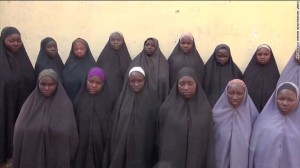
BUENOS AIRES, Argentina— In a historic human rights trial, Argentina’s last dictator and 14 military officials were sentenced to prison for their role in Operation Condor. Former general and Argentine dictator from 1982-83, Reynaldo Bignone, 88-years-old, was sentenced to 20 years of prison. Bignone was found guilty for illicit association, kidnapping and the disappearance of more than 100 people. He is already serving life sentences for various human rights violations.

Former Military Officials Stand Trial (Photo courtesy of the BBC)

In addition, Uruguayan army colonel, Manuel Cordero Piacentini was sentenced for his crimes against humanity. Argentine former general, Santiago Riveros was sentenced to 25 years in prison. Miguel Angel Furci, Argentine intelligence officer was sentenced to 25 years for illegally arresting and torturing dozens. The sentences among the defendants ranged from 8 to 25 years in prison. Since the trial began, five defendants have died, including Jorge Rafael Videla, former head of Argentina’s first junta.

The case against the former military officials began in 2013 in the domestic court of Argentina. This case marks the first time a domestic court has tried ex-military officials. The claim was brought forth by the victim’s families. The verdicts are a milestone for those affected by Operation Condor because it is the first time the conspiracy has been proven to exist. The evidence presented included testimonies by the families, victims, and documents such as a declassified FBI cable from 1976. The prosecutors were able to piece together the coordinated operation through an overwhelming amount of documents from the United States and South American archives.

Operation Condor was a US backed plan created by South American dictators to eliminate opponents and leftist. The operation lasted from mid 1970s to the early 80s. The countries that created and enforced the operation were Argentina, Chile, Paraguay, Bolivia, Uruguay, and Brazil. The South American countries would meet and use their police powers to track the opponents and leftist. The dissidents were captured, kidnapped, tortured and disappeared. Many of their remains continue to be unaccounted for. In addition, the children of the women who were kidnapped were taken away from their mothers and given to other families, such as military officials. According to UNESCO’s International Center for the Promotion of Human Rights, there were 376 Operation Condor victims.

In regards to the role of the United States during Operation Condor, President Obama has promised to release all documents and records. In a statement, President Obama announced, “I believe we have a responsibility to confront the past with honesty and transparency.”

For more information, please see:

ABC NEWS – Argentine Court Sentences Ex- Dictator for Operation Condor – 27 May 2016

BBC – Operation Condor: Landmark Human Rights Trial Reached Finale – 27 May 2016

The Guardian – Argentina’s Last Military Dictator Jailed Over Role in Operation Condor – 27 May 201

Washington Post – A Look at the Operation Condor Conspiracy in South America – 27 May 2016