During 2015 states, civil society and the UN took stock of the progress made in operationalizing the Responsibility to Protect (R2P) over the decade since it was first adopted at the UN World Summit in 2005. While practitioners noted the normative and institutional progress towards protecting populations from genocide, war crimes, crimes against humanity and ethnic cleansing, critical gaps remain in our collective response to the risk of mass atrocity crimes. As security challenges around the world evolve, we need to continue discussing how to address these threats in innovative ways.
The Department of International Relations and Cooperation of the Republic of South Africa and the Ministry of Foreign Affairs of Sweden, in partnership with the Global Centre for the Responsibility to Protect, convened a workshop during December 2015 on Strengthening South-South Cooperation to Prevent Mass Atrocities in Johannesburg, South Africa. The interactive workshop brought together practitioners from the Global South – including from the emerging powers of India, South Africa and Brazil – to highlight mechanisms for enhancing South-South cooperation in implementing R2P.
The following outcome document highlights the challenges in implementation identified by participants and provides recommendations for strengthening South-South cooperation on mass atrocity prevention.
The document is accessible on our website via the following link: Ten Years of the Responsibility to Protect: Strengthening South-South Cooperation to Prevent Mass Atrocities.
Justice for Sergei Magnitsky:Crane 1 of 1 French TV Station ARTE Permanently Cancels Nekrasov’s Anti-Magnitsky Propaganda Film
French TV Station ARTE Permanently Cancels Nekrasov’s Anti-Magnitsky Propaganda Film
9 May 2016 – The French TV station, ARTE, has permanently cancelled the anti-Magnitsky propaganda film by Russian filmmaker Andrei Nekrasov.
French lawyer Safya Akorri who represents the widow of Sergei Magnitsky, and William Browder, the leader of the international justice campaign for Sergei Magnitsky, wrote to ARTE, submitting a list of false allegations made in Nekrasov’s film and presenting the evidence of their falsity.
ARTE has since cancelled the show scheduled for release on 3 May 2016 and officially informed their lawyers that they had no intention to show it at any point in the future.
ARTE’s decision follows the decision at the European Parliament on 27 April 2016 not to air the Nekrasov’s film for similar reasons. The screening of Nekrasov’s film was scheduled as a personal initiative of Nekrasov’s girlfriend, Heidi Hautala, a member of the European parliament from the Green Party in Finland.
Speaking about the decision by ARTE to cancel the film, William Browder, leader of Magnitsky justice campaign, said:
“There are many people who wish to avoid facing justice for Magnitsky’s death and the crimes he exposed by trying to destroy his memory and legacy. It is our duty to make sure this doesn’t happen.”
Andrei Nekrasov’s film on Sergei Magnitsky was prepared for release on ARTE’s European cultural channel on May 3, 2016 ignoring the fact that Sergei Magnitsky’s mother did not consent to the use of video footage of her.
“We are outraged that Mr. Nekrasov pretended that he sympathized with our grief,” said Nataliya Magnitskaya.
Nekrasov’s film, which claims to be a “documentary”, contains numerous false allegations against Sergei Magnitsky, which had been reviewed and refuted by independent Russian and international bodies, including the Parliamentary Assembly of the Council of Europe, comprising delegates from 47 states, the European Parliament, theUS Department, and the US Congress, among others.
The letter from Magnitsky’s mother and widow denounced any form of distribution of Nekrasov’s film which, they believe, used compromised methods characteristic of Kremlin propaganda films:
“Mr. Nekrasov is not unique, such misleading movies and programs are demonstrated in Russia on a regular basis to drag Sergei Magnitsky’s name through the mud and to justify the persons responsible for his death. Directors use fragments of interviews which are often taken by deceit, single sentences or even words are taken out of the context of the documents, certain phrases are turned inside out and acquire the opposite meaning, fragments of speeches are combined in a way necessary to manipulative individuals, according to the order.”
When the Magnitsky family learned about Nekrasov’s film, they issued a letter of protest against this latest anti-Magnitsky propaganda initiative. The Magnitsky family said:
“We think that the film by Andrei Nekrasov, which is based on his concoctions but not on the documents and facts, degrades the dignity of Sergei Magnitsky, degrades the deceased person who is unable to defend himself.”
“This movie is made in the interests of those who are scared of the truth uncovered by Sergei Magnitsky,”
said Magnitsky’s mother and widow.
Following the revelation of Nekrasov’s turn-around on Magnitsky case, questions have been raised as to what could explain it.
Andrei Nekrasov was previously known for films, including about poisoning of Alexander Litvinenko, which were produced by his wife, Olga Konskaya, who passed away in Germany in 2009. Andrei Nekrasov’s public stance on Putin’s Russia changed since at least March 2014 — the time of President Putin’s invasion in Ukraine.
In Andrei Nekrasov’s blog post of 21 March 2014 available on the website of ‘Echo of Moscow,’ Russian radio station, he expressed a strong anti-American sentiment, justifying Putin’s actions, saying:
“Why America (and allies) can violate international law, and Russia — not? Americans and Co violate it, and this is not Kremlin-Kiselev’s propaganda, it is a fact recognized by the international community;”
“Putin controls the imagination of the people, and this is not the result of him “usurping power…;”
“In the opinion of aggrieved Russians, Crimea is not subject to Budapest memorandum.”
For more information, please contact:
Justice for Sergei Magnitsky
+44 207 440 1777
e-mail: info@lawandorderinrussia.org
Syrian Network for Human Rights: Hama Prison 2016 on the pace of Sidnaya Prison 2008
Fears threats the life of 762 detainees in the Hama Central Prison
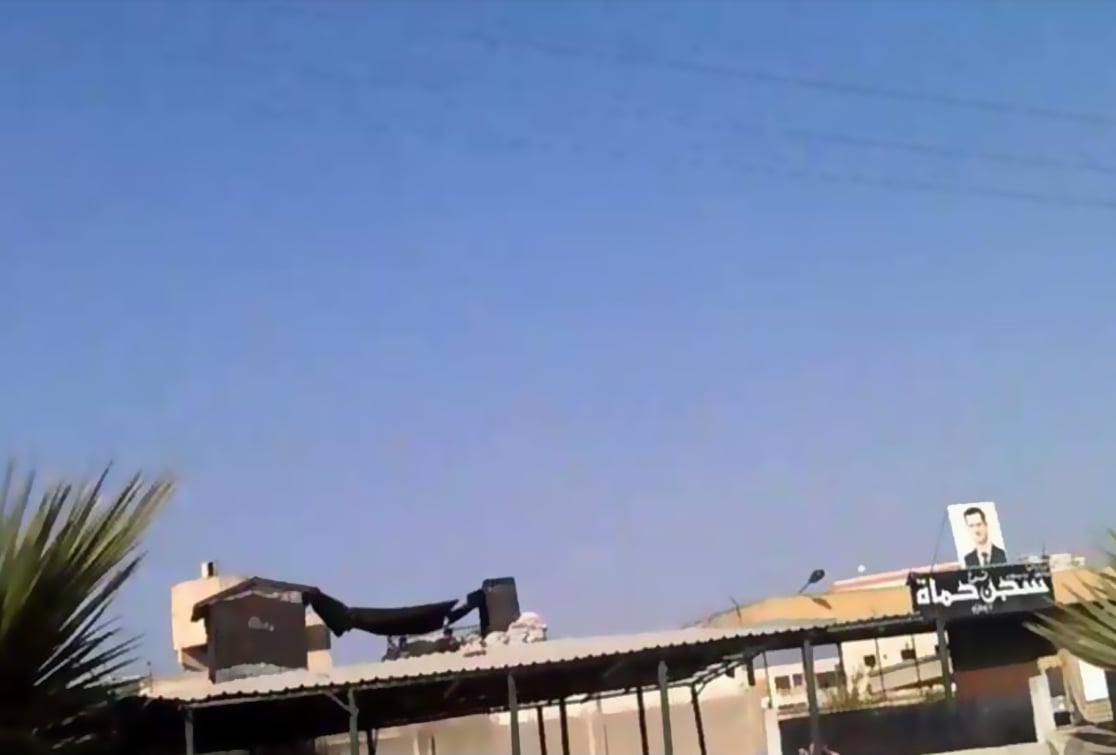
I. Introduction and the Executive Summary:
Hama Central Prison have witnessed several protests by the inside prisoners since 2013. The Governmental Forces detain nearly 762 prisoners from different governorates, such as: Hama, Al Raqqa, and Damascus countryside. The prison is an official civilian detention center located in the eastern area of Hamah city. The detainees’ files are subjected to the court of “Combating Terrorism” in Damascus, in the first place, then the Military Court and the court of the military field.
This protest “stubbornness” is considered as the third one the detainees do in Hama Central prison, in protest against the unfair death sentences provisions issued against them by the anti-terrorism court and the court of the military field in one hand, and the governmental forces and the transfer of convicts to Sidnaya Military Prison on the other hand. We have published earlier a report entitled “The Anti-terrorism Court” issued verdicts against 56 detainees in Hama Central Prison, Amongst 15 death sentences). The Syrian authorities after the end of second protest punished all the prisoners who participated, through transferring them to prisons that are far from their areas such as Tartous Central Prison, because the conditions of detention are worse, and it is difficult for their families to visit the detainees. We mentioned in a previous report about the detainees’ strike (Political Prisoners in Tartous Central Prison on Hunger Strike For their. 13th day so far)
SNHR managed to contact a number of prisoners inside the prison; all the people we talked to them expressed their fear from the governmental forces breaking into the prison for punishment and retaliation; we will do mention in this report only two scenarios due to the similarity of the stories of the detainees.
We recorded the death of one detainee infected with cancer because of the refusal of the prison administration to let him receive treatment. That happened on 5 May 2016, which marks the fourth day of protest inside the prison.
Syria Deeply Weekly Update: Young Film Directors Highlight the People of Zaatari
|
||||||||||||||||||||
|


Global Centre for the Responsibilty to Protect: Statement on Recent Airstrikes Targeting Displaced Civilians and Hospitals in Syria
|
||||||
|