Apple Opposes Court Order to Unlock San Bernardino Shooter’s Phone

By Samuel Miller
Impunity Watch Reporter, North America and Oceania

SAN FRANCISCO, California, United States of America — Apple Inc. CEO Tim Cook said his company will resist a federal judge’s order to obtain encrypted data hidden on a cellphone that belonged to Syed Rizwan Farook, who killed 14 people in San Bernardino last year. A California judge ordered on Tuesday that Apple help the Federal Bureau of Investigation (“FBI”) crack the security code to the phone, so that law enforcement officials can continue their investigation into that horrific attack.

Student Identification for Syed Rizwan Farook, Found at his Home on December 4th, 2015. (Photo Courtesy of US News & World Report)

In a statement released Wednesday, Cook said that an act such as this would undermine encryption by creating a backdoor that could potentially be used on other future devices.

The act sets up a legal showdown between Apple, which said it was eager to protect the privacy of its customers, and the FBI, who say that new encryption technologies hamper their ability to prevent and solve crime. In his statement, Cook called the court order a dangerous and unprecedented step by the federal government.

Cook said the FBI is essentially asking Apple to build a new operating system that could be installed on an iPhone recovered from an investigation. Such software does not exist today, but Cook said that if it did, there would not be a way to guarantee that the software would only be used for investigations.

“The government would have us remove security features and add new capabilities to the operating system, allowing a passcode to be input electronically. This would make it easier to unlock an iPhone by ‘brute force’ trying thousands or millions of combinations with the speed of a modern computer,” Cook wrote in his statement Wednesday.

The federal government’s request was made under the All Writs Act, a law which dates back to 1789, which allows the government to use its authority to issue orders that are not covered by a statute.

The tech industry and the government have long been at odds over how much access law enforcement and national security agencies should be given to private phone data. Although the tech industry says it wants to help, it’s reluctant to give away private information and data to government agencies, arguing that doing so fosters user distrust and raises the risk of hacker attacks.

Since September 2014, data on the latest Apple devices – such as text messages and photographs – have been encrypted by default. If a device is locked, the user’s passcode is required to access the data.

According to information obtained through the investigation by law enforcement officials, the phone stopped sending backup information to the iCloud server on Oct. 19, 2015. Furthermore, in its brief before the courts, the FBI stated it believed that Farook may have disabled the backup information function in order to hide evidence.

Any communications or data linked to the shooting after Oct. 19 would be accessible only through the device, according to the motion.

For more information, please see:

ABC News – Encryption Backdoor for San Bernardino Attacker iPhone Would Create Slippery Slope, Apple Argues – 17 February 2016

BBC News – Apple rejects order to unlock gunman’s phone – 17 February 2016

LA Times – Apple opposes order to help FBI unlock phone belonging to San Bernardino shooter – 17 February 2016

NY Times – Apple Fights Order to Unlock San Bernardino Gunman’s iPhone – 17 February 2016

TIME – Apple Leans on 227-Year-Old Law in Encryption Fight – 17 February 2016

US News and World Report – Apple to FBI: We Won’t Hack Encrypted iPhone of San Bernardino Shooter – 17 February 2016

Wired – Tim Cook Says Apple Will Fight Court Order to Unlock iPhone – 17 February 2016

Haiti Elects Interim President After Former President Stepped Down

By Samuel Miller
Impunity Watch Reporter, North America and Oceania

PORT-AU-PRINCE, Haiti — Legislators in Haiti have chosen an interim president for the country, the first step toward addressing the void left when former president Michel Martelly left office without a successor. Jocelerme Privert, 62, was elected yesterday to be Haiti’s interim president to fill the vacuum following the departure of former President Michel Martelly last week.

Interim President Jocelerme Privert. (Photo Courtesy of CNN)

Interim President Privert vowed to complete elections and hand power over to the future-elected president.

Opposition parties had called for the establishment of an interim administration to oversee fresh elections in the country and had taken to the streets protesting the outcome of the first round of balloting on August 24 last year as well as preventing the staging of the second round of the Presidential Elections on January 24 this year. Haiti canceled the runoff presidential election in January amid violent protests over alleged fraud in the first round and after the opposition candidate boycotted the vote.

In a speech before he was elected, Privert vowed to ‘foster confidence across society, ensure stability, and hold the much-delayed run-off vote as soon as possible”.

Following his election, he proclaimed at the inauguration ceremony, “We have shown that we can transcend our differences and our quarrels in favor of the public interest. We should welcome the peaceful and inclusive nature of this new step in resolving the crisis.”

Privert faces a daunting task in the coming days and weeks: his first job will be to select a consensus prime minister and government.

Additionally, one of the major challenges ahead will be to reach an agreement about who can participate in the election. Many parties rejected the October results that led to a two-man race between opposition candidate Jude Celestin and ruling party favorite Jovenel Moise, citing voter fraud and corruption.

In an interesting note, Privert served as Interior Minister under former President Jean-Bertrand Aristide. It is believed that Privert’s selection could help calm the protests led by factions of Aristide’s Lavalas movement, which believed the elections organized under Martelly were not free and fair.

After former President Aristide was forced from power in 2004 by armed groups, Privert was jailed for two years on charges that he orchestrated a massacre of Aristide’s opponents. The charges were later dropped.

Another opposition party, a breakaway faction of Aristide’s movement called ‘Platform Pitit Dessalines’, called for Privert to create a balanced electoral council acceptable to all sides.

A new election is expected to be held April 24, and new president sworn in three weeks later on May 14th.

For more information, please see:

Jamaica Observer – Haiti elects interim president – 15 February 2016

Latin Post – Haiti Elects Jocelerme Privert as Interim President for the Next 120 Days – 15 February 2016

Reuters – ‘We’re back’ – Aristide allies toast Haiti’s interim president at palace – 15 February 2016

Al Jazeera America – Haiti inaugurates interim president – 14 February 2016

BBC News – Haiti chooses interim president – 14 February 2016

CNN – Haiti gets new president — for 120 days – 14 February 2016

United Press International – Haitian lawmakers choose interim president – 14 February 2016

Britain Charges China With Violating Treaty After Hong Kong Bookseller’s Disappearance

By Christine Khamis  

Impunity Watch Reporter, Asia

BEIJING, China –

Britain has accused China of abducting Hong Kong bookseller Lee Bo to the Chinese mainland. It also claims that China has breached the 1984 Sino-British Joint Declaration under which Hong Kong transitioned from British colonial rule to partial control by Beijing. According to Britain’s Foreign Office, the violation is the first serious breach of the Sino-British treaty.

In a biannual report on Hong Kong affairs, British Foreign Secretary Philip Hammond stated that Mr. Lee was “involuntarily removed” to China’s mainland without due process under Hong Kong law. The report is issued to Britain’s Parliament and reviews the state of Hong Kong and Britain’s ties.

A spokesman for the Chinese Ministry of Foreign Affairs, Hong Lei, has rejected Britain’s report. Mr. Hong states that Hong Kong affairs are a domestic issue for China and that other countries have no power to meddle, according to the New York Times.

Mr. Lee, who holds a British passport, went missing in late December. Chinese police confirmed that he was in China, had traveled there voluntarily, and did not wish to be in contact with Hong Kong officials.

Mr. Lee on a Hong Kong protester’s sign. (Photo courtesy of the International Business Times)

Mr. Lee is associated with publishing house Mighty Current Media. Mighty Current is known for publishing gossip-style books about Chinese leaders. The publisher has released books about topics that many other publishers avoid covering, such as Chinese president Xi Jinping’s love affairs.

Four of Mr. Lee’s colleagues have also disappeared recently, including Gui Minhai, a Swedish citizen who vanished in Thailand in October. In January, Mr. Gui appeared on Chinese news sources stating that he had voluntarily returned to China to make amends for violating his probation there in 2003.

Under the Sino-British treaty, Hong Kong reverted back to China’s control in 1997 but is allowed liberal civil freedoms including freedom of speech, freedom of press, and a separate legal system. However, there has recently been much unrest among citizens of Hong Kong due to China’s increasing infringements on its autonomy. 


For more information, please see:

The Free Press Journal – UK Accuses China of Violating Treaty in HK Bookseller’s Case – 13 February 2016

Associated Press – UK: Hong Kong Bookseller ‘Removed’ in Breach of China Treaty – 12 February 2016.

The Hong Kong Standard – UK accuses China of violating pact over bookseller Lee’s removal – 12 February 2016

The New York Times – UK: Hong Kong Bookseller ‘Removed’ in Breach of China Treaty – 12 February 2016

The New York Times – Britain Accuses China of Violating Treaty in Hong Kong Bookseller’s Case – 12 February 2016

The Day the Press Stood Still

By Tyler Campbell

Impunity Watch Reporter, Africa

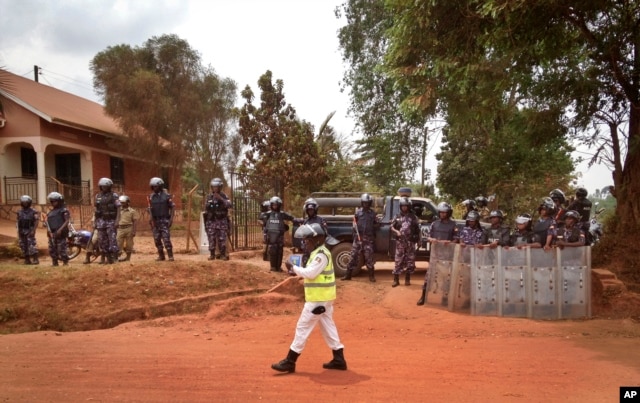
CONAKRY, Guinea ­– This Tuesday, 5 media outlets in Guinea joined together to create a media blackout day in remembrance and in protest to the death of fellow journalist, El Hadj Mohamed Diallo. The black-out was intended to draw attention to the dangerous climate that Guinea journalists work in on a daily basis. At this point it is not clear if Diallo was targeted for being a journalist or just caught in the cross fire during a politically motivated uprising in the nation’s capital.

Media Outlets Closed during Black-Out for Slain Journalist (Image Courtesy Yahoo News)

Before his death, Diallo was covering the opposition party’s vice president, Mamadou Bah Oury’s attempt to enter his office after he had been removed from that office by supporters of Union of Democratic Forces of Guinea (UFDG) earlier that day. The opposition party and their ex-vice president are blaming each other for the violence that broke out during the walk in.

The risk involved with being a journalist in Guinea cannot be chalked up to mere government oppression. In fact the government is currently investigating the death of Diallo. However, it is not unusual for journalists to be targeted by different segments of the Guinea public. There are wide reports of journalists being beaten by police officers and media outlets and radio stations being told to not run stories.

One notable instance of journalist oppression happened during the 2014 Ebola crisis. One journalist and two media workers lost their lives while trying to cover the crisis in Guinea. This media team lost their lives not to the disease they were covering but for covering the story. The three went missing and were later found murdered in a septic tank. It is in this environment that Guinea journalist are risking their lives.

In response to the murder of Diallo the authorities in Guinea have arrested 17 opposition party members. Why these 17 members were arrested and what they are being charged with is unclear at this time.

Diallo worked for Guinee7 news and wrote for the weekly L’independent. He is survived by his wife and younger daughter.

The Guardian ­– Guinea’s media holds ‘press-free day’ over shooting of journalist in clashes –9 Feb 2016

AfricaNews — Guinea: 17 arrested over journalist’s death – 12 Feb. 2016

Bloomberg Business — Guinea Reporter Killed During Clash Between Opposition Party – 9 Feb 2016

All Africa — Guinea: Media Blackout in Memory of Slain Journalist — 9 Feb. 2016

Pentagon Releases Photos Of Alleged Detainee Abuse In Iraq, Afghanistan

By Samuel Miller
Impunity Watch Reporter, North America and Oceania

WASHINGTON, D.C., United States of America — Last Friday, the Pentagon released nearly 200 photographs related to its investigation of alleged abuse of detainees held by the U.S. military in Iraq and Afghanistan. However, the military is continuing to block the disclosure of about 1,800 other photos from the same criminal investigations, saying that their release would endanger American service members serving abroad.

Two Photos Detailing Some of the Alleged Abuses at the Hands of U.S. Service-members. (Photo Courtesy of NY Times)

Taken more than a decade ago during the Bush administration, the photographs consist largely of close-up views of scrapes and bruises on detainees’ bodies.

The photos released Friday show close ups of arms, legs, feet, backs and heads, many with visible injuries and rulers or coins held up next to them for comparison. A few photos where faces would be visible have the faces blacked; furthermore, a few full-body photos show detainees kneeling or with their hands behind their backs.

The photographs were tied to U.S. military investigations that looked into reports of alleged abuse. Of the 56 allegations tied to the photographs, subsequent investigations substantiated the claims in 14 of the cases, which resulted in disciplinary action against 65 service-members, the Defense Department said in a prepared statement.

In 2003, the ACLU filed a Freedom of Information Act request for the entire cache of photos. The organization sued in 2004 after the gruesome photos of Abu Ghraib prison leaked to the media. In 2009, the Obama administration promised to release the photos, but Congress passed a law that allowed them to remain classified if the Defense secretary certified their release would jeopardize national security.

The American Civil Liberties Union hailed the release of the photos, but said the decision to hold back the remaining 1,800 images could mislead the public about the true scope of what happened.

“The disclosure of these photos is long overdue, but the photos released today are almost certainly the most innocuous of the 2,000 that were being withheld,” ACLU said in a statement released Friday. “From the nearly 6,000 reports, investigations, emails, and other documents the government has been forced to release to us in the course of this litigation, we have found more than 100 documents that either reference photos related to cases of abuse or actually contain photos that were redacted before they got to us.”

In one example, identified as an U.S. Army Criminal Investigation Command (‘CID’) case from 2004, black and white photographs depict a detainee holding a pen to his shin just under an area that appears slightly discolored. CID concluded there was not enough evidence to determine whether the detainee, whose name was redacted, had been abused by U.S. or coalition forces.

Investigators did, however, determine the detainee was likely abused by Iraqi Civil Defense troops.

For more information, please see:

AllGov – Pentagon Blocks Release of 1,800 Detainee Abuse Photos, Lets Out 198 – 6 February 2016

IB Times – Pentagon Releases Nearly 200 Photos Showing Detainee Abuse In Iraq, Afghanistan – 6 February 2016

Military.com – Pentagon Releases Photos of Alleged Prison Abuses in Iraq, Afghanistan – 6 February 2016

CNN – Pentagon releases 198 photos of detainees – 5 February 2016

NY Times – Pentagon Releases Small Portion of Photos From Detainee Abuse Cases – 5 February 2016

The Hill – Pentagon releases 198 photos of alleged detainee abuse – 5 February 2016

The Intercept – PENTAGON RELEASES PHOTOS OF DETAINEE ABUSE IN IRAQ AND AFGHANISTAN – 5 February 2016