Voices for Sudan: Focus on outcome of the UN Human Rights Council 30th Session in Geneva

VRS Roundtable Discussion Forum
  Focus on the Outcome of UN Human Rights Council 30th Session 

(Disappointment over Sudan & South Sudan)

Thursday October 22, 2015

10:30 a.m – 12 noon


1400 16th Street N.W # 430

Washington, DC 20036

Conference Room, 4th Floor
 Special Guest Speakers (invited):

Clement Nyaletsossi Voule,Program Manager States in Transition, Head of African Diplomacy (Via Skype)

Office of United States Special Envoy to

Sudan & South Sudan

Hannah Watson, United Kingdom Counselor to the United States


Featured Speakers 
Hanadi Elhadi Board Member
(Focus on Sudan and women empowerment)
Emanuella Bringi, VFS Executive Assistant and Diaspora Progrm Coordinator
(Focus on youth engagement and role of new generation to end impunity)
(Via Skype from Canada)


Moderator


Katie Campo

Program Officer

Africa Team

National Endowment for Democracy


Opening Remarks

Jimmy Mulla

President & Co-Founder, Voices for Sudan.

RSVP: E-mail at ebringi@voicesforsudan.org. For further information e-mail info@voicesforsudan.org
                                              
Bio of Speakers

JIMMY MULLA
Jimmy Mulla’s professional career has shifted between the technical field, research, and important Sudanese human rights advocacy work. He is an engineer by trade. Currently Jimmy is the president and Co-founder of Voices for Sudan (VFS), formerly known as the Southern Sudanese Voice for Freedom (SSVF). Mr. Mulla is a long time Sudan activist and has led a wide range of advocacy and awareness-raising efforts for the North-South conflict including Nuba Mountains & Blue Nile, Darfur genocide, Eastern Sudan and other Sudan issues. He was the founding member and president of Southern Sudanese Voice for Freedom (SSVF). SSVF played an instrumental role in the passage of the U.S. Sudan Peace Act and the appointment of a U.S. Special Envoy to Sudan, which re-energized the civil war peace talks; helped raise awareness of the genocide in Darfur; and helped facilitate an aggressive and successful divestment campaign that raises awareness of companies that do business with Sudan. Mulla has been on CNN, Voice of America TV and Radio, Al-Jazeera, Al-Hura and other major news networks.

Katie Campo Program Officer on the Africa team at the National Endowment for Democracy. Katie manages NED’s grant-making programs in both Sudan and South Sudan. Prior to joining NED, Katie was a Political Officer at the U.S. Embassy in Khartoum, where she specialized in Darfur. Katie holds a BA in International Relations from Brown University and an MA in Journalism from Columbia University. She speaks French, Arabic, and Chinese.
Hanadi Elhadi
Hanadi Elhadi, VFS Board Member
Hanadi Elhadi is a trained Chemist with a degree in pharmacology from Cairo University in Egypt, and an Associate degree from Howard Community College in Maryland. She served as a Quality Control chemist, and a student advisor. She is bilingual in English and Arabic, a skill that used in her work as interpreter and an activist on the issues of women empowerment, child protection and political lobbying for democracy and human rights in her country of origin, Sudan.  She helped found the Broad National Front, a coalition of Sudanese parties and organizations working on change in Sudan.

Emanuella Bringi.
Emanuella Bringi is Voices for Sudan’s Executive Assistant & Diaspora Training Program Coordinator. Ms. Bringi is also currently a National Youth Advisory Board member for a project titled Voices against Violence: Youth Stories Create Change; & a Leader for an initiative titled: Generation of Leaders: South Sudan.As a young leader in her community, Emanuella’s vision is to empower the Sudanese people from a youth perspective. As generations come and go, the need for support from all angles does not change; the visionaries of today and the experts of yesterday must collide and create a powerful force to bring peace to our regions.Emanuella holds a diploma in Social Service Work – Immigrant and Refugees from Seneca College, and a degree in Multicultural and Indigenous Studies from York University. During her studies at York University she held both the Student Life & Advocacy as well as the President position for the York United Black Students’ Alliance; YUBSA is a student run Pan-African organization established to help foster unity and togetherness in the Black community at York University and surrounding areas.
Special Guest Speaker


Clement Voulé – Programme Manager (States in Transition) and Head of African Advocacy
Clement leads our work to support defenders in States in transition and at the African Commission on Human and Peoples’ Rights. Before joining ISHR in 2006, Clement was Secretary-General of Amnesty International Togo and head of the Togolese Coalition of HRDs. Clement is Vice-Chair of the West African HRDs Network and a member of the African Commission Working Group on Extractive Industries, Environment & Human Rights Violation. “Mr. Voule “a long time activist and lawyer, completed his postgraduate studies at the University of Nantes in France. Before joining ISHR in May 2006, he was Secretary General of Amnesty International in Togo (2000-2002) and has occupied several other positions within the organization, such as head of the training program, head of the lobbying team and coordinator of the jurists network and of the campaign for the International Criminal Court in Togo. He was a founding member and Secretary General of the Togolese Coalition of Human Rights Defenders from 2002 and program coordinator of the West African Human Rights Defenders network from April 2005.” [1]

Syria Deeply: Back to School in Aleppo’s Basements

WEEKLY UPDATE
October 16, 2015

Dear Readers,

Welcome to the weekly Syria Deeply newsletter. We’ve rounded up the most important stories and developments about Syria and the Syrians in order to bring you valuable news and analysis.

Back to School in Aleppo’s Basements

As students return to classes this month in the rebel-held areas of Aleppo, they won’t be heading back to the classrooms they left last year. Instead, they’ll be receiving lessons in basements and other “secure areas” across the devastated city. Syria Deeply spoke with educators, students and parents about Aleppo’s deteriorating security situation and its effect on education.

Talking to the Yarmouk Martyrs Brigade

Syria Deeply takes a look at the evolution of the Yarmouk Martyrs Brigade and the group’s recent turn toward the Islamic State, talking to brigade members and locals in the Yarmouk Valley in southwestern Deraa.

Rebel Unity in the Face of Russian Intervention?

Though many rebel groups are united by sentiment in their condemnation of the Russian intervention in Syria, writes analyst Aymenn al-Tamimi in his debut article for Syria Deeply, actual unity remains a remote prospect – even if closer military cooperation can be expected.

More Recent Stories to Look Out for at Syria Deeply

Illegal Degrees for Illegal Emigration
My Syrian Diary Part 43
Should the U.S. Cooperate with Russia on Syria and ISIS?

Find our new reporting and analysis every weekday at www.syriadeeply.org. You can reach our team with any comments or suggestions at info@newsdeeply.org.

Peace and Security Report 10/16/2015

PEACE & SECURITY REPORT
IPSI’s Peace & Security Report (PSR) is a concise weekly e-publication intended to brief busy students, academics, advocates, and conflict management practitioners on pertinent global news, events, and trends. The PSR empowers us all to take a step back from our immediate deadlines each Friday and gain a greater understanding of the week’s global events.
Featured Article
Venezuela Elections 2015 – No Room for Credible Observation
ICG
On 6 December, Venezuela faces its most competitive election this century, and one that will play a crucial part in determining whether the country’s severe political, social and economic crisis can be resolved non-violently. For the first time since 2003, opinion polls show the opposition leading by around 20 points, putting it on course to take control of the 167-seat National Assembly. So concerned is President Nicolás Maduro at the prospect that he has threatened to take to the streets to “defend the revolution” if the opposition Democratic Unity (MUD) alliance wins a majority.
The danger is clear. Credible international election observation would help minimise the risk of a disputed result, but the government has once again refused to accept observer missions, dismissing them as a form of interference in its internal affairs. Instead, it will allow only “accompaniment” – a highly restricted form of observation which in the past has amounted to little more than an uncritical endorsement of the electoral authority (CNE).
 
Africa

CAMEROON: U.S. to deploy against Boko Haram
On Wednesday, President Obama informed Congress of the deployment of 300 U.S. soldiers to Cameroon as part of a mission to defeat Boko Haram. The U.S. force will provide airborne intelligence, surveillance, and reconnaissance to the regional coalition. An advanced contingent comprising of 90 soldiers arrived in Cameroon on Monday, and the remainder will be deployed following Wednesday’s announcement. The soldiers will remain in Cameroon until they are “no longer needed.” The U.S. contingent is expected to offer key intelligence and help the Multinational Joint Task Force defeat the remainder of Boko Haram’s forces and target its leaders.Comment: Due to a more effective campaign by the Nigerian military, Boko Haram has become increasingly active across the border in Cameroon, Chad, and Niger. At least 3,500 civilians have been killed by Boko Haram in Niger, Nigeria, Chad, and Cameroon this year. Last year, the U.S. deployed surveillance drones to Nigeria to aid in the search for the 200 kidnapped Chibok schoolgirls. (Al Jazeera,BBC,Reuters)
      
GUINEA: Presidential vote deemed valid
On Tuesday, the European Union announced that Sunday’s vote was relatively free and fair. Despite a number of logistical difficulties, the election was conducted without interference. Results are not expected to be released until the end of the week; however, opposition leader Cellou Dalein Diallo withdrew from the election on Wednesday. Diallo accused the President Alpha Conde of ballot-box stuffing, intimidating voters, and closing 400 polling stations. Diallo’s withdraw will not halt the confirmation of Conde if he wins, but observers fear it will tarnish the legitimacy of the election and eliminate the need for a run-off election between Conde and Diallo. Violence on Friday resulted in two deaths and more than 30 injuries in Conakry. Protests began after President Conde refused to postpone the election, denying opposition claims that the results would be rigged in his favor. The election on Sunday was peaceful, but new protests began on Wednesday in Conakry. The police fired tear gas and warning shots at protesters who were building barricades. Comment: Sunday’s election is only the second democratic presidential election in Guinea’s history. The first was held in 2010, ending a period of authoritarian rule that began at Guinea’s independence in 1958. Violence during legislative elections in 2013 resulted in dozens of deaths. (Al Jazeera, Al Jazeera, BBC,ReutersReuters , UN News Centre)


SOUTH SUDAN: Ugandan military to leave
On Monday, the Ugandan military announced that it will leave South Sudan in accordance with the cease-fire agreement signed at the end of August between the South Sudanese government and rebel forces. The agreement called for the removal of all foreign forces from South Sudan. Uganda ignored the original deadline of October 10, but will now begin removing its forces, beginning as early as the end of the week. It expects to complete the process by the end of October. Roughly 3,000 Ugandan soldiers are deployed in South Sudan, supporting the government throughout the conflict. The Ugandan government has claims that their intervention has prevented even greater loss of life. Comment: South Sudan has been in a state of civil war since 2013, resulting in tens of thousands of casualties. A ceasefire agreement signed in August resulted in decreased fighting, but has been violated by both sides through small-scale skirmishes. The removal of Ugandan forces is a key victory for the rebels, but is unlikely a large enough incentive to prevent a return to fighting. (BBC,Reuters,Wall Street Journal)
Researched/Written by Colin Treverton
Americas 

CHILE: Thousands of indigenous Mapuches march on Chilean capital
On Columbus Day, nearly 5,000 people marched in support of the indigenous Mapuches who are protesting the jailing of several indigenous leaders, and demanding the ‘demilitarization’ of the southern region of Araucanía. Chilean-owned forestry companies are currently controlling a large portion of Araucanía, lands the Mapuches consider theirs by ancestral right. Though the march began nonviolently, clashes between groups of hooded militants and police began when the columns of protestors reached La Moneda, the Chilean government’s seat. Some protestors attempted to remove the metal fences surrounding the building, at which point the police fired at them with tear gas and water cannons. Hooded individuals retaliated with rocks and Molotov cocktails. Comments: The conflict between the Mapuches and Chilean government is long-lived, and has a history of violence. In the past fifteen years, indigenous militants have been arrested for arson after setting fire to vehicles, highway tollbooths, and lumber shipments. A number of Mapuche activists and police officers have also died in past clashes. The Mapuches have been struggling to reclaim their land since it taken from them in the 19th century as part of a “pacification” campaign. Today, Mapuches number approximately 700,000 of Chile’s total population of 17 million. (El Comercio, El Nuevo Herald,Agencia EFE).
 
GUATEMALA: Village mayor lynched
On Sunday afternoon, a mob killed Basilio Juracán, Mayor of Concepción, a town 182 kilometers outside of Guatemala City, after he allegedly ordered an attack on a political rival. Earlier that morning, former-mayor Lorenzo Sequec had been driving along a local road with his family when ten unidentified gunmen opened fire on the vehicle. Sequec’s seventeen year-old daughter and sixteen year-old niece were killed; Sequec and another four members of his family were injured. As news of the attack spread through the community, a mob formed looking for Mayor Juracán, who was believed to have ordered the attack after the former-mayor accused him of mismanagement and demanded an audit of the village’s finances. Hundreds of residents burned down at least six buildings and multiple cars, said a local police report, before they found Juracán and lynched him. Comments: Guatemala is one of the most violent countries in Latin America. Official state figures report that there are at least fifteen assassinations in the country per day; however, political lynching is rare. (República, AP, BBC, teleSUR,).  
 
PERU: Defense minister announces investigation into military collusion with drug trafficking
On Wednesday, Peru’s defense minister announced that the military’s inspector general is going to initiate a probe into alleged military corruption in the cocaine trade. Smugglers in the Apurimac, Ene, and Mantaro river valleys have established an “air bridge” to Bolivia that delivers more than a ton of cocaine every day. Each planeload is worth approximately USD 7.2 million. The remote valley region is controlled by Peru’s military, which has been accused of ignoring the smuggling in return for bribes. In an interview with AP, one accused narco-pilot said that some local military officers charge USD 10,000 per plane to allow them to take off. Anti-corruption nonprofit Transparency International’s board chairman Ugaz says that military corruption and cooperation with the drug industry is an open secret in Peru. Comment: The river valley has been under a state of emergency for the past nine years due to the prevalence of Shining Path rebels, who are active participants in the drug trade. They are only one of fifteen narcotic trafficking groups operating out of the valley. Since 2011, more than 30 police officers and soldiers have been killed in clashes with Shining Path, while the rebel group has lost 60 fighters. (AP,Chicago Tribune, SIPSE).
Researched/Written by

East Asia & Pacific
INDONESIA: Three churches attacked
On Tuesday, a mob of people in a devoutly Muslim province of Indonesia attacked and burned down a number of churches in the Aceh province. One man died in the incident; he is thought to be one of the instigators. The attack took place in a Christian enclave of the predominantly Islamic province; however, many Christians have since fled fearing violence. Last week a group, Aceh Youth Concerned for Islam, demonstrated outside of the churches and demanded the government tear down the churches due to their lack of a license. The government initially agreed to the demonstrator demands, but no action was taken. President Joko Widodo called for calm and an end to the religious violence. Comment: The Aceh province is the only province in Indonesia to codify Sharia Law. There have been previous attacks on churches in Aceh, and in July, a Mosque was burned in the majority Christian province of Papua.(NYTBBCAsia Times)
MYANMAR: Ceasefire signed with eight rebel groups
On Thursday, Myanmar’s government signed a ceasefire agreement with eight small rebel groups after more than two years of negotiations and nearly six decades of fighting; however, seven other more powerful rebel groups have refused to sign onto the agreement. President Thein Sein and members of the represented groups signed the ceasefire at a ceremony in Myanmar’s administrative capital, Naypyitaw. According to sources, violence has left tens of thousands dead over the course of the conflict, displaced hundreds of thousands, and has been used to justify the military’s hold on political power for the past half century. Comment: According to analysts, resolving the conflict is essential to Myanmar’s attempts to reform its political structure and settle ethnic disputes. Myanmar’s President Thein Sein called it a “historic day for Myanmar,” and the chairman of one of the armed groups called it “a new page in history.” Although this cannot be considered a nationwide ceasefire, analysts say that it could pave the way for more a comprehensive political resolution. (BBC, Reuters, AP, WSJ)
PHILIPPINES: Foreign Ministry backs U.S. plan against Chinese territorial claims
On Tuesday, Philippines announced their support for a U.S. naval maneuver in which U.S. warships would sail within 12 nautical miles of an island claimed by China in the South China Sea. Philippines supports the plan, as it does not recognize China’s claim to the artificially constructed island in the Spratly Islands. The U.S. and Philippines have stated that the planned maneuver will ensure free access to the key trade routes in the region and is in line with international and regional law for access to the seas. Additionally, the Philippines and U.S. believe such a move will undermine China’s claim that artificial islands constitute territory and the extension of its sovereignty into the South China Sea. The plan was announced last week by the U.S. Navy, and is expected to be carried out within two weeks. Comment: Brunei, China, Malaysia, Philippines, Vietnam, and Taiwan claim part or all of the South China Sea as their sovereign territory. Philippines has filed a case against China at the International Court of Justice to halt China’s expansionist activities in the South China Sea. (The NationPhilippine StarWashington Times)
Researched/Written by Stephanie Billingham
Europe & Central Asia

GERMANY: Large protest against free trade deals
On Saturday, an estimated 100,000- 250,000 people marched in Berlin to protest the free trade proposal of the Transatlantic Trade and Investment Partnership (TTIP) between the EU, the United States, and Canada. An alliance of environmental groups, German opposition groups, and non-profit charities shuttled hundreds of buses to the capital in joint efforts to organize the rally. Government officials defended the deal, stating that the trade pact would boost the German economy, create jobs, and lower trade barriers.Comment: Protesters are concerned that the TTIP will support corporations at the expense of consumers, lower health and environmental standards, and compromise animal welfare standards through growth-enhancing hormones. (Mint Press News, EuroNews,BBC)
 
TURKEY: Bombings kill 97 during peace rally in Ankara
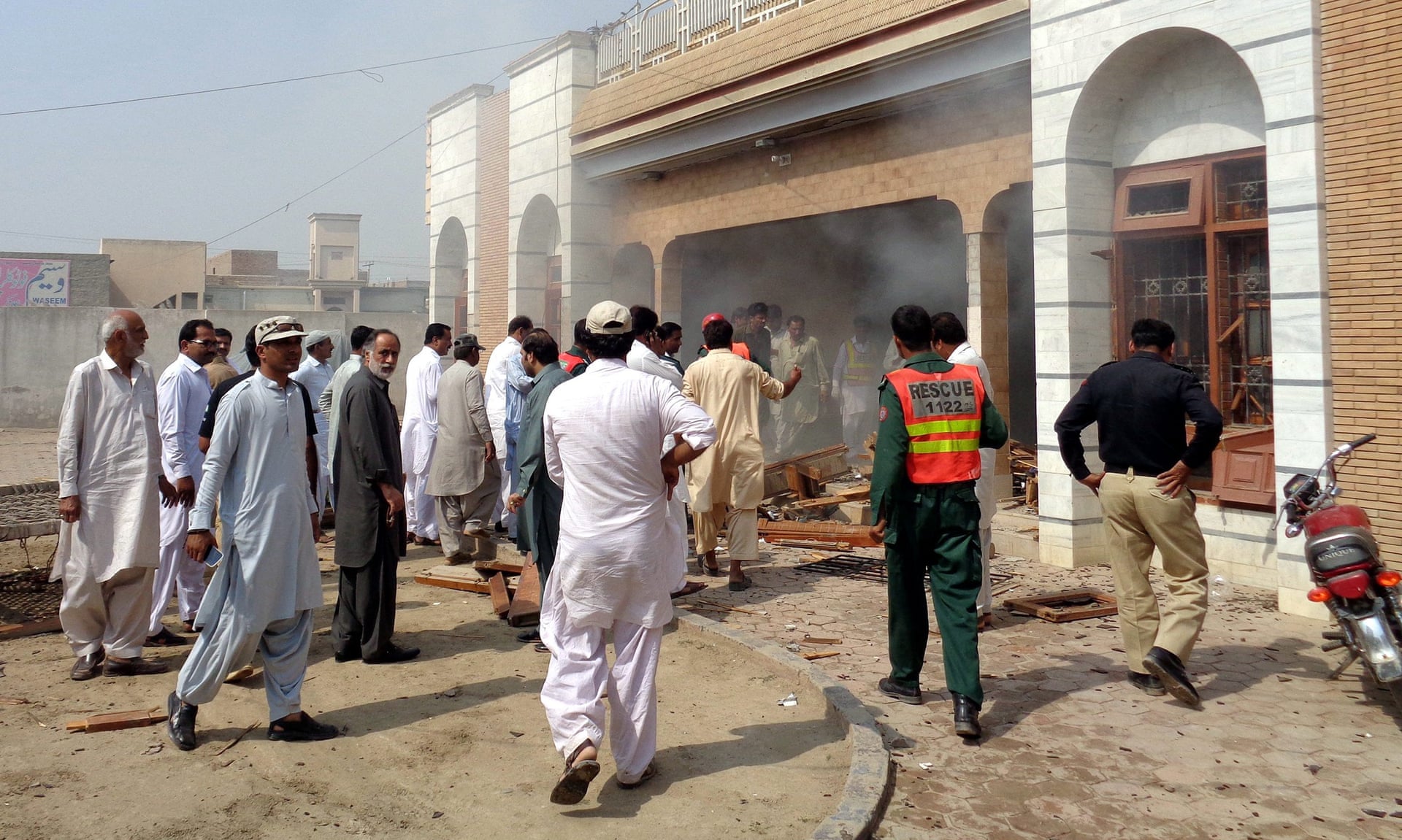
Two explosions blasted through a crowd of peaceful demonstrators on Saturday in Ankara, killing at least 97 people and injuring nearly 250 others. The Turkish government has not assigned responsibility to a group for the attack, but Prime Minister Ahmet Davutoglu suggested that two male suicide bombers from the self-proclaimed Islamic State (IS) group are the leading suspects in a criminal investigation. Comment: The peace rally was organized by members of the pro-Kurdish People’s Democratic Party to call for an end to the conflict between the Kurdistan Workers’ Party and the Turkish government. On Wednesday, the Turkish Interior Ministry announced the dismissal of the police chief and the head of the city’s police intelligence and security departments, citing a lack of security for the rally. (Hurriyet Daily News (Turkey), Al Jazeera, Reuters, BBC)
REGIONAL: EU collaborates with Turkey to deal with migrant crisis
On Thursday, 28 leaders from the European Union and Turkish government representatives met in Brussels to discuss long-term strategies for supporting the refugee population by providing adequate humanitarian aid, security protection around the borders, and preventing criminal smuggling activities. The EU summit meeting concluded with an “action plan” with Turkey and an emergency fund of about EUR 400 millionthat will increase measures to manage the flow of migrant refugees into Europe. Comment: Nearly 600,000 migrants have reached the EU by sea so far this year, with an estimated 3,000 drowning in the process. Turkey already houses roughly two million refugees within its borders, and under the new action plan, will build camps with EU funding to house two million more.  (VOA News, IBT, Reuters, BBC)
 Researched/Written by Jessica Gaytan
Middle East & North Africa

IRAN: Supreme leaders approve nuclear deal
On Tuesday, the Iranian Parliament approved the nuclear deal that was struck with the international community (P5 +1) in July. Before it could become law, the bill needed to be ratified by Iran’s Guardian Council, which is tasked with ensuring that drafted legislation does not contradict Islamic laws. On Wednesday, the Guardian Council gave the deal their final approval stating that they did not find the nuclear agreement “to be against religions law and the constitution.” In return for curbing its nuclear activities, as set forth under the Joint Comprehensive Plan of Action (JCPOA), international sanctions, which have crippled the Iranian economy, will be lifted.  Iran’s President Hassan Rouhani told state media sources on Tuesday that he expected sanctions to be lifted within “no more than a month or two” of the JCPOA being fully implemented. Comment: Although the deal has been vehemently opposed by hardliners in both the U.S. and Iran, the nuclear deal has passed in both the U.S. and Iranian legislative bodies. While the exact stance of the supreme leader Ayatollah Ali Khamenei is not known, he has commended the work of Rouhani’s negotiating team on their efforts. Despite the historic agreement, the Supreme leader vowed that it would not change his government’s stance towards the United States. This news is punctuated by recent state media reports that Iran has successfully test fired its new generation of long range missiles which could potentially be a violation of UN security council resolution. (BBC,CNN, Reuters, CNN)
ISRAEL: Security measures increase as violence persists
On Tuesday, Palestinian assailants stabbed three more Israelis in Jerusalem.  Over the past two weeks, a total of seven Israelis have been killed in random attacks, and an estimated 30 Palestinians have been killed in violent clashes with authorities. On Wednesday, the Israeli security cabinet approved the expansion of the national police, extra guards on public transportation, and the deployment of army units to sensitive areas along the barrier that separates the West Bank from Israel. Israeli authorities also set up roadblocks and checkpoints in Arab neighborhoods of East Jerusalem. Additionally, the cabinet announced that the homes of Palestinians who attacked Israelis would be demolished within days and never rebuilt, and their families’ right to live in Jerusalem would be taken away. Comment: The cause of recent turmoil stems from what Palestinians see as Israeli encroachment on the Al-Aqsa Mosque in Jerusalem’s Old City, which is holy to both Jews and Muslims.  Human Rights Watch warned that locking down parts of East Jerusalem would “infringe upon the freedom of movement of all Palestinian residents” and is not a tailored response to specific security concerns. Analysts note that these recent measures are not helping to ease tensions.(CNN,BBC,NYT,Al Jazeera America)
SYRIA: U.S. drops 50 tons of ammo for Syrian rebels
Last week, the United States decided to abandon its USD 500 million “train and equip” mission in Syria; this weekend, the U.S. publicly announced a new strategy to provide military aid for established anti-self-proclaimed Islamic State (IS) rebels in Syria. Washington said that the first recipient of the equipment was not to the Kurds but “Arab groups” whose leaders were vetted by the U.S. On Monday Kurdish fighters announced a new alliance with a small group of Arab fighters and Washington announced that it could direct support to Arab commanders who were cooperating with the Kurds. Comment: Analysts note that the decision to deliver aid to Arab factions over Kurdish ones could indicate unresolved tensions between Turkey and the U.S. over how much support should be given to the Kurds. Turkey fears Kurdish separatism to be a greater security threat than IS. (Al Jazeera America,CNN,Reuters)
Researched/Written by Josh Gazdik
South Asia

AFGHANISTAN: U.S. to halt withdrawal of troops
On Thursday, President Obama announced a halt to the withdrawal of U.S. troops from Afghanistan, leaving 5,500 U.S. troops through 2017. U.S. officials stressed the combat mission is over and the troops are strictly for counterterrorism operations and for training/advising of Afghan forces. The decision marks a policy shift for President Obama who said all troops except an embassy force of 1,000 would be removed by the end of his presidency. President Ghani has been very vocal about his desire for the U.S. troops to remain in Afghanistan for training and protection purposes.Comment: The announcement comes two weeks after the Taliban seized Kunduz, the largest city captured since 2001.The Afghan government has since retaken control of Kunduz. (BBCNYTCNN)
 
MALDIVES: Defense minister dismissed
On Wednesday, President Abdulla Yameen fired Defense Minister Jaleel, and although the dismissal came with no specific statement of cause, a national security shake up is currently underway following a September 28 assassination attempt on President Yameen. The president escaped unscathed from the attack, but his wife and two officials were injured in the blast. Two members of the military have since been arrested. Following the attack, the government cracked down on political dissent and deployed military troops to the country’s capital Male. Comment: President Yameen faces international criticism for jailing his political opponents. The previous president, President Mohamed Nasheed, was the first democratically elected president and is currently jailed on terrorism charges.   (ReutersEconomic TimesHaveeru)
 
SRI LANKA: Tamil prisoners begin hunger strike
On Monday, an estimated 200 Tamil prisoners held in jails across Sri Lanka began a hunger strike in protest of their continued imprisonment. Many of the prisoners are associated with the Tamil Tigers and are being held by the government under the Terrorism Protection Act (TPA) which allows the government to hold prisoners suspected of terrorism for up to 18 months without being charged; some prisoners have reportedly been held since 1997 with no action on their case. The prisoners said they will not break the fast until an acceptable solution is reached, and they have written a letter to the Sri Lankan president asking for their release. Tamil politicians are asking the government to release the prisoners or bring their cases to trial. Comment:  Last year, the government acknowledged the detention of 258 prisoners being held under the TPA, although only 54 of the prisoners have been convicted of a crime. Human rights groups have claimed that over 600 prisoners are held in secret jails across the country and many have called for an investigation into the national prison system (BBC, Asian Tribune, NDTV)


ICTJ | World Report October 2015 – Transitional Justice News and Analysis

In Focus

Devil Is in the Detail of Colombian Justice DealDevil Is in the Detail of Colombian Justice DealIn this op-ed, ICTJ Vice President Paul Seils analyzes the criminal justice agreement announced by the Government of Colombia and the FARC and discusses what aspects of the deal need clarification to ensure that it is capable of delivering the kind of truth and justice that victims of Colombia’s armed conflict deserve.

Read More…

World Report

AFRICAIn South Africa, the African National Congress passed a resolution to withdraw from the International Criminal Court (ICC). The ICC prosecutor unveiled 60 new war crimes charges – including using child soldiers and keeping sex slaves – against Dominic Ongwen, a former commander of Uganda‘s Lord’s Resistance Army. ICC judges refused to cut the 14-year sentence of former Democratic Republic of Congo militia leader Thomas Lubanga, who was convicted for using child soldiers. Less than half of the candidates running in this month’s presidential election in Côte d’Ivoire signed a good conduct pledge designed to help avert a repeat of the political violence that followed the country’s 2010 election. A militia leader accused of destroying historic mausoleums in Mali was arrested and transferred to the ICC.

Read More…

AMERICASIn Colombia, a former army colonel charged with the murders of 32 civilians said he wants his trial to be transferred to a transitional justice court if and when a peace deal is signed, while a prosecutor asked the Supreme Court to open a criminal investigation into former president Alvaro Uribe’s alleged complicity in a 1997 paramilitary massacre. The judge and prosecutor in the genocide trial ofGuatemala‘s former ruler, Efraín Ríos Montt – former Judge Iris Yassmin Barrios Aguilar and former Attorney General Claudia Paz y Paz Bailey – were awarded the Civil Courage Prize for human rights work. Brazil‘s electoral authority found grounds to investigate President Dilma Rousseff for allegedly using donations from companies involved in a corruption scheme to finance her 2014 re-election campaign. The president of Mexico told the families of the 43 college students from Ayotzinapa who were disappeared one year ago that he would appoint a new special prosecutor to investigate disappearances in the country.

Read More…

ASIAAt the request of Medecins Sans Frontieres (MSF), an international panel of experts is ready to investigate the bombing of a MSF hospital in Kunduz, Afghanistan by US forces, but is waiting on permission from the US and Afghan governments. Nepal‘s parliament promulgated the country’s new constitution, and MP Sharma Oli was elected prime minister. The UN Human Rights Council adoptedby consensus a resolution aimed at achieving justice and accountability for crimes committed during Sri Lanka‘s civil war with Tamil rebels, and the Sri Lankan goverment signaled that it will establish a credible judicial process involving foreign judges and prosecutors as called for in the resolution. Meanwhile, four Sri Lankan soldiers were sentenced to 25 years in prison for the rape of a Tamil woman. A museum in China published a collection of confessions by Japanese war criminals during World War II.

Read More…

EUROPEEuropean Union foreign ministers criticized a planned referendum by the Republika Srpska that would challenge the authority of Bosnia and Herzegovina‘s state judiciary. In his address to the UN General Assembly, the president of Serbia criticized Kosovo’s bid to join UNESCO and called on the international community to do more to protect Serbian cultural heritage in the former Serbian province.Kosovo’s foreign minister said that the government has nothing to hide from a newly created war crimes court that will try former Kosovo Liberation Army fighters. Croatia’s security and intelligence agency transferred secret service documents dating from 1937 to 1990 to the state archives, where they can be viewed by the public for the first time. The ICC prosecutor asked judges to open a full investigation into Georgia‘s 2008 conflict with Russia over the breakaway Georgian province of South Ossetia.

Read More…

MENATunisia’s National Dialogue Quartet – a coalition of workers, employers, human rights activists and lawyers – won the Nobel Peace Prize for helping to steer the country towards democracy. A judge inLebanon opened an investigation into three corruption complaints submitted by activists after protests over garbage collection grew into a larger movement calling for institutional reforms to increase accountability. Amid a wave of violence, Israel set up road blocks in Palestinian sections of Jerusalem.Algeria’s president credited the 2005 Charter for Peace and National Reconciliation – which provided amnesty to armed rebels and exonerated government forces of abuse allegations – with protecting the country from instability, but ten years after the end of the country’s civil war, victims are still calling for justice. In Egypt, former president Hosni Mubarak’s two sons, who were convicted of embezzlement and face additional charges, were released by an Egyptian court after it found that their time in temporary detention exceeded the legal limit.

Read More…

Publications

Squaring Colombia’s Circle: The Objectives of Punishment and the Pursuit of PeaceThis paper weighs the possible modes and competing policy objectives of punishing FARC members for serious crimes in the context of Colombia’s ongoing peace negotiations. It argues that punishment has to occur in a way that does not damage one of the underlying objectives of the peace process, transforming the FARC from an insurgent group into a political actor.

Tunisia in Transition: One Year After the Creation of the Truth and Dignity CommissionThis briefing paper details and analyzes the progress made so far in Tunisia to implement its historic Transitional Justice Law, with a particular focus on the Truth and Dignity Commission, created one year ago.