images_for_victims_of_torture_leaked_from_the_Syrian_military_hospitals_en
ICTJ | World Report October 2015 – Transitional Justice News and Analysis
|
Confederate Flag Supporters Indicted On Terrorism Charges
By Samuel Miller
Impunity Watch Reporter, North America and Oceania
ATLANTA, Georgia, United States of America — On Monday, fifteen individuals associated with a group of Confederate flag supporters in Douglas County, Ga., were indicted on terrorism charges. The July incident came in the midst of a debate that spread from South Carolina about removing the Confederate flag from public spaces.
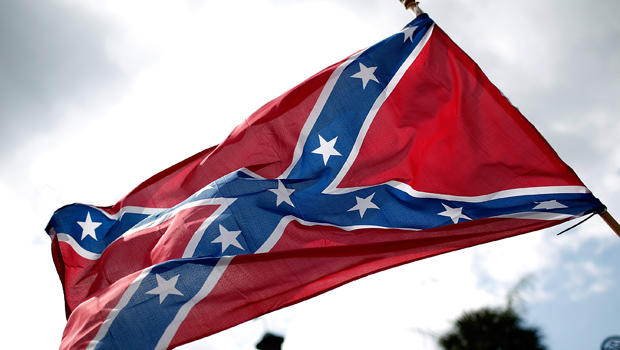
The charges are related to a July 25 incident in which members of a group called Respect the Flag drove a convoy of vehicles displaying Confederate flags through a neighborhood in Douglasville, when they were involved in an altercation with residents outside a home where a children’s birthday party was taking place.
The indictment alleges that Respect the Flag is a “criminal street gang,” and that members of the group threatened “to commit a crime of violence” against people at the party, “with the purpose of terrorizing those individuals and in reckless disregard for the risks of causing such terror.”
The two sides had wildly divergent accounts of what occurred.
Residents said the demonstrators entered their neighborhood and started shouting racial slurs. Melissa Alford, who hosted the July birthday party, said tensions flared when the trucks drove by the home in Douglasville, Georgia.
In an interview with the Atlanta Journal-Constitution, Ms. Alford recalled, “One had a gun, saying he was gonna kill the [racial slur].” Ms. Alford then alleged one of them said, ‘Gimme the gun, I’ll shoot them [racial slur].”
The Southern Poverty Law Center, which is representing some of the people who attended the party, praised the prosecutor for pushing forward with the case.
Morris Dees, the organization’s chief trial counsel, issued a written statement: “These cowards chose unarmed African-Americans enjoying a peaceful birthday party to vent their violent racist hatred. This is reminiscent of the Ku Klux Klan — modern-day night-riders terrorizing African-Americans in the name of Southern heritage.”
Members of the caravan countered that the group only drives around with flags and sells them to raise money to donate American flags to people who can’t afford them.
Levi Bush, one of the drivers, told the paper the convoy had been attacked by residents throwing rocks, and after he got a flat tire the residents swarmed his truck and threatened him.
Kayla Norton, another member of the Respect the Flag group, detailed the confrontation between her group and the party-goers in an interview with the local Atlanta Fox affiliate. She says, “We informed that other group that we did have guns in our vehicles and if need be, we could go get them.”
For more information, please see:
China Post — Confederate flag supporters charged over threats – 15 October 2015
CNN — Group that waved Confederate flags indicted – 15 October 2015
CBS News – Ga. Confederate flag supporters face terrorism charges – 12 October 2015
Transgender Activist Killed in Argentina
By Kaitlyn Degnan
Impunity Watch, South America
BUENOS AIRES – Argentina — Diana Sacayan, a well-known Argentine transgender activist was found dead at age 40 in her Buenos Aires apartment. Her body showed signs of violence, including multiple stab wounds.
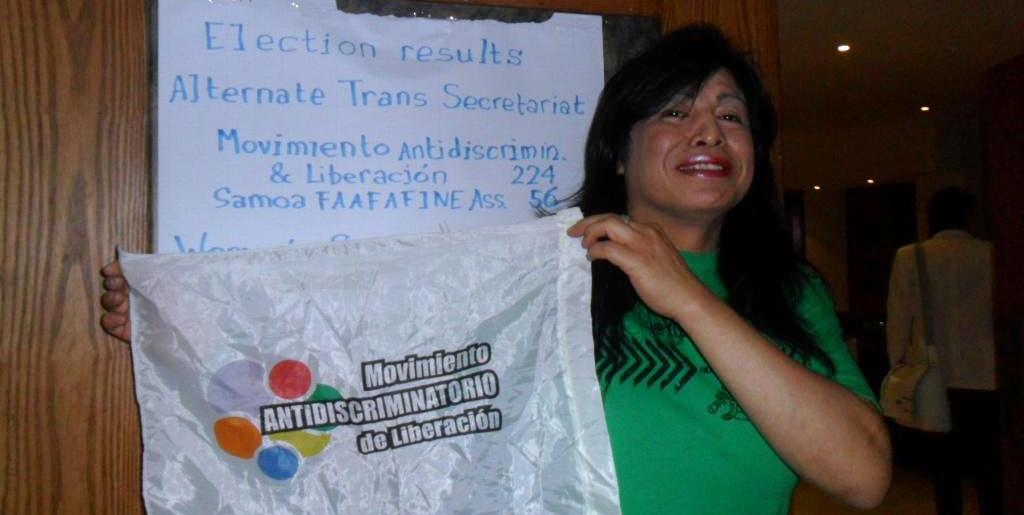
She is the third transgender woman in Argentina to have been killed in the past thirty days: Marcela Chocobar and Coty Olmos were also violently killed in Santa Fe and Santa Cruz.
Sacayan was a leader of the Antidiscrimination Liberation Movement in Argentina, and was on the board of the International Lesbian, Gay, Bisexual, Trans and intersex Association.
Amnesty International, among other organizations, are calling on Argentinian authorities to investigate the violence. Mariela Belski, executive director of Amnesty International Argentina said that, “A dark cloud has set over Argentina’s trans community. Unless this latest wave of murders is effectively investigated and those responsible taken to justice, a message will be sent that attacking trans women is actually OK.”
In 2014, the Argentine Homosexual Community reported 14 hate-crime murders.
Argentinian President Cristina Fernandez de Kirchner has asked the national security services and the Metropolitan police to investigate the killing. President Fernandez personally issued Sacayan’s new national identification card in 2012. Sacayan was the first person in Argentina (one of the few countries that allows citizens to change the gender on official identification documents) to have her national ID changed.
Argentina’s Special Crime Unit Against Gender Violence has made a formal motion to classify Sacayan’s death as a femicide, so the case can be investigated and tried as such. Argentina has recently seen spiked levels of femicide, with a woman being killed about one every thirty hours in the country.
Following the news of Sacayan’s death, social media was inundated with tributes and messages of outrage over her death. A vigil outside of Argentina’s supreme court building drew dozens of supporters.
Latin America has some of the highest murder rates for transgender persons, according to Amnesty International. Activist group Transgender Europe reports that from 2008 until 2014, approximately 78% of the 1,731 murders of transgender and gender-diverse persons worldwide occurred in Latin America.
For more information, please see:
Reuters – UPDATE 1-Outcry over the killing of three transgender women in Argentina – 14 October 2015
TeleSur – Argentine President Demands Inquiry into Trans Activist’s Death – 14 October 2015
BBC – Argentina transgender killings spark outcry – 15 October 2015
Guatemalan Mayor Lynched Following Political Violence
By Samuel Miller
Impunity Watch Desk Reporter, North America and Oceania
CONCEPCION, Guatemala — The mayor of Guatemala’s western town of Concepcion was killed in an apparent retaliatory mob lynching over an earlier attack on the mayor’s political opponent. The residents believed he was behind an earlier attack in which two women were killed and five other people injured.
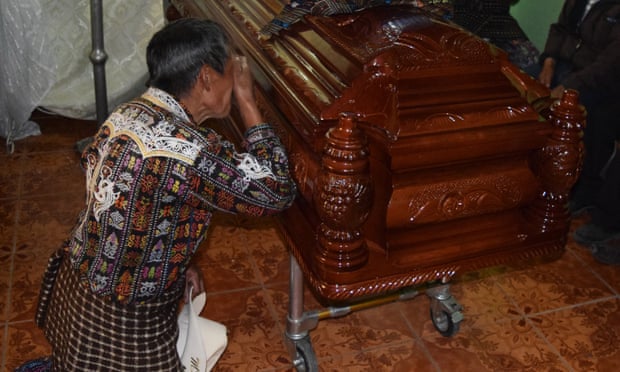
Guatemala is one of the most violent countries in Latin America; however, the lynching of an elected official is considered rare.
The incident began last month when Juracan defeated former mayoral candidate Lorenzo Sequen in Concepcion’s mayoral race. After losing the election, Sequen accused Juracan of mismanagement and demanded an investigation into Concepcion’s finances.
Villagers blamed Juracan for an attack on Sunday on Sequen, who was riding in a pickup with relatives when about 10 armed and masked men opened fire. His daughter and niece were killed, and at least five others, including Sequen, were wounded.
When news spread of the attack on Sequen, angry residents began searching for Juracan, who they believed was behind the attack.
The angry mob tracked down began burning houses belonging to Juracan’s family, until they found the mayor at his home. They dragged him out, beat him and set him alight. Police arrived too late to save Mr. Juracan.
According to the Latino Post, Guatemala is considered to be the most violent non-war zone on the planet. Additionally, this is not the first instance of political instability within the country.
Earlier this year, President Otto Perez Molina stood down after Congress voted to strip him of his immunity. Mr. Perez Molina is accused of involvement in a case known as “La Linea”, named after a hotline businesses allegedly called to access corrupt officials.
According to figures issued recently by the state’s National Institute of Forensic Sciences, there were 2,343 murders reported in Guatemala between January and May. In 2014, there was an average of 15.5 homicides per day.
Rural parts of Guatemala often see vigilante killings because of the lack of police officials in the areas. Guatemala belongs to one of the most violent countries in Latin America, and gun crime in particular is widespread in the country.
A national police spokesman, Jorge Aguilar, said 50 officers had been sent to patrol the village, where burnt cars remained in the streets on Monday.
For more information, please see:
Harvard Political Review — Fed Up in Guatemala – 13 October 2015
Latino Post – Guatemalan Mayor Beaten & Burned Alive by Vengeful Mob – 13 October 2015
UPI — Guatemalan mayor beaten, burned alive by revenge-driven angry mob – 13 October 2015
BBC News — Guatemalan mayor lynched by crowd over attack on rival – 12 October 2015