Guatemalan Mayor Lynched Following Political Violence

By Samuel Miller
Impunity Watch Desk Reporter, North America and Oceania

CONCEPCION, Guatemala — The mayor of Guatemala’s western town of Concepcion was killed in an apparent retaliatory mob lynching over an earlier attack on the mayor’s political opponent. The residents believed he was behind an earlier attack in which two women were killed and five other people injured.
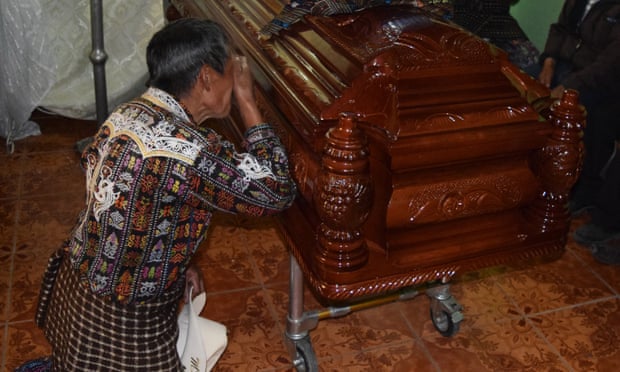
A man cries over the coffin of mayor Bacilio Juracan. (Photo Courtesy of The Guardian)

Guatemala is one of the most violent countries in Latin America; however, the lynching of an elected official is considered rare.

The incident began last month when Juracan defeated former mayoral candidate Lorenzo Sequen in Concepcion’s mayoral race. After losing the election, Sequen accused Juracan of mismanagement and demanded an investigation into Concepcion’s finances.

Villagers blamed Juracan for an attack on Sunday on Sequen, who was riding in a pickup with relatives when about 10 armed and masked men opened fire. His daughter and niece were killed, and at least five others, including Sequen, were wounded.

When news spread of the attack on Sequen, angry residents began searching for Juracan, who they believed was behind the attack.

The angry mob tracked down began burning houses belonging to Juracan’s family, until they found the mayor at his home. They dragged him out, beat him and set him alight. Police arrived too late to save Mr. Juracan.

According to the Latino Post, Guatemala is considered to be the most violent non-war zone on the planet. Additionally, this is not the first instance of political instability within the country.

Earlier this year, President Otto Perez Molina stood down after Congress voted to strip him of his immunity. Mr. Perez Molina is accused of involvement in a case known as “La Linea”, named after a hotline businesses allegedly called to access corrupt officials.

According to figures issued recently by the state’s National Institute of Forensic Sciences, there were 2,343 murders reported in Guatemala between January and May. In 2014, there was an average of 15.5 homicides per day.

Rural parts of Guatemala often see vigilante killings because of the lack of police officials in the areas. Guatemala belongs to one of the most violent countries in Latin America, and gun crime in particular is widespread in the country.

A national police spokesman, Jorge Aguilar, said 50 officers had been sent to patrol the village, where burnt cars remained in the streets on Monday.

For more information, please see:

Harvard Political Review — Fed Up in Guatemala – 13 October 2015

Latino Post – Guatemalan Mayor Beaten & Burned Alive by Vengeful Mob – 13 October 2015

The Guardian — Villagers in Guatemala burn their mayor to death after political rivalry escalates – 13 October 2015

UPI — Guatemalan mayor beaten, burned alive by revenge-driven angry mob – 13 October 2015

BBC News — Guatemalan mayor lynched by crowd over attack on rival – 12 October 2015
Belarusian President Lukashenko Wins Reelection

by Shelby Vcelka

Impunity Watch Desk Reporter, Europe

MINSK, Belarus–

Belarusian voters, in a seemingly rigged election, reelected incumbent president Alexander Lukashenko for a fifth term. Turnout to the election was high, with reporters saying 86.75% of citizens casting ballots. Lukashenko won by a profound margin, with 83.5% of the vote.

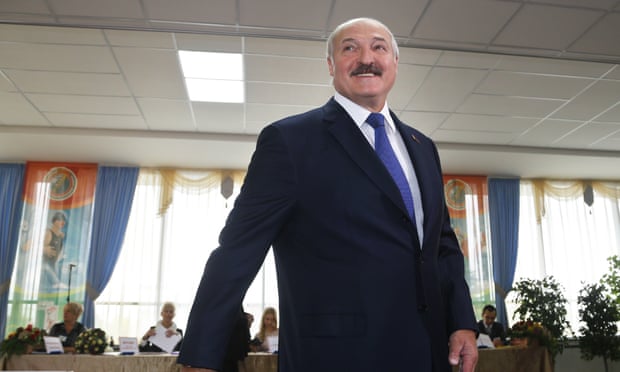
President Alexander Lukashenko casts his vote at a polling station on October 11th, before being reelected as president later that day. (Photo courtesy of The Guardian)

Lukashenko’s last reelection five years ago sparked massive protests and riots, ending with the imprisonment of leading opposition party members. Western countries have ostracized Lukashenko due to his human rights record and repression of political dissent, calling him “the last dictator in Europe.” However, Lukashenko criticized Russia’s activity in Crimea last year, and hosted peace talks during the Ukrainian crisis. In August, he pardoned six members of the opposition party he had previously imprisoned, with the hopes that his actions would soften his appearance to the West. For four months after the election, the European Union will lift sanctions on both Belarus and Lukashenko, barring any members from committing a last minute crackdown, as a result of his showing of good will.

“We have carried out everything the west wanted on the eve of the elections. If there is a desire in the west to improve our relations, nobody and nothing can prevent that,” Lukashenko commented while casting his vote during Sunday’s election. “The ball is now firmly in the west’s court.”

Belarus’ relations with Russia have shown signs of strain in recent months. In September, Russian President Vladimir Putin approved a plan to place a Russian airbase in Belarus, but by early October, Lukashenko stated that Belarus had no need for such a base. This is in addition to strains due to Belarus’ disapproval of Russian actions during the Ukrainian crisis.

Previous elections in Belarus have been monitored by the Organisation for Security and Cooperation in Europe, and they continued to watch the election on Sunday. The OSCE and other Western organizations have rated these elections as unfair, and are looking at Sunday’s vote as a showcasing of Belarus’ willingness to have free and fair elections. The official report by the OSCE will be released within the week of the vote.

For more information, please see–

BBC–Belarus president set to win fifth consecutive election— 10 October 2015

LA Times–Belarus election: Alexander Lukashenko will win, but by how much?— 10 October 2015

Al-Jazeera–Belarus poised to re-elect ‘last dictator in Europe’— 11 October 2015

The Guardian–Belarus election: Alexander Lukashenko wins fifth term with election landslide— 11 October 2015

South Africa to Part Ways With ICC?

By Tyler Campbell

Impunity Watch Reporter, Africa


PRETORIA, South Africa – Today the South African majority party, the African National Congress (ANC), has expressed plans to leave the International Criminal Court (ICC). This move is being spurred on by the criticism South Africa has faced from the court when it ignored ICC orders to arrest Sudanese president, Omar al-Bashi, when he visited there in June.

President Omar al-Bashi arriving home from his visit to South Africa. Photo Courtesy of the Times Live

In June president al-Bashi visited South Africa to be at the 25th African Union Summit. At the time there was heated debate within South Africa over whether or not to arrest him. On one side, groups claimed that the South African government was in contempt of the ICC and of local courts for not acting on an arrest warrant for al-Bashi. From the passage of the Rome statute into South African domestic law, compliance with the ICC’s arrest warrant should have been mandatory. The majority ANC party defended its decision not to act by claiming al-Bashi had diplomatic immunity. They did not arrest him because he was attending the AU summit as a guest of the AU and was not on a state visit to South Africa. It is notable that this type of diplomatic immunity is given to heads of state that attend UN meetings with similar warrants.


Even at this earlier point in time the ANC was already discussing the idea of leaving the ICC. ANC Secretary General Gwede Mantashe had been vocal in expressing his frustration with the ICC. “It is a tool in the hands of the powerful to destroy the weak and it is a court that is focusing on Africa, Eastern Europe and Middle East,” he said.


This line of thinking must have festered until today when the ANC made their intentions official by announcing it in National General Council meeting. Now the South African Parliament must debate whether or not to actually leave the ICC. If the ANC votes along party lines it is likely that any motion will pass since they hold a 60% majority in parliament.


Even though nothing is set in stone South Africa has already begun to protect itself from any scrutiny, should they leave the ICC. They have downplayed the importance and usefulness of the ICC. “The principles that led us to be members remain valid and relevant… however the ICC has lost its direction unfortunately, and is no longer pursuing that principle of an instrument that is fair for everybody,” said Obed Bapela, the ANC’s international relations subcommittee chair.


For more information, please see:


The Guardian – ANC plans to withdraw South Africa from international criminal court – 11 Oct. 2015

News 24 – ANC wants SA to withdraw from ICC – 11 Oct. 2015

Deutsche Welle – South Africa’s ruling ANC plans to leave International Criminal Court – 11 Oct. 2015

Deutsche Welle – South African government under fire over al-Bashir – 26 June 2015

Brazil: Opposition Seeks Resignation from Eduardo Cunha

By Kaitlyn Degnan
Impunity Watch Reporter, South America

BRASILIA, Brazil — Members of Brazil’s Congress are calling for the resignation of Eduard Cunha, President of Brazil’s Chamber of Deputies after newspaper Folha de S. Paolo reported that he received kickbacks from a Petrobras contract.

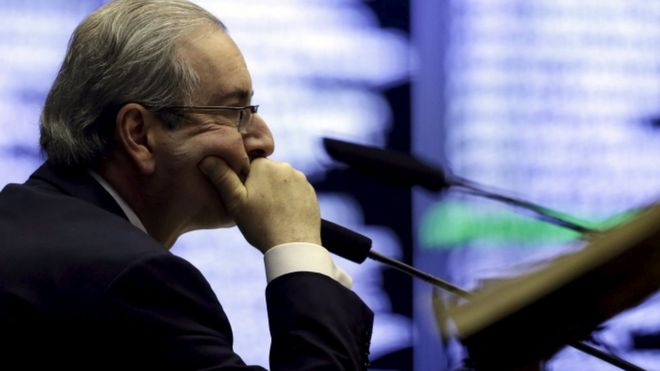
President of Brazil’s House of Deputies, Eduardo Cunha. (Photo courtesy of the BBC).

Cunha is a member of the Party for the Democratic Movement of Brazil, which is part of the government coalition. Cunha left the coalition in July after a Petrobras consultant alleged that he demanded bribes for contracts.

Cunha denied involvement in the scheme back in March.

Cunha allegedly received kickbacks in a Swiss account from a Petrobras contract in Africa. A lobbyist (reportedly the operator for PMDB at Petrobras) said he deposited $7.5 million in Cunha’s account. Swiss officials confirmed that there was $5 million in accounts belonging to Cunha, according to the Federal Public Prosecutor’s Office.

His attorneys, in a statement said that they learned about the allegations from media report. They plan to ask the Supreme Court for access to the investigation.

Opposition leaders sent Cunha an e-mail urging him to resign. A group of MPs, Rousseff’s supporters on the left, demanded Cunha be investigated under the code of ethics.

Cunha has denied the accounts, and said that he will not resign. He claims that the Brazil’s chief prosecutor leaked the information to embarrass him politically.

These calls for resignation comes just days after Brazil’s Court of Accounts ruled that President Dilma Rousseff’s government “overstated tax receipts and hid expenses,” manipulating 2014 revenue and spending figures. It is up to Cunha to make the decision on whether to let the dozen or so impeachment motions filed in Congress to proceed.

It is reported that Cunha was working with other members to start the proceedings when news broke of the kickbacks.

The president’s office has so far declined to comment on the matter.


For more information, please see:

Huffington Post – Eduardo Cunha: Time to Resign – 7 October 2015

Wall Street Journal – Brazil Watchdog Rules Against Rousseff, Fueling Impeachment Talk – 7 October 2015

BBC – Brazil opposition demands sacking of Congress speaker – 10 October 2015

Bloomberg Business- Brazil’s Cunha got Kickbacks from Petrobras Contract, Folha Says – 10 October 2015

Bloomberg Business – Rousseff’s Most Powerful Foe Suffers Blow in Kickback Scandal – 10 October 2015