Military Coup Days Before an Election

By Tyler Campbell

Impunity Watch Reporter, Africa


OUAGADOUGOU, Burkina Faso – As of yesterday, Burkina Faso is officially under new leadership. The military announced it had dissolved the government and removed the sitting president days before the election, which was scheduled to take place on October 11. The presidential guard seized the president, prime minister, and other government officials during a cabinet meeting this Wednesday. It is not clear what has become of these government officials at this time.

Protestors in the Nation’s Capitol (photo courtesy of the Indian Express)

Shortly after the seizer the guard took to radio and television signals to announce that they were now in control of the country. The presidential guard had been very vocal about its disagreement with the interim government that was running the country. The guard has heavy ties with the previous president, Blaise Compaore. He had been in control for 27 years until finally being ousted by public up rising the year before. The presidential guard’s main issue with the interim government was its decision to block any members of the ex-president’s party from running in the October election. This move could likely be an attempt for ex-president Blaise Compaore to regain power, or keep control within party lines.


This coup has had some immediate negative consequences for the country. The boarders of Burkina Faso have been shut down. The presidential guard has also put a curfew in place. The coup and these actions by the guard have been met with heavy rioting in the nations capitol.


These riots have left ten dead so far. An unverified claim blamed these deaths on shots fired by the presidential guard. Along with these deaths have come an unknown number of rioters being arrested.


Cheriff Sy the transitional parliamentary speaker has become the unofficial leader of the opposition to this coup. After declaring himself the leader of Burkina Faso he asked its people to rise up and fight this oppositional government. Saying, “We are in a resistance situation against adversity.”


The U.S. and French governments have both expressed concern and condemnation about the actions of the presidential guard. However, military action by either of these nations against the coup is very unlikely at this time. This could change if the situation with ISIS continue to worsen. Burkina Faso was one of the most important allies of these two nations in their fight against Islamist extremism.


For now it is fully up to the citizens of Burkina Faso to once again rise up and expel an illegitimate regime, like they did in 2014. In those riots the citizens of Burkina Faso eventually ended up setting fire to the capitol building and homes of then president, Blaise Compaore. We shall see if this level of violence will be needed to overthrow the presidential guard this time around.


For more information, please see:


Huffington Post – Military In Burkina Faso Confirms Coup And Dissolves Government – 17 September 2015


The Guardian – Coup in Burkina Faso as military takes over country ahead of elections – 17 September 2015


BBC – Burkina Faso coup sparks deadly street protests – 17 September 2015


CNN – Burkina Faso: Military takes over after presidential guards detain President – 17 September 2015


The New York Times – Violent Protests Topple Government in Burkina Faso – 30 October 2014


Palestinian Hunger Striker Re-Detained After Hospital Release

By Brittani Howell

Impunity Watch Reporter, The Middle East

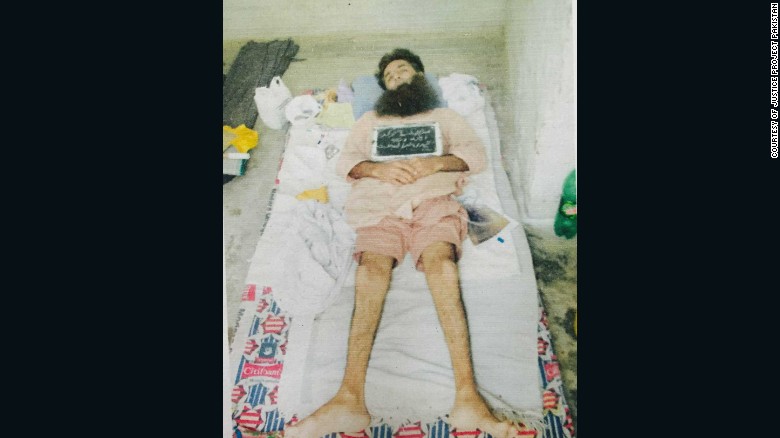
JERUSALEM, Israel – Mohammad Allaan, a Palestinian lawyer, was re-arrested by Israel on Wednesday after being discharged from the hospital. Allaan was in the hospital as a result of his hunger strike, protesting his incarceration

Protesters hold posters of Mohammed Allaan’s picture. (Courtesy of CNN)

Allaan, an alleged member of the Islamic Jihad militant group was detained by Israel without charges or a trial. The administrative detention allows military courts to detain militant suspects indefinitely, subject to a renewal every six months. According to the Israeli civil rights group, B’Tselem, “Israeli’s use of administrative detention blatantly violates the restrictions of international law.”

Israel states that the detention orders are necessary to protect intelligent sources in security-related cases. The Shin Bet internal security agency stated that Allaan was still, “a danger to peace and security in the region” and placed him back in custody because his health had improved.

Israel’s justice ministry alleges that Allaan is involved in “grave terrorism” which necessitates his detention. Allaan denies the allegations and denies involvement with the Islamic Jihad militant group.

Allaan was detained November 2014 and his detention was renewed in May. Allaan stopped eating on June 16 and, as a result, suffered brain damage among other medical conditions. Allaan’s lawyer, Mr. Khatib, intends to appeal the re-arrest because of the brain damage Allaan suffered. He also argues that only the Supreme Court had the authority to cancel the suspension of Allaan’s detention. The re-arrest was a result of a military directive, not a Supreme Court order canceling the suspension of the detention.

Sawsan Zaher, a lawyer for an Arab-rights group which also represented Allaan, stated, “The fact that the authorities renewed the order the moment his situation improved, without checking relevant or justifiable evidence – this means that the order is only an act of revenge.”

In July, Israel passed a law which allows force-feeding to those who are hunger-striking, if the strike’s life is in danger. The United Nations finds the law a “cause of concern” and the Israel Medical Association equates the law to torture.

Allaan was not force-fed, as the government could not find any willing doctors to do the procedure. Instead, Allaan was given intravenous fluids when his condition deteriorated.

Israeli police stated Allaan will be held in detention until November 4, which is when his detention is scheduled to end.

For further information, please see:

Al-Jazeera – Palestinian Hunger Striker Detained on Hospital Release – 16 September 2015

BBC – Israel Re-Arrests Hunger Striker Mohammed Allan – 16 September 2015

CNN – Palestinian Hunger Striker Mohammed Allan back in Israeli Detention – 16 September 2015

The New York Times – Palestinian is Rearrested and Resumes Hunger Strike – 16 September 2015

The Seattle Times – Israel Re-Arrests Palestinian Hunger Striker – 16 September 2015

Google Alert – War Crimes September 18, 2015

war crimes

Daily update ⋅ September 18, 2015
NEWS
Newsfirst
A Reckoning on Sri Lanka War Crimes

International New York Times
The United Nations Human Rights Council released its report Wednesday on possible war crimes committed during the last years of the Sri Lankan …
UN calls for war crimes court in Sri Lanka – WPTZ The Champlain Valley
Lanka Business Online
Sri Lanka offers domestic probe into warcrimes report

Fulton News
COLOMBO, Sri Lanka – Sri Lanka says is to establish a local mechanism to investigate accusations of human rights abuses stemming from the …
Balkan Insight
Bosnian Croat Military Policeman Cleared of War Crimes

Balkan Insight
Former Croatian Defence Council military policeman Mato Condric was acquitted of sexually abusing a female prisoner and physically abusing a man …
Revised (US) law made Rome (war crimes) Statute inapplicable in US

Asian Tribune
Congress passed the War Crimes Act of 1996, signed into law by President Bill Clinton, with “overwhelming bipartisan support.” The War Crimes Act …
War crimes report

The Hindu
Many countries and human rights organisations have been demanding a probe into the war crimes for sometime now (“Sri Lankan war crimes horrific: …
UN News Centre
UN officials outraged at accounts of Sri Lanka war crimes, stress need for accountability

Big News Network.com
17 September 2015 — Two senior United Nations officials today expressed outrage at the very serious accounts of war crimes and crimes against …
RINF Alternative News
Rejected! Parliament refuses to debate war criminalNetanyahu arrest petition

RINF Alternative News
Parliament has declined to debate a petition calling for Israeli Prime Minister Benjamin Netanyahu to be arrested for allegedwar crimes.
Sri Lanka to set up domestic mechanism to probe war crimes

GlobalPost
17 (Xinhua) — Sri Lanka’s new government said on Thursday that it hopes to set up a domestic mechanism to investigate the allegations of war crimes.
 
Hindu American Foundation calls for international investigation into Sri Lanka civil war crimes

San Jose Mercury News
This year’s event called for an international investigation into war crimescommitted during Sri Lanka’s civil war, in preparation for the U.N. Human …
BBC News
Yemen’s Forgotten War

BBC News
Human rights organisations say the strikes often target civilians and may amount to war crimes. Gabriel Gatehouse has been to Yemen to investigate.

British Arms Fair Invites Countries with Child Soldiers

By Tyler Campbell

Impunity Watch Reporter, Africa


ALGIERS, Algeria – This Tuesday marked the opening day of the Defence and Security Equipment Industry (DSEI) show. This is one of the world’s largest arms and securities fairs in world and it is held every two years in London. This is a massive event were more than 1,500 companies show off their best and latest weapons of war. On the guest list to the event are some of the biggest repeat offenders in human and civil rights violations.

Child Soldiers in Algeria (Photo of photo courtesy of telegraph.co.uk)

There were 61 countries officially invited to the event. Out of these 61 countries 14 of them have authoritarian leadership. More troubling is that the UN has flagged 23 of these 61 countries for serious child rights violations, including the use of child soldiers. Notable African countries with questionable human rights records on the list were Egypt, Angola and Algeria.


These invitations come in stark and almost ironic contrast to the message the European parliament was trying to send some of these countries only four days earlier. In debates about the British arms industry parliament talked about Azerbaijan and Angola, two countries with an invitation to the DSEI. The deteriorating situation of human rights in Angola was one topic that got touched upon.


This type of hypocrisy is not a new trend for the British arms industry. Britain has been selling arms to the Democratic Republic of the Congo since 2010. This is one nation that has a long record of recruiting and using child soldiers. Another country, Saudi Arabia, has had its own problems with civil rights and continues to be Britain’s leading arms customer. In past years at the DSEI, devices clearly against British law have even been offered up for sale.


These problems have not gone unnoticed by London protesters. Human rights activist protested and attempted to block the set up of the event. They also have a protest schedule for each day the event is going on. Advertisements on the sides of buses around London have been replaced with “These visitors make huge amounts of money from weapons and equipment that kill people all over the world.”


The other side of the debate continues to say that this event and the British arms industry are important sections of the economy and are essential to jobs and a growing GDP. This is most likely not an understatement. The UK has continued to be the world’s second largest defense exporter, behind only the United States. For this to change it will take aggressive action and legislation by parliament.


For more information, please see:

EurActive – Nations using child soldiers are invited to British arms fair – 14 September 2015


Yahoo News – Mega arms fair met with protest in Britain – 15 September 2015


Global Information Network – Nations using child soldiers among guests at UK arms fair – 15 September 2015


Defense One – UK Invites ‘Countries of Concern’ To Shop for Weapons in London – 15 September 2015

Cuba’s Human Rights to be a Spotlight for Papal Visit

By Samuel Miller
Impunity Watch Desk Reporter, North America and Oceania

HAVANA, Cuba — Democracy activists have been scrambling to get the Pope’s attention: they want him to know that Cuban authorities have been arresting peaceful protesters and violating basic human rights. Laura Labrada Pollan, leader of a Havana group called Ladies in White said, “we are asking for a meeting, a few minutes with Pope Francis, so he can hear it from us, to show him that yes, there are political prisoners in Cuba.”

Workers Prepare for the Arrival of Pope Francis. (Photo Courtesy of Reuters UK)

However, members of Cuba’s fractured and officially illegal opposition party said they see little chance that the trip will bring significant change.

“Pope Francis wants his visit to have a major impact, but he won’t be able to work any miracles, because change depends on the Cuban government’s political will. And it has none,” said Elizardo Sanchez, president of the Cuban Commission on Human Rights.

“Cuba is at a human rights crossroads, with important advances such as the recent release of prisoners of conscience and other activists and a number of positive reforms to its migration laws overshadowed by the government’s determination to deploy new methods to stifle dissent,” said Amnesty International ahead of a state visit by Pope Francis.

Historically, Cuba has had a tenuous relationship with the Holy See.

In 1998, John Paul II called for greater respect for human rights during the first papal visit to Cuba, a historic trip that symbolized a nascent rapprochement between the Church and the one-time atheist state. In 2012, Pope Benedict XVI criticized Marxism and spoke of the need for “new models,” considered by some to be a veiled message of disdain for the troubled country’s policies.

Amnesty International and other international organizations have not been allowed to enter Cuba since 1988, when a delegation from Amnesty International went to document the situation of prisoners of conscience and other individuals who were detained for political reasons across the country.

Although the country has been hesitant to allow these organizations to enter its country, Amnesty International claims advances have been made there, including a 2013 reform loosening travel restrictions and the release of political prisoners.

“However, the country still needs to make progress when it comes to allowing people to peacefully express their views without fear of being harassed, detained or attacked,” said Erika Guevara-Rosas, the rights group’s director for the Americas.

Over the past few years, authorities in Cuba have switched from a strategy of incarcerating people viewed as political dissidents for long periods of time, to consecutive short term arrests and public smear campaigns.

In an act of goodwill before the visit, Cuban authorities released more than 3,500 prisoners last week, amplifying a gesture also undertaken for the previous papal trips. Cuba is sensitive to criticism of its human rights record, saying it needs to restrain critics it describes as “mercenaries bent on destabilizing the government.”


For more information, please see:

LA Times — Pope Francis heading for Havana in first leg of reconciliation tour – 18 September 2015

NBC News — In Cuba, Democracy Activists and Dissidents Hope to Meet with Pope – 18 September 2015

Reuters UK — Pope’s visit to Cuba raises prospect of human rights friction – 18 September 2015

Yahoo! News — Cuban dissidents not expecting miracles from pope visit – 18 September 2015

Amnesty Int’l — Cuba at a human rights crossroads as Pope Francis prepares to visit the country – 17 September 2015