isis_insults_the_Security_Council_en
One million evacuate due to 8.3 magnitude earthquake in Chile
SANTIAGO, Chile — A massive 8.3 magnitude earthquake hit Chile on Wednesday. The powerful quake in Chile’s central region forced over a million people out of their homes. At least ten people died when the quake hit and one person is still missing.

Horror struck as residents of Illapel’s homes began to sway and they ran into the streets. Illapel is an area near the quake’s epicentre. Coastal towns like Coquimbo recorded waves as high as 4.7m (15ft) hitting the shore after the quake, resulting in a Tsunami alert for the entire Chilean coast. The alert has since been lifted.
The earthquake hit at 6:45 pm and lasted for more than three minutes. There have been more than a dozen aftershocks. According to the U.S. Geological survey the earthquake was the largest to hit that location in over 100 years. Gloria Navarro, a dweller in the coastal town of La Serena, said people were “running in all directions”.
Officials said that 1,800 people in Illapel were without drinking water. Electricity providers said hundreds of thousands of their clients in the worst-affected Coquimbo region had no power.
This Chilean earthquake was five times more energetic that the quake that devastated Nepal in April. However, early inclinations show that the death toll will be a fraction of what it was in Nepal. Why? This is the third massive quake in five years, Chile often experiences quakes this massive. To protect and prepare the country, the building codes are very strict and well enforced and the citizens are knowledgeable about how to react during an earthquake.
After the massive 8.8 quake in 2010, the Chilean government put millions into upgrading the country’s seismic network of sensors, and made improvements to telecommunications systems that share critical information and warnings.
President Bachelet said that “once again we must confront a powerful blow from nature”. She will travel to the affected areas later on Thursday.
For more information, please see:
BBC – Chile quake triggers mass evacuation and tsunami alert – 17 Sept. 2015
The Telegraph – Chile earthquake in pictures: 8.3 magnitude quake triggers tsunami warning – 17 Sept. 2015
theguardian – Chile earthquake: one million people evacuated after 8.3 magnitude quake – live updates – 17 Sept. 2015
NBC News – One Million Evacuated As Huge Quake Strikes Off Chile Coast – 17 Sept. 2015
Border Crisis Between Venezuela and Colombia Continues
By Kaitlyn Degnan
Impunity Watch Reporter, South America
CARACAS, Venezuela — Venezuela’s crackdown on its border with Colombia has extended to a third state. Venezuelan President Nicolas Maduro announced that he extended the state of emergency to an additional 10 provinces on Tuesday evening. As of now, border crossings in the Venezuelan states of Tachira, Zulia and Apure have closed, with Apure’s closing occurring Wednesday morning.
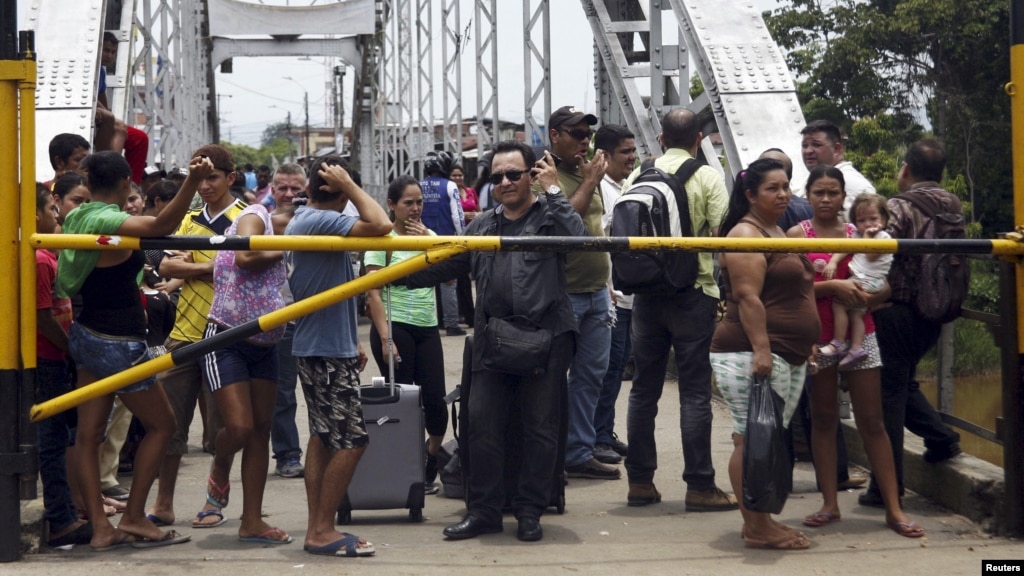
Some 18,000 of over 5 million Colombians living in Venezuela have crossed the border and returned to Colombia during the month long crisis. Some claim that they were beaten by Venezuelan security forces before crossing rivers to leave the country. Many feared reprisals from the Venezuelan government if they stayed.
The crisis began about a month ago, when Maduro closed a number of border crossings and deported 1,400 Colombians as part of an anti-corruption operation. Maduro has blamed Colombians in the country for Venezuela’s economic woes – the country has been in recession for some time.
Historically, the Venezuelan/Colombian border has been a hotbed of illegal activity, with smuggling and guerilla activity flourishing in the region. Both illegal smuggling and legal trade have suffered due to the border closures.
The declaration of a state of emergency in Venezuela suspends certain constitutional rights, and allows homes to be searched without a warrant.
Throughout the course of the crisis, diplomatic ties between the two countries have worsened, with Colombia recalling its ambassador from Caracas, and the Venezuelan ambassador leaving Bogota shortly after. Tensions rose significantly last week after Colombia claimed that Venezuelan military jets crossed into Colombian airspace. Venezuela has denied the claim.
Maduro and Colombian President Juan Manuel Santos have each separately called for meetings to discuss the border crisis, and both have expressed willingness to discuss the issue. Ecuador and Uruguay are currently working to broker a meeting.
A “humanitarian corridor” has been created which will allow Colombian children in Venezuela to attend school in Colombia. Work has also been done to facilitate the reunification of families split by the crisis.
For more information, please see:
BBC – Venezuela extends state of emergency to third border state – 16 September 2015
Reuters – Colombia’s president says Venezuela gestures could solve border spat – 16 September 2015
New Zealand Herald – Venezuela extends border crackdown to 3rd state – 17 September 2015
Asylum Seeker Sets Himself On Fire in Immigration Detention Center
By Samuel Miller
Impunity Watch Reporter, North America and Oceania
PERTH, Australia — An Afghani asylum seeker is in a critical condition tonight after setting himself on fire at the Yongah Hill Immigration Detention Centre, located east of Perth. The Afghani asylum seeker managed to obtain gasoline and set himself on fire in Yongah Hill Immigration Detention Center after two previous attempts to take his own life.
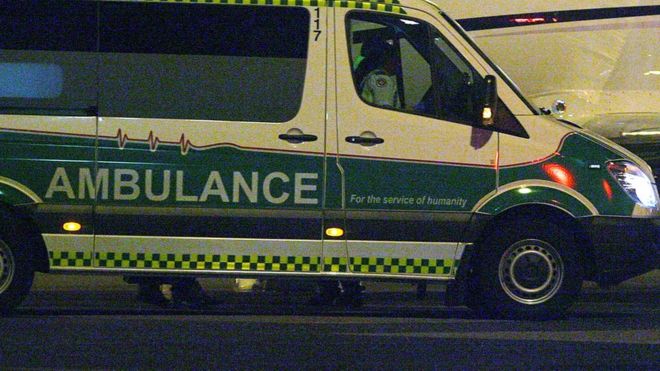
The man, Ali Jaffari, has been left with burns covering up to 90 percent of his body after the incident.
The Refugee Action Coalition claim it’s the third time the man has tried to end his own life in six weeks, and say it defies belief that he was able to get the gasoline.
Spokesman for the Refugee Action Coalition Ian Rintoul said the man had been held at Yongah Hill Immigration Detention Centre for about eight months. He went on to question how such an individual would have access to these materials given his prior history.
“How was he allowed to obtain the materials that allowed him to do this?” asked Mr. Rintoul. “Given his known mental state, he should not have been at Yongah Hill and he should not have been able to obtain flammable fluid. There’s simply been no adequate mental health treatment or proper care.”
Mr. Rintoul also commented on the detention of Mr. Jaffari, speculating on the mindset of Mr. Jaffari. “Given that he had been re-detained it was likely that he was simply facing an indefinite detention, and in those circumstances it seemed likely he had no future and no prospect of release,” Mr. Rintoul said.
The facility operator of Yongah Hill, Serco, has so far declined to comment on the matter.
Jaffari arrived in Australia in October 2010 on a boat he boarded in Indonesia. He was granted a permanent protection visa but had that cancelled in May 2014.
Jaffari was convicted of indecently assaulting two boys under the age of 16 at a Geelong swimming pool. It was reported to Yahoo! News that he fondled, kissed and cuddled the boys and joined one of them in the shower in November 2012.
While participating in a sex offenders’ program, Jaffari made admissions regarding accessing child exploitation material. A subsequent analysis of his computer revealed 27 images of child pornography, and he was charged and convicted of possessing those images. For both offences, Jaffari was sentenced to 3 months in jail, but had both prison terms suspended.
Last month, refugee advocates called for an inquiry into conditions at Yongah Hill, after the death of a 27-year-old Afghan detainee who was attacked in a brawl at the center.
The Refugee Action Coalition said the Afghan man had been held for three years, and may have died of a heart attack. Despite being sick for days and asking for medical assistance, he was only given paracetamol, the group claimed.
Soon after his death, angry detainees staged protests at the center, which was also the scene of a brawl involving 50 detainees earlier in July.
For more information, please see:
BBC News — Detainee sets himself on fire in Australian centre – 16 September 2015
Yahoo! News — Detainee sets himself on fire at Northam Detention Centre – 16 September 2015
Hungary To Arrest Illegal Migrants
by Shelby Vcelka
Impunity Watch Desk Reporter, Europe
BUDAPEST, Hungary–
Hungarian Prime Minister Viktor Orban warned last Friday that the police would take tougher action against migrants beginning next week. He alleges that the migrants entering the country rebelled against authorities by capturing railway stations, and refusing to be registered as refugees by the UN.

Hungary is being used as a transitory state, as migrants are traveling through to reach wealthier countries such as Germany and Sweden. In response, the legislature has passed emergency measures to help restrict the number of migrants coming through Hungary, effective September 15th. Orban has said that from September 15th on, migrants who cross the border illegally will be arrested, and that authorities cannot be forgiving of illegal border crossing. Hungarian prisoners and soldiers are also working on building a fence along the Hungarian-Serbian border to stem the flow of migrants into the country, and discourage illegal migration.
Over 170,000 migrants have crossed over into Hungary this year, with thousands more expected to make the journey. Most of these migrants attempt to avoid being registered in Hungary, afraid that they will be stranded or returned to Hungary once making the journey to a different country. The refugee camps that have popped up all over the country are woefully inadequate, with soldiers tossing food to crowds of migrants. Human Rights Watch, an international human rights watchdog group, have condemned the status of these camps, as they do not provide migrants with the basic requirements of food, water and shelter.
Overwhelmed with the number of migrants that have crossed the border, Hungary is also going to guard the southern border with the army. “Considering that we are facing a rebellion by illegal migrants, police have done their job in a remarkable way, without using force,” Orban said after meeting with Manfred Weber, the chairman of the conservative European People’s Party in the European Union.
Already, backlash against the new, restrictive laws is mounting against the Hungarian Parliament. A major concern for Hungarians is where the migrants will go once they have been arrested for illegal migration, and how much it will cost taxpayers to imprison them. Additionally, Hungarians fear that they will not be able to stem the flow of refugees into the country, even with the fence and new measures. The practical realities of the law, many Hungarians believe, will do nothing but make the situation worse.
For more information, please see–
BBC–Europe migrant crisis: Hungary ‘will arrest illegal migrants’— 11 September 2015
BBC–Migrant crisis: How will UK towns deal with refugees?— 11 September 2015
CBS–Hungary cracking down on migrants crossing border— 11 September 2015
PBS–Hungary enacts tougher laws on illegal immigrants— 11 September 2015
Reuters– Orban: Hungary will arrest ‘rebellious’ migrants— 11 September 2015