Ecuador Moves to Shut Down Free Speech NGO
By Kaitlyn Degnan
Impunity Watch Reporter, South America
QUITO, Ecuador — The Ecuadorian government has passed a resolution which would initiate the legal procedures to dissolve the NGO, Fundamedios. The organization, which monitors and defends freedom of the press, has been critical of Correra and his government.
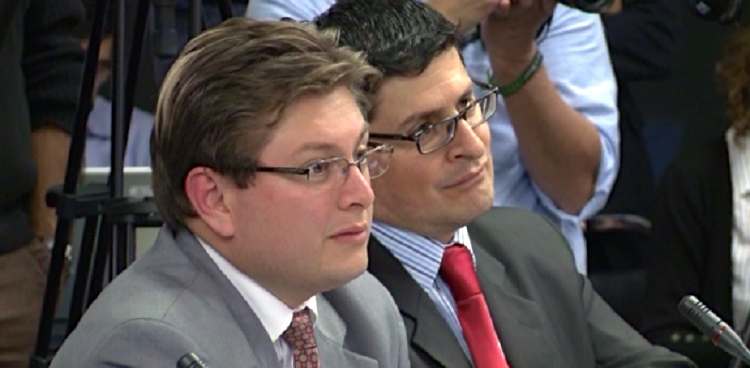
Fundamedios, or the Andean Foundation for the Observation and Study of the Media, was founded in 2007. Ecuador’s National Communications Secretariat (Secom) informed the organization that the dissolution was due to engagement in “partisan political activities.”
Secom cited two tweets including links to political blogs as the rationale behind the dissolution, saying that the organization had violated a statute which prohibited the organization from engaging in political activities.
Funamedios’ Executive Director César Ricuarte called the allegations “absurd,” saying: “it seems that for Secom political journalism equals to partisan politics.”
The Freedom House program director for Latin America and the Caribbean, Carlos Ponce, has also called the charges “politically motivated and glaring examples of the government’s lack of respect for freedom of speech.”
Other international observers, including the United States State Department, the Committee to Protect Journalists and Human Rights Watch have expressed concern regarding the move.
Human Rights Watch said that the Ecuadorian government should “close the administrative process against Fundamedios and repeal those norms to comply with its obligation to protect the rights to freedom of expression and association.”
Fundamedios has had issues with the Ecuadorian government in the past. It went before the Inter-American Human Rights Commission to make a case against the government in 2011. The government refuted the claim, and has kept a close eye on Fundamedios ever since.
In January of 2014, Fundamedios received notice that Secom had taken over supervisory control of the organization, and also received a request for the organization’s financial information.
This past June, Secom ordered the organization to stop issuing alerts. At the time, Executive Director Ricuarte said that Fundamedios would “continue issuing alerts whether Secom likes them or not.”
President Correra is well known for his enmity towards the press. According to Fundamedios, there have been 1305 instances of aggression against freedom of expression since 2008.
Article 16 of the American Convention of Human Rights, to which Ecuador is a signatory, states that freedom of association “shall be subject only to such restrictions established by law as may be necessary in a democratic society, in the interest of national security, public safety or public order, or to protect public health or morals or the rights and freedoms of others.”
For more information, please see:
Organization of American States – American Convention on Human Rights – 22 November 1968
Guardian – NGO alert: Ecuadorian government orders press freedom group to disband – 9 September 2015
Human Rights Watch – Ecuador: Media Freedom Group Facing Shutdown – 9 September 2015
PanAm Post – Ecuadorian Regime to Dissolve Free-Speech Watchdog Fudamedios – 9 September 2015
Report Card of Muhammadu Buhari After 100 Days
By Tyler Campbell
Impunity Watch Reporter, Africa
NIAMEY, Niger – September 4, 2015 marked the 100th day milestone of Niger’s newly elected President Muhammadu Buhari. Buhari became the first president to ever beat an incumbent in Niger and did so with a majority, winning 54% of the vote. At the time of the election the optimism of what Buhari would do for the troubled country was high. These expectations were fueled by lofty promises made during the campaign. He had even released his own to do list as part of his campaign. Now that we are 100 days into his presidency it is time to check and see if people still share the same optimism for their country and if Buhari has made good on his promises.
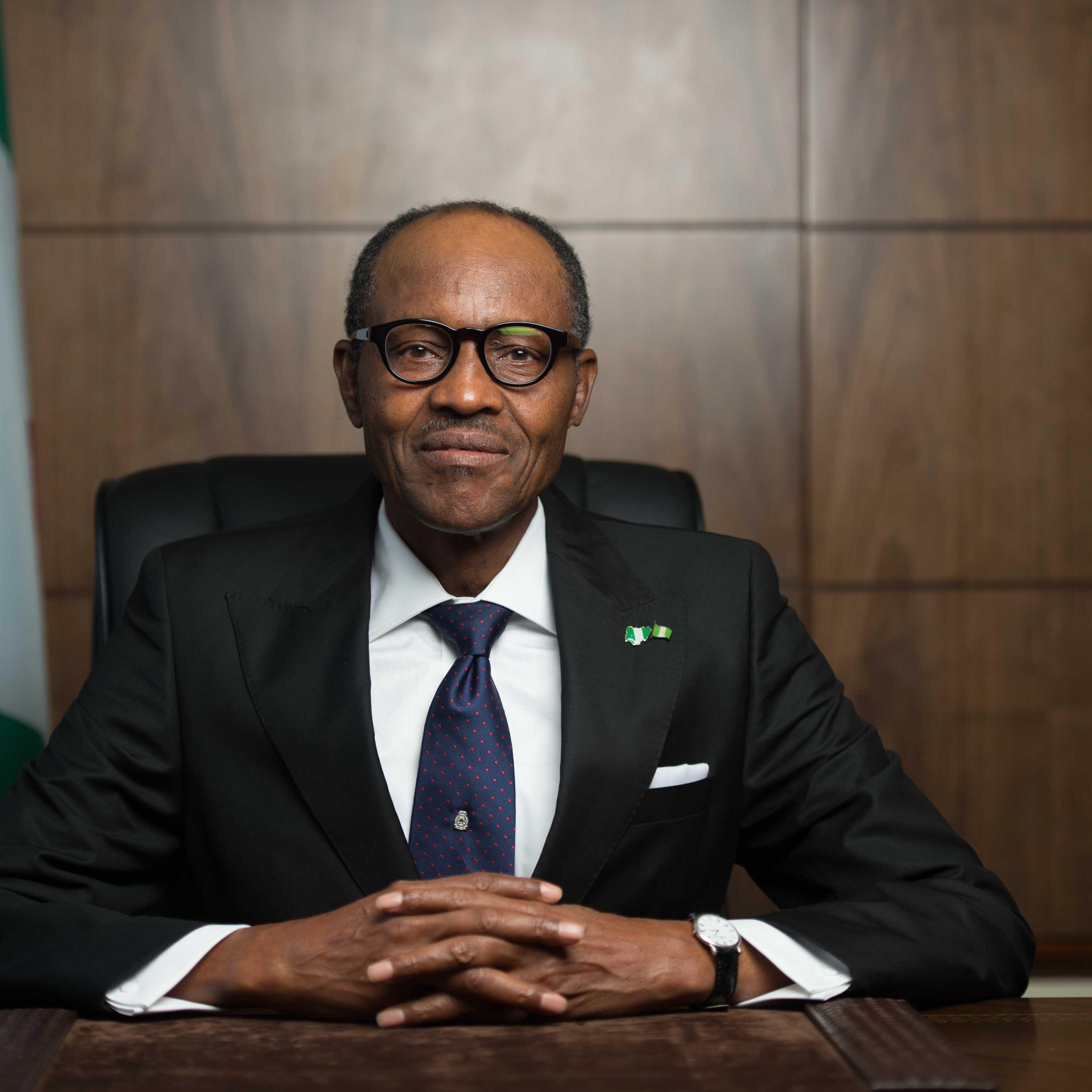
During the election Buhari published an open letter to all Nigerians titled “My Covenant.” In this Letter he outlined a rather extensive list of things he pledged to accomplish, should he be elected. All these pledges fell into ten main categories.
– Fight Corruption – Offer Better Access to Justice for Human Rights
– Fight Insurgency and Insecurity – Fight Pollution on the Niger Delta
– Celebrate Diversity – Ensure Health and Education
– Improve the Power Grid – Shift from an Oil to an Agriculture Economy
– Spur Culture – Improve Social Equality
This list is rather all encompassing and seemingly could not be accomplished in just the first 100 days. These lofty goals mixed with high expectations of the newly elected president have left many disappointed and others cautiously optimistic about the rest of his term.
Although many are disappointed about how Buharis first 100 days have faired there are some notable achievements that should be highlighted. The first goal of fighting corruption throughout Niger has been actively pursued. The Nigerian anti-corruption group, the Economic and Financial Crimes Commission, was reinstated by Buhari and has begun what is sure to be a long investigation of the last administration. There have been many small steps in the fight against corruption but no big name convictions have been made.
There has also been noticeable improvement to the nations power grid. On August 25, the Transmission Company of Nigeria reported the nation had reached 4,810.7MW of power generation. This is a rather remarkable improvement from the average of 2,000MW the nation had experienced previously. There is still room for improvement. A nation the size of Niger will need well above 4800MW if all citizens are going to have access.
Aside form these and other improvements made with in Buhari’s first 100 days, one sticking point with Nigerians is the lack of an articulated, comprehensive economic plan. Buhari has met these criticisms by saying that damage done by previous administrations must be fixed before real economic growth can happen. This argument does makes a lot of sense. With good infrastructure, such as a rebuilt power grid and stabilized financing system, economic growth will have a much smoother path.
It seems the doubters may have some grounds to question the new administration. However, Buhari does seem to be making real change and is moving the nation in a positive direction. Hopefully these trends continue in his next 100 days.
For more information, please see:
CNN – Buhari’s first 100 days: Does Nigerian president mean business? – 4 September 2015
General Buhari’s Public Letter To All Nigerians – April 2015
Australia Agrees to Increase Refugee Intake
By Samuel Miller
Impunity Watch Reporter, North America and Oceania
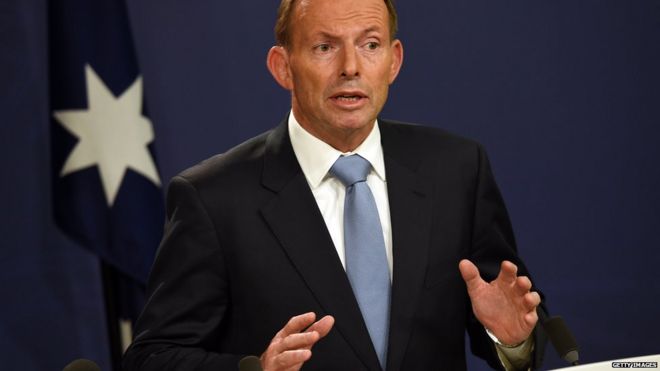
CANBERRA, Australia — Prime Minister Tony Abbott on Wednesday announced that Australia would accept 12,000 Syrians from persecuted minorities. This increase will be a supplementary intake, in addition to the 13,750 overall intake of confirmed refugees for 2015; the increase is expected to consist largely of Syrian refugees.
Australia will also give AU$44 million, or roughly $32 million USD, to the United Nations to directly pay for the support of 240,000 displaced people in countries neighboring Syria and Iraq.
The increase will be a one-time increase, rather than a permanent increase, and the refugees are to be granted permanent residency. The focus for the additional intake will be on women, children and families from persecuted minorities.
Some of the Prime Minister’s colleagues called for the priority of Australia’s intake to be Christians, prompting the Labor Party and others to declare that the places should be allocated on a needs basis, without qualification or discrimination.
Recently, Prime Minister Abbott confirmed the intake would include Christians, but not exclusively.
“There are persecuted minorities that are Muslim, there are persecuted minorities that are non-Muslim, and our focus is on the persecuted minorities who have been displaced and are very unlikely ever to be able to go back to their original homes,” said Prime Minister Abbott.
Treasurer Joe Hockey said it might take more than two years to resettle all of the 12,000-Syrian-refugees in Australia announced this week, and Prime Minister Abbott refused to include refugees languishing in offshore detention in the emergency intake.
Also announced Wednesday, the government has also decided that Australian combat aircraft would join bombing raids in Syria, extending the existing mission beyond the borders of Iraq where the operations are at the invitation of the Iraqi government.
The government’s decision to extend air strikes into Syria, a sovereign state, has been criticized in some quarters. Unlike Iraq, Syria has not asked for international help to fight IS.
Independent MP Andrew Wilkie said the UN had not approved the air strikes and the government’s claim it could make the strikes under “collective self-defense” was not true.
Article 51 of the UN charter guarantees “the inherent right of individual or collective self-defense if an armed attack occurs against a member of the United Nations”.
Furthermore, in Papua New Guinea, Prime Minister Abbott insisted Syrian asylum seekers in Nauru and Manus Island detention centers would not be resettled as part of the intake. The Prime Minister stated that to do so “would encourage the evil trade of people smuggling.”
Australia refuses to resettle refugees who try to come to the country by boat and has a policy of turning back asylum-seeker boats, detaining refugees in Pacific camps and denying them resettlement in Australia even if they are found to be refugees.
For more information, please see:
BBC News — Migrant crisis: Australia ups refugee intake and plans Syria strikes – 9 September 2015
Defense News — Australia Boosts Refugee Intake, Extends Airstrikes To Syria – 9 September 2015
Military Times — Australia to launch airstrikes in Syria, take more refugees – 9 September 2015
War Crimes Prosecution Watch: Volume 10, Issue 13 – September 7, 2015
War Crimes Prosecution Watch is a bi-weekly e-newsletter that compiles official documents and articles from major news sources detailing and analyzing salient issues pertaining to the investigation and prosecution of war crimes throughout the world. To subscribe, please email warcrimeswatch@pilpg.org and type “subscribe” in the subject line.
Opinions expressed in the articles herein represent the views of their authors and are not necessarily those of the War Crimes Prosecution Watch staff, the Case Western Reserve University School of Law or Public International Law & Policy Group.
Click the links to read further
Contents
Central African Republic & UgandaDarfur, SudanDemocratic Republic of the Congo
- ICC/CPI: ICC Presidency recomposes Trial Chamber VII in the case concerning Mr Bemba et al.
- ICC/CPI: ICC Presidency re-assigns the situation in DRC to Pre-Trial Chamber I
- ICC/CPI: Ntaganda Trial opens at International Criminal Court
- All Africa: Ruto Appeals ICC Decision to Allow Bensouda Use Recanted Witness Statements
- International Justice Monitor: Barasa Opens Second Challenge against ICC Arrest Warrant
- All Africa: Bensouda – OTP Will Again File Charges Against Kenyatta If Necessary Evidence Emerges
- Reuters: Four Libyan soldiers killed in new battle with Islamist fighters in Benghazi: medics
- Yahoo News: UN envoy to meet with Libya’s Tripoli parliament ahead of talks
- The Washington Post: U.S. defends seizure and interrogation of Benghazi terrorism suspect
- NBC News: Greek Coast Guard Seizes Libya-Bound Ship Carrying Weapons
AFRICA
EUROPE
Court of Bosnia & Herzegovina, War Crimes Chamber
- Court of Bosnia and Herzegovina: Accused in the Case v. Nikola Zovko et al. Enter a Not Guilty Plea
- Court of Bosnia and Herzegovina: Oliver Krsmanovic Sentenced to 18 (Eighteen) Years of Imprisonment
- Court of Bosnia and Herzegovina: First Instance Verdict in Mensur Memic et al. Pronounced
- Court of Bosnia and Herzegovina: Prohibiting Measures Imposed on the Accused in the Case v. Ivan Kraljevic et al.
International Criminal Tribunal for the Former Yugoslavia
- Institute for War & Peace Reporting: Mladic Away at Wedding During Srebrenica Killings
- BIRN: Serbian War Criminal Sainovic Returns to Belgrade
Domestic Prosecutions In The Former Yugoslavia
- InSerbia News: Could Thacki, Ceku And Other Kosovo’s Leaders Stand Trial For War Crime?
- Balkan Transnational Justice: Croatian War Criminal Arrested After Decade On Run
- Balkan Transnational Justice: Bosnia Charges Prosecutor With War Crimes Case Negligence
- Balkan Transnational Justice: Serbian War Criminal Sainovic Returns To Belgrade
- Jurist: Serbia Prosecutes Former Bosnia General For War Crimes
- Cleveland.com: Barberton Man Admits To War Crimes In Bosnian Conflict, Agrees To Deportation In Plea Agreement
MIDDLE EAST AND ASIA
Extraordinary Chambers in the Courts of Cambodia
- Reuters: Pol Pot’s Sister-in-Law, Indicted for Genocide in Cambodia, dies
- Khmer Times: Court Appoints New Tribunal Judge
- The Phnom Penh Post: Defence teams walk out on proceedings
- UN News Centre: Security Council Condemns Use of Sexual Violence as ‘Tactic of War’ in Iraq and Syria
- Reuters: Islamic State’s Destruction of Roman Temple in Syria is War Crime: UNESCO
Islamic State of Iraq and the Levant
- The Daily Beast: Group With No Jihadi Experience Rehabs ISIS Recruit
- KTAR News: Justice Department: Arizona man indicted for supporting ISIS
- The Examiner: Kenyan radical Muslim conspired to give terrorist groups material support.
- The Reason: Two Americans Headed to Prison After Tweeting Support for ISIS: As Reason regulars are all too aware, the feds have been taking a heavier hand lately when it comes to online speech.
- International Business Times: Mississippi State University’s Former Students Indicted For Trying To Join ISIS In Syria
- Minnesota Public Radio: February trial date set for Minnesota ISIS terror suspects
- The New York Times: Trial Set for Couple Accused of Trying to Join Islamic State
- The Daily Star: Telecoms Expert Explains Cellphone Evidence to STL
- The Daily Star: Defense Questions Reliability of Cell Phone Evidence
- The Daily Star: STL Defense Pokes Holes in Telecoms Expert’s Testimony
- The Daily Star: Dispute at the STL over Telecoms Expert
- The Daily Star: Distributor of Implicated SIM Cards Begins STL Testimony
- The Daily Star: STL Prosecution: Ajouz not a Candid Witness
REPORTS
- Reuters: U.N. Calls for End to Impunity for Crimes in Darfur, Sudan
- Daily Times Gazette: UN Chief Ban Ki-Moon Appalled By ISIS’ Demolition Of Palmyra, Calls It A ‘War Crime’
- NDTV: UN Security Council to ‘Act Immediately’ if South Sudan Peace Deal not Signed
- UN News Centre: Security Council Condemns Use of Sexual Volence as ‘Tactic of War’ in Iraq and Syria
WORTH READING
TRUTH AND RECONCILIATION COMMISSION
- AllAfrica: Tunisians Support the Truth Commission
- Jakarta Post: ‘Reconciliation’ Should not Sideline Justice
- Reuters: A Truth and Reconciliation Commission for the United States
- Channel News Asia: Victims of Armed Conflict Pressure Indonesia for Truth and Reconciliation Commission
- Thomas Grant: Russia’s Invasion of Ukraine: What does International Law Have to Say?
- Mark Kersten: Should War Crime Perpetrators Pursue Doctorates?
- Aaron Matta And Anda Scarlat: Malaysia Airlines Flight MH17–Possible Legal Avenues for Redress Part 1
- Aaron Matta And Anda Scarlat: Malaysia Airlines Flight MH17–Possible Legal Avenues for Redress Part 2
- Ilya Nuzov: Two Wrongs Don’t Make a Right: Ukraine Retaliates for Savchenko in Violation of IHL
- Ezequiel Heffes: Armed Opposition Groups’ Courts: Challenging the Lawfulness of Detentions in Light of the Serdar Mohammed Appeals Judgment