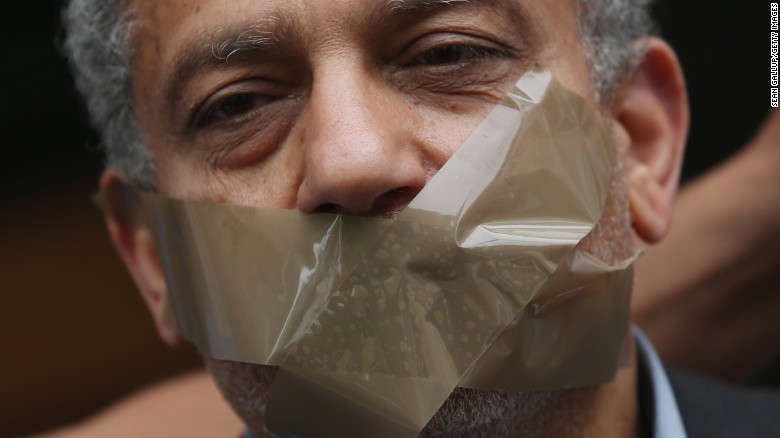
The Syria Campaign: Raed Saleh Speaks to U.N. Security Council Arria Briefing on June 26th
As a patriotic Syrian, I never imagined I would do this
In an incredibly candid and powerful address Raed Saleh, head of the White Helmets, speaks truth to power at the UN Security Council Arria Briefing on the 26th of June

Your Excellency ambassador Roman Oyarzun, Permanent Representative of Spain to the United Nations,
Your Excellency ambassador Francois Delattre, Permanent Representative of France to the United Nations,
Gentlemen, Representatives of UN Security Council member states,
First, I would like to thank you for extending this generous invitation to the Syrian Civil Defence (The White Helmets) and asking its head to attend this session to convey the message of the search and rescue teams in Syria about the suffering of the Syrian people due to the regime’s bombing with indiscriminate weapons, particularly barrel bombs.
I am not a politician, nor am I a diplomat. I am just a search and rescue worker. Therefore, I beg your forgiveness if I sound candid — the tragedy of my people demands it.
First, I would like to invite you to watch this short video as it provides a glimpse of the work we carry out in the aftermath of barrel bomb attacks and what this work means to us.
What you have seen is just one example of a single rescue operation that succeeded in saving a child. We have been able to save more than sixteen thousand lives in Syria from under the rubble, but unfortunately the number of civilians killed in indiscriminate bombing is much higher.
I cannot describe to you what our daily life is like as we deal with the human remains and the destruction that these weapons leave behind, especially after the Syrian army filled those weapons with poisonous chlorine gas that this very council had classified as a chemical weapon and had banned!
Syrians are killed everyday with various kinds of weapons, but the deadliest ones are the barrel bombs because of their indiscriminate nature. They destroy everything including schools, bakeries, hospitals, houses of worship and even cemeteries. Because of them the sounds of helicopters hovering in the Syrian sky are enough to cause terror and panic among civilians. That sound means anticipating death without anyone knowing where the barrel bomb will fall exactly and whom it will kill!
The moment sirens go off, we rush to the site of the barrel bomb attack and we try, with our very modest equipment, to search for survivors still under the rubble. More often than not, all we manage to dig out are the dead bodies and severed limbs of our neighbors, friends and sometimes relatives.
The terror we face is double-fold because the Syrian Air Force has adopted a new technique when carrying out their attacks. It’s called a double tap; the aircraft returns to the site of the attack minutes after the rescue teams arrive and people start to gather to rescue those who are still alive.
Due to our persistence and determination to carry out our humanitarian work despite the difficult circumstances, regime warplanes now regularly and deliberately target our teams and centres. We have lost 92 members of our search and rescue teams so far. Many of those we lost were killed in barrel bomb double taps while carrying out their duty.
In all the countries around the world, search and rescue teams are immune from bombing under the Geneva conventions, yet this is not the case in Syria. Just a few hours ago, my colleagues told me that the only two ambulances available in the village of Balyoon in the Idlib Countryside were destroyed in an aerial raid and that six civil defence volunteers were wounded.
Last month, my colleague, the head of the Civil Defence in Ma’aret Al-Artiq, in Aleppo suburbs, requested that we camouflage ambulances and fire engines by painting them with different colours because their original color makes them easy targets of the deliberate bombing! Can you imagine that?
Can you even imagine one single day of our lives?
Let me take you with me to the first day of June. On that day, we responded to 44 barrel bomb attacks across Syria—in Aleppo, Idlib, Daraa, Homs, and Rural Damascus—as well as seven rocket attacks and a chlorine gas attack. 136 people were killed, including a child, and all but 6 of the victims were civilians.
Even in wartime conduct, there is no justification for the use of this weapon since even the pilot himself who’s dropping the barrel bomb does not know exactly where it will fall as it is a truly indiscriminate weapon that cannot even be used on the front line as it can kill allied forces by mistake—which is why it is only ever dropped deep inside opposition-held areas.
The main purpose of this weapon is the collective punishment of the communities that live in areas outside regime control. The regime wants to make their lives a living hell to convey the false message that they cannot live except under the rule of the Assad family.
This is, of course, one of the main reasons that millions of Syrians have been displaced to neighboring countries, and it’s a real obstacle to the establishment of effective institutions that can govern on the ground.
There is no doubt whatsoever that the unrelenting indiscriminate killing of Syrians with these barrel bombs and other lethal weapons, the obstacles preventing Syrians from establishing civilian administrative institutions in liberated areas, and the absence of a political solution on the horizon are all fueling the spread of extremism.
Ladies and Gentlemen, what do you expect a simple Syrian citizen like me to ask from this council? Do we ask for more ambulances that the Syrian Regime will soon destroy anyway? Do we ask for more digging tools to recover bodies and limbs and bury them? Or do we ask for new resolutions condemning these acts to be added to the previous list of resolutions that you’ve signed, while some of you are still supporting the Syrian Regime politically, materially and militarily, including with spare parts for the aircraft used to drop these barrel bombs and kill more Syrians?
The international community has lost its credibility for Syrians in the absence of any political will to end the killing in Syria, and the UN Security Council has been transformed from the Security to the Insecurity Council in the eyes of the downtrodden because it has failed to uphold its own resolutions.
The Syrian people who are being killed every day, Ladies and Gentlemen, hold you responsible and demand that all measures available to end the killing, particularly with indiscriminate weapons, be taken immediately.
As a patriotic Syrian, I never imagined I would one day ask for a foreign intervention in my country, by land or air. But the lives of innocent women and children that we see dying in our hands every day compel us to ask for any intervention possible to stop the barbaric killing machine led by Bashar al-Assad, including preventing Syrian aircraft from flying, and especially preventing helicopters from hovering above us and dropping these bombs.
Before the strongest power on this planet, all I can do is ask that you awaken your conscience and tell me what you are going to do to stop these barrel bombs.
In all honesty, I hesitated a lot before coming here. Many of my colleagues asked me: why are you going? What do you expect from them?
My wish is that you provide me with an answer to take home with me.
Thank you.
Raed Al Saleh
Head of the Syrian Civil Defence
War Crimes Prosecution Watch Volume 10, Issue 8 – June 29, 2015
SNHR: Violations of the Right of Artists in Syria
Supreme Court Upholds Controversial Lethal Injection Drug Use
By Samuel Miller
Impunity Watch Reporter, North America and Oceania
WASHINGTON, D.C., United States of America —
The U.S. Supreme Court on Monday upheld the use of a controversial drug for lethal injection in executions; however, the Supreme Court may have opened a larger question about capital punishment, when two justices in the minority newly questioned whether the death penalty violates the Constitution. Justice Samuel A. Alito Jr. wrote for the majority that included Chief Justice John G. Roberts Jr. and Justices Antonin Scalia, Anthony M. Kennedy and Clarence Thomas.

The Supreme Court re-instated the death penalty in 1976 after having suspended it earlier in the 1970s. Capital punishment is now used in 31 states and by the federal government.
In the case, called Glossip v Gross, three inmates in Oklahoma argued that the sedative could not achieve the level of unconsciousness required for surgery, meaning severe pain and suffering was likely. But the court, in a 5-4 decision, handed a loss to the inmates after judges ruled they did not prove that midazolam was cruel and unusual when compared to known and available alternatives.
The majority opinion, written by Justice Samuel Alito, was a departure from a series of legal victories for liberals in recent days, including gay-marriage rights and the preservation of a major component of Obamacare. The court’s majority held that prisoners challenging an execution method as posing an unreasonable risk of severe pain must show that the government has overlooked a more humane method of carrying out capital punishment.
In the majority opinion, Alito writes, “The prisoners failed to identify a known and available alternative method of execution that entails a lesser risk of pain, a requirement of all Eighth Amendment method-of-execution claims.” Alito went on to state, “Second, the District Court did not establish that Oklahoma’s use of a massive dose of midazolam in its execution protocol entails a substantial risk of severe pain.”
The four dissenting justices wrote scathing opinions denouncing the approval of the lethal injections, as well as the prisoner’s right to choose the method for their execution. In her dissent, Justice Sonia Sotomayor bitterly denounced the court’s holding that those challenging a particular execution protocol had to show that a more humane method was available.
“Under the Court’s new rule, it would not matter whether the State intended to use midazolam, or instead to have petitioners drawn and quartered, slowly tortured to death, or actually burned at the stake: because petitioners failed to prove there was an available alternative, their challenge would automatically fail.”
Justice Stephen Breyer, in his dissent, raised the issue as to whether the death penalty should be interpreted as constitutional. With the concurrence of Justice Ginsberg, Breyer wrote, “We believe it highly likely that the death penalty now violates the Eighth Amendment.”
Several US states turned to midazolam when European manufacturers stopped supplying sodium thiopental to US prisons because of an EU ban on the sale of products used in lethal injections.
The shortage of various drugs used by the 32 US states that still have capital punishment led to some reintroducing other controversial methods, such as the gas chamber and firing squad.
For more information, please see:
BBC News — US Supreme Court backs use of contentious execution drug – 29 June 2015
CNN — Supreme Court backs use of lethal injection drug – 29 June 2015
Politico — Supreme Court permits lethal injection technique – 29 June 2015
Reuters — Supreme Court upholds lethal injections, blocks pollution rule – 29 June 2015
USA Today — Supreme Court refuses to ban controversial method of execution – 29 June 2015
Washington Post — Supreme Court upholds lethal injection procedure – 29 June 2015