By Kathryn Maureen Ryan
Impunity Watch, Managing Editor
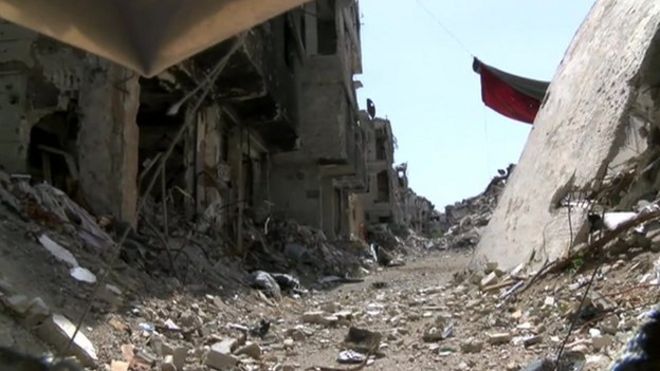
DAMASCUS, Syria – The United Nations Relief and Works Agency for Palestine Refugees has begun an urgent mission to Syria in response to growing concerns over the health and safety of thousands of Palestinian refugees and Syrian civilians living in the Yarmouk refugee camp which has been overrun in recent days by militants loyal to the Islamic State of Iraq and the Levant (ISIS). Pierre Krähenbühl, Commissioner-General for the agency in the Near East, is visiting Yarmouk to assess the situation in the camp, hear from refugees affected by the violence, and consult with leaders on how to get desperately needed aid to people in need. A statement by The United Nations relief and works agency said: “Never has the hour been more desperate in the Palestine refugee camp of Yarmouk. We demand humanitarian access and the establishment of secure conditions under which we can deliver life-saving humanitarian assistance and that enable civilians to be evacuated.”

Since 1 April, Yarmouk has been the scene of intense fighting between a number of armed groups including ISIS which has made it virtually impossible for civilians to leave the camp located near Damascus. Yarmouk is the largest Palestinian camp in Syria and has been home to several generations of refugees. The camp has been a frequent battlezone in the Syrian Civil war, today just 16,000 residents remain in the settlement, down from a high 200,000 before the war. Most of the residents of the camp fled to nearby Lebanon where they now live in overcrowded refugee camps becoming refugees for at least a second time. Some have attempted to flee on dangerous migrant boats to Europe and Egypt.
“It’s beyond a nightmare,” said Salim Salamah, a former resident of the Yarmouk refugee camp who now leads the Palestinian League for Human Rights and speaks daily to people still living in the camp. Camp residents who have reached out to the outside world through the Internet say they don’t know which to fear most, long-term hunger, bombings from the Assad regime or the presence of ISIS. “We are afraid of everything, of the future and the unknown,” said Sameh Homam, an activist living in Yarmouk who uses an alias because he is being hunted by both the Assad regime and the Islamic State of Iraq and the Levant.
The situation has been dire for the refugee camp for several years. Last year the community was largely cut off from the outside because of militant attacks as well as forces loyal to the Assad regime clash in the largely civilian community. For the civilians who remain in the community survival is a daily struggle. Chris Gunness, estimates that camp residents are surviving on 400 calories a day or less, he said, and conditions soon could become critical. “We simply cannot stand by and watch a massacre unfold,” U.N. Secretary General Ban Ki-moon said last week, urging concerted international action to save Yarmouk residents. “In the horror that is Syria, the Yarmouk refugee camp is the deepest circle of hell.”
For more information please see:
United Nations News Centre – UN Official on ‘Urgent’ Mission to Besieged Yarmouk Refugee Camp – 11 April 2015
The Washington Post – New Misery in Yarmouk, Symbol of Syria’s suffering – 11 April 2015
Belfast Telegraph – Isis Accused Of Beheading Captives In Palestinian Refugee Camp Yarmouk As Advance Towards Syrian Capital Damascus Continues – 7 April 2015
The Guardian – UN Warns Situation in Damascus Refugee Camp Is ‘Beyond Inhumane’ – 6 April 2015