Tunisia in shock following terror attack

By Ashley Repp

News Desk Reporter- Africa

TUNIS, Tunisia

               Many Tunisians are in a state of shock as they attempt to process the terror attack at the Bardo Museum on Wednesday afternoon that left a reported 25 people dead. Scores of people have taken to the streets to protest the terror attack, in an effort to defend the fragile democracy, which saw its first democratically elected president in December. The protesters carried signs condemning terrorism, asserting that terrorism is not representative of Tunisia or of Islam.
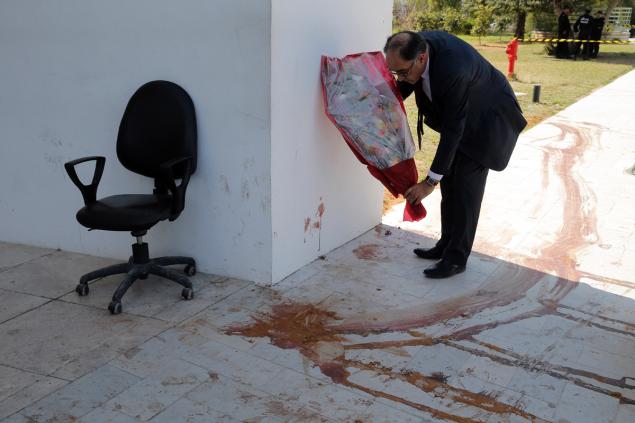
tunisia-attack
Mourner brings flowers to the site of the attack- photo courtesy of NY Daily News


Two of the attackers were killed during the siege by police, but little is known about the individuals, or who is ultimately responsible for the operation. ISIS has reportedly claimed responsibility for the attack; just prior to the attacks, an ISIS supporter tweeted “Coming good news to Tunisia’s Muslims.” ISIS has supporters in Algeria and an active presence in Libya. Tunisia, one of the region’s only democracies, lies geographically between Algeria and Libya, which makes it susceptible to ISIS activity and influence, as well as a target for operations aimed at disrupting democracy. Also problematic, thousands of Tunisians have already gone to Iraq and Syria to join ISIS. One of the two attackers killed had reportedly gone to Libya to receive training.

The attack will likely have a resounding impact on the tourism economy. Once a tourist destination, Tunisia had seen a substantial decline in tourism to the country, and only recently did the industry begin to grow again. Following Wednesday’s attack, some cruise companies have already decided to remove Tunisia from the list of countries their ships will stop at. The economic implications of the attack are likely to reveal themselves in the coming months if tourists decide to avoid Tunisia for safety concerns.

Photos taken from the scene reveal the gruesome nature of the attack. Blood from those slain by the attackers remained on the ground, congealing in the sun and heat. Those killed were predominantly tourists from cruise ships, and were visiting the Bardo Museum and Tunis for the day. Inside the museum, one staff member heard the gunfire and immediately ushered tourists in that wing into a room and shut the door, venturing out after the gunfire subsided.

Many expressed their shock and disbelief that such an attack could happen at the Bardo Museum, which is just steps away from Parliament. President Beji Caid Essebsi called on Tunisians to unite in the face of terror, asserting that “we won’t win if we don’t stand together.” Tunisians seem to be uniting under this call and protesting against extremism and terror.

For more information, please visit:

BBC News- Tunis museum attack: President urges unity to fight terror– Mar. 20, 2015

The Washington Post- Tunisia rampage raises new fears about reach of Islamic State groups– Mar. 19, 2015

The Guardian- Troops patrol streets of Tunis in aftermath of terror attacks– Mar. 19, 2015

Time- Tunis reels from a terror attack possibly linked to ISIS– Mar. 20, 2015
Indonesia Postpones Drug Related Executions of 10 Prisoners

By Max Bartels

Impunity Watch Reporter, Oceania 


Jakarta, Indonesia

The Indonesian government has postponed the executions of 10 prisoners convicted of drug smuggling charges. The government has postponed the executions to deal with the appeals of several of those scheduled to be executed; the government claims the appeals could take months to work through. The Indonesian government has been under significant pressure by the international community to halt its practice of executing those who are convicted of drug smuggling charges. The President of Indonesia declared narcotics a “national emergency” and imposed a death penalty in Indonesia, which hasn’t been used since 2013 in any criminal case.

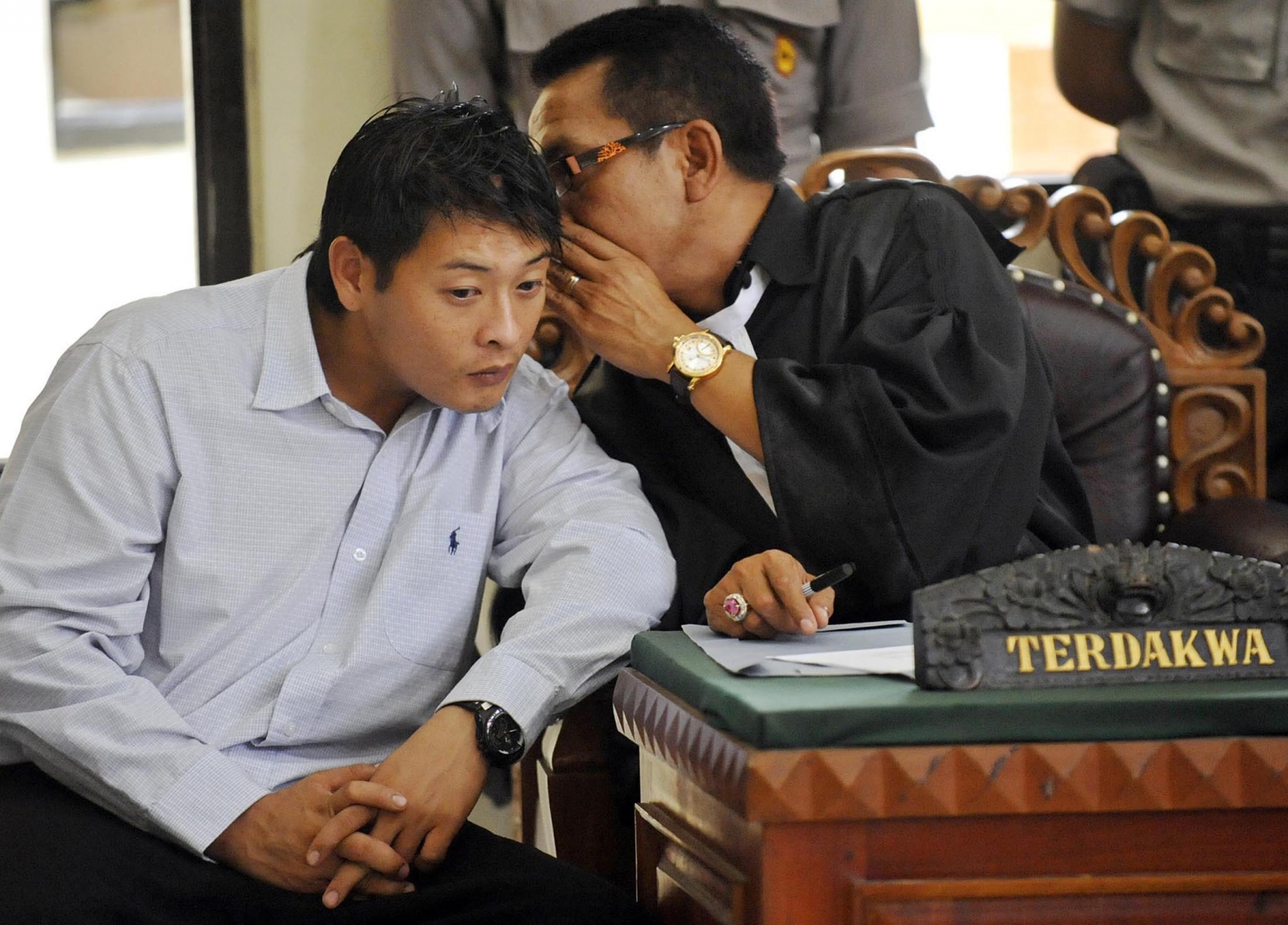
Andrew Chan consults with his lawyer during his original conviction. (Photo curtesy of the International Business Times)

In January Indonesia executed five foreign citizens who were convicted of drug smuggling charges in Indonesia. Since then, two Australian citizens have been sentenced to death for smuggling heroin as part of the “Bali Nine” drug smuggling organization. The two Australians, named Andrew Chan and Myuran Sukumaran argue that they are reformed and have expressed remorse for the crime as well as argue they have been model prisoners.

Both men appealed to the President for clemency to halt their executions. The President rejected their appeals and the executions were scheduled to continue as planned. Government officials claim that there are no avenues under Indonesian law to appeal the Presidents decision on a clemency appeal. However, the defense attorneys claims that the President did not actually read the case files of the two men before he rejected their appeals. The lawyers for Chan and Sukumaran have until March 25th to prepare their argument and submit evidence to challenge the president’s rejection of their earlier clemency appeal, with March 30th being the day the defense is scheduled to present their case.

In addition to the two Australian citizens there are several other foreign prisoners who have been sentenced to death that are attempting to appeal their sentences and convictions. Two Nigerian prisoners are also appealing the President’s clemency rejection, as well as a French citizen and Ghanaian citizen who are asking the Indonesian Supreme Court to review their convictions. Indonesian officials have expressed concerns over the timing of the executions. If all the executions are not carried out simultaneously it would create further problems for the government, the executions must now wait until the appeals of all the convicts are resolved before any of the executions can move forward.

For more information, please see: 

The NY Times — Indonesia Postpones Drug- Case Executions Amid Legal Challenges — 19 March, 2015

ABC News — Indonesia Defers Execution of 10 Drug Traffickers — 18 March, 2015

International Business Times — Bali Nine Executions: Indonesian Court Postpones Clemency Appeal Hearing for 2 Australian Convicts — 19 March, 2015 

The NY Times — Indonesia: Executions are Delayed — 18 March, 2015

Rights Disregarded: Prisons in the Islamic Republic of Iran


logo 3

Rights Disregarded: Prisons in the Islamic Republic of Iran
(March 18, 2015) – Today the Iran Human Rights Documentation Center (IHRDC) has released its newest report, “Rights Disregarded: Prisons in the Islamic Republic of Iran.” The imprisonment of successive generations of activists, human rights defenders, and journalists, and other citizens by governments both before and after the Revolution of 1978-79 have turned the country’s prisons into a central stage in Iranian political and cultural life. This report examines that stage by taking a tour of fifteen detention facilities across Iran through the eyes of inmates past and present.
In exploring previously-unreleased testimony and other accounts including letters and memoirs from current and former political prisoners, the report presents a broad-ranging investigation of prison conditions and the treatment of political prisoners in Iran’s penal system. Iran’s prisons are shown to suffer from extreme overcrowding, poor hygiene and water quality, inadequate medical facilities, violence targeting political prisoners and prisoners of conscience, and chronic abuse of prisoners by the authorities.
Rod Sanjabi, IHRDC’s Executive Director, stated, “For years, all evidence coming from inside Iran’s prison system has readily demonstrated that the reality of prison life in Iran is extremely grave,” adding, “It is apparent that the Islamic Republic has not endeavored to uphold either international instruments like the Standard Minimum Rules for the Treatment of Prisoners or its own domestic prisons regulations, both of which are habitually and indeed systematically ignored by the Prisons Organization and the Judiciary that oversees it.”
The report can be accessed here.

Mexico’s Guerrero State Continues To Be Plagued By Violence: Politicians Targeted

By Lyndsey Kelly
Impunity Watch Reporter, North America

MEXICO CITY, Mexico – Aide Nava, a 42-year-old woman running for mayor, has been kidnapped and decapitated in Northern Guerrero, a Southwestern Mexican state. This same state has been the location of numerous violent crimes and most notably the recent murders of approximately 43 student teachers, which sparked the biggest crisis of President Enrique Peña Nieto’s administration.

Relatives of missing students gather in Mexico City to protest violence occurring in Guerrero State. (Photo Courtesy of The Guardian).

Guerrero, along with eight other Mexican states, is set to hold gubernational elections in June. Nava, a candidate from the leftist Part of the Democratic Revolution was kidnapped in the town of Ahuacuotzingo, the municipality she hoped to become mayor of in the June elections. A threatening note was left next to Nava’s body, stating that the same treatment would be given to any politician who does not “fall in line.” The note was signed by “Los Rojos,” one of the main criminal groups in Gurrero. Gurrero’s chief prosecutor Miguel Angel Godinez did not confirm local media reports that Nava has been beheaded, but said “it is a very unfortunate and important case that we have to treat with a great deal of care.”

Violence throughout the state is prevalent. Nava’s husband, Francisco Quiñónez, who served as mayor of the same town Nava sought to run for mayor in, was shot dead in June 2014, two years after the couple’s son disappeared after being kidnapped. Additionally, two weeks prior to Nava’s death Leticia Salazar, the mayor of Matamoros, suffered an armed attack on a convoy she was travelling in. Further, Juan Acosta, the mayor of the town of Choix in the state of Sinaloa, is currently hospitalized after suffering bullet wounds sustained in an attack on a vehicle he was traveling.

More than 100,000 people have died in violence linked to drug cartels in Mexico during the past eights years. There have been no significant improvements in the security of citizens. Unfortunately, it seems as though now, the people who can make a difference in controlling the violence through the enactment of reforms, are the targets of the violence.


For more information, please see the following:

THE GUARDIAN – Mexican Mayoral Candidate Reportedly Decapitated – Body Found on Dirt Road – 11 Mar. 2015.

HUFFINGTON POST – Mayoral Candidate Aide Nava Decapitated in Mexico’s Guerrero State – 11 Mar. 2015.

LATIN POST – Mexico Drug Cartel News: Mayoral Candidate Aide Nava Found Decapitated in Guerrero Along With Threatening Note Written By Gang – 12 Mar. 2015

REUTERS – Mexico Mayoral Candidate Decapitated in Northern Guerrero State – 11 Mar. 2015.


7 Days For Syria: Starting March 15th