Despite Ukraine-Russia Truce Holding, Tension Between Russia and Baltic States Remains High
By Kyle Herda
Impunity Watch Reporter, Europe
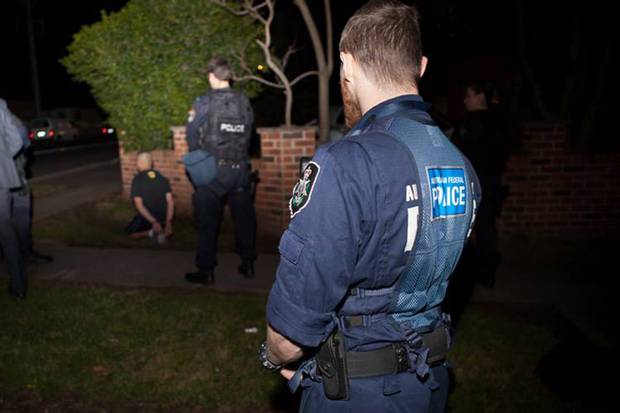
VILNIUS, Lithuania – In Russia’s most recent move against the Baltic states of Latvia, Estonia, and Lithuania, Moscow has sought to reopen criminal investigations into Lithuanian residents who refused to serve in the Soviet army after Lithuania declared dependence in 1990. An estimated 1500 young people refused the orders nearly 25 years ago, and now Russia wants them to pay.

While Russia has already made this same request once prior, roughly ten years ago, the surrounding context now makes the situation more dire. The recent abduction of the Estonian border guard, coupled with Russia’s current attempt to prosecute him for allegedly spying, has forced the Lithuanian State Security Department to advise Lithuanians who withdrew from the Soviet army in 1990 to refrain from traveling outside of Lithuania, or at least outside of any European Union or NATO countries.
Lithuanian President, Dalia Grybauskaite, has taken the additional step to establish certain strategic sectors of the Lithuanian economy as those that should have major investments first vetted to the government. This comes as a matter of national security after a Russian-led company leased two large plots of land next to Siauliai airport, where NATO planes patrol the Baltic skies. NATO currently has Operation Reassurance based in Siauliai, and the aims of this operation are to preserve NATO European airspace and safeguard NATO nations from air attacks, specifically in response to Russia’s recent aggressions in eastern Europe.
Russia has also flown jets close to Baltic borders over 140 times this year, and recently successfully tested its new Bulava Intercontinental Ballistic Missile (“ICBM”) with a range of 8,000 kilometers. Russia has recently spoken out about securing the rights and interests of ethnic Russians. Russia’s Foreign Ministry chief monitor of human rights overseas, Konstantin Dolgov, in a speech in Latvia’s capital, Riga, said, “It has to be stated with sadness that a huge number of our compatriots abroad, whole segments of the Russian world, continue to face serious problems in securing their rights and lawful interests.”
As long as the military remains involved on both sides of the border, there will remain worry and uneasy feelings for all parties involved. On the one hand, worries in the Baltics are completely justified, as the situation in Ukraine prior to both Russia’s annexation of Crimea and the subsequent invasion by Russia of eastern Ukraine draws many parallels to what we are seeing now in Russia’s behavior towards the Baltic States. On the other hand, the situation in the Baltics differs from Ukraine in that NATO has already stated that a military response would come for the Baltic States in the event of a Russian invasion, citing Article 5 of the North Atlantic Treaty as justification of such an event.
So while concerns that this may be Crimea all over again carry heavy weight, they may not be entirely justified. While the situation began very similarly, the implications here if events continue down the same path would result in a very different, and potentially much bloodier, outcome. Perhaps this will deter either side from pushing too far, or perhaps this will allow for a much greater escalation in events.
For more information, please see:
Ottawa Citizen – Photos: CF-18 and F-16 Falcons over Lithuania – 17 September 2014
Reuters – Lithuania to vet more investments for national security risks – 17 September 2014
Baltic Review – Lithuanians Strongly Advised to Refrain from Traveling to Countries Outside the EU or NATO – 17 September 2014
The Baltic Times – More Russian jets near Baltic borders cause for concern, says army chief – 17 September 2014
The Moscow Times – Russia Sees Need to Protect Russian Speakers in NATO Baltic States – 16 September 2014
Canada National Defence and the Canadian Armed Forces – Operation REASSURANCE – 12 September 2014
The Moscow Times – Russia Proves Nuclear Muscle With Ballistic Missile Launch – 10 September 2014
Military Violence Ignited Public Fury in South Korea
By Hojin Choi
Impunity Watch Reporter, Asia
SEOUL, South Korea – There are two recent cases that implicitly demonstrate the abuse problems in the South Korean military.
In June, Sergeant Lim opened fire on his fellow soldiers. Five soldiers were killed and seven were injured. They were returning to their base after training, and, surprisingly, it was not a shooting spree since the sergeant aimed at each one of the victims. He attempted to commit suicide, but was arrested with severe injury.

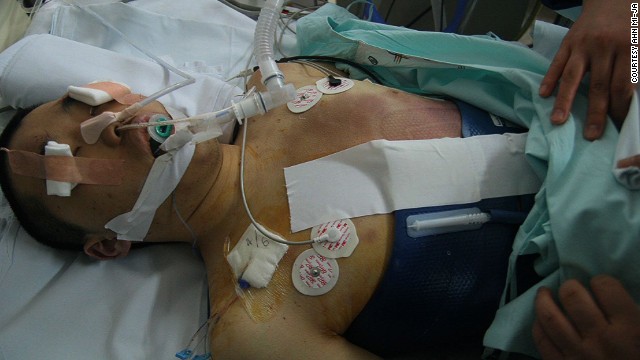
In April, Private Yoon died in his military base after being beaten to death by his senior troops. Yoon had suffered from habitual abuse and bullying at the hands of his fellow troops. This incident was unknown to the public until the Korean civic group, the Center for Military Human Rights, revealed it.
These two cases have several similarities. First, at the outset, there were bullying problems. Second, Both Lim and Yoon faced their situations by themselves without any help from outside. The only difference is that Yoon had endured his suffering until he died while Lim exploded his anger through extreme retaliation, murdering his comrades. Several Korean media stated that if Lim did not kill the aggressors, he would have ended up like Sergeant Yoon.
What the 20-year-old private, Yoon, had suffered is close to torture. He was denied food and forced to consume phlegm and his own vomit. He was beaten with fists, feet, and mop handles until they broke. When he became groggy, he was hooked up with intravenous drip to be revived and beaten again as he woke up. He was ordered to hold “horse-riding” stances for hours and forced to have an irritating salve rubbed on his genitals. On April 6, he was forced to eat frozen food right after being punched and kicked. He died thereafter.

One of the key causes leading to such severe military violence is the closed environment of the military. Its strict and conservative hierarchy system tends to obscure the violence even after someone dies. This tendency is related to promotions of higher rank officials. Moreover, a strong “pecking order” within Korean society makes its people more vulnerable to bullying problems not only in the military but also at work places and in schools.
In Yoon’s case, several officials did recognize Yoon’s situation, but did not take action to intervene. The military officially confirmed his cause of death as choking. However, after the public outcries, it changed its report to “death from shock” by intensive physical abuses. The military has since brought murder charges against the suspects in Yoon’s case.
In addition to the characteristics of the military and society, the conscription system makes the violence function as a vicious circle. In South Korea, it is mandatory for all male citizens to join the military for 2 to 3 years. When lower rank soldiers become senior ranks, they repeat the violations that they have suffered on the new soldiers.
According to a statistical inquiry, there are 152 dead bodies, which are classified as death from “failure to adjust to military life,” kept in the military morgue. Their families have refused to take the bodies until the “truth” is revealed by independent investigations that include civil experts. In recent five years, over 120 soldiers have died in the military and 80 of them were classified as “suicides.” Allegedly, some of the bodies with “suicide” tags are not even real suicide cases.
In South Korea, people who could legally avoid the military duty by substituted work or low levels of physical condition are called “sons of god.” Private Yoon’s mother, Ahn Mi Ja, said to CNN that “I wanted to do to them exactly what they did to my son.”
For more information, please see:
CNN – South Korean soldiers face murder charge amid bullying claim – 4 September 2014
The New York Times – Outrage Builds in South Korea in Deadly Abuse of a Soldier – 6 August 2014
Asian Human Rights Commission – SOUTH KOREA: Military camps or government run torture centres? – 28 August 2014
BBC – South Korea military under fire over abuse – August 27 2014
Venezuelan’s Plastic Surgeons are Seeing the Impact of Shortages
By Delisa Morris
Impunity Watch Reporter, South America

CARACAS, Venezuela — There’s nothing new about Venezuelan’s complaining over chronic shortages since the governments restrictive currency controls deprive local businesses of the money to import foreign goods. However, outcry from Venezuelan women has begun to grow louder since FDA approved silicone breast implants have become scarce within the country.
Many women are so desperate that they and their doctors are turning to implants that are the wrong size or made in China, with less rigorous quality standards. Previously, Venezuelans had easy access to implants approved by the U.S. Food and Drug Administration.
Today doctors say they are now all-but impossible to find because restrictive currency controls have deprived local businesses of the cash to import foreign goods. It may not be the worst shortfall facing the socialist South American country, but surgeons say the issue cuts to the psyche of the image conscious Venezuelan woman. Venezuelan’s are obsessed with their appearance.
“The women are complaining,” said Ramon Zapata, president of the Society of Plastic Surgeons. “Venezuelan women are very concerned with their self-esteem.”
Venezuela has one of the world’s highest plastic surgery rates, and the breast implant is the premiere procedure. Doctors performed 85,000 implants there last year, according to the International Society of Aesthetic Plastic Surgery. Only the U.S., Brazil, Mexico and Germany, all with much larger populations, saw more breast implants.
While there are no official statistics on how many Venezuelans are walking around with enhanced busts, a stroll down any Caracas street reveals that the augmentations are prevalent there more than in other surgery-loving places. The mannequins even look like they have had breast implants.
In the recent past, women could enter raffles for implants held by pharmacies, workplaces and even politicians on the campaign trail. During this spring’s anti-government street demonstrations, the occasional sign protesting the rising price of breast implants blended with posters against food shortages and currency devaluation.
“It’s a culture of ‘I want to be more beautiful than you.’ That’s why even people who live in the slums get implants,” surgeon Daniel Slobodianik said.
Slobodianik used to perform several breast implants each wee, but now performs about two a month. He says women call his office daily to ask for the specific implant size they’re looking for and when they can’t find it they almost always size up.
Frustrated, the women have little sympathy, especially not from the government. The consumerism of plastic surgery never fit with the rhetoric of socialist revolution. The late President Hugo Chavez called the country’s plastic surgery fixation “monstrous,” and railed against the practice of giving implants to girls on their 15th birthdays.
For more information, please see:
CBS News – Breast Implant Shortage in Venezuela – 15 Sept 2014
Huffington Post – Breast Implants are Newest Shortage in Venezuela – 15 Sept 2014
NBC News – Venezuela’s Chronic Shortages Hit Brand-Name Breast Implants – 15 Sept 2014
Daily News – Venezuela’s Shortage of Breast Implants Leads to Riskier Decisions – 15 Sept 2014
Syrian Refugees Attacked in Lebanon
By Kathryn Maureen Ryan
Managing Editor Impunity Watch
BEIRUT, Lebanon – Ibrahim Abbas Ali and his family, who fled the deadly civil war in Syria in the hopes of finding safety in neighboring Lebanon, awoke in the middle of the night to the sound of gunfire outside their tent in a makeshift refugee camp housing around 200 people. The family fled to the nearby fields. The Gunmen set fire to several tempts, including the one used by Mr. Ali and his family, destroying the few belongs the family of 18 managed to bring across the border. The family also lost their officials documents, including their U.N. refugee cards. “We lost all the aid we received from the U.N. and all we were left with are the clothes we are wearing,” Mr. Ali said.

The camp appears to have been the target of a wave of so called revenge attacks that were carried out after one of several Lebanese soldiers who was captured by militants in Syria in a cross-border wave was beheaded by jihadists earlier this months. The killing of the Shiite soldier by Sunni extremists has aggravated sectarian tensions in Lebanon, a country whose population is now about 50% refugees, which has become bitterly divided over the ongoing war in Syria.
Violence targeting the refugee population has spread to the capital where a mob of young men attacked Syrian refugees sheltering under a bridge over the weekend. In other parts of Beirut, leaflets have been dispersed calling on Syrians to leave or “be slaughtered or tortured to death.”
Gunmen attacked refugees living in a camp near the town of Brital. The residents described a night of terror that was reminiscent of the horrors they fled in Syria. Mohammed Darwish, 45, said most of the camp’s residents were sleeping on the night of Sept. 6 when gunmen, many of them wearing masks, arrived in several SUVs. “Oh you dogs. We are coming to slaughter you,” he heard the gunmen yell as they fired their weapons into the air, driving out the camp the terrified residents. Mr. Darwish said he too fled into the nearby fields with his six children. A Lebanese resident of the town of Brital said the attack was carried out by local “thugs and troublemakers” who do not represent the feelings of the Brital community.
“We live in the fear of being subjected to an attack, although we have not been threatened,” said Fatoum Allawi, 65, who fled from the northern Syrian town of Saraqib and is now sheltering near Riyak. “We are mostly women and children here with a few men who work nearby,” she said as she sat on a plastic chair holding her granddaughter.
Syrian refugees living in Lebanon have faced discrimination both from violent thugs and members of the community who resent their entering the country and members of the government who have refused to recognize their status as refugees and have refused to provide government assistance to Syrians fleeing atrocity at home. Earlier this month the Lebanese Labor Minister Sejaan Azzi proposed that all Syrian refugees should go home suggesting that they should return to rebel held or regime held areas based on their loyalties. He said, “What is at stake now is the proposal that refugees who trust the regime return to the areas under regime control, and those who have faith in Nusra Front and ISIS go to the regions under their control.”
Shortly after the Labour ministers statements the Lebanese government announced its intention to set up two camps for Syrian refugees along the border, marking the first time the government established such camps in the three year history of the deadly conflict in Syria. Social Affairs Minister Rashid Derbas announced the plan last Thursday. “The Council of the Ministers has taken a decision to set up camps for Syrian refugees, one in the Bekaa valley in the Masnaa area and one in the Abda area in northern Lebanon,” Derbas said. “Estimates are that each camp could accommodate 10,000 people,” he added.
The sudden influx of refugees into the ebonies population has placed great strains on the country’s limited resources. The government has so far failed to adequately address the issue, inflaming tensions between Lebanese citizens and refugees fleeing violence in Syria, who now fear that the war has followed them across the border. Aisha Mohammed, a 26-year old Syrian refugee said she came from Syria’s northern province of Raqqa, which is now held by the Islamic State of Iraq and the Levant group and has come under increasing attack by Syrian regime warplanes. “I wish I could return to Raqqa but the bombings have intensified,” she said. “We have fled from fear in Syria and here we are living in fear in Lebanon.”
For more information Please see:
USA Today – Syria refugees attacked in Lebanon – 13 September 2014
The Daily Star: Lebanon – Lebanon minister: All Syrian refugees must return home – 5 September 2014
The Daily Star: Lebanon – Lebanon to open first Syria refugee camps: minister – 11 September 2014
The New York Times – Syrian Refugees Surpass 3 Million, U.N. Says – 29 August 2014