Thousands Gather to Protest in Poland over Parliament and Prime Minister’s Actions

By Ben Kopp
Impunity Watch Reporter, Europe

WARSAW, Poland – Poland experienced one of its largest demonstrations in recent years, in response to a lagging economy. Prime Minister Donald Tusk characterized the demonstration as an attempt to overthrow the government.

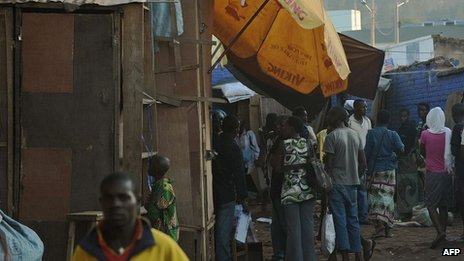
Tens of thousands march in Warsaw against Prime Minister Tusk and his coalition. (Photo courtesy of BBC News)

Since 10 September 2013, in response to labor law reform proposals, tens of thousands have marched in Warsaw. Organized by trade unions, the march included a variety of banners, flags, and trumpets. The city council suggested that demonstrators remained peaceful during the march, although some report that smoke grenades were thrown in Castle Square.

While Poland was the only European Union to avoid recession from the economic crisis’s start—and has experienced two decades of uninterrupted economic growth—demonstrators complain that Poland remains behind Western Europe. As the Eurozone struggled through a recession in the first fiscal quarter of 2013, Poland’s economic growth slowed to 0.1%.

“One has to protest because it is getting worse,” said a young woman named Ola. “Compared to Western states we are a sinking ship, despite the fact that we are in the center of Europe and we have the prerequisites to become a European powerhouse.”

In February 2013, the unemployment rate hit a six-year high of 14.4%. Demonstrators demanded that the Polish government increase the minimum wage, provide greater job security, and return the retirement age to 65 for men and 60 for women. Recently, a new law lifted the retirement age to 67 for everyone.

Several also called for Tusk to resign for his failure to improve unemployment rates. Unions add that Tusk refuses to hear their demands or engage in dialogue. While Tusk is Poland’s longest-serving prime minister since communism fell in 1989, his coalition’s popularity is at its lowest level since he took office in 2007.

“We want the departure of Donald Tusk. This is the only way to change social policy in Poland,” Marek Lewandowski, spokesman for the Polish trade union federation Solidarity, told the AFP news agency.

Among the 100,000-120,000 demonstrators, reports suggest that the political right and left joined together in their demands.

“The government gets its last warning today. If it draws no conclusions, we will block the whole country, all roads and highways,” Jan Guz, leader of the OPZZ union told demonstrators.

Marek Duda, the leader of the conservative Solidarity Union said, “We’re becoming slaves in our own country.”

While Tusk’s Civic Platform party waits to compete in the 2015 parliamentary election, regional governments and the European Parliament will hold elections in 2014.

In recent weeks, three of Tusk’s Members of Parliament have resigned. Lawmaker Jacek Zalek, who resigned on 12 September 2013, told reporters the “protests were a sign that we were unable to rise to the challenges that were put before us by Poles.”

Tusk contends that his revised 2013 budget, which passed through parliament, “proves that the government’s majority is stable.”

Peaceful protests provide leaders an opportunity to address public problems, yet can only remain peaceful where the people are heard. Absent an ear, voices become acts, which create arrests and, possibly, impunity.

For further information, please see:

Radio Free Europe/Radio Liberty – Poles Stage Huge Antigovernment Protest in Warsaw – September 15, 2013

Al Jazeera – Thousands Protest against Polish Government – September 14, 2013

BBC News – Mass Anti-Government March in Poland against Reform – September 14, 2013

Reuters – Tens of Thousands Join March for Jobs in Poland – September 14, 2013

Washington Post – 100,000 Polish Unionists Protest Government Labor Policies in Warsaw March, Threaten to Strike – September 14, 2013

The Guardian – Poland Must Rediscover the True Meaning of Solidarity – September 13, 2013

United States and Russia Reach Syria Chemical Weapons Agreement

By Thomas Murphy
Impunity Watch Reporter, Middle East

DAMASCUS, Syria – The United States and Russia have announced an agreement designed to eliminate Syria’s chemical weapons supplies by mid-2014. Syria has been given one week to provide a list of its full chemical weapons stockpiles and must allow for United Nations chemical weapons inspections immediately.

John Kerry, United States Secretary of State, and Sergey Lavrov, Foreign Minister of Russia, shook hands and addressed the media after reaching an agreement on Syria’s chemical weapons. (Photo Courtesy of Reuters)

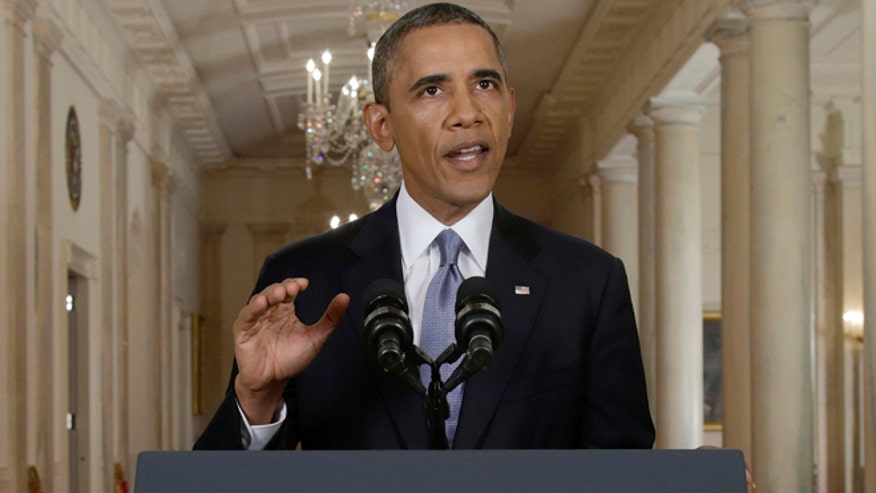
If Syria fails to uphold the agreement, it may be enforced by a UN resolution under Chapter VII of the U.N. Charter which allows for sanctions and military intervention. There is currently no such resolution in place, but President Obama reiterated his position that “if diplomacy fails, the United States remains prepared to act.”

US Secretary of State John Kerry provided a six point outline of the plan:

  1. The amount and type of chemical weapons must be agreed upon and “rapidly” placed under international control
  2. Syria must submit within one week a comprehensive listing of its stockpiles
  3. Extraordinary procedures under the Chemical Weapons Convention will allow “expeditious destruction”
  4. Syria must give inspectors “immediate, unfettered access” to all sites
  5. All chemical weapons must be destroyed, including the possibility of removing weapons from Syrian territory
  6. The U.N. will provide logistical support, and compliance may be enforced under Chapter VII

“Providing this framework is fully implemented it can end the threat these weapons pose not only to the Syrian people but also to their neighbours,” Kerry said. “Because of the threat of proliferation this framework can provide greater protection and security to the world.

“The world will now expect Assad’s regime to live up to its commitments… There can be no room for games. Or anything less than full compliance.”

Not unexpectedly, General Salim Idris of the Free Syrian Army heavily criticized the agreement.

“We cannot accept any part of this initiative,” he said. “The FSA will work towards toppling Assad and does not care about US-Russia deals. I and my brothers in arms will continue to fight until the regime falls.”

He added that the FSA was “frustrated, and feels betrayed by the international community. It has no faith the UN will ever support it”.

For further information, please see:

Al Jazeera – Syria given week to declare chemical weapons  – 14 September 2013

BBC – US and Russia agree Syria chemical weapons deal – 14 September 2013

Reuters – U.S., Russia agree on Syria weapons, Obama says force still option – 14 September 2013

Washington Post – U.S., Russia reach agreement on seizure of Syrian chemical weapons arsenal –  14 September 2013

African Union Demands Halt in Kenyan Leaders’ ICC Case

By Erica Smith

Impunity Watch Reporter, Africa

THE HAGUE, Netherlands – The African Union (AU) has asked that the International Criminal Court (ICC) to halt the cases against Kenyan president Kenyatta, his Deputy William Ruto and journalist Joshua arap Sang until after its application to have the cases moved.

Kenya’s Deputy President William Ruto, right, speaks with his defense counsel Karim Khan ( Photo Courtesy of The Christian Science Monitor)

The AU also wants to two leaders to be able to choose which session of the trial they would like to attend so that the leaders will be able to carry out their constitutional responsibilities.

The AU sent a letter to the ICC and the United Nations Security Council on September 10th arguing that the court should determine whether the cases can be moved before the trials progress further.

“The prosecution has ignored several procedural requirements having the effect of eroding the principles on natural justice. The court’s attention has been drawn to this aspect on two occasions by its own judges. This leaves the African Union with no option but to ask that until the request of the AU is considered and clearly responded to, the cases should not proceed.” The letter signed by AU Chairperson Hailemariam Desalegn and by AU Commission Chairperson Nkosazana Dlamini-Zuma stated.

The AU further argued that Mr. Ruto should not be forced to attend all the trial sessions even though the ICC prosecutor is appealing an earlier decision that he would not have to attend them all. The AU believes that Mr. Ruto will be unable to carry out his constitutional duties if he is forced to attend every session.

The AU pointed out that there are two high level security meetings slated for this month that Kenyatta would not be able to attend as a result of the ICC trial against Ruto. The AU believes that  Kenyatta not participating in the meetings will seriously affect Kenya’s efforts towards peace and security.  The AU also believes that the trials would undermine Kenya’s role in the international arena and that the trials should not infringe on the responsibilities of the two Kenyan leaders.

“While Kenya has always cooperated and reiterated its commitment to continue cooperating with the court, it must do so in the context of its own constitutional requirements,” the AU wrote.

For further information, please see:

All Africa — Africa: ICC Allows Five African States to Join Ruto Appeal — 14 September 2013

All Africa — Kenya: Stop Uhuru Ruto Trials, AU Demands — 13 September 2013

The Christian Science Monitor — Can Kenya’s leaders skip part of their international crimes trials? — 13 September 2013

All Africa — Africa: Halt ICC Cases, Give Kenyan Leaders Leeway – AU — 12 September 2013

Philippine Government and Rebel Leader Discuss Truce

Kevin M. Mathewson
Impunity Watch Reporter, Asia

ZAMBOANGA, Philippines — The leader of a Muslim Rebel group whose members have been locked in a deadly fight with Philippine forces in Zamboanga city has agreed to ceasefire talks, officials say.

Over 15,000 residents have left their homes because of the violence. (Photo courtesy of Reuters)

Roughly 180 gunmen from the Moto National Liberation Front (MNLF) infiltrated six coastal districts of Zamboanga city before dawn on Monday. The siege, lasting for roughly five days, resulted in over 200 people dead and at least 100 residents taken hostage.

It’s been estimated that 15,000 residents of Zamboanga have been displaced by the violence.

Vice-President Jejomar Bonay, who spoke with rebel leader Bur Misuari, says the proposed truce will begin Saturday. No conditions have been set in exchange for the agreed ceasefire.

“The details of a peaceful settlement can be threshed out with a ceasefire in place.” Vice-President Bonay told Associated Press. Vice-President Bonay plans to join President Benigno Aquino in Zamboanga on Saturday.

President Benigna Aquino visited Zamboanga earlier in the week to speak with Philippine troops and the residents displaced by the violent clash. There, he warned in a speech that his government would not hesitate to use force to end the crisis. His administration has faced Muslim Rebel groups since he came into power in 2010.

There are over 1,000 troops currently in Zamboanga city, battling to drive MNLF back after the rebels set fire to resident’s homes.

Fighting broke out as recently as Thursday, where a mortar fired by the rebels landed on a street in front of a government hospital in the village of Santa Catalina. Four members of the Red Cross were reported injured as a result of the attack.

The MNLF was created by Nur Misuari in 1971, with the goal of fighting the Philippine state for an independent Islamic nation.  The MNLF then signed a peace agreement with the Philippine government in 1996.

However, Misuari accused the government of violating the terms of the 1996 agreement by negotiating a separate peace deal with a rival faction, the Moro Islamic Liberation Front.

For further information, please see:

BBC News – Philippines standoff: Rebels agree to ceasefire talks – 13 September 2013

Bangkok Post – Philippines VP says rebel leader agrees to discuss truce – 13 September 2013

Yahoo! News – Philippines VP says rebel leader agrees to discuss truce – 13 September 2013

South China Morning Post – Muslim rebels in Zamboanga stand-off agree to ceasefire – 13 September 2013

Sky News – Philippines: Fighting Intensifies In Stand-Off – 13 September 2013