
SNHR: Human Rights’ Violations in Syria (Figures and Facts)
[scribd id=168152933 key=key-1iqsjplo1l494z6tt10k mode=scroll]
Kevin M. Mathewson
Impunity Watch Reporter, Asia
ZAMBOANGA, Philippines — The leader of a Muslim Rebel group whose members have been locked in a deadly fight with Philippine forces in Zamboanga city has agreed to ceasefire talks, officials say.

Roughly 180 gunmen from the Moto National Liberation Front (MNLF) infiltrated six coastal districts of Zamboanga city before dawn on Monday. The siege, lasting for roughly five days, resulted in over 200 people dead and at least 100 residents taken hostage.
It’s been estimated that 15,000 residents of Zamboanga have been displaced by the violence.
Vice-President Jejomar Bonay, who spoke with rebel leader Bur Misuari, says the proposed truce will begin Saturday. No conditions have been set in exchange for the agreed ceasefire.
“The details of a peaceful settlement can be threshed out with a ceasefire in place.” Vice-President Bonay told Associated Press. Vice-President Bonay plans to join President Benigno Aquino in Zamboanga on Saturday.
President Benigna Aquino visited Zamboanga earlier in the week to speak with Philippine troops and the residents displaced by the violent clash. There, he warned in a speech that his government would not hesitate to use force to end the crisis. His administration has faced Muslim Rebel groups since he came into power in 2010.
There are over 1,000 troops currently in Zamboanga city, battling to drive MNLF back after the rebels set fire to resident’s homes.
Fighting broke out as recently as Thursday, where a mortar fired by the rebels landed on a street in front of a government hospital in the village of Santa Catalina. Four members of the Red Cross were reported injured as a result of the attack.
The MNLF was created by Nur Misuari in 1971, with the goal of fighting the Philippine state for an independent Islamic nation. The MNLF then signed a peace agreement with the Philippine government in 1996.
However, Misuari accused the government of violating the terms of the 1996 agreement by negotiating a separate peace deal with a rival faction, the Moro Islamic Liberation Front.
For further information, please see:
BBC News – Philippines standoff: Rebels agree to ceasefire talks – 13 September 2013
Bangkok Post – Philippines VP says rebel leader agrees to discuss truce – 13 September 2013
Yahoo! News – Philippines VP says rebel leader agrees to discuss truce – 13 September 2013
South China Morning Post – Muslim rebels in Zamboanga stand-off agree to ceasefire – 13 September 2013
Sky News – Philippines: Fighting Intensifies In Stand-Off – 13 September 2013
By Brandon Cottrell
Impunity Watch Reporter, North America
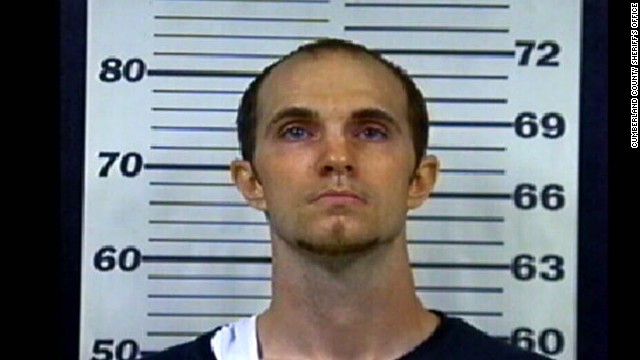
WASHINGTON, D.C., United States – Jacob Allen Bennett was named a suspect in the rural Tennessee murders of John Lajeunesse, age 16; Steven Presley, age 17; Dominic Davis, age 17; and Danielle Jacobson, age 22. The four victims, who were headed to nearby Renegade Mountain to go four-wheeling, were found dead in a parked car near the mountain.
The area where the car was found is part of a 3,000 acre former resort. The area is very wooded and isolated with less than 50 full time residents. One of those residents said that with “10 miles of road on 3,000 acres it’s easy to . . . be invisible once you get past the gate.” Many other residents say the area has lacked sufficient security ever since new owners got rid of a controlled access gate and fence that once surrounded the entire resort.
Tennessee Bureau of Investigation Director Mark Gwyn believes that, “The citizens of Cumberland County and Crossville can rest assured that we have the person who committed the crimes in custody [and] that the community is safe.” Bennett, age 26, has been arrested five times previously, though the authorities have released few details pertaining those arrests. Of the arrests, reporters have discovered that one of the arrests was for being a violent felon in possession of a firearm. It is also believed that Bennett has been arrested for theft.
While Bennett was identified as a suspect quickly, no one has said why Bennett was initially identified. Deputy District Attorney General Gary McKenzie said that, “There are some indications that there was some connection between the suspect and one, possibly two of the victims,” but he declined to specify which of the victims might have known Bennett.
McKenzie also failed to mention a possible motive or give other details about the case. Other authorities, however, say they believe the four victims were deliberately targeted. Additionally, they are pursuing leads and have ruled out the possibility that the murder was one of the victims and that none of the victims committed suicide.
Donald Andrews, the superintendent of the school district where three of the victims attended school, said that the murders were “just a surprise; it’s one of those this doesn’t happen here kind of things . . . it’s actually a grim reminder to us all that we’re vulnerable.” However, it is not yet clear what made these four victims vulnerable. Some local residents wonder whether it was a drug deal gone badly, a theft or just a fight but they will have to wait for answers to those questions.
For more information, please see:
ABC – Suspect in Shooting of Woman, 3 Teens Arrested – 13 September 2013
CBS News – Four Found Shot To Death In Car Near Former Tenn. Mountain Resort; Person Of Interest In Custody, Report Says – 13 September 2013
CNN- Suspect Detained In Rural Tennessee Slayings Of 4 – 13 September 2013
Fox News – Tenn. Shooting Victims In Car Include 3 Teens; Person Of Interest Taken Into Custody – 13 September 2013
By Ben Kopp
Impunity Watch Reporter, Europe
MADRID, Spain – Hundreds of thousands of Catalans demonstrated throughout the region in effort to separate from Spain. In Catalonia, many hope that Scotland will separate from the United Kingdom to promote similar referendums throughout European countries.
Catalonia, a wealthy industrial region in Spain, generates a fifth of the country’s economy. Until King Philip V abolished Catalonia’s Generalitat in 1714, Catalonia managed its own affairs. Following a recession and cuts in Catalan public spending, many felt discontent toward Madrid.
“But this is about more than economics,” Al Jazeera’s Emma Hayward reported. “They feel their culture is very distinct from Spain’s and they want independence.”
On 10 September 2013, Catalan President Artur Mas said, ”The people of Catalonia should be consulted next year on their political future.”
11 September is Catalonia’s National Day. On that day for 2013, a poll revealed at 52% of Catalans would vote for a Catalan state separate of Spain.
At exactly 17:14 on 11 September 2013, approximately 400,000 demonstrators dressed in yellow and formed a human chain across 250 miles (400 kilometers) of the region—from the Pyrenees border with France in the north to the Valenica border in the south—to demand independence in “a Scottish-style referendum.” Several waved the regional flag and draped themselves in separatist banners.
The chain, deemed “the Catalan Way”, linked 86 communities in their push for political self-determination. By day’s end, organizers claim that 1.6 million people had participated.
Although a referendum is not permitted by the Spanish Constitution, Mas is determined to hold a 2014 referendum. Mas also stated that he is “firm” in promising “the right to choose their political future” for Catalans; and he is determined to use “all the democratic and legal measures available so that Catalans can decide their future as a country.”
“Today is a historic day,” said Carme Forcadell, President of the Catalan National Assembly, which organized the demonstration. “The Catalan people have reaffirmed their determination to be a free state.”
“We need to put an end to the economic and cultural suffocation we are suffering,” Forcadell further stated. “We have come to the streets in our hundreds of thousands to show in a democratic and inclusive way that we are capable of achieving any aim.”
Regional leader of the People’s Party, Alicia Sanchez Camacho criticized the independence movement: “There are millions of Catalans who feel like orphans because they don’t have a government because it has put all its focus on the separatism movement and the independence of Catalonia.”
While history echoes that “a house divided cannot stand”, Spain and Catalonia must determine whether they are people of and within one house. If they are one house, the European Union is best hearing one voice. However, one voice cannot always speak for two houses.
For further information, please see:
Catalan News Agency – The Majority of Catalan Parties Propose an Independence Vote in 2014 the Day after the Human Chain – September 12, 2013
Wall Street Journal – Catalan Separatists Pull Off Protest but Referendum Is Harder – September 12, 2013
Al Jazeera – Catalans Join Hands to Demand Independence – September 11, 2013
Euronews – Catalonia Celebrates National Day Amid Calls for Independence – September 11, 2013
The Telegraph – 400,000 Person Human Chain Stretching 250 Miles for Catalan Independence – September 11, 2013
Reuters – Catalans Form Human Chain to Press for Independence from Spain – September 11, 2013
By Brian Lanciault
Impunity Watch Reporter, Asia
NEW DELHI, India– An Indian judge will announce Friday whether four men should hang after fatally raping a young woman on a bus last December. The case presents a major test for India’s paradoxical death penalty.

Indian judges hand down an average of 130 death sentences per year; they have executed only three people in 17 years. Despite this seeming reluctance to carry out the sentences,India voted last year against a U.N. draft resolution which called for a global moratorium on executions.
In November, India ended what many human rights groups had perceived as a de facto moratorium on capital punishment after executing Mohammad Ajmal Kasab, a militant convicted for the 2008 attack on Mumbai. Three months later, however, India hanged Mohammad Afzal Guru for a 2001 militant attack on parliament.
“In the past year, India has made a full-scale retreat from its previous principled rejection of the death penalty,” said Meenakshi Ganguly, South Asia director of Human Rights Watch.
She called for the complete abolition of the death penalty.
Prosecutors want the “harshest punishment” to be given to bus cleaner Akshay Kumar Singh, gym instructor Vinay Sharma, fruit-seller Pawan Gupta, and unemployed Mukesh Singh for the rape and murder of the woman. The hope is to send a signal to society that such attacks would not be tolerated.
Comments on social media suggest that popular opinion favors executing the men, yet a survey by CNN-IBN-The Hindu newspaper in July showed Indians were divided on capital punishment.
The four men were found guilty this week of luring the 23-year-old trainee physiotherapist onto a bus on December 16, raping and torturing her with a metal bar and then throwing her naked and bleeding into the street. She died two weeks later. Defense counsel A.P. Singh urged Judge Yogesh Khanna to ignore demands for the death penalty, which characterized as “primitive and cold-blooded.
If the men are sentenced to death, a potentially multi-year appeals process lies ahead. The case will go the High Court and then the Supreme Court. If the courts confirm the sentences, the final decision will lie with the president, who has the power to grant clemency.
The death penalty should be imposed only in the “rarest of rare” cases, according to a Supreme Court ruling from the early 1980s. However opponents say the reality is quite different.
Indian courts sentenced 1,455 prisoners to death between 2001 and 2011, according to the National Crime Records Bureau. During the same period, sentences for 4,321 prisoners were commuted to life imprisonment.
There are 477 people on death row. Many have been there for years. Human rights groups are alarmed by the policy tendencies of President Pranab Mukherjee, who was sworn into office in July 2012. He has rejected 11 appeals for clemency, confirming the death penalty for 17 people.
Top politicians, including interior minister Sushilkumar Shinde, have said the death penalty is guaranteed in the case. Such comments could add pressure on the court to make a populist ruling to satisfy the public’s outrage.
For more information, please see:
Los Angeles Times — Indian police praised for handling of bus rape; other cases languish — 12 September 2013
Wall Street Journal — Rape Case: Sentencing Arguments — 11 September 2013
BBC — India Delhi gang rape four ‘deserve death penalty’ — 11 September 2013
Reuters — Delhi gang rape trial puts focus on death penalty paradox — 13 September 2013