Government Corruption Allegations Spark Protests in Slovenia

By Alexandra Sandacz
Impunity Watch Reporter, Europe

LJUBLJANA, Slovenia – Nearly 5,000 Slovenians gathered in Ljubljana, despite heavy rain, to protest against the country’s political powers and demanded government changes.

Protesters placed stickers all over the central bank building. (Photo Courtesy of Aljazeera)

A Facebook group was created in November to demand the resignation of Janez Jansa, leader of the centre-right government. With over 18,000 followers, the Facebook group stated, “We demand the resignations of all incapable and corrupted political elite members.”

The group also demanded the prime minister designate, Alenka Bratusek, to set an early date for elections as soon as she officially takes office.

The protest movement followed various corruption allegations against Jansa over the struggling economy and austerity measures that resulted in declining living standards and unemployment rise.

Furthermore, Jansa’s government started to fall after three of the five parties quit his Cabinet because the prime minister was accused of corruption. He allegedly failed to declare $285,000 of his personal assets.

Protesters carried banners that said, “We do not want a new government but revolutionary changes” and “There will be no peace until there is justice.” Another banner stated, “We are not right and we are not left but we are the people who are sick of you.”

Moreover, protesters placed stickers that said, “This is our property” all over the central bank building and other public institutions.

One protester, Gorazd Mlekuz, who works in transport, said, “The incoming government has the same structure, the same principles as the old one, so we need a new election and we have to vote out the parties that are in parliament at present. We need to create jobs for the young. My son, who is a historian, was an excellent student but there is no job for him. He works as a volunteer now and he was lucky to get even that.”

Another protester, a 21-year-old social science student, said, “I’m protesting because life in Slovenia is getting worse, there is more and more poverty and people are not equal. The government scrapped my scholarship last year so I can only get by with the help of my parents, but I am worried that even an early election might not bring any improvement.”

Despite the corruption allegations, Jansa continues to praise his austerity program and stated he believed the allegations were merely politically motivated to weaken his administration.

He warned that the nation could face bankruptcy after his unseating. He stated, “Greece is slowly turning to recovery, I would be happy to say the same for Slovenia.”

While Slovenia struggles to avoid an international bailout, parliament nominated budget expert, Alenka Bratusek, of the center-left Positive Slovenia to form a new government. If she fails to form a new government soon, Slovenia could face early elections for the second time in less than two years.

For further information, please see:

AFP – Thousands of Slovenians Demand More Changes, Early Vote – 9 March 2013

Aljazeera – Slovenians Take to Streets Against Corruption – 9 March 2013

Reuters – Protests In Slovenia Continue Despite Government’s Fall – 9 March 2013

Inquirer News – Slovenia’s Troubled Government Ousted – 28 February 2013
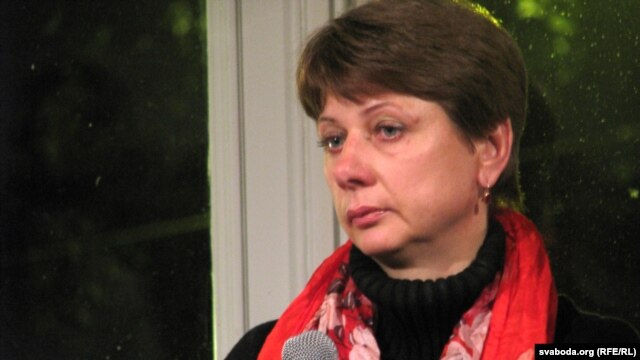
Mother Denied Executed Son’s Remains

By Madeline Schiesser
Impunity Watch Reporter, Europe

MINSK, Belarus – When Lyubou Kavalyova’s son was executed last March, all she received from the authorities was a letter from the Belarusian Supreme Court containing his death certificate.  A year later, Mrs. Kavalyova still does not know the whereabouts of her son’s remains because of an article in Belarus’ Criminal Executive Code that allows the government to not communicate the burial place of those executed to their relatives.

Lyubou Kavalyova’s fight with Belarusian authorities for the return of her son’s body earned her the title “Human Rights Defender of the Year” from fellow activists in December. (Photo Courtesy of RFE/RL)

Mrs. Kavalyova’s son, Uladzslau Kavalyou, and his friend, Dzmitry Kanavalau, both born in 1986, were executed last year in Belarus after having been sentenced to death for an April 2011 subway bombing in Minsk that killed 15 people and wounded more than 300, and two earlier bombings.

Independent investigators, including some from Russia, expressed serious doubts about the evidence used to convict the men.  Their trial was also heavily criticized for failing to meet international fair trial standards.

Mrs. Kavalyova announced at a press conference in Minsk on Wednesday her hope that Belarusian authorities would release her son’s body as she marks the first anniversary since his execution.

Alternatively, according to human rights defender Rasman Kisliak, authorities should release the burial location of the men’s bodies.  Kisliak further explained that, “It is necessary to find out who had conducted the execution in order to plan future activities and find from whom to demand answers.”  He also spoke of plans to demand the annulment of the law under which relatives of deceased convicts are refused access to the body.

The family of Dzmitry Kanavalau has declined to communicate with the press, and human rights activists believe they have been intimidated into silence.  Activist Pavel Levinau claims “[T]he whole Kanavalaus family were arrested after the arrest of Dzmitry – an elder brother and the father. They were kept in custody, as far as I remember, for about three months. Only the mother remained free – a woman who was intimidated. I can only guess what psychological pressure was put on her. Probably psychological and physical pressure was put on other relatives of Dzmitry Kanavalau’s as well. Probably, they were even promised something if they keep silent.”

Belarus remains the only nation in Europe to still sentence people to death.  Prisoners are informed of their pending execution only hours, or even minutes in advance, and the executions are carried out with a shot to the back of the head.

“The death penalty is the ultimate cruel, inhuman and degrading punishment and a human rights violation. Failing to return the bodies of these two men compounds that cruelty,” said David Diaz-Jogeix, Amnesty International’s Deputy Director for Europe and Central Asia.

“The complete secrecy surrounding the death penalty denies families the opportunity to bury their relatives according to their traditions and religious beliefs . . . It is unacceptable that authorities in Belarus would not even reveal the burial site to the families, and ban them from saying goodbye to their loved ones,” he further stated.

On Friday, Russia rejected Amnesty International’s request to demonstrate against executions in front of the Belarusian Embassy in Moscow.  Although authorities offered Amnesty International two alternative sites to hold the demonstration, Amnesty International rejected them as remote and having nothing to do with the subject of the protest.

For further information, please see:

Chapter’97 – Pavel Levinau: Kanavalau’s Family Does Not Get in Touch Because of Threats of Special Services – 15 March 2013

RFE/RL – Amnesty International Refused Permission For Belarus Embassy Protest In Moscow – 15 March 2013

Viasna – A Year Has Passed Since the Execution of Kanavalau and Kavaliou: Human Rights Defenders Put New Questions – 15 March 2013

Amnesty International – Belarus: After Death, the Cruelty Continues as Bodies of Two Executed Men Still Hidden – 14 March 2013

RFE/RL – Mother Of Belarusian Executed For Terrorism Wants Son’s Body – 13 March 2013

This Week in Syria Deeply: 17 March 2013

Somalia Frees Journalist Held For Reporting Rape

By Ryan Aliman
Impunity Watch Reporter, Africa

MOGADISHU, Somalia – Freelance journalist Abdiaziz Abdinur was finally released from imprisonment last Sunday.

Local journalists demand the release of their colleague, Abdiaziz Abdinur Ibrahim, in Mogadishu. (Photo courtesy of Reuters/Feisal Omar)

Also known as “Koronto”, Abdinur was arrested last month for interviewing a woman who alleged she had been raped by Somali soldiers. He and the alleged rape victim were brought into custody without warrant and were sentenced to a year in jail for “offending state institutions”.

On Sunday, however, the Somali High Court announced that the charges against Abdinur had been dropped. High Court Chairman Aideed Abdullahi Ilkahanaf told the press that the justices found “no evidence to support his charges.”

Abdinur was relieved upon hearing the court’s decision. “I’m happy to be free,” Abdinur told reporters after thanking the international community and journalist organizations for urging the Somali government to free him. “I’m very happy that I got my freedom back, I thank those who worked in this process that helped my release including my lawyers,” he added on his way out from court.

Abdinur’s case fueled worldwide outrage from various governments and human rights groups.

UN Secretary General Ban Ki-moon said he was “deeply disappointed” by Abdinur’s arrest. The U.S. State Department, meanwhile, said his imprisonment “the wrong message to perpetrators of sexual and gender-based violence”.

The Committee to Protect Journalists (CPJ) described it as “a direct assault on press freedom” in the country especially since it is in the process of recovering from civil war and dictatorship.

Condemning the government’s decision to convict Abdinur, Africa director at Human Rights Watch Daniel Bekele reminded Somali authorities that “silencing rape victims and journalists will not end sexual violence, but just reinforce Somalia’s climate of impunity.”

After announcing Abdinur’s release, Prime Minister Abdi Farah Shirdon Saaid acknowledged the “deep-seated problems” with both the armed forces and judicial system. He said that his administration shall implement measures to safeguard the independence of the local media. He hopes to put an end to the threats, arrests, and attacks several journalists have been subjected to. According to him, the local media plays a critical and constructive role “during the hard times of the country.”

But the Prime Minister also reminded the press of their responsibility. He told reporters that they, in turn, “should be professional and work in the line of the ethics of the media and journalism” as they receive protection from the government.

“Somalia is returning to normalcy and peace, the local media should prioritize how to pacify the country and lead harmony within the Somali people,” Prime Minister Shirdon said.


For further information, please see:

All Africa – Somalia: Somali Prime Minister Vows Protection of Independent Media – 17 March 2013

Al Jazeera – Somali journalist held over rape report freed – 17 March 2013

BBC News – Somalia frees rape row journalist – 17 March 2013

Reuters – Somali court frees reporter jailed for interviewing rape victim – 17 March 2013

Shanghai Daily – Somalia court frees rape reporting journalist – 17 March 2013

Police in India Arrest Local Tribesmen Suspected of Raping a Swiss Tourist

By Irving Feng
Impunity Watch Reporter, Asia

Local Indian police arrested five or six young men who allegedly gang raped a Swiss female tourist on Friday, bringing into question India’s commitment to providing adequate safety to women within its borders.

The suspects of the alleged rape from the local Kanjar tribe. (Photo Courtesy of BBC)

The Swiss woman, age 39, was vacationing with her husband when the gruesome crime occurred.  She and her husband were engaged in a 250 kilometer (roughly 155 miles) biking adventure tour from Orchha to Agra to visit the Taj Mahal when they stopped to camp near Sewda road.

They set up camp in a forested area, and the suspected perpetrators invaded their camp area during the night.  The men beat the woman’s husband with wooden sticks, and some of the men sexually assaulted and brutally raped the woman in front of her husband while he was tied up to a tree.

The suspects were reportedly carrying a firearm at the time of the assault.  Police say that the attackers also stole some of the pair’s valuables including cellular phones, laptop computer, and around 10,000 rupees ($185).

The young men suspected of committed the crime were all members of a local tribe known as the Kanjar from the village of Jharia in the Datia district.  Police checked the criminal history of the men and found their records to be clean.  Their ages ranged from 20 to 25.

The couple has made it safely to the Swiss embassy in New Delhi.  The Swiss Ministry for Foreign Affairs released a statement to the press indicating that there is an extreme interest in rectifying the situation for their two citizens, and a course of action will be implemented in due time.

The Swiss government had recently issued a travel warning last month to all tourists travelling to India regarding the alarming number of rapes and other sexual attacks occurring throughout the country.  Other countries may be prompted to release similar warnings to their general publics in the near future.

This newest incident involving a foreign victim comes at a time when sexual crimes in India are on the rise.  The National Crime Records Bureau suggests that roughly one woman is raped every 20 minutes in their country.

After last December’s brutal rape and murder of a physiotherapy student in Delhi, protestors took to the streets to demonstrate and called for the perpetrators to be sentenced to death.  India’s legislature has recently implemented harsher punishments for the crime of rape, increasing the prison terms from seven to ten years to a maximum of 20 years.

For further information, please see:

BBC – Six held over India rape of Swiss woman – 18 March 2013

The Times of India – 5 arrested for Swiss woman’s gang-rape – 18 March 2013

The Huffington Post – Five Men Arrested In Gang-Rape Of Swiss Woman In India – 17 March 2013

Reuters –  Six arrested for gang-raping Swiss tourist in India: police – 17 March 2013