Syrian Network for Human Rights: Casualty Report – 15 February 2013
The Syrian network for human rights documented 74 martyrs , Friday 15/02/2013 all across Syria. Most of them in Idlib , Damascus and countryside .Among the martyrs 9 children , 6 ladies , and 22 from free Syrian Army.
Damascus and countryside : 26 martyrs
Idlib : 17 martyrs
Aleppo : 8 martyrs
Hasakee : 4 martyrs
Alraqaa : 5 martyrs
Homs : 6 martyrs
Hama : 2 martyrs
Deir Al Zor : 3
Daraa : 2
Lattakia :1
Damascus and countryside : 26 martyrs including three children , lady , and six martyrs from Syrian free army
1- Mohamad Alhalboin ( Abo Taeseer ) randomly by a sniper , near to Alassad special troops checkpoint – Alqaboon http://youtu.be/jf1a94vObNc
2- The Child Hamza Alhabash – 7 years old – Almaliha – Damascus countryside – affected by his wounds , cause of Al MIG shelling on Marj Alsultan town in Damascus countryside http://youtu.be/O-LDhgTBJAY
3- Alaa tayseer Alhamrawi –Jobar –Damascus countryside – by a sniper of Alassad troops in Al comeuppance battle to liberate the city of Aadra http://www.youtube.com/watch?v=wt9uYHk-TZ0
https://www.facebook.com/photo.php?fbid=483935291670956
4- Ihsan Ghaleb Tabranin – Misraba – Damascus countryside – known as Abo Mohamad from Syrian Free Army martyr in comeuppance bottle to liberate Aadra city http://www.youtube.com/watch?v=wt9uYHk-TZ0
https://www.facebook.com/photo.php?fbid=483935291670956
5- Ahamd Awaed – Damascus – Daf Alshok- free Syrian Army –assassinated with his brother by Alassad troops in raid for their home in Daf Alshok , their bodies were dragged and tarnished and then kidnapped – 14-2-2013
6- Khaled Awaed – Damascus – Daf Alshok- free Syrian Army –assassinated with his brother by Alassad troops in raid for their home in Daf Alshok , their bodies were dragged and tarnished and then kidnapped 14-2-2013
7- Mohamad Mahmood Mohamad – Damascus – Alhajar Alaswad – reporter – known as Abo Albaraa – free Syrian Army affected by his wounds , shot by Alassad troops while doing his duty few days ago https://www.facebook.com/photo.php?fbid=609987919026790
http://youtu.be/_c09MxLN3BM
8- Radwan Alqaisi – Damascus – Almidan-by a sniper from Alassad troops – on the highway – near to Alqaboon –Damascushttp://youtu.be/MQHsdaRhKrc
http://sphotos-h.ak.fbcdn.net/hphotos-ak-prn1/841156_611126595569412_280651553_o.jpg

9- Hisham Alhalaq – Saqba – Damascus countryside – known as Abo Maher , martyred affected by his wounds cause by warplanes yesterday http://youtu.be/cq_pBDDKhpk
10-Ihsab Ghanoum -– Misraba – Damascus countryside – known as Abo Mohamad from Syrian Free Army martyr in comeuppance bottle to liberate Aadra city
11-Majed Suliman Alalawi – Damascus countryside – shot by Alassad troops http://youtu.be/7mjUwUVOngg
12-Ms Amal Mansour –Albowaidah – Damascus countryside – martyred in Alhajar Alaswad cause of shelling by Alassad troops http://youtu.be/pek58xnbYGY
13-Abo Kasem Swidan – Doma – Damascus countryside – from Syrian Free Army martyr in comeuppance bottle to liberate Aadra city -14-3-2013
14-Hashem Mohamad Aldibs –Doma- Damascus countryside – martyred cause of shelling by Alassad troops 14-2-2013 https://www.youtube.com/watch?v=2yGsP5XDvFg
15-The Child Nagham Alaa Abdulaziz – Yarmouk refugee camp – Damascus – martyred in Altakadom area , cause of shelling of Alassad troops www.facebook.com/photo.php?fbid=604943016186911
16-Mohamad Khaled Karbouj – Moazameah Alsham – Damascus countryside-cause of random shelling
17-Ms Manal Alshaikh Kwaider –Arbien – Damascus countryside – By Alassad troops shelling
18-Samer Talebah–Arbien – Damascus countryside – By Alassad troops shelling
19-Adnan Alrais – Harasta – Damascus countryside- Syrian Free Army –clashes with Alassad troops
20-Mohamad Ahmad Alabas – Harasta – Damascus countryside- Syrian Free Army –clashes with Alassad troops
21-Yaseen Ahamd Dawood – Moazameah Alsham – Damascus countryside-shot by a sniper http://youtu.be/0Zg3wPvEm2w
22-Mohamad Mahmod Alef Alserwan -23years old – Damascus – Alsalhia- martyr in Jobar neighborhood through clashes with Alassad troops in Grand Epic battle https://www.facebook.com/photo.php?fbid=538722266167802
23- Hassan Mohamad Deeb Alkhoja –known as Abo Mohamad – Dommar – Damascus –shot by Alassad troops andkidnapped his body
24-Mahmod Ibrahim known as Abo Kifah – Palestinian Nationality – Yarmouk refugee camp – martyred in Sabina area – Damascus countryside – through clashes with Alassad troops https://www.facebook.com/photo.php?fbid=605028449511701
25-Khaled ALnahawi known as Okasha Abo Mosaab –Madaya – Damascus countryside –martyred through clashes with Alassad troops 13-2-2013
26-Khaldon Albarhamji – Harasta – Damascus countryside – martyred through clashes with Alassad troops
Idlib : 17 martyrs including lady, child and three men from Syrian Free Army
1- Mohamad Jamal Alqalaa – Khan Shaikhon-Idlib cause of shelling and rocket launchers on the city http://youtu.be/jQ8EYS3MP8s
2- Moneer Abdulhamid Idris– Khan Shaikhon-Idlib cause of shelling and rocket launchers on the city http://www.youtube.com/watch?v=TOPx5lccr-U&feature=youtu.be
3- Ghazi Mohamad Abo Di– Khan Shaikhon-Idlib cause of shelling and rocket launchers on the city http://youtu.be/d0loOf7SxOo
4- Mohamad Aziz Idris- Khan Shaikhon-Idlib cause of shelling and rocket launchers on the city http://www.youtube.com/watch?v=TOPx5lccr-U&feature=youtu.be
5- Bilal Abdulkarim Muhana – Khan Shaikhon-Idlib cause of shelling and rocket launchers on the city – http://www.youtube.com/watch?v=TOPx5lccr-U&feature=youtu.be
6- Abdulkarim Ahmad Kirwan – Khan Shaikhon-Idlib cause of shelling and rocket launchers on the city
7- Halom Mohamad Kirwan – Khan Shaikhon-Idlib cause of shelling and rocket launchers on the city
8- Abdulrazak Saleh Arakeel – Lawyer – Khan Shaikhon-Idlib cause of shelling and rocket launchers on the city – http://youtu.be/AsKkRZJpzyg
9- Mostafa Qadoor AAfan – Khan Shaikhon-Idlib cause of shelling and rocket launchers on the city http://www.youtube.com/watch?v=TOPx5lccr-U&feature=youtu.be
10-Khaled Mamoun Makhzoom — Khan Shaikhon-Idlib cause of shelling and rocket launchers on the city
11-Unknown lady – Alghasania Idlib-cause of warplane on the village
12-Osamah ALhusain- Maarat Alnoaaman – Idlib – Free Syrian Army – affected by his wounds through clashes with Alassad troop in Albonian Almarsos battle .
13-Suliman Rashid Altanari – Maarat Alnoaaman – Idlib – Free Syrian Army – affected by his wounds through clashes with Alassad troop in Albonian Almarsos battle . http://youtu.be/ldBTLyyMAaU
http://youtu.be/YdFSc0YiY7w
14-Child Fatima Mostafa Orabi – 12 years old – Zarzour _ Idlib –random shelling https://www.facebook.com/photo.php?fbid=588524377828568&set=a.251675284846814.79414.249515501729459&type=1&theater
15-Jamal Nofal Dada- Zarzour _ Idlib –random shelling https://www.facebook.com/photo.php?fbid=588525574495115&set=a.251675284846814.79414.249515501729459&type=1&theater
16-Mohamad Aref Alali – Frreka – Idlib –dissident soldier shot by Alassad troops http://www.facebook.com/photo.php?fbid=168135646667257&set=a.154438481370307.35651.154403408040481&type=1&theater
17-Abdulkadir Hamidi –Khan Alsobol – Idlib – cause of random shelling
Hasakee : 4 martyrs included two children and a lady
1- Abdulsalam Yasin Almniti – Alshadadi- Alhasakee – cause of Al MIG shelling on the southern neighborhood of the city and Tall Alshadadi
2- Child Yousef Abdulsalam Almniti – Alshadadi- Alhasakee – cause of Al MIG shelling on the southern neighborhood of the city and Tall Alshadadi
3- Child Anas Abdulsalam Almniti – Alshadadi- Alhasakee – cause of Al MIG shelling on the southern neighborhood of the city and Tall Alshadadi
4- Ms Fadia Saaed Jalod Alsalibi -– Alshadadi- Alhasakee – cause of Al MIG shelling on the southern neighborhood of the city and Tall Alshadadi
Alraqaa : 4 martyrs included two children and one lady :
1- Manhal Suliman Alhamod Alshomari – Alraqaa-shot by Alassad troops 14-2-2013
2- Ms Subhia Salom : 65 years old – Altabaka –Alraqa – affected by the shelling of cluster bombs on the wide street – downtown
3- Child: Mohamad Khaled Alshater – 7 years old Altabaka –Alraqa – affected by the shelling of cluster bombs on the wide street – downtown Deir Al Zor
4- Child: Ahmad Mohamad Alaabed Taha – 10 years old Altabaka –Alraqa – affected by the shelling of cluster bombs on the wide street – downtown
5- Mahmoud Almashhory –Alraqa-random shelling on Alkarama area .
Aleppo : 8 martyrs , 7 from Free Syrian Army
1- Radwan Mohamad Alaswad- Tal AAjar-Aleppo – free army affected by wounded through clashes with Alassad troops near Menag Military Airport https://www.facebook.com/photo.php?fbid=445593558844952&set=a.395746480496327.86035.385339138203728&type=1&theater
2- Mohamad Walid Ibrahim – Altawama-Aleppo-through clashes with ALassad troops in Alashrafia neighborhood
3- Mohamad Hasa known as Abo Awish – free Syrian Army–through clashes with ALassad troops in Alashrafia neighborhood
4- Yousef Adel Bakri – reporter – known as Abo Jad – through random shelling
5- Ibrahim Ali Albadr-Tadef –Aleppo – free army – shot by Alassad troops near by Alsabaa Bahrat http://youtu.be/ni4l3KOJ2R0
6- Mostafa Latouf Horma – Mayer-Aleppo- free army- shot by Alassad troops
7- Salah Ahmad Masini – Mayer-Aleppo- free army- shot by Alassad troops
8- Mohamad Yousef Sharaq known as Abo Allosh – Hayan-Aleppo- free army- shot by Alassad troops
Homs: 6 Martyrs included two ladies , two children ,and one of the free army
1- Ms Dalal ALahmad – tal Dahab-Homs-married and mother for five children martyred affected by her wounded cause of shelling to Alhola – Homs countryside
2- Husain Abdullah Harfosh – Alqsair –Homs – affected his wounded by shelling to Alqusair few days ago https://www.facebook.com/A.E.N.N.Freedom?ref=stream#!/photo.php?fbid=351402224972589&set=a.276649785781167.60418.276646335781512&type=1&theater
3- Mohamad Zakaria , known as Zakaria Alhomsi– Shinshar –Homs – free army – shot by Alassad Troops in Alsafeera – Aleppo https://www.facebook.com/photo.php?fbid=339386189500015
4- Unknown Martyr-Alghnto-Homs-found shackled hands and his body dumped in Alasei river http://youtu.be/llPcLLFIDHA
http://www.facebook.com/photo.php?fbid=372872056145388&set=a.198201986945730.41000.195788363853759&type=1&theater
5- Child Saad Husien Mohamad Alswef – 10 years old – Taeba – Homs – random shelling
6- Child : Siham Husien Mohamad Alswef – 10 years old – Taeba – Homs – random shelling
Hama : Two martyrs Free Syrian Army
1- Ahmad Jolaq – Hama-through clashes with Alassad troops in the rural south battle in Hama while hit Alsaleem checkpoint 13-2-2013
2- Khaled Alswda– Hama-through clashes with Alassad troops in the rural south battle in Hama while hit Alsaleem checkpoint 13-2-2013
Deir Alzoor : 3 martyrs, two form Free Army
1- Taha Othman Taha known as Abo Aaesha-Albaghlia –by a sniper http://www.youtube.com/watch?v=tl4ryzhm1kI&feature=share&list=FLuDm1VONVaHCMdbcXdtxnMA
https://fbcdn-sphotos-f-a.akamaihd.net/hphotos-ak-prn1/c57.0.403.403/p403x403/66096_487492311285930_1155000894_n.jpg
http://www.youtube.com/watch?v=SLAPFQbOfn8&feature=youtu.be

2- Abo Mosa Almohajer – Der Alzoor – free army –martyr in Almayadeen , after wounded in Alshadadi – Alhasakee http://youtu.be/AyVbR1SwyL8
3- Abdullatif Alabdulah Alsuliman Alshikh Fayad – Deir Alzoor cause of the shelling on Alshmitiah vellage
Draa : 2 martyrs from Free Syrian
1- Abdulakader Mohamad ALkatma – Daraa-tafas – dissident solider – through clashes in a battle to lebrate Tal Braq in Hasakee https://fbcdn-sphotos-c-a.akamaihd.net/hphotos-ak-prn1/551522_608674865825510_97027956_n.jpg

2- Amin Qasem Altebawi – Naema – Daraa – Free Army –shot by Alassad Troops
https://www.facebook.com/photo.php?fbid=430260293715391
Lattakia: 1 : Khaled Almansour – Alhafa –after shelling and rocket launchers on the city of Khan SHekhon-Idlib , after his migration to it for his life
The SNHR documented :
1- Hafez Abdulasaad- Deir Alzoor -– free army – martyred in Sunday 10-2-2013 caused by Artillery shell fragments
2- Mahmoud Alawi Alaskar – Deir Alzoor -– free army – martyred in Sunday 10-2-2013 caused by Artillery shell fragments
3- Ahmad Alawi Alaskar- Deir Alzoor -– free army – martyred in Sunday 10-2-2013 caused by Artillery shell fragments
Following Putin’s Public Attack on Magnitsky’s Colleagues, Russian Authorities Have Opened a New Criminal Case and Threaten Use of “Special Units” against HSBC Bank in Moscow
Press Release
Hermitage Capital
15 February 2013 – The Russian Interior Ministry has opened a new criminal case against colleagues of the late Sergei Magnitsky, who was killed in Russian police custody in 2009. Details of the new criminal case are not yet known other than that it alleges ‘fraudulent actions’.
The new case was opened on January 24, 2013 following public statements by Russian President Vladimir Putin at a December 2012 press conference that he needed to “dig deeper” into the Magnitsky case.
Under this new criminal case, the Russian Interior Ministry is now pressuring HSBC Bank Moscow to provide wide-ranging financial and banking information concerning the companies of the Hermitage Fund and its advisers dating all the way back to 1996.
The Russian Interior Ministry has threatened to use “special forces” to obtain the documents if HSBC doesn’t cooperate.
“Otherwise, the documents which have the force of evidence under the criminal case and are with OOO HSBC Bank RR can be seized by force during a seizure or search, including with the prarticipation of employees of special units,” said the request sanctioned by major G.Sungurov, head of 4th section within the Interior Ministry’s Investigations Department.
Under the Russian law, banking information can be provided to the police only if it concerns specific acts and circumstances of the investigation. The Interior Ministry has failed to identify any circumstances connecting the companies in question to their request, yet they demanded that banking information on transactions of “each day of operations” for 8 different companies be provided in Russia.
For further information please contact:
Hermitage Capital
Phone: +44 207 440 1777
Email: info@lawandorderinrussia.org
Website: http://lawandorderinrussia.org/
Facebook: http://on.fb.me/hvIuVI
Twitter: @KatieFisher__
Livejournal: //hermitagecap.livejournal.com/
New Zealand Representative Criticized for Anti-Muslim Rant
By Mark O’Brien
Impunity Watch Reporter, Oceania
WELLINGTON, New Zealand — Political observers in New Zealand say the future of Richard Prosser does not look promising after an anti-Muslim rant has mired him in a national controversy.
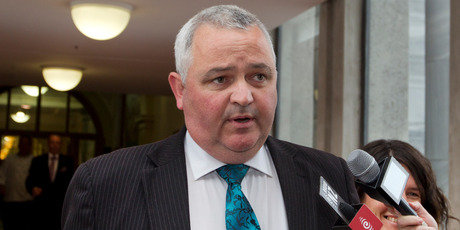
Prosser, who is a House of Representatives member for the NZ First party, recently wrote in a magazine column that all young men “who are Muslim, look like Muslims, or come from a Muslim country” should be banned from flying “Western airlines,” according to TV NZ. The New Zealand Herald also reported that the rant referred to Muslims as “troglodytes” and that Islam was a “stone-age religion.”
“He’s [upset] the party [to] no end,” an anonymous source familiar with the party told the Herald. “The biggest issue is his total lack of judgment.”
So far, the NZ First party leader Winston Peters has said he does not believe Prosser should resign. But criticism has been widespread, and the feeling around parliament is that Prosser may serve only one term.
“He’ll be so far down the list next time, you won’t see the top of his head,” the Herald’s source said, discussing Prosser’s future party standing if he survives the next election.
Prosser, who joined Parliament in 2011 fourth on the NZ First party list, has apologized for the comments. He told the Herald that he believes his willingness to acknowledge he was wrong would go over well with voters.
“I think New Zealanders are essentially fair people,” Prosser said. “[I]f you make a mistake but admit it, undertake not to do it again, and undertake to correct some of them . . . people will give you a fair go.”
Most people, however, do not appear to share that sentiment. The Federation of Islamic Associations of New Zealand lodged a formal complaint against Prosser with the Human Rights Commission. Association leaders called Prosser ignorant and undeserving of being an MP.
“You can maybe excuse it on a street corner on a drunken night, but not from a Member of Parliament,” said the association’s Jamal Green. “This was not just an outburst.”
Judith Collins, who is New Zealand’s minister for both Ethnic Affairs and Human Rights, called Prosser’s comments “appalling and irresponsible.” She called on the party to “avoid causing further embarrassment to New Zealand.”
Prosser’s rant was reportedly sparked by a recent incident when he was stopped from carrying his pocketknife on a flight to Christchurch. This also is not Prosser’s first bought with controversy. He previously called for a ban on burqas in public, mandatory army training for all citizens, and New Zealand’s South Island to become a separate state.
For further information, please see:
New Zealand Herald — MP Richard Prosser’s Future Looks Shaky — 16 February 2013
MSN NZ — Richard Prosser Faces a Bleak Future — 15 February 2013
TV NZ — Prosser to Be Reported to Human Rights Commission — 14 February 2013
3 News — Collins Slams Richard Prosser’s ‘Anti-Islamic Rant’ — 12 February 2013
Egypt Rallies on Friday
By Justin Dorman
Impunity Watch Reporter, Middle East
CAIRO, Egypt – Yesterday, both liberal anti-Morsi protesters and Islamic pro-Morsi supporters took to the streets in Egypt to demonstrate. The Morsi opponents were protesting against what they perceived as Morsi’s consolidation of power and implementation of Sharia law. The Morsi supporters were demonstrating against violence caused by protests and the need for Sharia law. Predictably, violence broke out.
The anti-Morsi faction congregated outside El-Quba, one of the presidential palaces. They called the rally, “Checkmate Friday,” as if they had cornered the king. The protesters view Morsi as a dictator who has failed to actualize the purposes of the revolution which put him in his position.
National Salvation Front, the main opposition group to Morsi and the Muslim Brotherhood, was not involved in this protest. They sought to distance themselves from the protest after coming under criticism that they have been inciting street violence.
As nightfall covered the protest, violence eventually ensued. “Troublemakers” threw rocks and petrol bombs, and security forces answered back with tear gas and water cannons.
Away from the main rally, in the industrial town of al-Mahalla al-Kubra, protesters set fire to a local government building. Additionally, in Alexandria, protesters who tried to force their way into a police station were met by security force violence.
Thousands of pro-Morsi demonstrators also met in Cairo to show their support for President Morsi and to denounce the violence that has occurred as a result of anti-Morsi protests. This demonstration was dubbed the “Together Against Violence” rally and was organized by the ultraconservative Salafi Islamist group Al-Gama’a al-Islamiya. Ironically, Al-Gama’a al-Islamiya led an armed revolt against the state in the 1990s, but has since denounced violence.
Since the anniversary of the ousting of Mubarak in January, at least sixty people have died as a result of demonstration violence. The pro-Morsi group is calling for an end to this unrest so that Egypt can gain some semblance of stability, such that tourists will not fear the Egyptian political climate and jumpstart its economy. Instead, the protesters just want the whole country to embrace Sharia law.
Mohammed al-Sagheer, a Muslim cleric in the crowd declared that, “the person who came [to power] through ballot boxes will not leave by firebombs.”
Others held banners which read, “No to Violence. Yes to Sharia.”
The demonstrators chanted, “Islam is coming, the Koran is our constitution,” as they marched to the central rally point of Cairo University.
For further information, please see:
Al Jazeera – Pro-Morsi Protesters Rally in Cairo – 15 February 2013
Examiner – Morsi Supporters Hold Rally in Cairo – 15 February 2013
Jerusalem Post – Egypt Islamists Rally Against Violence, for Sharia – 15 February 2013
Reuters – Islamists Rally for Egypt’s Mursi in Cairo – 15 February 2013