Rebels React to French Intervention in Northern Mali

By Ryan Aliman
Impunity Watch Reporter, Africa

BAMAKO, Mali – Malian rebel groups Ansar Dine and AQIM (al-Qaeda in the Islamic Maghreb) have threatened France that its military intervention in Northern Mali could endanger the lives of its people.

The Mujao, an extremist group occupying northern Mali, who claimed responsibility for kidnapping a French citizen last November. (Photo courtesy of RFI/AFP/Issouf Sanogo)

They urged France to reconsider its military support to the Malian Army to avoid any harm to French hostages and other French citizens.

“There are consequences, not only for French hostages, but also for all French citizens, wherever they find themselves in the Muslim world,” said Sanda Ould Boumama, Ansar Dine’s spokesperson. “The hostages are facing death.”

AQIM posted a video online where its spokesperson, Abdallah Al-Chinguetti, gave a similar warning to France: “Stop your assault against us or you are digging your own sons’ graves.”

Since April last year, the Malian government had been asking for urgent military assistance from France to regain territories captured by several insurgent groups in the north. On Friday, French President Francois Hollande announced that France will help its former colony in west Africa. On the same day, France sent air strikes to Konna which allowed the Malian Army to drive the rebel convoy out of the city.

“Terrorists should know that France will always be there when the rights of a people – those of Mali who want to live freely and in a democracy – are threatened,” President Hollande said. According to him, the French military operation in Mali, named “Operation Serval”, would last “as long as necessary” mainly because “Mali’s very existence as a state was under threat” with insurgent groups trying to turn Mali into a “terrorist” state.

President Hollande added that the French military intervention complied with international law and had been agreed with by Malian interim President Dioncounda Traore.

Although Operation Serval had been successful in regaining control of several territories in a matter of days, it was not without casualties. A French pilot was killed on Friday when his helicopter was shot down near the town of Mopti. Hours later, a French hostage being held by extremist groups in Somalia was executed which further highlighted France’s conflict with such groups in Africa.

The French Foreign Ministry has since raised its security alert to red – the highest level, advising the 6,000 French citizens staying in Mali to leave the country. It has also extended the red alert on neighboring countries such as Mauritania and Niger.

Meanwhile, interim Malian President Traore declared a state of emergency on Friday. He also cancelled a long-planned official trip to Paris on Wednesday because of the ongoing conflict in his country.


For further information, please see:

BBC News – French soldier killed and hostage feared dead in Somalia – 12 January 2013

Huffington Post – France’s Mali Operation: Troops Make Progress Against Islamist Rebels – 12 January 2013

Reuters – France bombs Mali rebels, African States Ready Troops – 12 January 2013

Reuters – Mali intervention will put French citizens at risk: Islamists – 12 January 2013

RTE News – Over 100 rebels killed after French Air Strikes on Mali – 12 January 2013

Times Live – Mali war escalates with French intervention – 12 January 2013

RFI – Mali’s islamist Mujao group claims kidnapping of French citizen – 22 November 2012


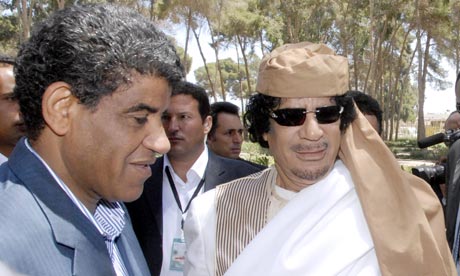
Abdullah al-Senussi’s Lawyer Calls for ICC Trial

By Justin Dorman
Impunity Watch Reporter, Middle East

TRIPOLI, Libya – Abdullah al-Senussi has once been described as the “world’s most wanted man.” During the rule of his brother-in-law, Muammar Gaddafi, Senussi ran the country’s internal security, external security, and was the chief of its espionage agency. His lawyer, Ben Emmerson, believes that if Senussi is not sent for trial at the International Criminal Court (ICC) in the Hague, that he will surely be sentenced to death in Libya.

Senussi’s attorney believes that if Senussi is not rightfully sent to face trial at the ICC, that he will be summarily executed. (Photo Courtesy of the Guardian)

On June 27, 2011, the ICC issued arrest warrants for both Senussi as well as Saif al-Islam, Gaddafi’s son. Nevertheless, Islam has been detained in west Libya, where he will be tried. Similarly, despite the arrest warrant, Senussi, who was being held in Mauritania, was deported back to Libya when Libya purposefully ignored the warrant and paid between $125-$200 million for him.

While Libya is supposed to follow the directives of the ICC, there is no real manner in which the ICC can enforce itself, nor the United Nations Security Council, who referred the case to the Hague to begin with. Lord Macdonald, the former director of public prosecutions in England threatened, however, that “the Libyan government need to decide whether they want to join the international community or not. If they continue to flout the UN security council [resolution]. . . they are not going to be treated seriously as part of the community of nations.”

Emmerson claims that if his client is put on trial in Libya, that the country has breached its obligations to both the ICC and Security Council. He further believes that when Libya obtained Senussi from Mauritania, that it partook in unlawful rendition. Emmerson wants a fair trial for Senussi and ultimately feels that if Senussi is tried in Libya, that it is “likely to be a short and summary process resulting in his conviction and summary execution.”

Senussi was believed to be the orchestrator of the bombing of Pan Am Flight 103, known as the Lockerbie bombing, which killed 170 people. Many also think that he was also the man responsible for the slaughtering of 1,200 prisoners at Abu Salim prison.

On the first of this month, Taha Baara, spokesman for Libya’s attorney general stated that Senussi’s trial would take place “within a month.” The Libyan authorities are required to respond to the ICC’s demands by January 15, 2013.

For further information, please see:

Guardian – Abdullah al-Senussi: Foreign Office Urged to Prevent Execution of spy Chief – 11 January 2013

Al Arabiya News – Libyan Ex-spy Chief Must be Extradited or Risk Execution: Lawyers – 10 January 2013

Amnesty International – Libya Must Seek Justice not Revenge in Case of Former al-Gaddafi Intelligence Chief – 18 October 2012

The Hague Justice Portal – Abdullah Senussi

Displaced Rohingya Refugees Turned Away from Thailand

By Irving Feng
Impunity Watch Reporter, Asia

BANGKOK, Thailand – Over 600 displaced Rohingya Muslims were found by Thai authorities after police raided a warehouse in the town of Sadao in Songkhla province and a rubber plantation in a Malaysian border town of Pedang Besar.

Rohingya refugees awaiting deportation. (Photo Courtesy of Al Jazeera)

Police suspected that the raid sites were utilized by local human traffickers and discovered the refugees during their operations.  Among the Rohingya discovered in Pedang Besar, roughly 20 of the refugees were women and children.

The Thai landowner of the raid sites is now being sought by the local authorities on illegal human trafficking charges.  The charge of sheltering illegal migrants has also been tacked on by the officials seeking to prosecute the alleged traffickers.

Reports say that the Rohingya refugees had fled Myanmar and were passing through Thailand en route to a third destination.  The migration was entirely voluntary by the Rohingya refugees; however, the migrants had been housed in the warehouse for 3 months prior to discovery.

The refugees were reportedly travelling to a final destination in Malaysia and the camps were temporary holding facilities as they passed through.  The landowners were middlemen who were paid to help facilitate the refugees’ journey.

The migrations may have been voluntary because the Rohingya people are currently stateless.  The Myanmar government continues to deny the Rohingya people official citizenship status.  Myanmar also classifies them as illegal Bangladeshi immigrants.

Nearby Bangladesh also denies the Rohingya people official status creating hostility and persecution for the stateless refugees.  The Thai government has refused to grant asylum and plans to force the recently discovered refugees back onto rickety and overcrowded boats for departure, similar to the ones they utilized during their arrival.

Similar incidents in 2008, where Rohingya were forcibly deported from Thailand, generated tragic results.  The Thai military put roughly 1000 Rohingya refugees onto boats without food or water causing hundreds of deaths.

The violence in the Rakhine state of Myanmar last June has caused a large displacement of the Rohingya people.  Of the 800,000 Rohingya people, an estimated 110,000 people were displaced, many of which were Rohingya.

Rights groups have clamored to the international community about Thailand’s attitude toward the recently discovered Rohingya refugees in the two police raids.  Thailand’s refusal of asylum for the stateless refugees and sending them back to sea in rickety boats without food or water is seen as shameful.

Thailand had already deported 73 of the Rohingya people back to Myanmar last week, but the boat landed in the nearby Thai island of Phuket.

For further information, please see:

Al Jazeera – Myanmar Rohingya refugees rescued in Thailand – 11 January 2013

Breitbart – 700 ROHINGYA IN THAILAND TO BE DEPORTED TO MYANMAR – 11 January 2013

Reuters – Over 600 illegal Rohingya migrants held in Thai raids – 11 January 2013

San Jose Mercury News – Rohingya boat people found adrift near Thai resort – 1 January 2013

Women Granted Seats on Shura Council for First Time

By Justin Dorman
Impunity Watch Reporter, Middle East

RIYADH, Saudi Arabia – Saudi Arabia, a ultraconservative Islamic country historically governed by men, has for the first time granted seats on the Shura council to women. The Shura council is Saudi Arabia’s top advisory board.

Saudi Arabia’s Shura Council will now be made up of twenty percent women. (Photo Courtesy of the Guardian)

The one hundred and fifty member council now seats thirty women. Furthermore, courtesy of First Amendment: Article 3 of the council’s statute, which King Abdullah introduced, women can never constitute less than twenty percent of the council. Previously, women were only permitted to be consultants to the council and only on topics such as family and women’s issues.

Members of the Shura council sit for four-year terms. Since the nature of the council is to serve in an advisory capacity, it has no legislative power. Members may review laws and question ministers.

The thirty women who were given seats on the council include human rights activists, university graduates, and two princesses. One such woman is Thuraya Obaid, a United Nations administrator who has previously served as the undersecretary general to the world body and as an executive director to the United Nations Development Programme.

Female Saudi novelist Baridya al-Bishr described the new class of councilwomen as “the cream of the crop.”

King Abdullah’s appointment of women to the council has been warmly welcomed by women’s rights activists. Well known activist Wajeha al-Hawaidar believes that, “men can finally respect women when they see them playing a male role.”

This move was one of many changes King Abdullah has made to advance women since he became king. In 2009, Norah al-Fayez was the first woman ever named to a ministerial post. Then in 2011 he granted women the right to vote and run as candidates in local elections. Most recently, two Saudi Arabian women were permitted to be the first women to partake in the Olympics.

Nevertheless, there are still many more changes female activists wish to see implemented. Women are still not allowed to marry, divorce, work, travel, or be taken care of in a hospital without the permission. Women who are permitted to travel are still electronically tracked, and automatic text messages are sent to her male guardian informing him of her whereabouts.

Ultimately, the council appointments signify great progress for women in Saudi Arabia. The change, however, does not come without limitations. Women still must be segregated from men once inside the council in a special area, and must also enter through a separate door.

For further information, please see:

Al-Akhbar – In Historic First, 30 Women Appointed to Saudi Shura Council – 11 January 2013

Guardian – Saudi King Allows Women on top Advisory Council – 11 January 2013

Middle East Online – Precedent: Saudi Women Named to Shura Council – 11 January 2013

Ya Libnan – Women Named to the Saudi Shura Council for First Time – 11 January 2013

Three Politically Active Kurdish Women Mysteriously Murdered in Paris

By Alexandra Sandacz
Impunity Watch Reporter, Europe 

PARIS, France – The Kurdish community was stunned this past Thursday when three politically active Kurdish women were brutally murdered. The three bodies were found around 2 a.m. inside the Kurdish Information Center. The center was used to promote Kurds’ political and cultural agendas.

The community watches as the three bodies were removed from the inconspicuous building. (Photo Courtesy of NBC News)

Although there are no claims of responsibility or any suggestion of suspects, it is quite clear that the killings were carefully planned. Since the building is not marked, investigators believe someone would have to know where the office was. Furthermore, the front door could not be opened without a digital code.

Center employee, Berivan Akvol, stated, “There is no doubt this was politically motivated.” Agnès Thibault-Lecuivre, a spokeswoman for the Paris prosecutor’s office, stated, “No hypothesis can be excluded at this stage” as per the motive. However, Kurdish activists believe Turkish forces committed the murders.

One woman who was killed is one of the founders of the Kurdish Workers’ Party, the PKK. Multiple nations, such as Turkey, believe the PKK is a terror organization because of their 28-year rebellion against the Turkish state, one of Middle East’s longest-running conflicts.

The PKK, a pan-Kurdish nationalist movement, is internationally known for the three decade war against the government of Turkey. As a result, an estimated 40,000 people were killed. However, suspiciously, the killings happened around the time the Turkish government entered into peace talks with Kurdish leaders.

French Interior Minister, Manuel Valls, told reporters that the three women were “without doubt executed” and described the killings as “totally unacceptable.”

Roj Welat, a spokesman for the PKK leadership in northern Iraq, said “It is an assassination, it is terror, it is ideological and political assassination, a terror attack against the Kurdish people. Sakine Cansiz has been actively involved in the peace and democracy struggle, freedom struggle, of the Kurdish people for a long time. She was one of the women who participated in the formation of the PKK.”

However, although many believe the Turkish government is behind the killings, Turkish political leaders were quick to express their shock and disgust. Additionally, Turkish government spokesman, Bulent Arinc, said the “savage” killing of the women was “utterly wrong.”

The BDP, the Turkish parliament, also stated, “We expect the French government to enlighten this massacre beyond a shadow of doubt. We want it known that these murders committed overtly in the busiest part of Paris cannot be covered up.”

For further information, please see:

BBC News – PKK Paris deaths: Turkey PM Erdogan blames ‘internal feud’ – 11 January 2013

CNN – 3 Kurdish women political activists shot dead in Paris – 11 January 2013

NBC News – Three women shot dead in ‘politically motivated’ Paris slayings – 10 January 2013

The New York Times — 3 Kurds Are Killed in Paris, in Locked-Door Mystery – 10 January 2013